


Plant spirit work is a relationship-based practice rooted in animism: you approach individual plants as conscious, communicative beings capable of offering healing, guidance, and genuine allyship. You can begin safely today with three steps.
- Greet the plant. Sit quietly beside it, introduce yourself aloud or in your mind, and state your intention.
- Ask permission. Pause and notice your body’s response — a sense of warmth or openness often signals yes; tension or unease signals wait.
- Listen without agenda. Spend 10 minutes in receptive silence, observing images, sensations, or emotions that arise.
Safety note: Before ingesting any plant, confirm you have no allergies and consult a qualified healthcare provider. Plant spirit work is not a substitute for licensed medical care.
Key Takeaways
Plant spirit work is most effective when it combines consistent short practices, genuine ethical grounding, and a willingness to receive subtle impressions without immediately editing them away.
| Point | Details |
|---|---|
| Start with greeting and consent | Sit with one plant, introduce yourself, and ask permission before any deeper engagement. |
| Daily 10-minute sittings build skill | Short, consistent sessions develop receptivity faster than occasional long ones. |
| Safety and ethics are non-negotiable | Check allergies, avoid endangered species, respect Indigenous traditions, and never replace medical care. |
| Journal every session | Immediate post-session notes reveal patterns that single sessions cannot — the relationship shows up over time. |
| Kejiwastore supports your practice | Spagyric tinctures, botanical aromatics, and Ormus minerals are crafted with plant spirit intention for practitioners at every stage. |
Table of Contents
- What do people actually mean by “plant spirits”?
- How do you prepare your mindset and setting?
- What are the most effective methods for meeting a plant spirit?
- How do plant spirits communicate, and how do you interpret what you receive?
- What ethical guidelines should you follow?
- Why do practitioners speak of plant consciousness?
- Three starter practices you can try this week
- Kejiwa’s perspective on plant spirit work
- Kejiwastore’s botanical tools for your practice
- Sources
What do people actually mean by “plant spirits”?
The term draws from animism, one of humanity’s oldest worldviews, which holds that plants, animals, and natural features carry their own intelligence and relational presence. A “plant spirit” is not a metaphor for chemistry; practitioners describe it as the distinct energetic or conscious signature of a species — the quality that makes lavender feel calming in a way that transcends its linalool content, or that makes mugwort reliably appear in dreams.
People work with plant spirits for three broad reasons: healing (physical, emotional, or energetic), personal guidance during transitions, and what practitioners call “allyship” — an ongoing reciprocal relationship that deepens over years. Pam Montgomery, whose book Plant Spirit Healing is the canonical English-language reference on this subject, frames the practice as a “triple spiral path” moving from heart to soul to spirit — a progression that teaches practitioners to pace themselves rather than rush toward dramatic experiences. Montgomery’s work, along with Kejiwa Alchemy’s practitioner resources on plant spirits in folk herbalism, reflects decades of accumulated practice wisdom that beginners can draw on immediately.
How do you prepare your mindset and setting?
Preparation is where most beginners underinvest. A distracted, cluttered, or rushed session rarely produces clear impressions — not because the plant isn’t communicating, but because your nervous system isn’t calibrated to receive.
A reliable step-by-step preparation sequence includes:
- Choose your plant. Select one species you feel drawn to. Avoid endangered or legally protected plants. Potted herbs like rosemary, basil, or mint are ideal for beginners.
- Set your space. Find a quiet location with minimal electronic noise. A dedicated altar cloth or natural surface signals to your own nervous system that this time is different.
- State your intention. Write it down in one sentence before you begin. Vague intentions produce vague results.
- Ask permission. Speak to the plant directly. Notice your body’s response over 30–60 seconds.
- Ground yourself. Feel your feet on the floor, slow your exhale, and let your shoulders drop.
- Journal immediately after. Record impressions before your analytical mind edits them.
Personal safety checks before any session: confirm no known allergy to the plant species; if you are pregnant, nursing, or on prescription medication, consult your healthcare provider before any ingestive practice; never harvest from roadsides, treated lawns, or protected lands without explicit permission.
Pro Tip: Synchronize your breath with the plant’s perceived rhythm before you begin — three slow exhales, each slightly longer than the last. This simple anchor shifts your nervous system from sympathetic activation toward the receptive state where subtle impressions become perceptible.
What are the most effective methods for meeting a plant spirit?
Practitioners across traditions converge on a handful of reliable entry points. Common methods include meditation, ingestion with safety cautions, shamanic journeying, and dieta — each suited to different temperaments and experience levels.
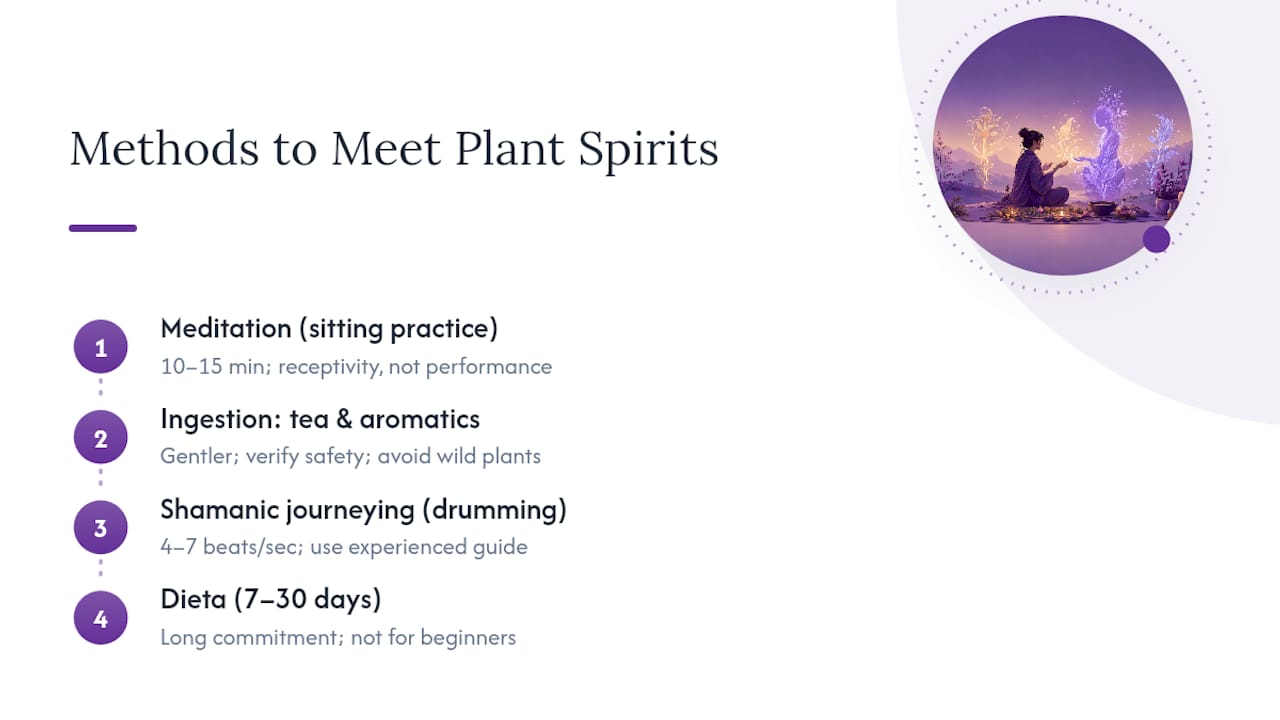
Sitting practice is the most accessible starting point. Sit within arm’s reach of your chosen plant. Close your eyes, breathe naturally, and silently introduce yourself: “I’m here to listen. I’m not here to take. I’m open to whatever you want to share.” Stay for 10–15 minutes. The goal is receptivity, not performance.
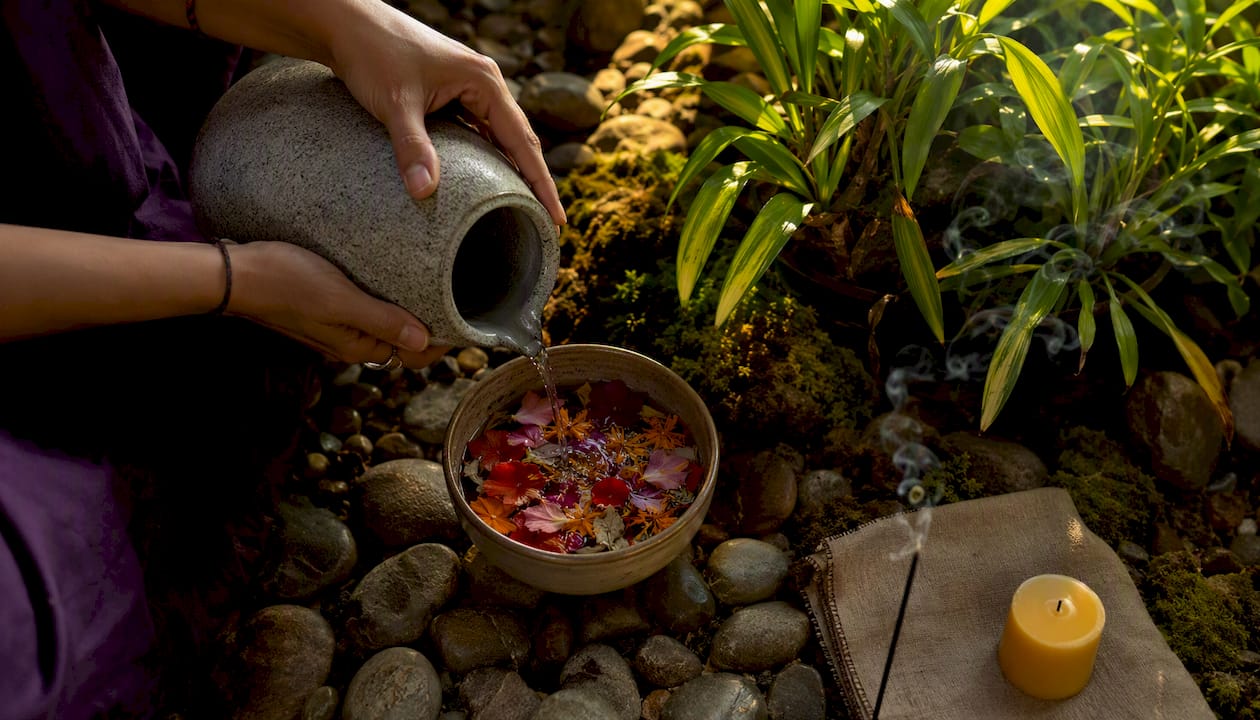
Offerings build relational trust over time. Water, song, breath, or a small amount of your own food are appropriate. The act of giving before asking recalibrates the relational dynamic from extraction to exchange. Place the offering at the plant’s base and speak your gratitude aloud.
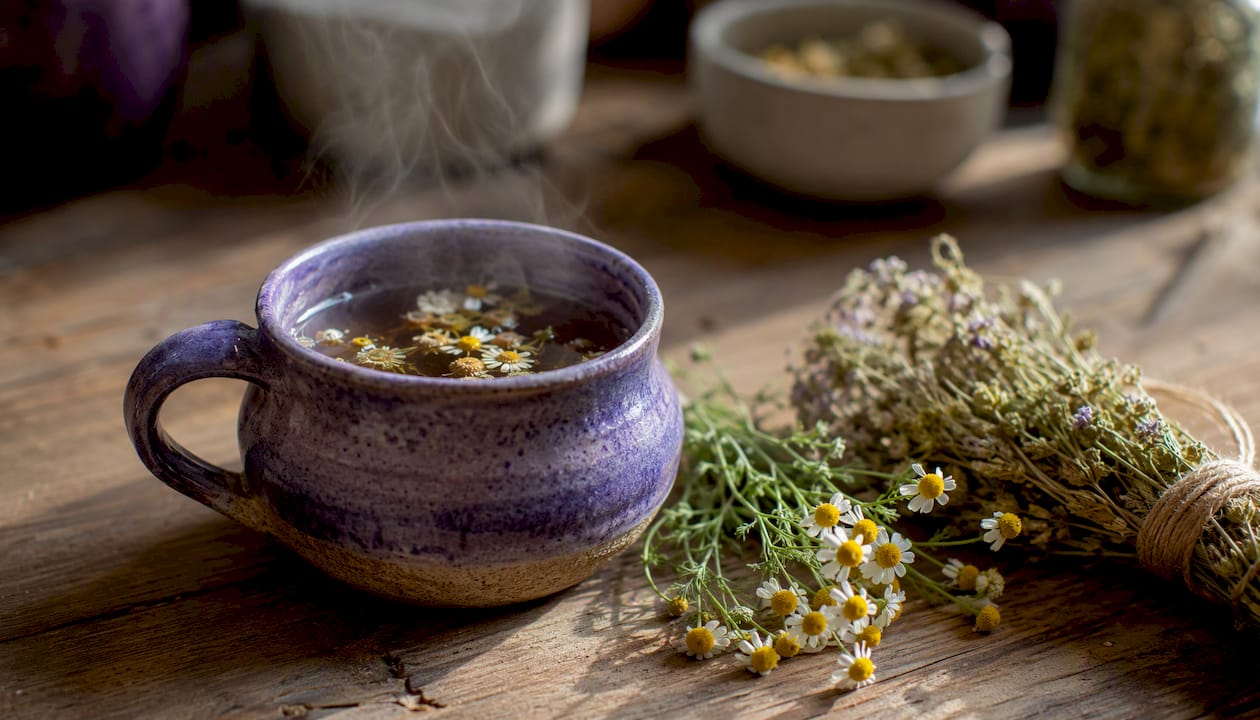
Scent and tea offer a gentler ingestive entry than tinctures. Brewing a simple cup of chamomile or peppermint tea while holding the intention of connection counts as a form of communion. Drink slowly, with attention on what arises in your body and mind. Always verify safety before ingesting any plant, and never consume wild-harvested material without confirmed identification. Aromatic practices — diffusing essential oils or working with botanical aromatics in ritual — carry no ingestion risk and are a sound starting point.
Shamanic journeying uses rhythmic drumming (typically 4–7 beats per second) to shift brainwave states and allow a practitioner to meet a plant spirit in an interior landscape. This method benefits from guidance by an experienced teacher before solo practice.
Dieta is a longer commitment — typically 7–30 days of simplified diet, reduced stimulation, and focused attention on one plant. It is the deepest relational practice and is not recommended as a first step.
For choosing your plant: trust your initial pull toward a species, then research its traditional uses and contraindications. A plant whose qualities match your current intention (e.g., hawthorn for grief, lemon balm for anxiety) tends to produce clearer communication. Guidance on ritual botanical use can help you match plant qualities to your practice needs.
How do plant spirits communicate, and how do you interpret what you receive?
Plant spirits communicate through images, body sensations, taste, smell, emotions, and intuitive knowing — rarely through words, and almost never through dramatic visions in early practice. Most beginners receive subtle impressions they initially dismiss as imagination. That dismissal is the single biggest obstacle to developing this skill.
Helpful signals to note:
- A sudden warmth or tingling in the hands or chest
- A spontaneous image (a color, a landscape, a simple scene)
- An emotion that arrives without an obvious personal trigger
- A smell that intensifies even when the plant is not in bloom
- A phrase or word that surfaces during stillness
Red flags that warrant pausing the session:
- Strong pressure to stop medical treatment or ignore professional advice
- Intense fear or dissociation that doesn’t resolve within a few minutes
- Compulsive urges that feel out of character
A simple post-session journaling template keeps your impressions organized and comparable over time. After each sitting, write: What did I notice in my body? What images or emotions arose? What felt like it came from outside my usual thought stream? What question did the plant seem to be answering? Over weeks, patterns emerge that are far more instructive than any single session.
Pro Tip: Test an insight before you trust it fully. If the plant seemed to suggest rest, give yourself three days of intentional rest and observe what shifts. Small, time-bound experiments protect you from over-interpreting a single session and build genuine discernment.
What ethical guidelines should you follow?
Ethics in plant spirit work are not optional courtesies. Ethical sourcing and cultural humility shape whether a plant will engage with a practitioner — and they protect ecosystems and communities in ways that matter beyond any individual practice.
Consent and harvest: Always ask permission before taking any part of a plant. Prefer cultivated plants or those from permitted wildcrafting areas. The U.S. Forest Service and Bureau of Land Management both publish foraging regulations by region — check before you collect on public land.
Endangered species: The United Plant Savers organization maintains a “Species at Risk” list for North American medicinal plants. Goldenseal, American ginseng, and black cohosh are among those under pressure. Do not harvest them from the wild under any circumstances.
Cultural respect: Many plant spirit practices originate in Indigenous traditions — Amazonian, Mesoamerican, and North American lineages among them. Engaging with these practices means crediting their origins, avoiding the appropriation of ceremonial protocols you haven’t been taught within their lineage, and seeking a teacher when a practice belongs to a specific tradition. Curiosity is welcome; extraction is not. For deeper ceremonial context, Kejiwa’s guide on ancestral healing botanical ceremony addresses this framing with care.
Medical and legal limits: Plant spirit work is not a substitute for licensed medical care. No plant communication, however vivid, justifies stopping prescribed treatment. In the U.S., making medical claims about plant-based products is regulated by the FDA — practitioners and product sellers alike must stay within those boundaries.
Why do practitioners speak of plant consciousness?
The practitioner literature on plant consciousness is experiential rather than peer-reviewed, and that distinction matters. Montgomery’s Plant Spirit Healing does not claim to offer clinical proof; it offers a structured framework — the triple spiral path — for practitioners to develop their own relational evidence over time. That intellectual honesty is part of what makes it the canonical reference in this field.
The broader reading list for anyone serious about this practice:
- Pam Montgomery, Plant Spirit Healing (Bear & Company, 2008): The foundational English-language text on plant-as-teacher and the heart-soul-spirit progression.
- Emma Farrell & Pam Montgomery, Journeys with Plant Spirits (Simon & Schuster): Catalogs experiential techniques including journeying, dieta, and dreamwork for practitioners ready to deepen beyond short meditations.
- Holly Worton, Plant Spirit Totems: Accessible introduction to plant communication for those new to animist frameworks.
- Kejiwa Alchemy’s blog series on sacred plant medicine traditions: Bridges traditional and contemporary perspectives with practical application.
| Source | Focus | Why It Helps |
|---|---|---|
| Montgomery, Plant Spirit Healing | Triple spiral path, plant-as-teacher | Foundational framework for pacing and depth |
| Farrell & Montgomery, Journeys with Plant Spirits | Journeying, dieta, dreamwork | Longer-form practices beyond beginner meditations |
| Holly Worton, Plant Spirit Totems | Communication modes, permission protocols | Practical entry for animist beginners |
| Kejiwa Alchemy practitioner blog | Folk herbalism, ritual botanicals | Applied guidance with ethical sourcing context |
A brief disclaimer: the scientific literature on plant consciousness is preliminary and contested. Studies on plant signaling (electrical, chemical, and acoustic) suggest plants process and respond to environmental information, but peer-reviewed science does not yet validate the specific claims practitioners make about spirit communication. Approach the practitioner literature as experiential testimony, not clinical evidence.
Three starter practices you can try this week
These three practices are time-boxed, safe for beginners, and designed to build on each other. Daily short sittings of around 10 minutes accelerate sensitivity and receptivity more reliably than occasional longer sessions.
-
10-minute greeting (Day 1–3). Sit beside a potted herb — rosemary, basil, or mint work well. Close your eyes. Say aloud: “I’m here to meet you. I’m listening.” Breathe slowly for 10 minutes. Afterward, write three sentences about what you noticed. Safety note: no ingestion required; this is purely relational contact.
-
Simple tea ritual (Day 4–5). Brew one cup of a common, well-researched herb — chamomile or peppermint are safe for most adults. Before drinking, hold the cup and state your intention. Drink slowly, attending to taste, warmth, and any emotional shifts. Safety note: confirm no allergy; avoid if pregnant or on blood thinners without medical clearance. Terpene profiles in aromatic herbs can influence mood — terpene effects on emotional states are an active area of wellness research worth understanding before you begin ingestive work.
-
7-day attention dieta (Day 6–12). Choose one plant and commit to noticing it every day for a week. Observe it at different times of day. Sketch it. Dream about it. Reduce caffeine and screen time in the evenings to lower the noise floor. At the end of seven days, read your journal entries in sequence — the arc of your relationship with that plant will be visible. Expect subtle shifts in mood, dream imagery, or spontaneous thoughts about the plant’s qualities. These are the early signals of a genuine plant spirit relationship forming.
Kejiwa’s perspective on plant spirit work
At Kejiwa Alchemy, plant spirit work isn’t a trend we’ve adopted — it’s the philosophical ground our craft stands on. Every small-batch spagyric tincture and botanical aromatic we make begins with the same question practitioners ask in their sitting practice: What does this plant want to offer? That question shapes sourcing decisions, preparation methods, and the intention held during production.
What we’ve observed, working with responsibly sourced and wild-harvested botanicals over years of practice, is that the ethical dimension of this work is inseparable from its efficacy. Plants sourced with care, prepared with attention, and used with respect seem to carry a different quality of presence than those treated as raw material. That’s not a claim we can prove in a laboratory. It is, however, consistent with what practitioners across traditions report — and it’s the standard we hold ourselves to.
If you’re building a plant spirit practice and want tools that were made with that same intention, our practitioner resources and product offerings are a natural next step.
Kejiwastore’s botanical tools for your practice
The practices in this guide work with what you already have — a potted plant, a quiet corner, a journal. But as your practice deepens, purpose-made botanical tools can sharpen your energetic coherence and make each session more reproducible.

Kejiwastore’s spagyric herbal tinctures are crafted using traditional alchemical preparation methods that preserve both the plant’s physical constituents and its energetic signature — a meaningful distinction for practitioners who work at the spirit level, not just the biochemical one. Our botanical aromatics offer a non-ingestive way to call in a plant ally’s presence during meditation or altar work, with no allergy risk from ingestion. For practitioners seeking deeper energetic support, our Ormus mineral formulas are designed to support biofield coherence and receptivity during subtle-perception work.
Safety reminder: always consult a healthcare provider before ingesting any botanical product, especially if you are pregnant, nursing, or managing a health condition. Browse the full range and find the plant ally that calls to you at Kejiwastore.
Sources
The sources below are the primary references cited in this guide. When evaluating any plant spirit resource, prefer those that acknowledge the experiential nature of the practice, include safety guidance, and credit the cultural traditions they draw from. Avoid resources that make medical claims or promise specific outcomes.
- Plant Spirit Healing: A Guide to Working with Plant Consciousness - Pam Montgomery — Simon & Schuster
- Let the Plants be your Teachers - a Guide to working with Plant Spirit Medicine
- A Step-by-Step Guide on How to Connect with Plant Spirits | School of Holistic Mastery | Astro Pagan
- Ultimate Guide to Working With Plant Spirits and Devas - Witchcraft For Beginners
- How to Talk to Plants: Communicating With Plant Spirits - Holly Worton
This article is for general informational purposes only and does not constitute medical, legal, or professional advice. Consult a qualified healthcare provider before beginning any ingestive botanical practice.