


Aromatherapy in ritual is defined as the intentional use of plant-derived scents to shift emotional states, deepen mindfulness, and mark meaningful transitions in daily or spiritual life. The role of aromatherapy in ritual goes far beyond pleasant fragrance. When you inhale an essential oil, aromatic molecules travel through the olfactory nerve directly to the limbic system, the brain’s emotional control center, triggering shifts in mood, memory, and nervous system tone within seconds. Oils like frankincense and lavender have been used in sacred ceremonies across cultures for thousands of years, and modern neuroscience now confirms what ancient practitioners already knew: scent is one of the fastest pathways to an altered inner state.
What does science say about aromatherapy’s role in ritual wellbeing?
The evidence for aromatherapy as a therapeutic tool is stronger than most people realize. A 2026 systematic review found that aromatherapy shows 86% efficacy for anxiety reduction and 100% efficacy for improving sleep quality in clinical settings. Those numbers reflect real neurological shifts, not just a pleasant experience.
“Aromatherapy blends achieve superior psychological outcomes compared to single oils used alone, pointing to the power of intentional formulation in ritual contexts.”
The mechanism is the olfactory-limbic pathway. Essential oils affect brain activity within seconds via the olfactory nerve, which connects directly to the amygdala and hippocampus. These structures govern fear, memory, and emotional regulation. Frankincense activates TRPV3 ion channels, producing measurable calming effects. Lavender reduces cortisol by a significant margin in controlled trials, with documented improvements in both anxiety and sleep quality.
Clinical data also shows that rose oil produces an anxiety reduction with a standardized mean difference of -1.31, a strong effect size by research standards. Orange blossom aromatherapy dropped mood disturbance scores by 20 points in pregnant women. These are not trivial outcomes.
Researchers also note that therapeutic benefits partly derive from psychosocial factors like the relaxation response and expectancy effects. This does not diminish aromatherapy’s value. It actually reinforces why ritual context matters so much. The symbolic act of lighting a diffuser, choosing an oil with intention, and creating a consistent sensory environment amplifies the physiological response. The ritual and the scent work together.
How do aromatherapy rituals create emotional stability and mindfulness?
Ritual structure itself is therapeutic. Aromatherapy rituals provide emotional safety through consistency and predictability, which helps regulate the nervous system during periods of overwhelm or transition. When you repeat the same sensory sequence, your brain begins to associate that sequence with a specific state, calm, focus, or readiness for sleep.
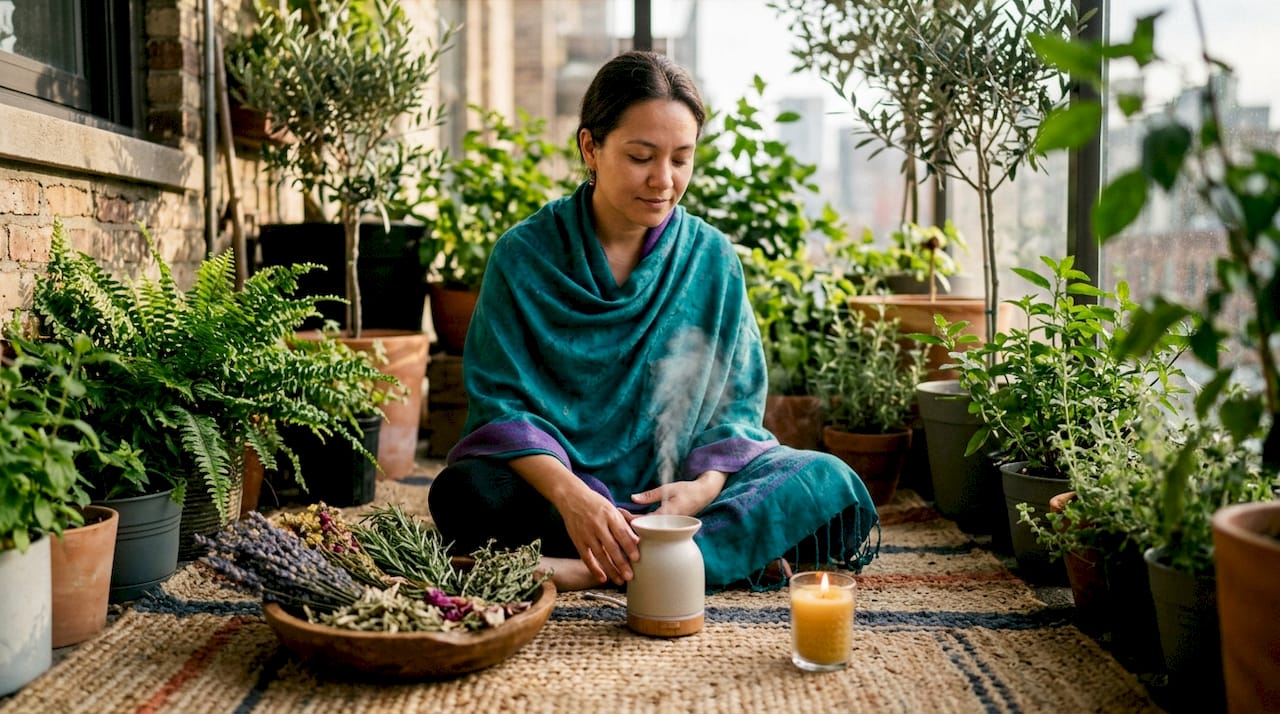
This is classical conditioning at work. Consistent daily use of aromatherapy builds conditioned nervous system responses, so the scent alone begins to trigger the desired state faster over time. A practitioner who diffuses cedarwood before every meditation session will eventually find that the scent alone begins to drop them into a quieter mental space before they even close their eyes.
Aromatherapy rituals are especially useful at life’s daily transition points. Consider these high-value moments for scent-anchored practice:
- Morning activation: Citrus or peppermint oils to signal wakefulness and intention
- Pre-meditation: Frankincense or sandalwood to shift from ordinary mind to contemplative awareness
- Midday reset: Eucalyptus or rosemary for mental clarity during a work break
- Evening wind-down: Lavender or chamomile to cue the nervous system toward rest
- Spiritual ceremony: Rose or myrrh to mark sacred space and devotional focus
Aromatherapy rituals serve as symbolic acts of self-nurturing that mark daily transitions. That symbolic dimension matters. You are not just inhaling a chemical compound. You are telling your nervous system that this moment is different, that it deserves attention and care.
Pro Tip: Pair your chosen oil with a single breath practice. Three slow exhales after inhaling the scent trains your body to deepen the conditioned response faster.
For practitioners who also work with energy sensitivity, structured scent rituals offer a reliable buffer. Kejiwastore’s blog on energy protection for sensitive people explores how predictable sensory environments support emotional resilience in those who feel the world more intensely.
Which essential oils work best for different spiritual practices?
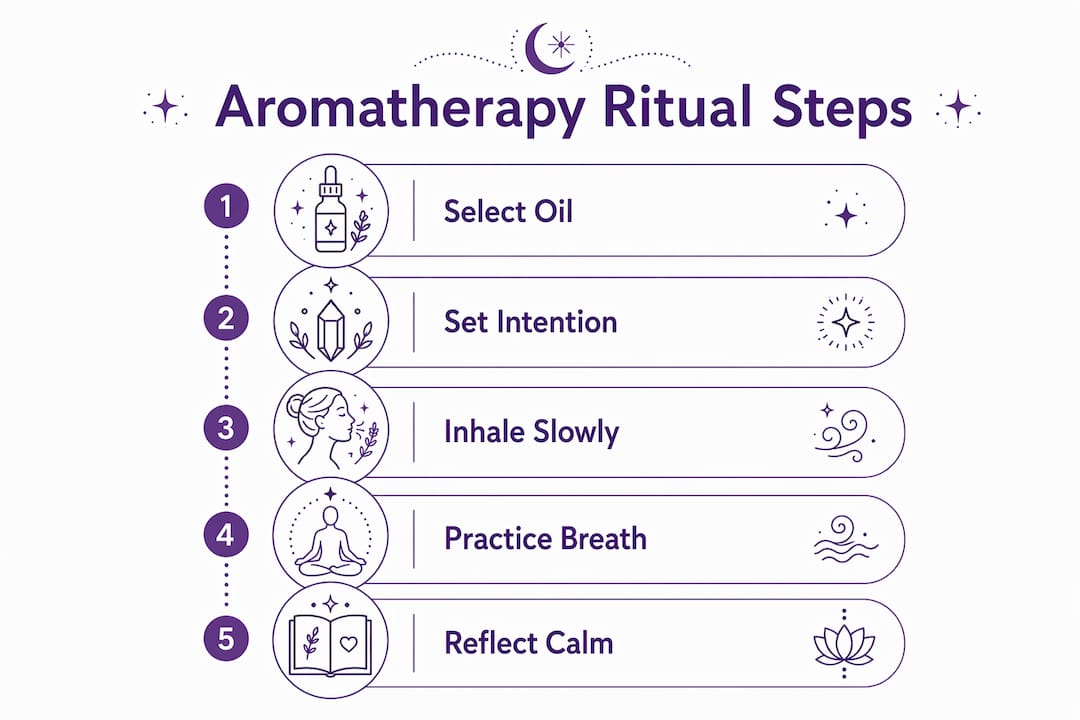
Choosing the right oil for your ritual is not guesswork. Each oil carries a distinct chemical profile that produces specific neurological and emotional effects. Matching oil to intention sharpens the ritual’s impact.
| Practice | Recommended Oil | Primary Effect |
|---|---|---|
| Meditation and prayer | Frankincense | Calming, deepens breath, activates TRPV3 channels |
| Evening relaxation | Lavender | Cortisol reduction, anxiety relief, sleep support |
| Grounding practices | Cedarwood | Earthy, stabilizing, supports presence |
| Devotional or heart rituals | Rose | Emotional opening, mood elevation |
| Active focus or study | Rosemary | Mental clarity, alertness |
| Sacred ceremony | Myrrh | Purification, depth, spiritual resonance |
Recommended oils by ritual type follow clear patterns: frankincense for meditation and prayer, lavender for calming evening practices, cedarwood for grounding, and rose for devotional work. These are not arbitrary assignments. Each oil’s chemistry maps to specific receptor activity in the brain.
One caution most guides skip: avoid strongly sedating oils like vetiver during active or seated meditation. Vetiver and valerian can induce drowsiness, which works against the alert, open awareness that meditation requires. Save those oils for sleep rituals.
Format matters as much as oil selection. Diffusion disperses scent evenly through a space and works well for group ceremonies or extended sessions. Palm inhalation, where you place a drop in your palms, rub them together, and cup them over your nose, delivers a fast, concentrated hit that works for quick transitions. Aromatherapy mist sprays let you set an entire room’s energetic tone in seconds. Ritual baths with oil blends combine scent with water’s own calming properties for deep somatic release.
Layering aromatherapy with crystals or specific times of day enriches the sensory experience and strengthens ritual efficacy. Placing a piece of amethyst near your diffuser during evening practice, for example, adds a visual and tactile anchor that reinforces the ritual’s meaning. You can also explore how ancient resins in smudging complement essential oil work to prepare your energy field before meditation.
Pro Tip: Blend two oils with complementary effects rather than using a single note. Frankincense and lavender together cover both the deepening and the calming dimensions of meditation simultaneously.
How can beginners build lasting aromatherapy rituals?
Sustainability is the single biggest challenge for new practitioners. The most effective rituals are the simplest ones. Starting with one scent, one moment, and one clear purpose builds the habit before complexity creeps in.
Follow this sequence to build your first ritual:
- Choose one oil. Pick based on your primary intention: lavender for sleep, frankincense for meditation, citrus for morning energy. Do not rotate oils in the first two weeks.
- Anchor it to an existing habit. Attach the ritual to something you already do daily, brewing coffee, brushing your teeth, or sitting down to journal. The existing habit carries the new one.
- Keep it under five minutes. Diffuse for 10–15 minutes before your session or use palm inhalation for 60 seconds. Brevity removes the friction that kills new habits.
- Set a single intention. Before inhaling, state silently what you want from this moment. Calm. Clarity. Presence. The intention activates the expectancy effect that research confirms amplifies the scent’s impact.
- Track your response over two weeks. Notice how your body and mind respond. Adjust the oil or format based on what you feel, not what you read.
Matching scent profiles to times of day and emotional goals supports long-term adherence. Rituals also evolve naturally with seasons and personal growth. A winter practice built around warming spice oils like clove or cinnamon will feel different from a summer ritual centered on cooling peppermint or bergamot. That flexibility is a feature, not a flaw.
The most common beginner mistake is building an elaborate ritual that collapses under the weight of its own complexity. A single sensory anchor, like diffusing one oil before journaling, outperforms a 12-step ceremony you abandon after three days. Pairing aromatherapy with other wellness tools, like CBD for emotional regulation, can deepen the ritual’s effect once the core habit is stable.
Pro Tip: Keep your chosen oil on your desk or nightstand, not in a cabinet. Visibility is the simplest cue for consistency.
Key Takeaways
Aromatherapy enhances rituals by engaging the olfactory-limbic pathway to produce real neurological and emotional shifts, and consistency is what transforms a pleasant scent into a reliable tool for mindfulness and spiritual presence.
| Point | Details |
|---|---|
| Scent reaches the brain fast | Essential oils affect the limbic system within seconds via the olfactory nerve, shifting mood and nervous system tone immediately. |
| Ritual structure amplifies the effect | Repeated, consistent use builds conditioned responses so scent alone triggers calm, focus, or readiness over time. |
| Match oil to intention | Frankincense suits meditation, lavender supports sleep, cedarwood grounds, and rose opens the heart for devotional practice. |
| Start simple to stay consistent | One oil, one moment, and one clear purpose builds a sustainable ritual faster than complex multi-step ceremonies. |
| Context shapes outcomes | Psychosocial factors like expectancy and symbolic self-care amplify the physiological effects of any essential oil used in ritual. |
What I’ve learned from years of working with scent and ritual
The practitioners I see struggle most with aromatherapy rituals are the ones who start with the most elaborate setups. They buy twelve oils, design a 30-minute ceremony, and burn out by week two. The ones who build something lasting almost always start with one oil and one quiet moment.
What surprised me most, working with botanical alchemy and plant-based wellness, is how quickly the nervous system learns. Within days of consistent use, the scent stops being just a smell. It becomes a signal. Your body begins to respond before your mind catches up. That speed is the gift of the olfactory-limbic connection, and it is something no other sensory modality delivers as reliably.
I also believe the spiritual dimension of aromatherapy is undervalued in clinical conversations. Frankincense was burned in temples not because ancient priests had access to TRPV3 receptor research. They burned it because it worked. It shifted the room. It shifted the people in it. Science has now caught up with that observation, and I find that deeply satisfying.
The other thing I want you to hear: your ritual does not need to look like anyone else’s. The most powerful practice is the one you actually return to. Simplicity is not a compromise. It is the design principle that makes everything else possible.
— Kejiwa
Kejiwastore’s botanical aromatics for your ritual practice
Kejiwastore crafts small-batch aromatherapy products designed specifically for practitioners who take their rituals seriously. Every formula uses carefully sourced organic botanicals and intentional blending to support the kind of consistent, meaningful practice this article describes.
The Botanical Aromatics collection includes elixir sprays and oils built for ritual use, from grounding cedarwood blends to heart-opening floral mists. The Jasmine Passion Alche-Mist and the Sense U All Aromatherapy Blend are practitioner favorites for ceremony and daily mindfulness work. If you want to deepen your practice beyond scent, Kejiwastore’s spagyric herbal tinctures offer plant-based support for energetic balance and inner clarity. Every product is made with the same intention you bring to your ritual.
FAQ
What is the role of aromatherapy in ritual?
Aromatherapy in ritual uses plant-derived scents to shift emotional states, signal transitions, and deepen mindfulness by engaging the olfactory-limbic pathway in the brain. Consistent use builds conditioned nervous system responses that make the ritual more effective over time.
Which essential oils are best for spiritual practice?
Frankincense suits meditation and prayer, lavender supports calming and sleep rituals, cedarwood grounds the body, and rose opens the heart for devotional work. Avoid sedating oils like vetiver during active meditation to maintain alert awareness.
How long does it take for aromatherapy to work in a ritual?
Essential oils affect brain activity within seconds of inhalation via the olfactory nerve. Deeper conditioned responses, where the scent alone triggers a desired state, typically develop after consistent daily use over one to two weeks.
Can beginners practice aromatherapy rituals effectively?
Yes. Starting with one oil, one moment, and one clear intention is the most effective approach for beginners. Anchoring the ritual to an existing daily habit, like morning coffee or evening journaling, builds consistency without added effort.
Does the ritual context affect how well aromatherapy works?
Research confirms that psychosocial factors like expectancy and symbolic self-care amplify aromatherapy’s physiological effects. The ritual structure itself, its consistency, intention, and meaning, is part of what makes the scent work as well as it does.