


Elemental rituals with botanical tools are spiritual practices that channel the natural energies of earth, air, fire, and water through plants and plant-based preparations to support personal growth and connection with nature. Known in traditional herbalism and plant spirit work as “botanical spellwork” or “herbal ceremonial practice,” these rituals draw on ancient systems of elemental correspondence that assign specific plants, directions, and intentions to each of the four cardinal elements. You do not need an elaborate setup to begin. Elemental rituals align with cardinal directions and use distinct tools to manifest intentions during personal spiritual practice. The standard alignment is Earth-North, Air-East, Fire-South, and Water-West, and that framework is the foundation for everything covered here.
What botanical tools and elemental correspondences are essential for these rituals?
Every elemental ritual with botanical tools begins with understanding which plants and objects belong to which element. Botanical spellwork databases catalog over 2,000 components matched to traditional plant correspondences, with sage linked to cleansing and rose linked to love. That depth of tradition means you have a rich library to draw from, even as a beginner.
The four cardinal elements each carry a distinct energetic signature, and the botanical tools you choose should reflect that.
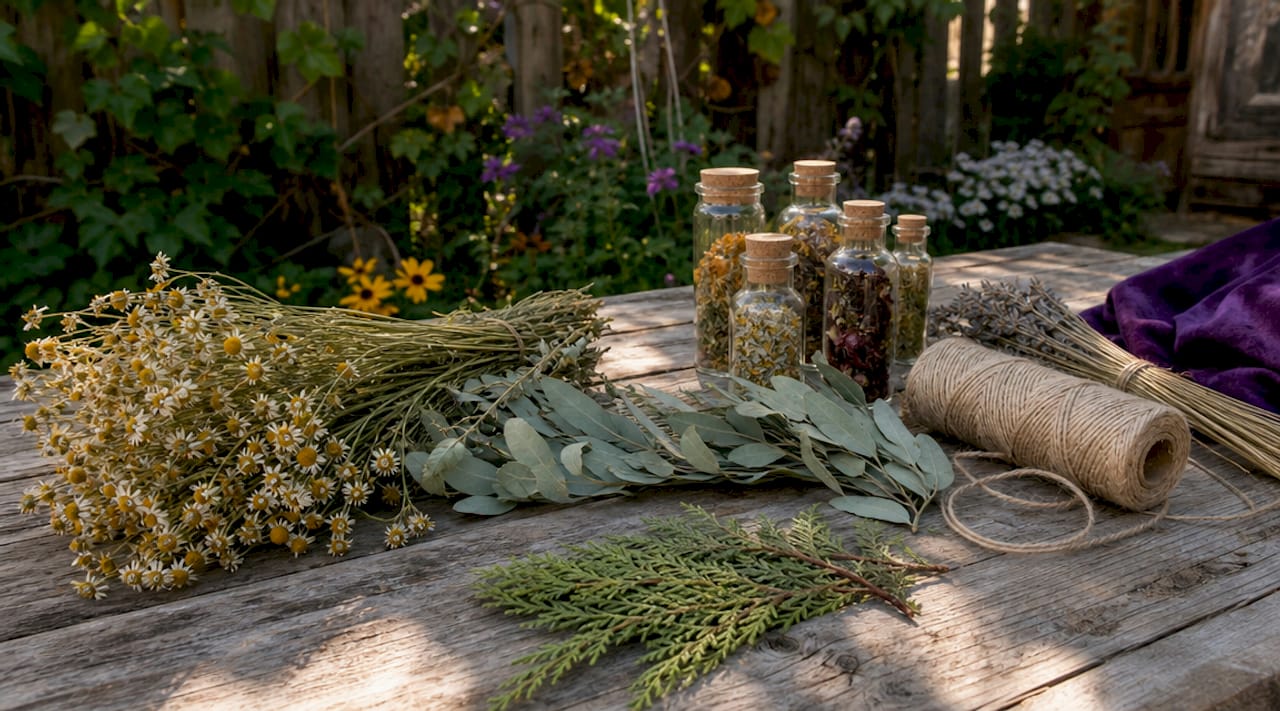
| Element | Direction | Botanical Tools | Intention |
|---|---|---|---|
| Earth | North | Cedar, patchouli, moss, stones | Grounding, stability, abundance |
| Air | East | Lavender, lemongrass, incense smoke | Clarity, communication, new beginnings |
| Fire | South | Cinnamon, rosemary, candles, dragon’s blood resin | Courage, transformation, will |
| Water | West | Rose, chamomile, mugwort, water bowl | Emotion, intuition, healing |
Beyond the table above, your core toolkit for herbal ritual practices typically includes:
- Herbs and dried botanicals aligned with your chosen element and intention
- Incense or herbal smoke bundles for Air and purification work
- Candles in colors corresponding to elemental energy (green for Earth, yellow for Air, red for Fire, blue for Water)
- A water vessel for Water element work, charged with intention
- Crystals paired with botanical allies, such as black tourmaline with cedar for Earth grounding
The key principle here is correspondence. When your tools, plants, and directions all point toward the same intention, the ritual gains coherence. Think of it as tuning multiple instruments to the same note before a performance.
How do you prepare yourself and your space for elemental botanical rituals?
Preparation is not optional. Failing to clear energetic residue like daily anxiety blocks the subtle perception needed for effective plant spirit work. You cannot pour clear water through a cloudy vessel.
Follow these steps to prepare both yourself and your space before any botanical ceremony:
- Clear your space energetically. Use smudging herbs like white sage or palo santo, moving counterclockwise through the room to release stagnant energy. Sound tools like a singing bowl or hand drum work equally well.
- Clear yourself. Smudge your own body from feet to crown, or take a brief cold rinse with the intention of releasing the day’s energetic residue.
- Set your mental and emotional state. Spend three to five minutes in slow breathwork, four counts in and six counts out. This shifts your nervous system from reactive to receptive.
- Build your altar or ritual space. Place your elemental tools at their corresponding directions. Use a compass if needed. Natural surfaces like wood, stone, or cloth ground the space energetically.
- Practice ethical reciprocity. Ethical practice of reciprocity involves offering back to the Earth whenever you take any natural material. Before harvesting herbs, offer a prayer, tobacco, or water to honor the plant’s contribution.
Pro Tip: If you cannot smudge indoors due to smoke sensitivity, a botanical aromatherapy spray with white sage, cedar, or frankincense essential oils achieves a similar energetic clearing effect without the smoke.
How do you perform a basic elemental ritual using botanical tools?
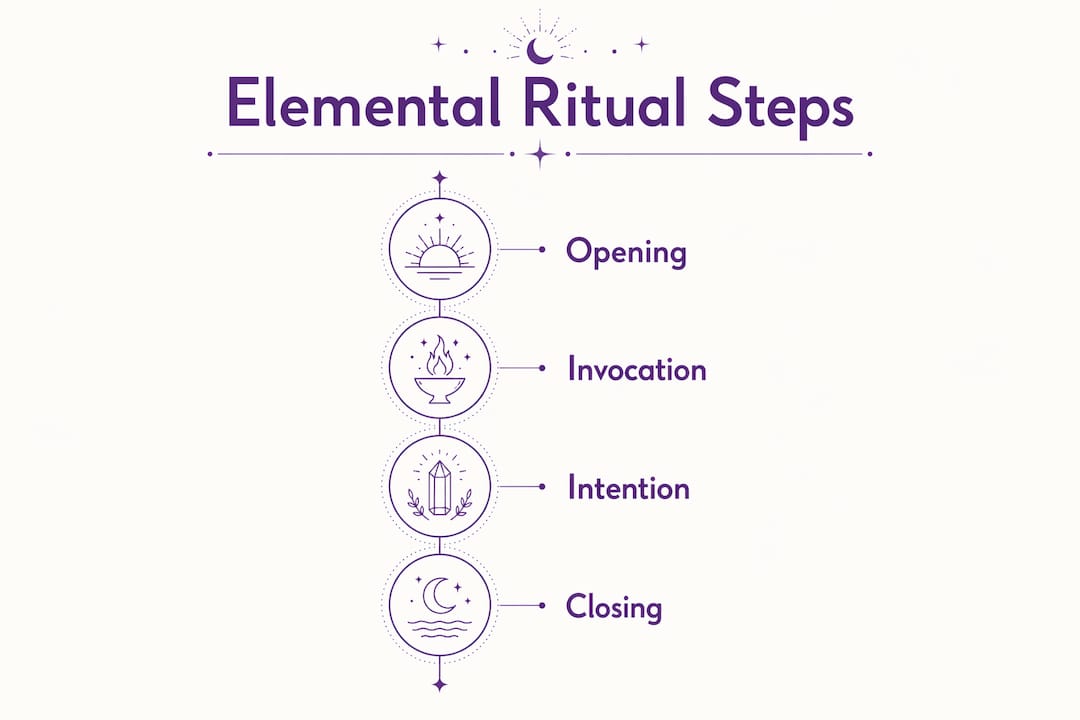
A well-structured earth element ceremony moves through four clear phases: opening, elemental invocation, intention work, and closing. Each phase uses specific botanical tools to anchor the energy.
Phase 1: Opening and grounding
Stand at the center of your space. Hold a grounding herb like cedar or patchouli in both hands. Breathe slowly and feel your feet connect to the floor. State your intention aloud in one clear sentence. For example: “I call on the four elements to support my healing and clarity tonight.”
Phase 2: Elemental invocation
Move to each cardinal direction and invoke its element using the corresponding botanical tool.
- North (Earth): Place cedar or a stone at the northern point. Say: “I call to the North, to the element of Earth. Ground me, sustain me, hold me steady.”
- East (Air): Light incense or wave a lavender bundle at the eastern point. Say: “I call to the East, to the element of Air. Clear my mind, carry my intentions forward.”
- South (Fire): Light a candle and hold rosemary or cinnamon near the flame. Say: “I call to the South, to the element of Fire. Ignite my will, burn away what no longer serves.”
- West (Water): Place a bowl of water with rose petals or chamomile at the western point. Say: “I call to the West, to the element of Water. Open my heart, deepen my intuition.”
Phase 3: Intention work
Return to center. This is where you meditate, journal, work with a tincture, or simply sit in the energetic field you have created. Effective plant spirit work requires conscious, sustained relationship with plants that includes quiet observation and receiving guidance before ritual use. Let the plants speak to you here, not the other way around.
Pro Tip: Incorporating a spagyric herbal tincture during the intention phase deepens the body’s resonance with the plant ally you are working with. Spagyric preparations carry the plant’s full energetic signature, not just its chemistry.
Phase 4: Closing the ritual
Move counterclockwise through each direction, thanking and releasing each element. Extinguish candles intentionally. Dispose of water outside, returning it to the Earth. Store your botanical tools with care.
| Ritual Phase | Botanical Tool | Purpose |
|---|---|---|
| Opening | Cedar, patchouli | Grounding and intention setting |
| Air invocation | Lavender, incense | Mental clarity and direction |
| Fire invocation | Rosemary, cinnamon candle | Will and transformation |
| Water invocation | Rose, chamomile water bowl | Emotional depth and intuition |
| Closing | All tools released | Integration and gratitude |
What are the most common mistakes in elemental botanical rituals?
Most practitioners who feel disconnected from their rituals are making one of five predictable errors. Recognizing them early saves months of frustration.
- Skipping energetic clearing. Jumping straight into ritual without clearing yourself or your space is like trying to tune a radio while standing next to a generator. The signal gets lost.
- Treating plants as ingredients, not allies. The fundamental difference in effective botanical magic is approaching plants as spiritual beings rather than mere ingredients. Sage is not just a smoke source. It is a relationship.
- Misaligning tools with elements. Using fire-aligned herbs like cinnamon for a Water ritual creates energetic friction. Always check your correspondences before building your altar.
- Overcomplicating beginner rituals. A ritual with 12 tools and 6 invocations is not more powerful than a focused ritual with 3 tools and clear intention. Complexity often masks a lack of presence.
- Neglecting reciprocity after the ritual. Ethical plant use does not end when you close the circle. Compost your used botanicals, return water to the earth, and express gratitude to the plants you worked with.
The plants are always speaking. The question is whether you have quieted yourself enough to listen. Reciprocity is not a ritual step. It is the foundation of the entire relationship.
What additional botanical practices complement elemental rituals?
Natural healing rituals extend well beyond the formal circle. Daily botanical practices build the same energetic muscles you use in ceremony, just in smaller doses.
- Herbal purification baths. Traditional purification baths use cool herbal infusions poured over the body to clear energetic fields more effectively than simple immersion. The Yoruba Owe bath protocol includes intention setting and ancestral connection through water and herbs. Try a cold chamomile or rose infusion poured from crown to feet after a difficult day.
- Daily tea spells. Accessible botanical rituals can be performed with common kitchen items and simple herbs. A daily tea spell requires only a mug, heat, water, and culinary-grade herbs. Hold the mug with both hands, set your intention, and drink with full attention.
- Aromatherapy as elemental attunement. A botanical aromatherapy mist aligned with your element of focus, sprayed in your workspace or on your pulse points, keeps your energetic field oriented throughout the day. This is especially useful for Air and Water work, where subtle shifts in mood and perception matter most.
- Spagyric tinctures and alchemical preparations. Spagyric preparations, like those crafted by Kejiwastore, extract the plant’s body, soul, and spirit through a traditional alchemical process. Taking a few drops before ritual deepens your connection to the plant ally and supports the holistic relationship between practitioner and natural elements that integrative healing frameworks recognize as central to outcomes.
- Plant observation practice. Spend five minutes daily sitting with a single plant, indoors or outdoors, without agenda. This builds the receptive awareness that makes formal rituals far more potent. You can also explore CBD wellness routines as a complementary botanical practice for nervous system support between ceremonies.
Key Takeaways
Elemental rituals with botanical tools work because they align plant energies, cardinal directions, and clear intention into a single coherent practice that the body, mind, and spirit can all receive.
| Point | Details |
|---|---|
| Elemental correspondence is the foundation | Assign each botanical tool to Earth, Air, Fire, or Water before building your ritual. |
| Energetic clearing comes first | Smudge or spray your space and yourself before every ritual to remove energetic interference. |
| Treat plants as allies, not ingredients | Approach each botanical as a conscious being and practice reciprocity when harvesting or using plants. |
| Simplicity outperforms complexity | A focused ritual with three aligned tools beats an elaborate one with scattered intention. |
| Daily botanical practices build ritual capacity | Tea spells, purification baths, and aromatherapy keep your energetic field tuned between formal ceremonies. |
What I have learned from years of working with plant allies
The most surprising thing about elemental botanical work is how much it asks of you before it gives anything back. When I first started building rituals around plants, I treated them the way most beginners do: as props. I chose sage because it looked right on the altar. I burned palo santo because it smelled good. The rituals felt flat, and I could not figure out why.
The shift happened when I stopped performing rituals and started listening. I spent a week sitting with a single cedar branch every morning, no agenda, no invocation. By the end of that week, I felt something I can only describe as a conversation. Not words, but a quality of presence that changed how I moved through the day.
That experience taught me something I now consider non-negotiable: the plants are not waiting for you to use them correctly. They are waiting for you to show up honestly. Reciprocity is not a step in the ritual sequence. It is the entire orientation. When you offer something back, whether a prayer, a handful of water, or simply your full attention, you shift from extraction to relationship. That shift is where the real work begins.
I also want to say directly: do not let the complexity of elemental systems intimidate you. The four directions, the correspondences, the invocations, they are all scaffolding. The actual practice is simpler. You are learning to pay attention to the living world around you. The plants, the elements, and your own body are all part of the same conversation. Your job is to get quiet enough to hear it.
— Kejiwa
Kejiwa’s botanical tools for your elemental practice
Kejiwa hand crafts each product with the same intention you bring to your altar: sourced ethically, made in small batches, and designed to support genuine energetic work rather than aesthetic ritual.

For clearing and preparation, the Harmony Smudge Bundle combines white sage, palo santo, and selenite into a single tool that addresses all three layers of energetic clearing. For intention work during the ritual itself, Kejiwa’s Ormus minerals and spagyric tinctures carry the full energetic signature of their botanical and mineral sources, making them natural companions for the elemental phases described in this guide. Every product is made with wild-harvested or organic ingredients and intentional craftsmanship, so what you bring to your ritual space is already aligned.
FAQ
What are elemental rituals with botanical tools?
Elemental rituals with botanical tools are ceremonial practices that use plants, herbs, and plant-based preparations aligned with the four cardinal elements to set intentions and support personal or spiritual growth. The standard framework assigns Earth to the North, Air to the East, Fire to the South, and Water to the West.
Which plants are best for beginners in elemental rituals?
White sage, lavender, rosemary, cedar, and rose are the most accessible starting plants because they carry clear elemental correspondences and are widely available. Sage and cedar align with Earth and purification, lavender with Air and clarity, rosemary with Fire and will, and rose with Water and emotion.
How do I ethically source botanical tools for rituals?
Ethical sourcing means either purchasing from suppliers who use organic or wild-harvested botanicals, or harvesting your own plants with permission and reciprocity. When harvesting, offer a prayer or small gift back to the plant and never take more than one-third of any plant’s growth.
Can I perform elemental botanical rituals daily?
Yes. Daily herbal ritual practices like tea spells, aromatherapy attunement, and brief plant observation sessions build the same energetic awareness as formal ceremonies. A one-minute nature pause with a single herb is a complete practice in itself.
Do I need special tools to start elemental botanical rituals?
No specialized tools are required to begin. A mug, a candle, a bowl of water, and a handful of kitchen herbs like rosemary or chamomile are enough to perform a basic four-element ritual with full intention and effect.