


Prayer in herbal crafting is defined as a conscious, intentional act of spiritual communication that transforms the making of herbal remedies into a sacred dialogue between the practitioner and the living world of plants. This practice sits at the heart of spiritual herbalism, a tradition recognized across animistic cultures, shamanic lineages, and modern holistic wellness communities alike. The role of prayer in herbal crafting goes far beyond reciting words before you grind a root or steep a leaf. It is the foundation of a reciprocal relationship with plant spirits, one that shapes your intention, your energy, and ultimately the potency of what you create. Kejiwastore builds every product from this same understanding.
How does prayer shape the herbalist’s relationship with plant spirits?
Prayer in herbalism is a living dialogue, not a monologue. Shamanic herbalism traditions describe prayer as bidirectional and relationship-based, focused not on specific words but on the quality of your presence. That distinction matters. You are not casting a spell at a plant. You are opening a channel of genuine communication.
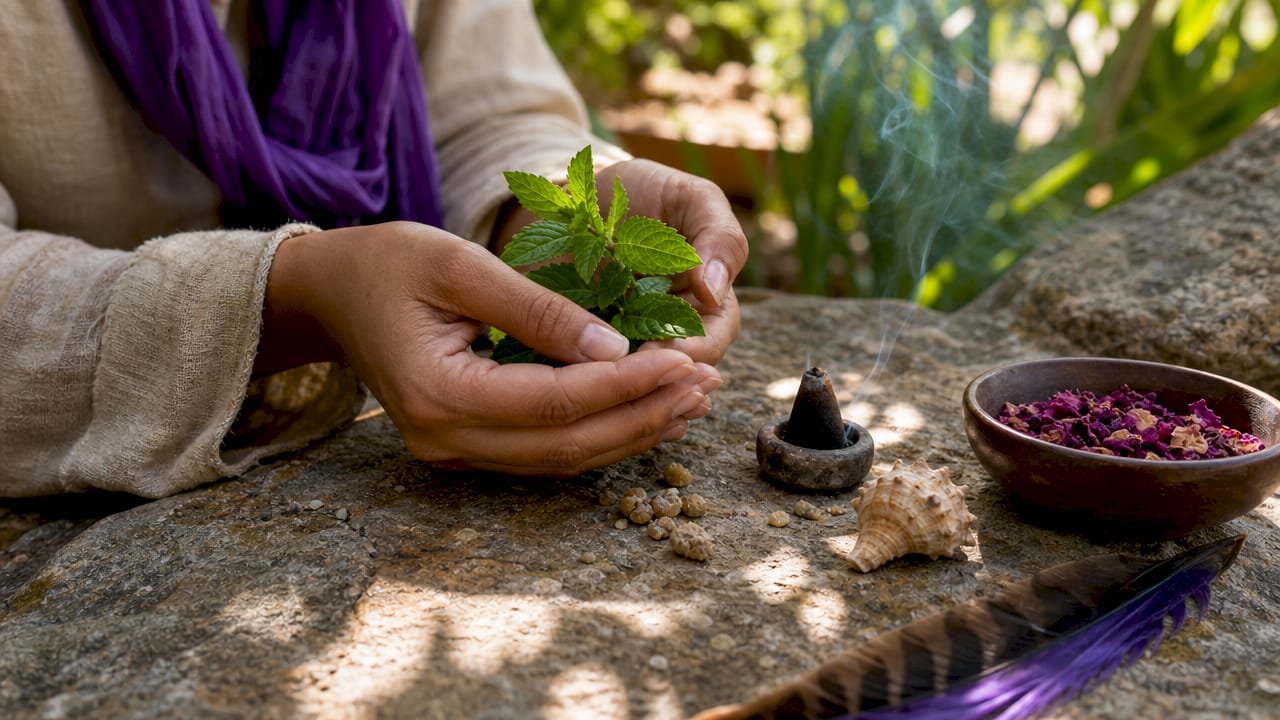
Animistic traditions across cultures treat plants as sentient beings with their own intelligence and spirit. Treating plants as sentient transforms herbalism into a communion where the practitioner builds sustained relationships, receives teachings, and performs ceremonies that honor plant spirits. This is where the herbalist becomes what older traditions called a “cunning person,” someone who listens and learns from the green world through prayer and ritual.
Building that relationship takes time. You cannot harvest a plant once, say a quick prayer, and expect a deep spiritual bond. Sustained connection requires repeated visits, attentive observation, and genuine respect. Think of it the way you would any meaningful relationship: presence and consistency matter more than grand gestures.
Practical etiquette supports this relationship at every step:
- Ask permission before harvesting. Pause, breathe, and listen for a felt sense of openness or resistance from the plant.
- Make an offering as a gesture of reciprocity. Water, a strand of hair, a pinch of cornmeal, or a song all work. The act matters more than the material.
- Give thanks after harvesting. Acknowledge what the plant has given and what you intend to do with it.
- Harvest mindfully. Take only what you need. Leave the plant healthy enough to continue growing.
Pro Tip: If you feel uncertain whether a plant is willing to be harvested, try sitting quietly beside it for several minutes before touching it. Many experienced herbalists report a clear shift in their own body awareness when a plant signals readiness.
What herbs are traditionally paired with prayer in spiritual herbal crafting rituals?
Specific herbs carry distinct spiritual energies that prayers activate and amplify. Herbs like Mugwort and Rosemary serve focused spiritual functions when paired with prayers, with Mugwort supporting dream work and Rosemary supporting mental clarity and protection. This pairing is not arbitrary. Each herb brings a frequency, and your prayer aligns your intention with that frequency.
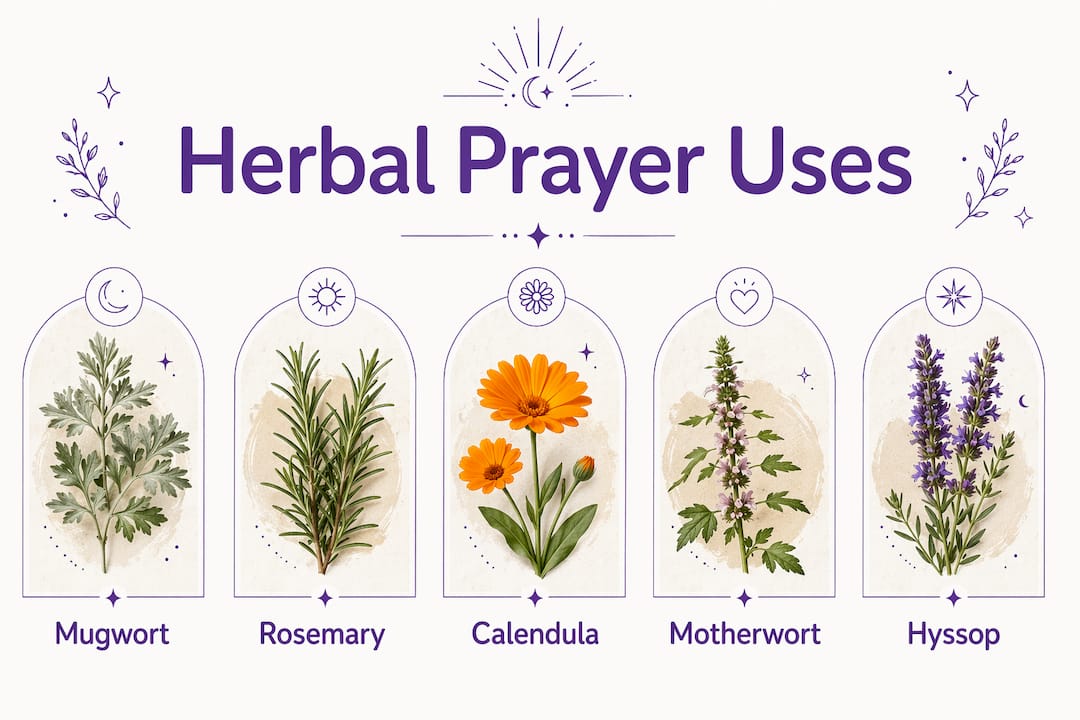
One of the most documented examples comes from biblical tradition. Hyssop in Psalm 51 is used for spiritual cleansing and purification, with prayer remaining primary and the herb serving as a supportive aid. The herb does not replace the prayer. It amplifies and focuses it. This model holds across many traditions: the plant supports the practitioner’s intention, but the prayer is the engine.
Here are five herbs traditionally used in prayer-centered herbal crafting, along with their spiritual associations:
- Calendula — Protection and intuition. Used in prayers for clarity and energetic shielding.
- Motherwort — Fear banishing. Paired with prayers for courage and emotional steadiness.
- Hyssop — Purification and spiritual reset. Central to cleansing rituals across biblical and folk traditions.
- Mugwort — Dream work and psychic awareness. Used in prayers before sleep or divination practices.
- Rosemary — Mental clarity and protection. One of the most widely used herbs in prayer across European and American folk herbalism.
| Herb | Spiritual function | Prayer focus |
|---|---|---|
| Calendula | Protection, intuition | Clarity, energetic shielding |
| Motherwort | Fear banishing | Courage, emotional steadiness |
| Hyssop | Purification | Cleansing, spiritual reset |
| Mugwort | Dream work | Psychic awareness, vision |
| Rosemary | Clarity, protection | Focus, mental strength |
You can explore spiritual smudging herbs that align with these prayer traditions if you want to work with botanicals already selected for ceremonial use.
How does prayer in herbal crafting enhance the efficacy of herbal remedies?
Prayer reshapes the practitioner’s inner state, and that shift has real consequences for the remedies you make. Research from the Journal of Religion and Health confirms that incorporating spiritual elements like prayer addresses important healing dimensions related to the practitioner’s beliefs and supports wellness outcomes. Spirituality is not a soft add-on to herbal medicine. It is a recognized component of healing.
“Prayer turns herbalism into a conscious act of spiritual intention. It enhances intuition, focus, hope, and emotional calm, making it a tool of inner transformation that extends well beyond the physical effects of any single herb.”
When you pray before and during crafting, you enter a state of focused presence. Your nervous system settles. Your attention sharpens. You handle each plant with care rather than rushing through a recipe. That quality of attention changes the energetic signature of what you make, and it changes you in the process.
The benefits practitioners report include:
- Heightened intuition about which herbs to combine and in what proportions.
- Emotional alignment that reduces the risk of crafting from a place of fear, depletion, or distraction.
- Deeper respect for the plants themselves, which naturally leads to more careful sourcing and preparation.
- A sense of meaning that sustains long-term practice, preventing the burnout that comes from treating herbalism as purely mechanical work.
Integrating spirituality into botanical healing validates the role of personal belief in successful wellness practice. That validation matters, especially for practitioners who have felt pressure to separate their spiritual life from their craft. You do not have to choose between the two.
Pairing your herbal practice with a daily wellness routine that includes intentional rituals can deepen the effects of both your prayers and your remedies.
What practical steps can herbalists take to incorporate prayer effectively?
Prayer in herbal crafting works best when it is woven into every stage of the process, not saved for a single ceremonial moment. Ancestral spiritual traditions hold that prayer must precede herb collection and crafting to transform material harvesting into a sacred, reciprocal exchange. That sequencing is intentional. Prayer before the work sets the tone for everything that follows.
Here is a practical framework organized by stage:
Before harvesting:
- Spend a few minutes in stillness near the plant before touching it.
- State your intention aloud or silently. Be specific. “I am gathering this rosemary to support clarity and protection in the remedy I am making for healing.”
- Ask the plant’s permission and wait for a felt response.
- Make a small offering as an act of reciprocity.
During preparation:
- Maintain a quiet, focused atmosphere. Avoid distractions that pull you out of presence.
- Speak or think your intention repeatedly as you work. This is not superstition. It is a form of sustained mindfulness that keeps your energy coherent throughout the process.
- Handle each plant with deliberate care. Rough or careless handling signals disconnection.
After crafting:
- Give thanks to the plants, the land, and any spiritual forces you work with.
- Store your remedies with intention. Some practitioners write a prayer or intention on the label.
Beginners frequently overlook etiquette like asking permission and making offerings, which are foundational to respectful and effective prayerful herbcraft. Skipping these steps does not ruin a remedy, but it does limit the depth of the relationship you are building.
Pro Tip: Authenticity matters far more than perfect words. A simple, sincere “thank you” spoken from genuine gratitude carries more spiritual weight than a memorized invocation recited without feeling. Start with what is true for you.
You can deepen your practice further with meditation and spiritual guides that support the kind of presence prayer in herbalism requires.
Key Takeaways
Prayer in herbal crafting is a foundational spiritual practice that deepens the herbalist’s relationship with plants, amplifies the energetic intention of remedies, and transforms the entire crafting process into a sacred, reciprocal exchange.
| Point | Details |
|---|---|
| Prayer is relational, not ritual | Build a sustained dialogue with plant spirits through presence, not just words. |
| Herb and prayer pairings are specific | Herbs like Calendula, Hyssop, and Mugwort each carry distinct spiritual energies that prayers activate. |
| Spirituality enhances healing outcomes | Research confirms that spiritual integration supports wellness and practitioner effectiveness. |
| Etiquette is non-negotiable | Asking permission, making offerings, and giving thanks are the foundation of respectful herbcraft. |
| Authenticity outweighs perfection | Sincere, present-moment prayer carries more weight than scripted formulas recited without feeling. |
Why prayer changed everything about how I work with plants
I used to think of prayer as something you did before a meal or in a church pew. Working with plants broke that assumption completely. The first time I sat quietly with a patch of mugwort and genuinely asked before harvesting, something shifted. Not in the plant. In me. I became slower, more attentive, and far less certain that I was the one in charge of the process.
What I have learned over years of prayerful herbcraft is that the quality of your inner state during crafting is not separate from the remedy. It is part of it. You cannot pour from an empty vessel, and you cannot craft with genuine spiritual intention while mentally running through your to-do list. Prayer is the practice that brings you back into your body and into relationship with the green world.
The herbalists I respect most are not the ones with the largest collections or the most impressive formulas. They are the ones who treat every plant as a teacher and every crafting session as a conversation. That orientation comes from prayer. It is not a technique you add to your practice. It is the ground your practice grows from.
Spiritual growth and herbal knowledge deepen together. The more you pray with plants, the more the plants teach you. That reciprocity is the heart of this work, and no amount of botanical study replaces it.
— Kejiwa
Kejiwastore’s offerings for prayerful herbal practitioners
Kejiwastore crafts every product with the same intentional presence this article describes. If you are ready to bring that energy into your own practice, the spagyric herbal tinctures collection offers plant-based preparations made through traditional alchemical methods that honor both the physical and spiritual dimensions of each herb.

For practitioners who want to support their energetic field during prayer and crafting, the Ormus minerals collection provides monatomic mineral preparations traditionally associated with heightened awareness, cellular coherence, and spiritual receptivity. These are not substitutes for prayer. They are companions to it, created by people who understand what it means to work with intention.
FAQ
What is the role of prayer in herbal crafting?
Prayer in herbal crafting is a conscious spiritual practice that establishes a reciprocal relationship between the practitioner and plant spirits, setting intention before and during the preparation of herbal remedies. It transforms the craft from a mechanical process into a sacred, meaning-filled exchange.
Which herbs are most commonly used in prayer-based herbal rituals?
Calendula, Motherwort, Hyssop, Mugwort, and Rosemary are the herbs most traditionally paired with prayer, each carrying a specific spiritual function such as protection, purification, or dream work.
Does science support the use of prayer in herbal medicine?
Research published in the Journal of Religion and Health confirms that spirituality enhances healing outcomes and supports wellness journeys by addressing the practitioner’s beliefs as a meaningful dimension of health.
How do I ask a plant for permission before harvesting?
Sit quietly near the plant, state your intention clearly, and wait for a felt sense of openness or resistance in your own body. Respectful harvesting etiquette also includes making a small offering and giving thanks after you have gathered what you need.
Do I need to use specific prayers or can I use my own words?
Your own sincere words carry the most weight. Prayer in herbalism is less about exact formulas and more about genuine presence and authentic intention, which means any heartfelt expression directed toward the plant and your purpose qualifies as prayer.