


A mindful herbal supplement routine starts small: three drops of a spagyric tincture or one spritz of an Ormus-infused mist, taken 2 to 3 minutes before you sit down to meditate, anchored to one specific scent you use for nothing else. That single repeated pairing is what turns a bottle on your altar into an actual practice. Here is the copyable version:
Your starter template: Before I meditate, I mist [scent] once across my chest, breathe it in for three full breaths, place a drop of spagyric tincture or Ormus solution under my tongue, and sit for at least five minutes.
Kejiwa Alchemy’s small-batch spagyric tinctures, Ormus minerals, and botanical mists like the Jasmine Passion Alche-Mist were built as ritual companions for exactly this kind of practice, not as clinical remedies. Keep that framing, and the rest of this guide will show you how to shape it into something durable.
Key Takeaways
Consistent scent, timing, and movement train your nervous system to enter ritual states more easily, and small, repeatable practice beats occasional intensity.
| Point | Details |
|---|---|
| Pick one intention | Match a single clear intention to one form before adding complexity. |
| Keep variables fixed | Same scent, seat, and time build the strongest associative memory. |
| Match form to purpose | Use tinctures for inward work, mists for transitions, minerals for steady baseline. |
| Run a two-week trial | Track subtle shifts in a journal before judging whether a routine works. |
| Start with Kejiwa Alchemy | Small-batch spagyric tinctures, Ormus minerals, and mists offer ritual-ready starting points. |
Table of Contents
- What makes a mindful herbal routine actually stick
- Which herbal and alchemical forms fit which intention?
- What do sample routines and timing look like in practice?
- How do scent and movement train your nervous system?
- What safety and sourcing checks matter most?
- How should a two-week starter plan work?
- Where Kejiwa Alchemy fits into your routine
- Frequently Asked Questions
- Sources
What makes a mindful herbal routine actually stick
Routines that survive past the first excited week share one trait: they are short and organized around a single intention. Not five intentions. One. Grounding, presence, opening, or protection, and the form you choose should serve that intention directly.
A tincture taken sublingually suits inward, contemplative intentions because the ritual itself (measuring, placing under the tongue, waiting) slows you down. A mist suits transitional intentions, marking the boundary between “regular day” and “practice time,” because scent hits the nervous system almost instantly. Ormus minerals work best as a steady baseline, something you take consistently rather than reach for only when you feel depleted.
Structure your practice at three depths:
- Micro-ritual (2 to 5 minutes): scent anchor plus a few breaths, used daily.
- Short ceremony (10 to 20 minutes): anchor, dosage, brief movement, then seated practice.
- Weekly integration ritual (20 to 30 minutes): deeper reflection, intentional dosing, and journaling.
A workable order looks like this: prepare your space, anchor with scent, dispense your tincture or mineral drops, move your body or take a few conscious breaths, sit, then close with a gesture or word that signals the ritual is complete.
Pro Tip: Keep every variable fixed for the first two weeks, same scent, same seat, same time of day. Novelty feels appealing, but your nervous system builds trust through repetition, not variety.
Which herbal and alchemical forms fit which intention?
Choose the form based on how you want to work, not just what smells good. Drops suit inward, contemplative sessions. Mists suit quick transitions between states. Ormus and mineral preparations suit steady, cumulative support rather than one-time effects. Smudging herbs suit clearing and boundary-setting before or after other work.
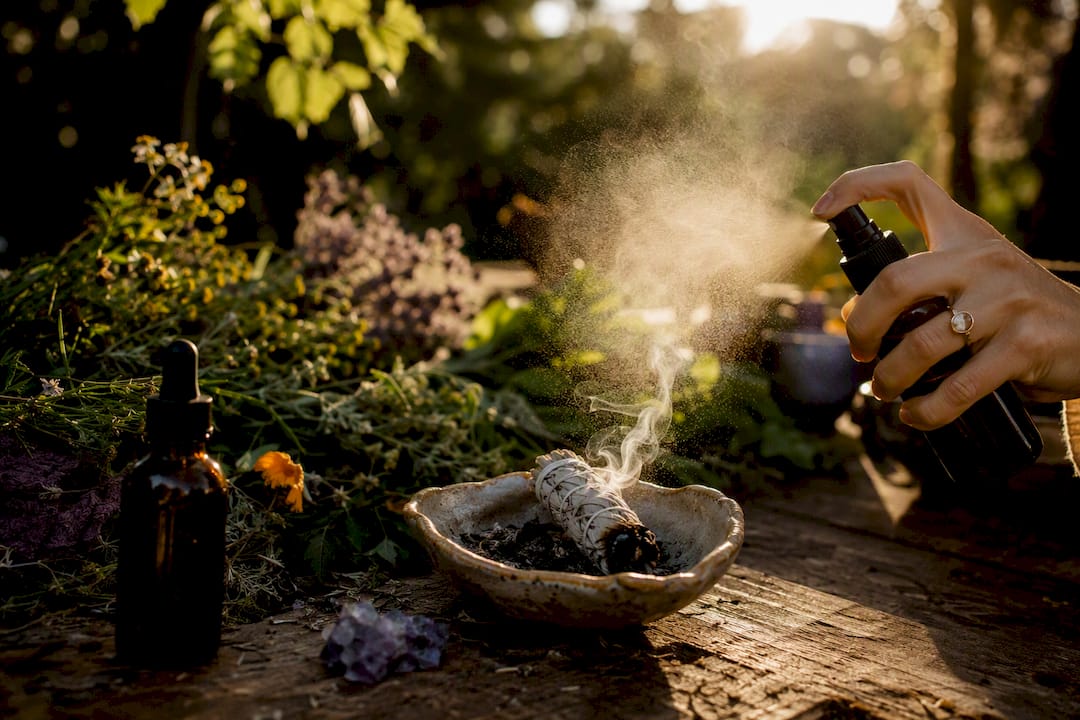
Spagyric tinctures separate a plant into its essential oil, fermented “spirit,” and calcined mineral salts, then recombine all three. That [alchemical separation and recombination process](https://herbsociety.org.uk/spagyrics-the-forgotten-herbal remedies/) is what practitioners point to when they say spagyric extracts feel more complete than a standard tincture. The process is genuinely labor and time intensive, which is why small-batch makers typically dispense them in small doses, a few drops under the tongue rather than larger doses.
Ormus minerals work as a baseline layer rather than an acute intervention, best taken at a consistent time daily so any cumulative shift becomes noticeable over weeks.
Botanical aromatherapy mists, like Kejiwa’s Jasmine Passion Alche-Mist, function through scent’s direct line to the nervous system, useful for opening or closing a session.
Smudging herbs suit clearing space or marking a boundary before deeper work begins.
| Form | Best intention | Ritual fit | Typical ritual use | Sourcing notes |
|---|---|---|---|---|
| Spagyric tincture | Inward, contemplative work | Drops, sublingual | A few drops before sitting | Small-batch, alchemical extraction |
| Ormus minerals | Steady, cumulative baseline | Drops or spray | Daily at a fixed time | Wild-harvested where applicable, batch-noted |
| Aromatherapy mist | Transitions, opening/closing | Spray | 1 to 2 spritzes | Organic botanicals, small-batch |
| Smudge herbs | Clearing, protection | Smoke | Before or after sessions | Wild-harvested, provenance-tracked |
What do sample routines and timing look like in practice?
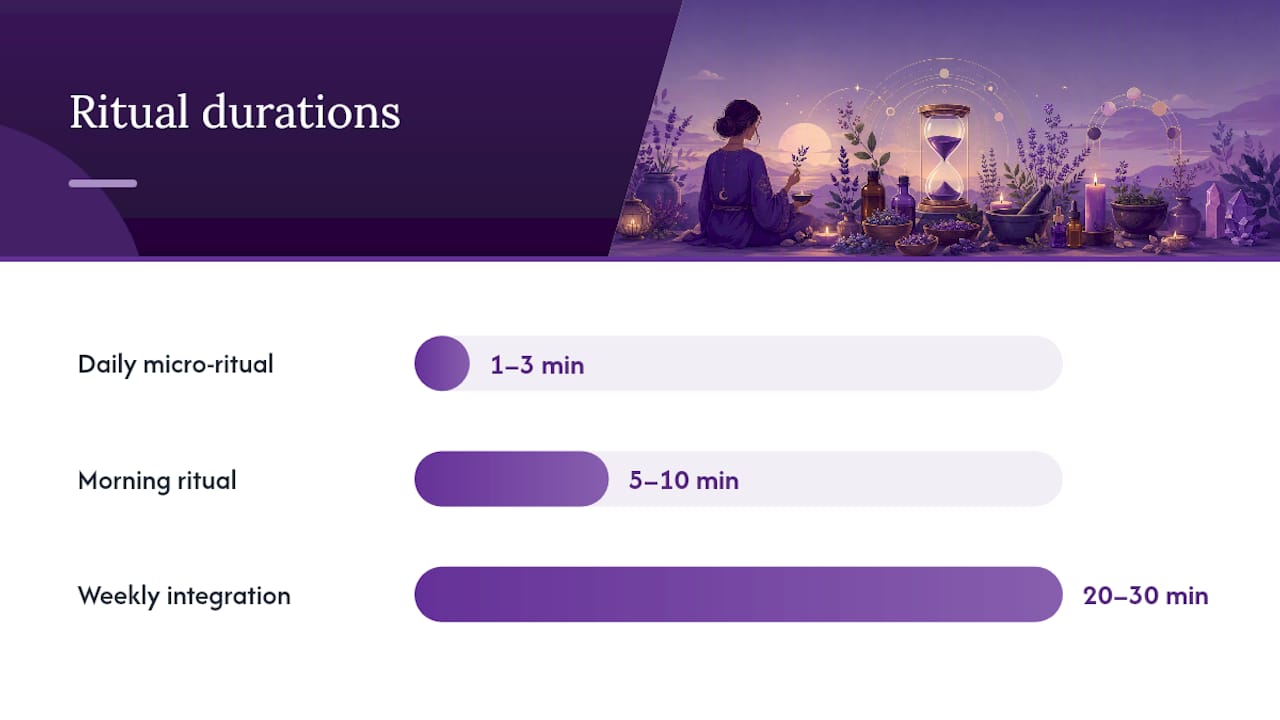
Three routines cover most needs: a one-minute reset for busy days, a fuller morning ritual for building consistency, and a weekly deep session for integration. Each uses the same core actions at different depths.
The daily micro-ritual takes one to three minutes. Mist your chosen scent once, take three slow breaths, and notice where your attention lands before returning to your day. This is less about transformation and more about training the cue-response loop.
The morning ritual runs 5 to 10 minutes. Anchor with your mist, dispense a spagyric tincture or Ormus dose, move through a few stretches or a short breath practice, then sit. This is where most of the routine’s cumulative benefit shows up over time, since consistency over dosage tends to matter more than how much you take.
The weekly integration ritual runs 20 to 30 minutes, ideally on a day with fewer demands. Clear the space with smudge herbs, take your tincture or mineral dose with more intention, sit longer than usual, and close with a full journal entry rather than a quick note.
| Routine | Duration | Core actions | Journal prompt |
|---|---|---|---|
| Daily micro-ritual | 1 to 3 min | Mist, breathe, notice | What did I notice in my body just now? |
| Morning ritual | 5 to 10 min | Mist, dose, move, sit | How did my attention shift after sitting? |
| Weekly integration | 20 to 30 min | Smudge, dose, sit, journal | What feels different this week versus last? |
Timing matters more than most people expect. Morning rituals work best before food, when your senses are least distracted. Evening rituals suit tinctures better than mists, since you are winding down rather than transitioning into activity.
How do scent and movement train your nervous system?
Scent, movement, and timing together create a predictable cue, and your nervous system learns to associate that cue with settling into a ritual state faster the more you repeat it. This is not vague energetic language. Aromatherapy research from the National Center for Complementary and Integrative Health notes that scent connects directly to memory and autonomic nervous system response, which is why the same smell, used repeatedly before the same activity, starts producing a calming effect before you even begin.
Pick one scent and stay with it. Add one small movement, a hand gesture, a specific way of sitting, or a breath count, and repeat it identically each time. Lock your timing to something already fixed in your day: sunrise, a lunch break, or right before bed.
- Choose a single, dedicated scent for this practice only.
- Add one repeatable gesture or movement.
- Anchor the ritual to a consistent daily moment.
Pro Tip: Pair your scent with one specific hand mudra used for nothing else. The combination of smell and gesture strengthens the associative link faster than scent alone.
What safety and sourcing checks matter most?
Treat ritual herbal products as energetic and spiritual tools, not medical treatments, and a few basic checks reduce risk while supporting the practice itself. Patch test any new mist on your inner wrist before spraying it near your face. Start conservative with dosing for the first two weeks and pay attention to how you respond. If you are pregnant, nursing, or on medication, talk with a clinician before adding a new tincture or mineral preparation to your routine, the same caution applies here as it would for any new mist.
Look for small-batch transparency when sourcing: organic or wild-harvested ingredients, batch notes, and a maker who documents provenance rather than hiding behind vague marketing language. Store tinctures and mists in cool, dark conditions, away from direct sunlight, and follow the packaging guidance that comes with each product to preserve potency.
Ritual herbal work asks for patience rather than intensity. The NCCIH’s own safety guidance points to dilution awareness and mindful use around sensitive individuals as the baseline, not an afterthought.
This content is offered for spiritual and wellness practice, not as medical advice.
How should a two-week starter plan work?
A focused two-week trial, the same small ritual repeated daily, is the most reliable way to find out whether a routine actually fits your practice. Two weeks gives enough repetition for subtle patterns to surface without demanding a huge time commitment.
| Days | Form to use | Timing | Journal focus |
|---|---|---|---|
| 1 to 3 | Mist only | Before morning sit | Notice initial response to scent |
| 2 to 3 | Mist plus tincture | Before morning sit | Track attention and body tone |
| 5 to 10 | Mist plus tincture or Ormus | Morning and evening | Note dream recall, mood shifts |
| 20 to 30 | Full ritual plus weekly integration | Morning, plus one deep session | Compare week one to week two |
Each day, run the same short checklist: prepare your space, apply your scent anchor, dispense your chosen form, move or breathe intentionally, sit, close the ritual, and write one or two sentences. Keep the journal prompts simple: What shifted in my attention today? Did my body feel different? Any change in dream recall or emotional tone?
A short note on patience and practice
I’ve come to trust that consistency teaches more than intensity ever does. A quiet two weeks of showing up, watching closely, and writing down what actually happens will tell you more than any single “big” session. Kejiwa Alchemy’s small-batch approach exists for exactly this kind of patient inquiry.
Where Kejiwa Alchemy fits into your routine
Kejiwa Alchemy makes the ritual-ready pieces this guide keeps pointing back to: spagyric tinctures for inward evening work, Ormus minerals for a steady daily baseline, and botanical aromatherapy mists like Jasmine Passion for the transition into practice.
If you are starting the two-week plan above, pick one product rather than three. A single mist for your scent anchor, or one small tincture for your evening sit, is enough to test whether the rhythm fits before expanding your shelf. Every batch carries its own sourcing and process notes, so you know what you are actually working with.
Shipping is straightforward, and batch transparency means you can see exactly how each preparation was made before it reaches your altar. Browse the spagyric tincture collection and choose one small product to start your own trial this week.
Frequently Asked Questions
How long before I notice results from a mindful herbal routine? Most practitioners report subtle cumulative shifts after consistent practice over a short period rather than immediate effects. Patience and repetition matter more than dose size.
Can I combine a spagyric tincture with an Ormus mineral in the same routine? Yes. Many ritual practitioners use a tincture for inward focus and an Ormus preparation as a daily baseline, since the two serve different roles rather than competing.
Do I need a specific scent for aromatherapy mists to work? No single scent is required. What matters is choosing one scent and using it consistently, since repetition strengthens the nervous system association more than the specific fragrance you pick.
Is a mindful herbal supplement routine safe during pregnancy? Talk with a clinician before adding any new tincture, mineral preparation, or mist to your routine while pregnant or nursing, since ritual framing does not replace medical guidance.
How much should I use when starting out? Start conservative. A few drops of tincture or one to two spritzes of mist is typically enough to gauge your response during the first two weeks before adjusting.
Sources
For deeper background on the traditions behind these preparations, consult the aromatherapy safety and research overview, the Herb Society’s spagyric explainer, the Pharmakeia spagyric primer, the Hilaris Publisher academic paper, and the Wikipedia entry on spagyrics.