


Spiritual wellness rituals are deliberate practices that connect you to something larger than daily routine: a sense of meaning, healing, and inner peace. The core types include meditation, prayer, smudging and energetic cleansing, Reiki and energy work, gratitude practices, nature connection, and creative expression. Each category draws from deep cultural roots while adapting naturally to modern life.
What unites all of these practices is intention. Healthcare professionals at Banner Health emphasize that spiritual wellness is personal and inclusive, requiring no formal religion. It is simply your relationship with whatever feels meaningful and sacred to you.
The outcomes people seek from spiritual health practices are consistent across traditions: greater calm, emotional resilience, a clearer sense of purpose, and a felt sense of connection to themselves and the world around them.
- Meditation and breathwork: Quieting the mind through focused attention or rhythmic breathing
- Prayer and devotion: Intentional communication with the sacred, in any form that resonates
- Smudging and cleansing: Using smoke, sound, or water to clear energetic space
- Energy work: Practices like Reiki that work with the body’s biofield
- Gratitude rituals: Daily noticing and recording of what is good
- Nature connection: Deliberate time outdoors as a spiritual act
- Creative expression: Art, music, and movement as pathways to the sacred
Table of Contents
- What are the main types of spiritual wellness rituals?
- 1. Meditation and mindfulness practice
- 2. Prayer and devotional ritual
- 3. Smudging and energetic space clearing
- 4. Reiki and energy healing
- 5. Gratitude journaling and intentional noticing
- 6. Nature connection as spiritual practice
- 7. Breathwork and pranayama
- 8. Hindu puja and devotional altar work
- 9. Shamanic drumming and sound healing
- 10. Moon phase ceremonies
- 11. Aromatherapy ritual
- 12. Creative expression as spiritual ritual
- 13. Labyrinth walking and mindful movement
- Why spiritual self-care through ritual actually matters
- How to start and sustain your own spiritual ritual practice
- How Kejiwa Alchemy’s botanical tools support your ritual practice
- Kejiwastore brings ancient botanical alchemy to your ritual practice
- Key Takeaways
What are the main types of spiritual wellness rituals?
The range of spiritual wellness rituals across cultures is wide, but each type serves a recognizable purpose: marking a transition, clearing what no longer serves, or deepening connection. Here are the most practiced and culturally significant categories.
1. Meditation and mindfulness practice
Meditation is one of the most widely studied spiritual health practices, with research showing benefits for anxiety, depression, chronic pain, and heart health. You do not need a cushion or a quiet room. Walking meditation, body scans, and mantra repetition all count. Even five minutes of focused breathing shifts the nervous system from reactive to receptive. The key is consistency, not duration.
2. Prayer and devotional ritual
Prayer takes countless forms across traditions: spoken aloud, written, silent, or sung. For those drawn to organized religion, regular communal worship carries social and emotional benefits alongside the spiritual ones. For others, prayer is a private conversation with nature, the universe, or their own deepest values. Gratitude-focused prayer, specifically, tends to lift mood and reinforce a sense of abundance rather than lack.
3. Smudging and energetic space clearing
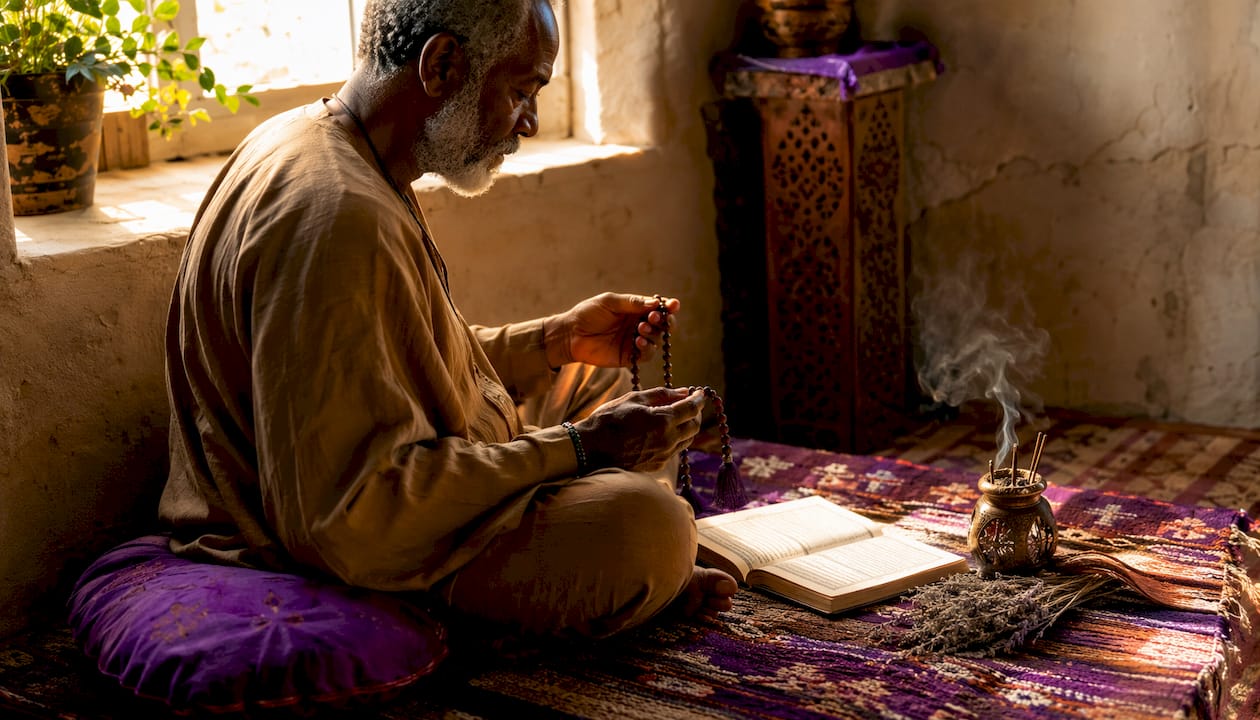
Burning sage, palo santo, or sacred resins like frankincense and copal has been practiced for centuries across Native American, Mesoamerican, and Indigenous traditions worldwide. The ritual is never just about the smoke. Wellness practitioner Misun Delmon advises slowing down before lighting anything and asking yourself what you want to release and what energy you want to invite in. That intention is what transforms a scented moment into a genuine clearing practice. You can deepen your understanding of these traditions through Kejiwastore’s guide to smudging herbs and their significance.

4. Reiki and energy healing
Reiki is a Japanese energy healing practice in which a practitioner channels life force energy through their hands to support the recipient’s physical and emotional balance. It works with the concept of the biofield, the energetic field surrounding and interpenetrating the body. Sessions can be received in person or at a distance, and many people learn self-Reiki as a daily ritual. The practice is gentle, requires no particular belief system, and pairs naturally with breathwork or meditation.
5. Gratitude journaling and intentional noticing
Experts at Boone Health describe spiritual wellness as a continuous practice of noticing and gratitude, a counterbalance to the numbing pace of modern life. Writing down one thing you are grateful for each day builds a more positive neural baseline over time. The format does not matter: a paper journal, a sticky note jar on the kitchen counter, or a simple app all work. What matters is the act of pausing to notice what is good.
6. Nature connection as spiritual practice
Spending time outdoors, even briefly, lowers stress and improves mood in ways that feel almost immediate. The spiritual dimension comes from approaching nature with attention rather than distraction: noticing a flower’s color, listening to birdsong, feeling the texture of bark. Boone Health practitioners suggest taking a short walk with the sole intention of noticing the natural world around you. That quality of attention is itself a ritual. Kejiwastore’s guide on nature’s role in spiritual growth offers practical ways to deepen this connection.
7. Breathwork and pranayama
Breathwork spans traditions from yogic pranayama to modern therapeutic methods like SKY Breath Meditation, developed by the Art of Living Foundation. Rhythmic breathing patterns directly regulate the autonomic nervous system, shifting the body out of fight-or-flight and into a state of calm alertness. Small daily rituals like slow exhalations can measurably reduce anxiety and raise mood. Three slow exhales before a difficult conversation or a stressful meeting is a complete practice in itself.
8. Hindu puja and devotional altar work
Puja is a Hindu devotional ritual involving offerings of flowers, incense, water, light, and food to a deity or sacred image. The altar becomes a focal point for daily spiritual attention, a physical place where the sacred is honored and invited into ordinary life. You do not need to follow Hinduism to draw from this wisdom. Creating a personal altar with meaningful objects, a candle, a plant, a stone, or a photograph, anchors your ritual space and gives your nervous system a consistent cue to slow down.
9. Shamanic drumming and sound healing
Rhythmic drumming has been used in shamanic traditions across Siberia, the Americas, and Africa to induce altered states of consciousness, facilitate healing, and communicate with the spirit world. The steady beat entrains brainwave activity toward theta states associated with deep relaxation and insight. Modern sound healing extends this principle through singing bowls, tuning forks, and gongs. You can access these states through live sessions, recordings, or community drum circles.
10. Moon phase ceremonies
Lunar rituals align personal intention-setting with the natural rhythms of the moon’s cycle. New moon ceremonies focus on planting intentions and beginning new chapters. Full moon rituals center on release, gratitude, and illumination of what has grown. These practices appear across Indigenous American, Celtic, and Vedic traditions. The ritual structure is simple: gather in a quiet space, write your intentions or what you are releasing, and close with a moment of stillness or gratitude.
11. Aromatherapy ritual
Scent is one of the fastest pathways to the limbic system, the brain’s emotional and memory center. Aromatherapy rituals use essential oils, botanical mists, or incense to anchor a specific state of mind or mark a transition in the day. Applying a grounding oil before meditation, misting your space before journaling, or diffusing lavender as part of an evening wind-down all qualify. The ritual is in the intention, not the complexity. Kejiwastore explores this in depth in their guide to aromatherapy in ritual practice.
12. Creative expression as spiritual ritual
Art, music, dance, and writing are spiritual practices in many traditions, not hobbies. Creative activities increase dopamine and serotonin levels and can generate a felt sense of connection to something larger than the self. The goal is not to produce something beautiful. It is to enter the state of making, where the analytical mind quiets and something more intuitive takes over. Drawing, collage, free-form movement, or playing an instrument for ten minutes can function as a complete ritual.
13. Labyrinth walking and mindful movement
Walking a labyrinth, a single winding path leading to a center and back out, is a meditative practice found in Christian cathedrals, Native American traditions, and ancient Greek culture. Unlike a maze, a labyrinth has no dead ends. The walk itself is the ritual: each step taken with attention, the body moving while the mind settles. Yoga, tai chi, and qigong operate on the same principle, using conscious movement to integrate body and spirit.
Why spiritual self-care through ritual actually matters
Spiritual self-care is not a luxury. It is a counterweight to the chronic low-grade stress that accumulates when you are always doing and never being. Mental Health America notes that spirituality, in any form, is linked to better mood, less anxiety and depression, and even fewer physical ailments. The mechanism is partly neurological: rituals that signal a clear transition from activity to stillness help the nervous system genuinely relax, not just pause.
A common misconception is that spiritual wellness requires religious belief. It does not. Spirituality is about personal meaning, and that meaning can live in nature, in creative work, in relationships, or in a quiet morning cup of tea taken with full attention. What matters is that the practice feels real to you.
Sensory grounding during rituals, through scent, texture, or sound, creates neurological anchors that strengthen the ritual’s effect over time. This is why traditions across cultures have always used incense, bells, candles, and water. These are not decorations. They are tools for shifting your state.
How to start and sustain your own spiritual ritual practice
Starting is simpler than most people expect. The obstacle is usually the belief that a ritual needs to be elaborate or perfectly performed to count.
Ritual fails most often when it is treated as another task on a to-do list rather than a genuine transition from doing to being. The fix is structural: build a ritual that begins with stillness, not action.
Practical steps to begin:
- Choose a dedicated space. Even a corner of a room with a candle and one meaningful object creates a consistent sensory cue.
- Start with one simple act. Lighting a candle, taking three slow breaths, or writing one sentence of gratitude is a complete ritual.
- Set a clear intention. Before you begin, ask yourself what you want to release or invite. That question is the heart of the practice.
- Use sensory anchors. A specific scent, a particular piece of music, or a tactile object signals to your nervous system that this time is different.
- Anchor it to an existing habit. Morning coffee, the moment before sleep, or the transition from work to home are natural ritual points.
- Release the pressure of consistency. Missing a day does not break a practice. Returning to it does.
- Adopt cultural practices respectfully. Learn the origin and significance of any tradition you draw from, and approach it with genuine reverence rather than aesthetic borrowing.
Pro Tip: [Designate a specific corner](https://universal.net/7-simple-rituals-that-help-you-feel-like-yourself again/) of your home as your ritual space and keep the same sensory items there. The physical location itself becomes a neurological anchor, making it easier to drop into a meditative state each time you return to it.
How Kejiwa Alchemy’s botanical tools support your ritual practice
Kejiwa Alchemy’s product line was built specifically to serve the kind of intentional ritual practice described throughout this article. Every product is small-batch, crafted from organic and wild-harvested botanicals, and designed to function as a genuine ritual tool rather than a wellness accessory.
Key offerings include:
- Ormus minerals: Handcrafted monatomic minerals traditionally associated with cellular coherence and energetic clarity, used by practitioners before meditation or energy work.
- Spagyric tinctures: Plant medicines prepared through the alchemical spagyric process, which preserves the plant’s body, soul, and spirit. These support energetic balance and can be incorporated into morning or evening rituals.
- Botanical aromatics: Aromatherapy mists and elixir oils crafted to accompany cleansing, meditation, and intention-setting rituals. The Jasmine Passion Alche-Mist, for example, is formulated to open the heart and elevate emotional frequency during ritual.
- Sacred resins and smudging botanicals: Tools for space clearing that honor the traditions from which smudging practices originate.
Kejiwastore’s blog and educational resources reflect genuine expertise in herbal alchemy, nervous system regulation, and the intersection of ancient plant wisdom with modern spiritual wellness. The brand’s community of healers, wellness seekers, and energetically sensitive practitioners has shaped its product development from the beginning.
Kejiwastore brings ancient botanical alchemy to your ritual practice
You have spent time learning what these practices are and where they come from. The next step is having the right tools to support them.
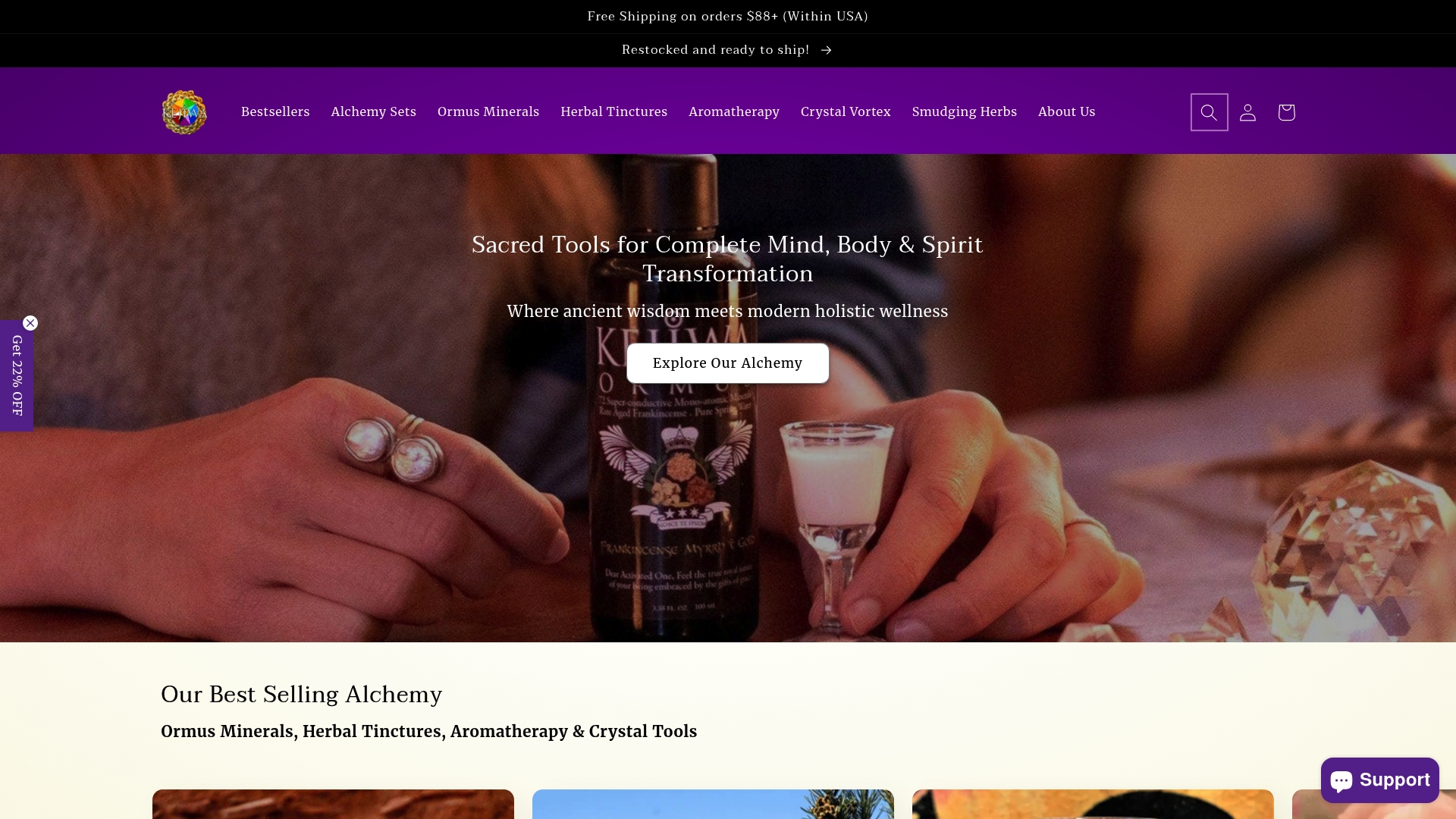
Kejiwastore offers something most wellness brands do not: products rooted in genuine alchemical tradition, made in small batches from wild-harvested and organic botanicals, with the specific intention of supporting energetic and spiritual work. Whether you are building a daily meditation practice, deepening a cleansing ritual, or looking for botanical support for your biofield, Kejiwastore’s formulations meet you where you are. Browse the Ormus mineral collection or explore the full range of spagyric tinctures to find what resonates with your practice.
Key Takeaways
Spiritual wellness rituals work because they create a deliberate transition from reactive doing to present being, grounding the nervous system and deepening your connection to what matters most.
| Point | Details |
|---|---|
| Ritual requires intention, not religion | Spiritual wellness is personal and inclusive; meaning can be found in nature, creativity, or quiet attention. |
| Sensory anchors strengthen practice | Scent, texture, and sound create neurological anchors that deepen ritual effectiveness over time. |
| Small acts carry full ritual power | Lighting one candle or writing one sentence of gratitude is a complete and meaningful practice. |
| Cultural diversity enriches your options | Traditions from Native American smudging to Hindu puja to Buddhist meditation all offer accessible, time-tested frameworks. |
| Kejiwastore supports ritual with botanical tools | Small-batch Ormus minerals, spagyric tinctures, and botanical aromatics are crafted specifically to enhance energetic and spiritual practice. |