


Yes, alchemical and spagyric tinctures can be used intentionally in shadow-work practice. They work best not as standalone remedies, but as sensory anchors that link your conscious intention to the body’s nervous system, creating a repeatable ritual cue that helps safety-based patterns form over time.
Here is what that looks like in practice:
- Set intention first. The tincture becomes a vessel for your purpose, not a shortcut around it.
- Regulate your nervous system before you begin. Shadow work done in a fight-or-flight state can deepen activation rather than release it.
- Choose transparent, small-batch spagyric tinctures with clear botanical names, batch notes, and dosage guidance (Kejiwa Alchemy’s formulations are built around these standards).
- Follow contraindication checks before every session, especially if you take medications or are pregnant.
The core insight: a tincture used reverently becomes part plant medicine, part ritual. That dual nature is exactly what makes it useful for somatic shadow integration.
Table of Contents
- What makes spagyric tinctures different from standard ones?
- How do tinctures actually support shadow work?
- How do you choose the right tincture for shadow work?
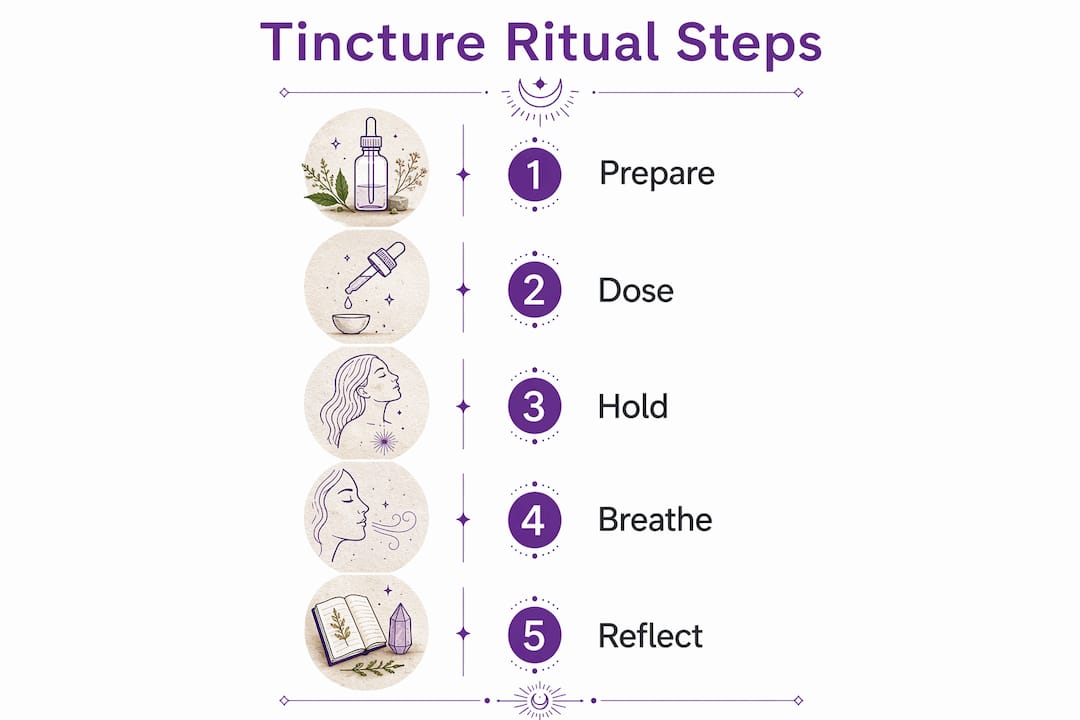
- A step-by-step ritual protocol for tincture-assisted shadow work
- Safety, contraindications, and when to consult a clinician
- What to expect after a session and an integration timeline
- Kejiwastore’s spagyric tinctures for somatic shadow work
- Key Takeaways
- Alchemy and the body belong together
- Useful sources and further reading
What makes spagyric tinctures different from standard ones?
A standard herbal tincture macerates plant material in a solvent (usually alcohol or glycerin) to extract biochemical constituents. A spagyric tincture goes further. The spagyric process, rooted in alchemical tradition, includes maceration, distillation, and the reintroduction of calcined plant salts back into the extract. In plain terms: the mineral ash of the plant is returned to the liquid, so the final preparation carries the plant’s body, soul, and spirit as classical alchemy describes them.
That distinction matters for ritual work. The calcined salts are believed to carry the plant’s energetic signature in a more complete form, making spagyrics a preferred choice among practitioners who work with sacred plant medicine traditions and somatic integration.
| Dimension | Spagyric tincture | Standard tincture |
|---|---|---|
| Preparation | Maceration + distillation + calcined salts reintroduced | Maceration in solvent only |
| Energetic framing | Whole-plant (body, soul, spirit) | Biochemical extract |
| Solvent options | Alcohol, glycerite, or both | Alcohol, glycerite, or vinegar |
| Ritual suitability | High — designed for intentional use | Moderate — depends on sourcing |
| Batch transparency | Harvest dates, batch numbers expected | Varies widely |
A note on solvents: AWAKEN’s practitioner guidance outlines maceration ratios across alcohol, glycerin, and vinegar, with optional energetic practices like moon-charging during the 4–6 week maceration window. Each solvent carries different extraction properties and ritual resonance. Alcohol extracts a broader range of constituents; glycerites are gentler and alcohol-free, making them suitable for those avoiding alcohol in ceremony.
Pro Tip: When a product labels itself “spagyric,” ask for batch notes, harvest dates, and a clear explanation of which solvent was used. A maker who cannot answer those questions is likely using the term loosely.
How do tinctures actually support shadow work?
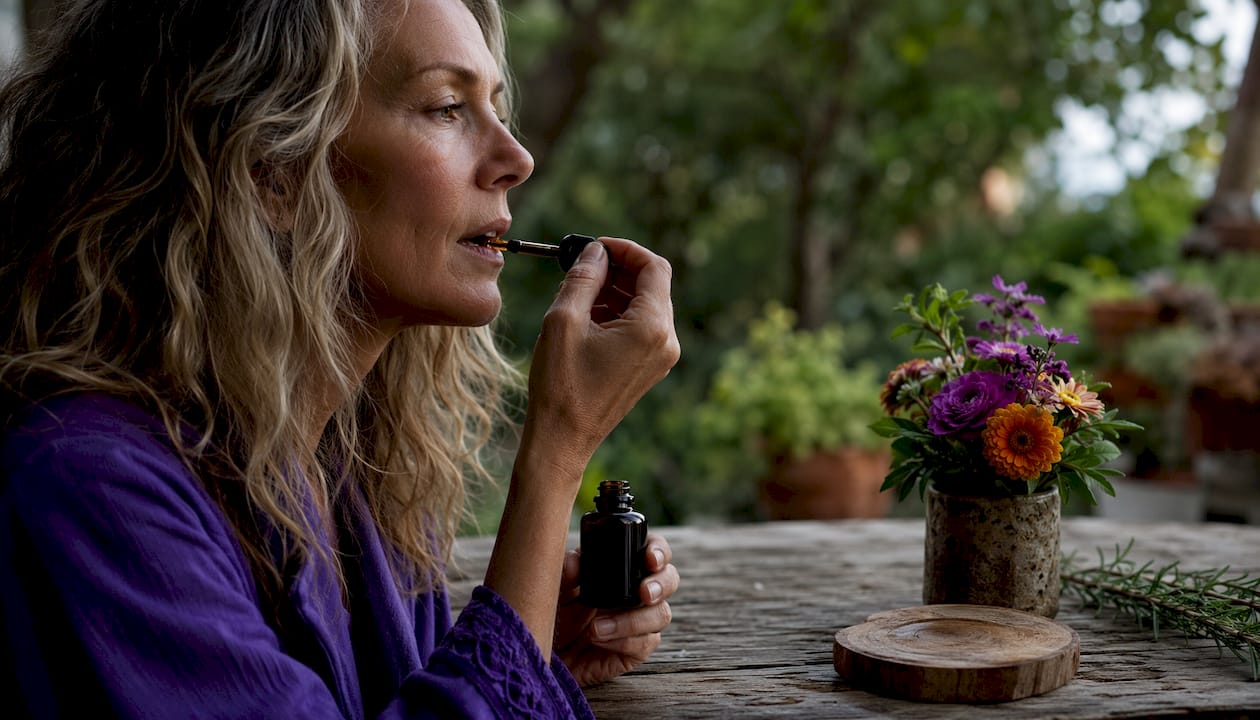
Tinctures support shadow work by creating a repeatable sensory-intention bridge that cues the nervous system and deepens ritual safety. That is the mechanism. The taste, the ritual of dosing, the scent, all of it becomes a consistent signal that tells your body: this is the container, you are held here.
Somatic therapist Taren Maroun makes the case clearly:
That is precisely where a tincture earns its place. It is not doing the psychological work. It is helping your body recognize the ritual space as safe, session after session.
Practical ways tinctures support the work:
- Grounding and centering before journaling or inner inquiry
- Easing somatic discharge (trembling, heat, emotional release) during active processing
- Ritual thresholding — a clear before/after marker that opens and closes the session
- Dreamwork facilitation when taken before sleep with clear intention
A 3-minute centering practice: Take your tincture dose, hold it under the tongue for 30 seconds, and breathe slowly. As you swallow, state your intention aloud or in writing: “I am willing to see what has been hidden.” Then sit for two minutes with one hand on your chest before opening your journal.
Pro Tip: Pair your tincture with an aromatherapy elixir to layer sensory anchors. Scent reaches the limbic system faster than almost any other cue, deepening the ritual container.
How do you choose the right tincture for shadow work?
Prioritize sourcing transparency, clear botanical names (Latin binomials), solvent type, batch notes, and practitioner guidance. Those five criteria separate a ritual-grade tincture from a generic supplement.
Selection checklist:
- Formulation: spagyric vs. standard (spagyric preferred for somatic ritual work)
- Solvent: alcohol (broader extraction), glycerite (gentler, alcohol-free), or topical oil (external use only)
- Single-plant vs. curated blend (single-plant for targeted work; blends for layered support)
- Potency and dose guidance clearly stated on the label
- Allergen and medication interaction flags included
Matching tincture type to shadow-work intention:
| Intended use | Preferred formulation | Solvent | Ritual suitability |
|---|---|---|---|
| Somatic grounding | Spagyric, single-plant | Alcohol or glycerite | High |
| Emotional release | Spagyric blend | Alcohol | High |
| Dreamwork | Standard or spagyric | Glycerite | Moderate–high |
| Energetic clearing | Spagyric | Alcohol | High |
Trust signals to look for:
- Full ingredient list with Latin binomials (e.g., Pinus edulis not just “pine”)
- Batch numbers and harvest or production dates
- Organic or wild-harvest sourcing claims with verifiable detail
- Educational content from the maker (practitioner-written guides, not just marketing copy)
- Practitioner endorsements or community testimonials from named sources
- Proper tincture storage guidance for shelf stability
A step-by-step ritual protocol for tincture-assisted shadow work
A safe, effective tincture ritual centers on pacing, clear intent, nervous-system regulation, and integration steps. Rushing any phase undermines the whole container.
Before the session:
- Check your baseline state. If you are highly activated, postpone. Regulation comes first.
- Clear your space physically and energetically (smudging, sound, or simple breath).
- Set a written intention. One sentence is enough: “Today I am willing to meet my anger with curiosity.”
- Take your tincture dose as directed. Pause. Breathe.
During the session: 5. Open with a grounding body scan (2–3 minutes, feet on the floor). 6. Begin journaling with one of these shadow-work prompts:
- What emotion do I most resist feeling in front of others?
- Where in my body do I hold the feeling I called “too much”?
- What capacity in me was labeled dangerous or wrong?
- Who taught me that this part of me was unacceptable?
- What would I do if I trusted that part of me completely?
- What am I protecting by keeping this hidden?
- If intensity rises, pause writing. Place both hands on your chest, breathe slowly, and return to sensation before continuing.
After the session: 8. Close the container deliberately. Write one sentence of gratitude or acknowledgment. 9. Ground somatically: walk barefoot, drink water, eat something small. 10. Note one concrete behavior you will try differently this week.
Pro Tip: Shadow work journaling works best when the journal feels private and secure. The privacy is load-bearing. Keep your shadow journal separate from everyday notebooks.
Safety, contraindications, and when to consult a clinician
Safety is primary. Check for medication interactions, pregnancy and breastfeeding contraindications, and mental-health instability before using any potent botanical tincture in deep inner work.
Red flags that call for practitioner support before beginning:
- Active or recently destabilized bipolar disorder or psychosis history
- Trauma without current professional support (shadow work is not trauma therapy)
- Recent major loss or acute grief without a stabilizing container
- Current use of antidepressants, benzodiazepines, or MAOIs (some botanicals interact with these drug classes)
- Pregnancy or breastfeeding (many herbs are contraindicated)
A word on pacing: Somatic practitioner Taren Maroun writes that “without containment, descent can re-traumatize rather than transform.” That is the clearest possible reason to go slowly, work with a practitioner when the material is heavy, and never mistake intensity for depth.
Pro Tip: To find a trauma-informed somatic therapist, search the Somatic Experiencing International directory or ask your integrative healthcare provider for a referral. You do not have to do this alone.
If shadow material becomes destabilizing, the correct response is containment and somatic return, not pushing through. Pause the practice and seek qualified support.
This article is general information, not professional medical or psychological advice. Confirm current guidelines with a qualified healthcare provider or licensed clinician for your specific situation.
What to expect after a session and an integration timeline
Expect variable somatic aftereffects and a phased integration process. Immediate grounding, 24–72 hours of emotional processing, and longer-term re-patterning over weeks are all normal.
Timeline:
- 0–2 hours: Somatic sensations (warmth, heaviness, emotional tenderness), fatigue, or unusual clarity. Rest. Avoid screens.
- 24–72 hours: Dreams may intensify. Emotions surface in unexpected moments. This is the material metabolizing.
- 2–6 weeks with consistent ritual: Pattern shifts begin to show up in behavior, not just awareness. You pause where you used to react.
- 21-day consistency window: Practitioners recommend consistent use over roughly 21 days to reinforce neural and energetic pathways. The tincture becomes a reliable cue, not a novelty.
Integration checklist:
- Journal follow-up within 24 hours of each session
- Gentle movement (walking, stretching) the day after
- Adequate sleep and nourishing food
- Check in with a practitioner or trusted community member if material feels heavy
- Repeat the ritual with small adjustments based on what you noticed
The alchemical nigredo stage teaches this directly: breakdown precedes reconstitution. Reaching for quick fixes interrupts the process. Trust the pacing.
Kejiwastore’s spagyric tinctures for somatic shadow work
Kejiwastore’s Kejiwa Alchemy line offers small-batch spagyric tinctures and botanical aromatics crafted specifically for ritual and somatic practices. Every formulation uses organic or wild-harvested botanicals, and product pages include ingredient lists with Latin binomials, batch transparency, and practitioner guidance — the exact trust signals that matter when you are choosing a tincture for deep inner work.

Three collections align directly with shadow-work intentions:
- Spagyric Herbal Tinctures: The core collection for ritual use. The Piñon Pineal Spagyria is a strong starting point for dreamwork and pineal activation; the Piñon Pineal Spagyria is worth exploring if dreamwork is your entry point.
- Ormus Minerals: Monoatomic gold and mineral preparations that support energetic coherence and biofield regulation alongside tincture work.
- Botanical Aromatics: Elixir sprays and oils for ritual thresholding and sensory anchoring before and after sessions.
For grounding intentions, start with a single-plant spagyric and a low dose (follow the product page guidance). For emotional release work, a curated blend with clear practitioner notes gives you more support. One-off orders let you test a formulation before committing to a subscription.
Key Takeaways
Spagyric tinctures work in shadow practice because they anchor intention in the body, not just the mind. Pacing, sourcing transparency, and nervous-system regulation are what make the difference between integration and overwhelm.
| Point | Details |
|---|---|
| Nervous system first | Regulate before every session; never begin shadow work in a fight-or-flight state. |
| Tinctures as anchors | A tincture is a sensory cue for safety, not a cure; consistent ritual use over roughly 21 days builds the pathway. |
| Choose transparent sourcing | Look for Latin binomials, batch numbers, harvest dates, and clear dosage guidance on every label. |
| Pace the integration | Expect a 0–2 hour somatic window, 24–72 hour processing phase, and 2–6 weeks of pattern shifts with consistent practice. |
| Kejiwastore’s offering | Kejiwa Alchemy’s small-batch spagyric tinctures, Ormus minerals, and botanical aromatics are formulated for exactly this kind of ritual, somatic work. |
Alchemy and the body belong together
The thing most shadow-work guides miss is this: alchemy was never purely symbolic. The nigredo, albedo, and rubedo stages were always describing something that happens in the body as much as in the psyche. When you use a spagyric tincture with clear intention, you are not adding a supplement to your journaling practice. You are giving your nervous system a physical, repeatable signal that the work is real, that the container is held, and that transformation moves at the pace of lived experience, not insight.
What we have seen, working with plant allies and intentional craftsmanship at Kejiwa Alchemy, is that the readers who get the most from this practice are the ones who slow down. They choose sourcing they trust. They pair their tincture with somatic awareness rather than using it to push harder into difficult material. And they treat the 21-day consistency window not as a protocol, but as a commitment to showing up for themselves.
The plants meet you where you are. The question is whether you are willing to be met.
Useful sources and further reading
Practitioner and theory sources:
- Shadow Alchemy: When Shadow Work Isn’t Enough — Taren Maroun: The clearest practitioner explanation of why somatic pacing matters and how shadow alchemy differs from standard shadow work. Start here.
- Herbal Tinctures and Spirit Medicine — AWAKEN Center for Human Evolution: Covers tincture preparation, solvent trade-offs, and the role of intention in spirit medicine. Practical and grounded.
- Alchemy and the Shadow — Shadow Grimoire: Maps the classical alchemical stages (nigredo through rubedo) onto inner transformation work. Useful for normalizing difficult phases.
- Shadow Work Journaling: Beyond Prompt Lists — Orileva: Emphasizes containment, privacy, and when to stop and seek support. Essential safety reading.
Kejiwa Alchemy product and educational pages:
- Spagyric Herbal Tinctures collection: Browse small-batch spagyric formulations with full ingredient transparency.
- Piñon Pineal Spagyria: A focused starting point for dreamwork and pineal-oriented shadow practice.
- Spiritual nervous system healing: Background reading on nervous-system regulation in spiritual practice.
- Ancestral healing botanical ceremony guide: For readers wanting a larger ceremonial container for their shadow work.
- Energy protection for highly sensitive people: Practical boundaries and protection practices for those doing deep inner work.