


Spring offerings call for fresh water, new sprouts, and green herbs. Summer wants bright flowers and sun-warmed stones. Autumn asks for dried herbs, seeds, and fruit skins. Winter honors dormancy with pine cones, bark, and warming tea. That’s the entire framework behind any seasonal spirit offerings botanical guide, and every ritual detail in this piece builds outward from those four anchors.
The ethics are just as simple: offer only biodegradable material, favor what grows near you, and keep the gesture modest. A single flower placed with intention outweighs a fistful of imported blooms.
Here’s your first action, right now:
- Walk outside (or to a windowsill), find one plant that’s actively growing, blooming, or fruiting, and leave one small token of gratitude at its base.
You don’t need a full altar or a shopping list to start. You need attention to what’s already alive around you.
Key Takeaways
Seasonal spirit offerings work best when timed to a plant’s visible life stage rather than a fixed calendar date, and sourced from abundant, local, biodegradable material.
| Point | Details |
|---|---|
| Match offerings to phenology | Use budding, blooming, and fruiting as your timing cue instead of a calendar date. |
| Choose plants with intention | Marigold, mugwort, rose, and hawthorn each carry distinct protective or threshold associations. |
| Prepare with simple methods | Altar bowls, simmer pots, and short infusions all work without specialized equipment. |
| Harvest ethically | Take small amounts from abundant stands and skip rare or protected species entirely. |
| Support your practice with quality tools | Kejiwastore’s aromatherapy mists offer a smoke-free way to bring seasonal botanicals into ritual space. |
Table of Contents
- Season-by-season offerings tied to plant phenology
- Key botanicals and their spiritual associations
- How to prepare and present a seasonal offering
- Ethical harvesting: sourcing offerings without taking too much
- Starter templates you can use this week
- What to avoid: unsafe and inappropriate offerings
- Why the “more ingredients, more power” mindset gets seasonal offerings wrong
- Bring these offerings into your everyday ritual practice
- Frequently Asked Questions
- Sources
Season-by-season offerings tied to plant phenology
Most seasonal offering advice leans on the calendar, but calendars lie. A warm February can push crocuses up weeks early, and a cold May can stall roses that “should” be blooming. The more reliable approach borrows from phenology, the study of recurring biological events like budding, flowering, and fruiting, which the USA National Phenology Network tracks across thousands of species and locations. Instead of asking “what month is it,” ask “what is this plant doing right now.”
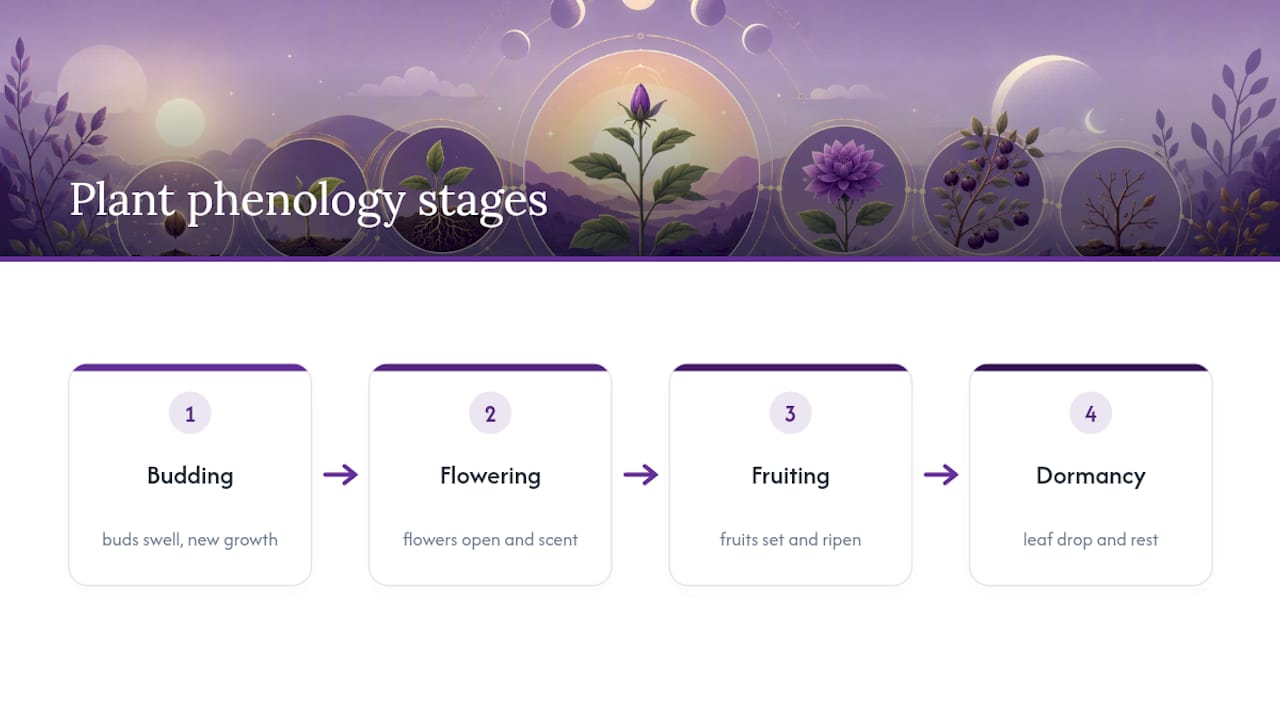
Spring: freshness and emergence
Spring offerings should mirror what’s happening in the ground: new growth pushing through cold soil, buds cracking open, sap starting to run. Fresh water matters more here than in any other season, since emerging root systems are thirsty and vulnerable.
- Fresh spring water poured slowly at the base of a waking plant, never flooding it.
- New sprouts or microgreens, offered whole rather than cut, as a gesture of shared beginning.
- Green herb clippings like young mint or chive, still soft and unlignified.
- First blossoms from fruit trees or early bulbs, given one bloom at a time.
Summer: peak vigor and sun-charge
By midsummer, plants are working at full capacity, photosynthesizing hard and often blooming their showiest flowers. Offerings here can be bolder: bright colors, citrus, anything that’s absorbed a full day of sun.
- Sun-warmed stones, left in direct light for a few hours before placing them on an altar or at a tree’s base.
- Bright, fully open flowers such as marigold or zinnia, cut at their peak rather than as buds.
- Citrus peel, dried briefly to release oils, scattered thinly so it composts fast.
Autumn: gratitude and preservation
Autumn is harvest energy, plants are setting seed, dropping fruit, and pulling resources back into their roots. Offerings should reflect that same instinct to gather and preserve.
- Dried herbs from your own summer harvest, crumbled rather than whole.
- Seeds, especially from plants that grew nearby, symbolically returning what the land already produced.
- Fruit skins (apple, pear, persimmon), left whole enough for birds and decomposers to use.
Winter: rest and grounding
Winter offerings honor dormancy, not absence. Roots are alive underground even when nothing shows above it.
- Pine cones or bark pieces, gathered from the ground rather than stripped from a living tree.
- A small cup of warming tea (chamomile, cinnamon, clove) poured at a tree’s base or left on an indoor altar until cool.
Pro Tip: Instead of marking your calendar for “spring offerings,” mark the first day you see a specific bud swell on a plant near your home. That visible cue is more accurate than any date, and it trains your eye to notice the land’s own rhythm.
Key botanicals and their spiritual associations
Certain plants show up again and again in offering traditions, and knowing why helps you choose intentionally rather than randomly. Cornell Botanic Gardens lists marigold, mugwort, and tobacco among the plants historically used in ritual and offering contexts, each carrying its own cultural weight.
- Marigold (Tagetes): Long associated with protection and communication with the dead, marigold petals or a small flower cluster work well on autumn altars or ancestor offerings. A handful of loose petals travels further, visually, than a single stem.
- Mugwort (Artemisia): Traditionally tied to veil-thinning and dreamwork, mugwort is usually offered as dried sprigs or brewed lightly as tea. It carries real caution: some people are sensitive to it, and it should never be burned indoors without ventilation. Pregnant readers should avoid ingesting it altogether.
- Rose: The classic symbol of sacred heart connection, offered as loose petals or a single bloom. If roses aren’t in season or available, other fragrant flowers, lavender, jasmine, or gardenia, carry a similar resonance.
- Hawthorn: Associated with thresholds and the Beltane season, hawthorn sprigs or berries suit offerings marking transitions, a move, a new relationship, a season’s turn.
One detail worth knowing: garden-grown botanicals and wild-foraged ones aren’t interchangeable in ritual value. A Cornell listing of ritual-associated plants notes that cultural connection to a plant often depends on local abundance, so choose based on what actually grows near you rather than what a guide says is “traditional” in a different climate. Petals and leaves are almost always safer and more meaningful to offer than roots or bark from a live plant, since removing those parts can kill or seriously stress the source.
How to prepare and present a seasonal offering
An offering is only as good as its presentation, and presentation doesn’t require complexity. It requires a clear container, a clear intention, and a clear plan for what happens after.
Building an altar bowl
- Choose a shallow, natural-material bowl, wood, clay, or stone, roughly the size of your palm.
- Fill it with two or three seasonal items from the checklists above (a flower, a dried herb, a stone).
- Place the bowl at a threshold, windowsill, or outdoor altar for no more than 24 to 48 hours.
- Compost the contents or return them to soil once the offering period ends. Never leave synthetic containers or non-biodegradable items outdoors.
Simmer pots for seasonal scent
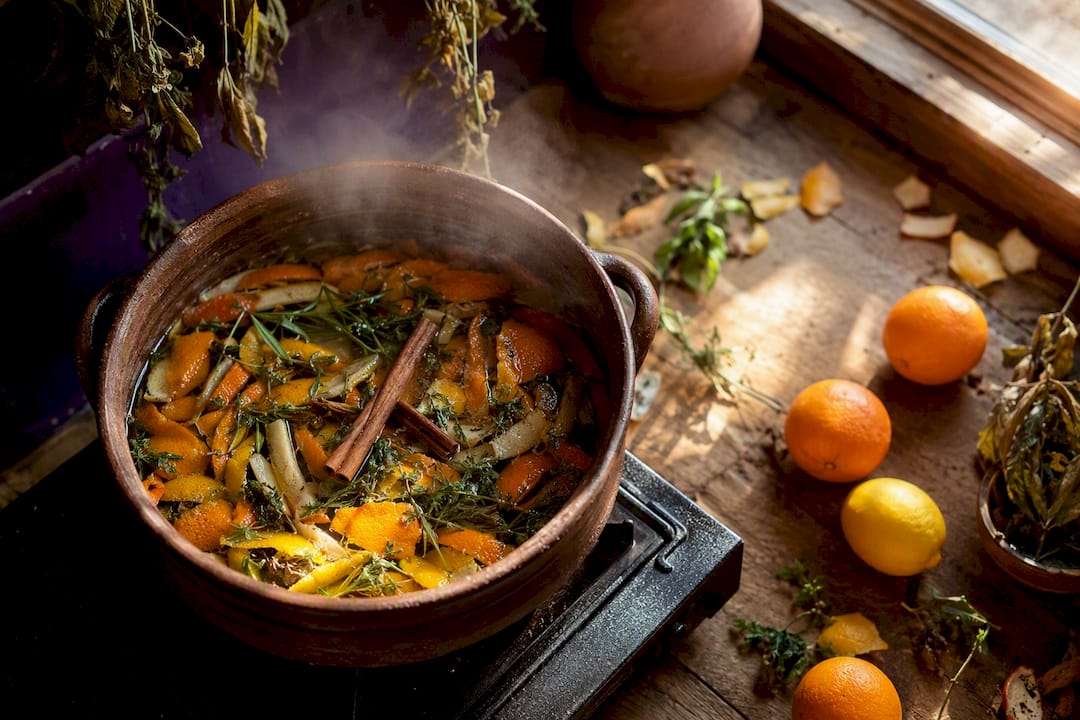
Simmer pots turn kitchen scraps into ritual atmosphere: simmer citrus peel, herbs, and spices in water on low heat, letting the steam carry scent through the space. This practice pairs naturally with seasonal altar work, and contemporary ritual recipes often pair a simmer pot with a matching seasonal altar item, cinnamon and orange peel in winter, mint and lemon in summer. Compost the spent botanicals once the water cools.
Smoke and smoke-free alternatives
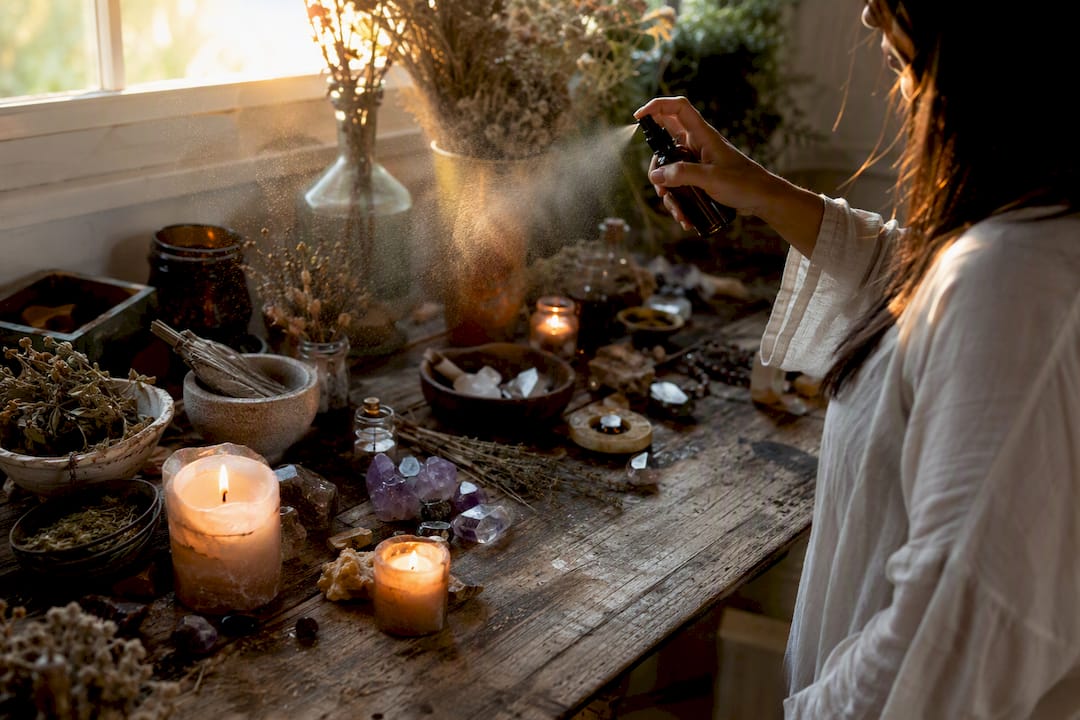
Traditional smoke offerings using dried herb bundles carry real legal and safety considerations. Many apartments, shared housing situations, and public lands restrict open flame or smoke, and some dried botanicals aren’t safe to burn indoors without ventilation. Kejiwastore’s botanical smoke cleansing guide covers both the ritual use of smoke and smoke-free substitutes like herbal teas or aromatic mists, which deliver a similar sensory shift without fire risk.
A basic herbal infusion as offering
A simple infused spirit or cordial can serve as a poured offering. Imbibe Magazine’s herbal liqueur method blends fresh herbs with high-proof alcohol, adds a light honey syrup, and strains after the flavor develops, a process that can take days to weeks depending on the herb. Mountain Rose Herbs recommends tasting every few days rather than waiting for a fixed date, since infusion strength varies by herb. Anyone under legal drinking age, or offering in a location where alcohol isn’t appropriate, can substitute a strong herbal tea steeped the same way, herbs added to hot water, covered, and left to cool before straining.
| Preparation Method | Best Season | Retirement Method |
|---|---|---|
| Altar bowl | Any, matched to seasonal items | Compost within 24–48 hours |
| Simmer pot | Autumn and winter (warming scents) | Compost spent botanicals after cooling |
| Herbal tea / smoke-free spray | Any, especially indoors | Discard liquid outdoors or on soil |
| Infused cordial | Autumn (harvest herbs) | Pour remainder as a poured offering outdoors |
Ethical harvesting: sourcing offerings without taking too much
Every offering you gather has a cost to the plant it came from, and that cost is easy to ignore until a “favorite” foraging spot goes bare. Kejiwastore’s approach to wild harvesting with reverence treats sourcing as part of the ritual itself, not a separate logistics problem.
- Harvest only from populations that are clearly abundant, never from a single struggling patch.
- Take a small fraction of any stand, a common guideline is no more than one in ten plants, and never the last of anything.
- Skip rare, threatened, or protected species entirely, even when they seem perfect for the ritual.
- When buying rather than foraging, choose garden-grown or ethically farmed material, and ask about provenance when it isn’t listed.
- Before gathering on land tied to a specific cultural or indigenous tradition, learn whether that plant carries restricted or ceremonial status before treating it as free for personal use.
Kejiwastore’s guide on how wild plants hold more energy for ritual herbalists expands on why abundance, not scarcity, makes an offering more potent, not less.
Pro Tip: If you’re unsure whether a patch is abundant enough to harvest from, count the individual plants before you touch anything. If you can’t find at least ten of the same species within easy reach, buy or grow that ingredient instead.
Starter templates you can use this week
You don’t need to design a ritual from scratch every season. These three templates cover most needs and can flex with whatever’s actually growing near you.
- Starter altar bowl (any season): One handful of a seasonal item (blossom, dried herb, seed, or pine cone), placed in a small bowl at a windowsill or outdoor threshold, and composted within two days.
- Four-season simmer pot base: Spring: mint and lemon peel. Summer: citrus peel and rosemary. Autumn: cinnamon, clove, and apple peel. Winter: orange peel, cinnamon, and a few pine needles. Simmer low, top off water as needed, compost after use.
- Herbal cordial template: Combine roughly one part fresh herb to two parts high-proof spirit in a clean jar, seal, and store somewhere dark. Taste every three to four days; strain once the flavor matches your intention, usually within one to three weeks. For a non-alcohol version, steep the same herb ratio in hot water instead, and use it within a day.
A ritual doesn’t need more ingredients to carry more meaning. It needs ingredients that came from somewhere you can point to.
Kejiwastore’s elemental rituals with botanical tools guide has more season-specific templates if you want to build beyond these three starting points.
What to avoid: unsafe and inappropriate offerings
Some materials do more harm than good, no matter how well-intentioned the gesture. Skip plastic, glitter, and processed human food (bread, candy, dairy) since these attract pests or simply never break down. Avoid invasive species as offerings, since scattering their seeds can spread the problem, and steer clear of plants known to be toxic to wildlife or pets, including foxglove, oleander, and lily of the valley.
For indoor houseplants, use tiny amounts, a few drops of water or one small leaf, since overwatering or overloading a pot causes more harm than an empty offering ever would. For sensitive wild sites, ask permission of whoever manages the land, keep offerings minimal, and when a site holds cultural or ceremonial significance to a specific community, defer to that community’s own tradition-holders before assuming the practice is open to anyone.
Why the “more ingredients, more power” mindset gets seasonal offerings wrong
The biggest misconception in offering practice is that elaborate ritual, more herbs, rarer plants, longer ceremonies, produces more spiritual result. Nothing in the phenology-based approach supports that. A single dandelion picked from your own yard at the exact moment it opens carries more relational weight than an imported bundle of “sacred” herbs bought sight unseen.
Conventional guides tend to treat botanicals like a shopping list: buy sage, buy palo santo, buy rose quartz. That framing skips the actual relationship, the noticing, the timing, the restraint, that makes an offering mean anything at all. It also ignores the ecological cost of treating wild plants as infinite inventory.
If you take one thing from this guide, prioritize proximity over rarity. Learn what’s blooming within walking distance before you order anything online. Notice what dies back in your own garden every autumn. That attentiveness is the actual practice; the botanicals are just the vocabulary.
Bring these offerings into your everyday ritual practice
Once you start noticing what’s actually growing near you, the next question is usually: what do I use when nothing fresh is available, or when I want something that lasts beyond a single season? That’s where Kejiwastore’s small-batch approach fits in. Every tincture, mist, and mineral blend is made with organic and wild-harvested botanicals sourced the same way this guide recommends: abundant, traceable, and gathered with intention rather than convenience.

If you want a smoke-free way to mark a seasonal shift, browse Kejiwastore’s botanical aromatherapy mists, which work as altar sprays or space-clearing tools when open flame isn’t practical. For readers drawn to the infusion side of this guide, the spagyric herbal tinctures collection offers pre-made, ethically prepared botanical extracts built on the same traditional alchemy principles covered here, without the wait time of a homemade infusion. Start by picking one collection that matches the season you’re in right now, and let that be your next offering.
Frequently Asked Questions
What is the best offering for each season? Spring favors fresh water and new sprouts, summer favors bright flowers and sun-warmed stones, autumn favors dried herbs and seeds, and winter favors pine cones, bark, and warming tea. Match the offering to what a nearby plant is actively doing rather than the date on a calendar.
Do I need to burn herbs to make a spirit offering? No. Smoke is one traditional method, but herbal teas, simmer pots, and aromatic mists deliver a similar sensory shift without fire, smoke inhalation risk, or the legal restrictions many buildings and public lands place on open burning.
Is it okay to forage wild plants for offerings? It’s okay when you harvest from clearly abundant populations, take only a small portion, and avoid rare or protected species. When you’re unsure whether a patch can sustain harvesting, buy garden-grown or ethically farmed material instead.
Can I make an offering with houseplants instead of outdoor plants? Yes. Use tiny amounts, a few drops of water or a single small leaf, since indoor pots have far less room to absorb excess than outdoor soil does. Overwatering an indoor offering does more harm than skipping it.
How long should an altar bowl offering stay in place? Most practitioners retire an altar bowl within 24 to 48 hours, composting the contents or returning them to soil. Leaving organic offerings out longer usually just invites pests without adding ritual value.
Sources
- Plants that draw the spirit world near — Cornell Botanic Gardens
- Homemade Herbal Liqueur — Imbibe Magazine
- How to Make Herb-Flavored Alcohol + 3 DIY Herbal Spirit Blends — Mountain Rose Herbs blog