


Plant spirits in folk herbalism are the relational, animistic intelligences attributed to plants — their personality, wisdom, and energetic presence as recognized by traditional healers across cultures. The safest first step to begin working with them is simple: sit quietly with a living plant you already know, observe it without agenda, and offer genuine gratitude. That single act of attentive presence is the foundation of every deeper practice that follows.
Plant spirit healing partners with the conscious intelligence of plants to address energetic and emotional imbalances alongside physical symptoms — a frame that differs fundamentally from clinical herbalism’s focus on pharmacology and dosing. Kejiwa Alchemy has built its entire botanical alchemy practice around this relational approach, and the guides here reflect that lived orientation.
Pro Tip: Before ingesting any wild plant, confirm its identity with a field guide and consult a qualified clinician for contraindications. Plant spirit work and physical plant medicine are not the same thing — you can practice the former safely without ever consuming a plant.
Table of Contents
- What “plant spirits” really means in folk herbalism
- Common ways practitioners connect with plant spirits
- How plants “speak”: signatures and US plant allies to learn with
- Practicing with respect: ethics, cultural sensitivity, and sustainable harvesting
- Safety and contraindications you need to know
- A beginner ritual to meet a plant spirit safely
- How spagyric tinctures support plant-spirit relationships
- Key Takeaways
- Why relationship-based practice is the only practice worth doing
- Kejiwastore’s botanical tools for plant-spirit practice
What “plant spirits” really means in folk herbalism
The term “plant spirit” is not metaphor dressed up as medicine. Within folk herbalism, it names a specific belief: that each plant carries an animistic intelligence, a relational presence that can communicate, teach, and heal on levels beyond its chemical constituents. This is the animistic frame, and it is ancient.
Clinical or biomedical herbalism, by contrast, works with standardized extracts, measurable doses, and symptomatic outcomes. Both traditions use the same plants. What differs is the relationship the practitioner cultivates with them. Folk herbalism is community-based, intuitive, and relationship-focused; clinical herbalism is pharmacological and protocol-driven. Neither cancels the other, but conflating them causes confusion for practitioners who want to work at the spirit level.
Historically, this relational approach appears across European folk traditions and global indigenous practices. European shamanic and folk sources document practitioners cooperating with plant spirits as guardians and teachers, not merely as chemical resources. The Green Arte’s research into historical European witchcraft shows plants like hawthorn and elder treated as beings with temperament and influence — harvested with prayers and offerings, not just clippers.
Three working definitions help clarify the vocabulary:
- Spirit/ally: The plant’s animistic presence — its personality, mood, and relational availability to a practitioner who approaches with respect.
- Teacher/guardian: The plant in its role as a source of wisdom, protection, or initiation; elder and hawthorn appear frequently in this role across traditions.
- Energetic blueprint/signature: The plant’s vibrational imprint — the sum of its form, scent, habitat, and growth pattern that communicates its nature before any chemical analysis occurs.
Decolonizing perspectives in spiritual herbalism remind us that this knowledge belongs to living lineages, not just history books. Approaching it with that awareness is the starting point for ethical practice. You can also explore energetic herbalism as a practical primer for situating these ideas within your existing herbal work.
Common ways practitioners connect with plant spirits
The methods below are not equally accessible or equally risky. Choosing where to start depends on your experience, your nervous system, and your intention.
| Method | Accessibility | Risk Level | Best Context |
|---|---|---|---|
| Field contact (sitting with the plant) | High | Very low | Beginners; any season |
| Sensory attunement / observation | High | Very low | Daily practice; any setting |
| Offerings and gratitude | High | Very low | Before harvesting or working |
| Mindful preparations (teas, tinctures) | Moderate | Low–moderate | Home practice with known plants |
| Journeying / shamanic meditation | Moderate | Moderate | Experienced practitioners with support |
| Dreamwork | Moderate | Low | Ongoing relationship work |
Field contact means sitting physically near a plant, breathing with it, and observing without an agenda. Shamanic and folk traditions consistently identify this as the most reliable way to establish a personal plant relationship — local plants, met outdoors, over repeated visits. It asks nothing of you except presence.
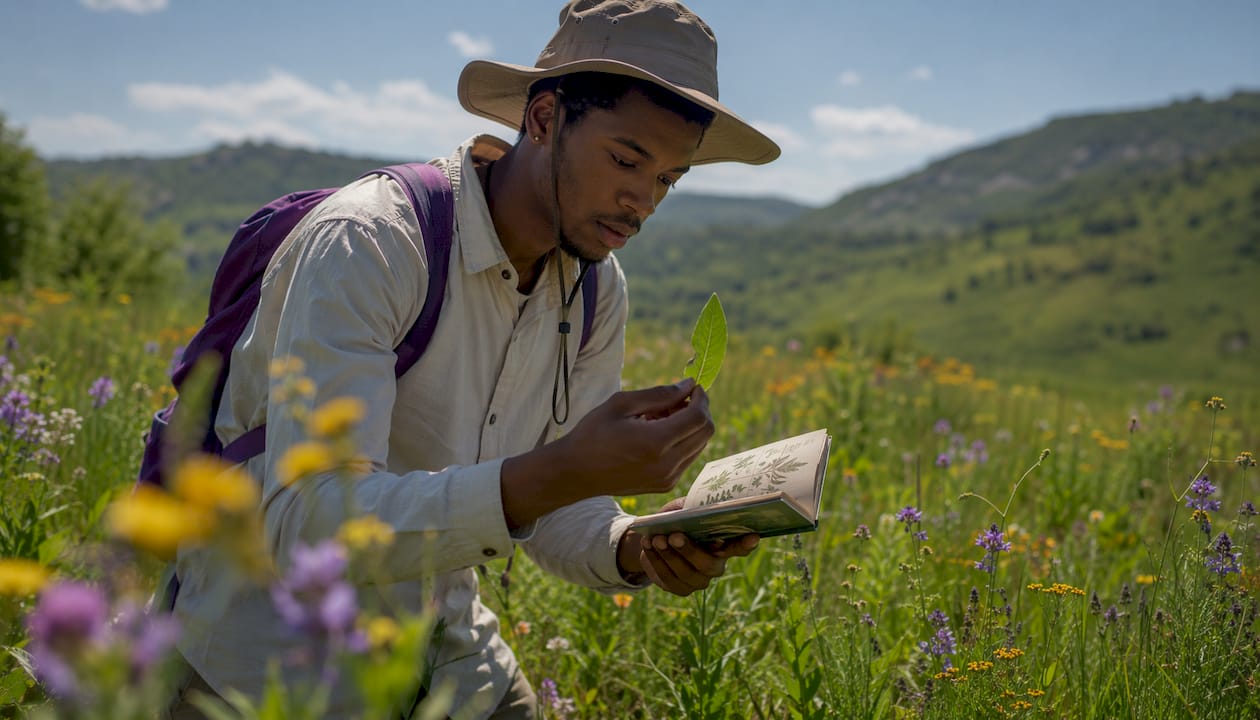
Sensory attunement deepens field contact. You name observations aloud: the texture of a leaf, the micro-climate around the roots, the scent after rain. This disciplined sensory mapping surfaces cues that no pharmacopoeia records.
Offerings and gratitude are small acts of reciprocity — water poured at the roots, a song, a moment of acknowledgment before harvesting. Across traditions, these gestures signal that you are entering a relationship, not extracting a resource.
Mindful preparations bring intention into the kitchen — for example, responsibly sourced CBD tinctures are used by some practitioners as a gentle entry into plant spirit work. Brewing a tea or preparing a tincture with full attention to the plant’s presence — speaking its name, holding its qualities in mind — is a low-risk entry point that integrates spirit work into daily herbal practice. Use only plants you have positively identified and know to be safe for your constitution.
Journeying and dreamwork require more experience. Shamanic journeying uses rhythmic drumming or breathwork to enter a receptive state where plant communication becomes more vivid. Dreamwork involves setting an intention before sleep to receive plant guidance. Both methods are legitimate within their traditions and both carry a higher responsibility to prepare well and integrate carefully.
Pro Tip: Relationship over transaction — visit the same plant at least once a month across a full year before expecting deep communication. Seasonal change reveals dimensions of a plant’s character that a single visit never will.
How plants “speak”: signatures and US plant allies to learn with
The doctrine of signatures holds that a plant’s form, scent, habitat, and growth pattern are direct communications about its nature and use. Plant Energy Medicine describes these sensory and physical cues as pathways to a plant’s voice and energetic imprint — resonance that can shift energy beyond symptomatic relief. Learning to read signatures is a core skill for any practitioner working at the spirit level.
The table below focuses on plants accessible across much of the US, with notes on their traditional folk associations and a simple beginner practice for each.
| Plant | Signature Cues | Traditional/Folk Spirit Association | Beginner Practice |
|---|---|---|---|
| Mugwort (Artemisia vulgaris) | Silver-backed leaves, liminal habitats (roadsides, edges), strong aromatic | Dreaming, prophecy, lunar cycles, protection | Dry a small bundle; hold it before sleep and set a dream intention |
| Hawthorn (Crataegus spp.) | Thorns protecting sweet berries, heart-shaped leaf lobes, threshold guardian | Heart healing, protection, ancestral connection | Sit with a hawthorn in May; observe the contrast of thorn and blossom |
| Elder (Sambucus spp.) | Hollow stems, grows near water and old settlements, strong scent | Wisdom, death and rebirth, protection — ask permission before harvesting | Offer water at the roots; observe for three visits before taking anything |
| Plantain (Plantago major) | Grows where feet walk, resilient, broad healing leaves | Resilience, wound-tending, the “common healer” | Press a fresh leaf to a minor skin irritation; notice its cooling quality |
| Chamomile (Matricaria chamomilla) | Sun-like flowers, gentle scent, grows in disturbed ground | Calm, solar warmth, nervous system ease | Brew a mindful cup; sit with the steam and observe what arises |
| Yarrow (Achillea millefolium) | Feathery leaves, boundary-marking growth, styptic properties | Warrior medicine, boundaries, energetic protection | Carry a dried sprig; notice when you feel called to touch it |
| Rosemary (Salvia rosmarinus) | Needle leaves, Mediterranean origin, strong memory-scent | Memory, clarity, ancestral presence | Crush a sprig between your palms before study or ritual |
| Violet (Viola spp.) | Heart-shaped leaves, grows in shade, early spring bloom | Tenderness, grief support, hidden strength | Sit with violets in early spring; journal what feelings surface |
Ethics callout: Some plants with strong spirit reputations are protected by state law, toxic in certain preparations, or sacred within specific Indigenous traditions. Always confirm legal harvest status in your state before wildcrafting, and approach culturally sensitive species with humility and guidance from knowledge-holders within those traditions.
Practicing with respect: ethics, cultural sensitivity, and sustainable harvesting
Ethical plant spirit work is not a checklist you complete once. It is an ongoing orientation. Decolonizing perspectives in herbalism call for centering local and Indigenous knowledge-holders and actively avoiding the appropriation of sacred practices. That means more than good intentions — it means changing sourcing habits, learning your bioregion, and knowing which plants carry cultural weight you have not earned the right to carry.
Practical do’s and don’ts for field and sourcing work:
- Do ask permission before harvesting — pause, breathe, and sense whether the plant and place feel receptive.
- Do prioritize plants native or naturalized to your own bioregion; local plants are particularly effective for building personal relationships.
- Do harvest no more than 10% of any wild stand, and never the first or last plant you find.
- Do prefer cultivated or certified sustainably wild-harvested sources when buying prepared products; document provenance when you can.
- Don’t harvest white sage (Salvia apiana) unless you are from a tradition that holds it as sacred or you have explicit guidance from an Indigenous knowledge-holder. Overharvesting driven by mainstream demand has stressed wild populations significantly. Alternatives like garden sage, rosemary, or cedar serve similar ceremonial functions without the cultural and ecological weight.
- Don’t harvest on protected land, in national parks, or in areas where local ordinances restrict wildcrafting. US state regulations vary widely — check with your state’s department of natural resources before harvesting any species.
- Don’t assume that because a plant is widely sold it is ethically sourced. Ask your supplier for harvest origin and method.
For guidance on choosing smudging herbs ethically, Kejiwa’s smudging herbs guide covers alternatives and sourcing considerations in practical detail. You can also explore sacred plant medicine traditions for broader context on reclaiming folk herbal practices responsibly.
Safety and contraindications you need to know
Plant spirit work and plant medicine are related but distinct. You can sit with a plant, offer gratitude, and journal your impressions without any physical risk. The moment you ingest, apply topically, or inhale a plant preparation, clinical safety rules apply — and they apply regardless of your spiritual intention.
“Herbs can be prepared in many forms, and safety depends on standardization and dosage. Drug-herb interactions, pregnancy contraindications, and toxicity from lookalike species are documented risks that no spiritual framework overrides.”
Key warnings every practitioner should hold:
- Poisonous lookalikes are a real danger in the US. Wild carrot (Daucus carota) and poison hemlock (Conium maculatum) share habitat and appearance. Elderberry and pokeweed (Phytolacca americana) can be confused by beginners. Never ingest a plant you have not confirmed with at least two independent identification sources.
- Pregnancy and breastfeeding contraindicate many commonly used herbs, including mugwort, yarrow, and blue cohosh. Consult a qualified clinician before using any herbal preparation during pregnancy.
- Drug-herb interactions are clinically documented. St. John’s Wort affects the metabolism of dozens of pharmaceutical drugs. Kava interacts with sedatives and alcohol. If you take prescription medication, speak with your prescriber before adding herbal preparations.
- Altered-state practices (journeying, intensive breathwork) can surface unexpected emotional or psychological material. If you experience severe dissociation, panic, or psychiatric disturbance after such work, stop the practice and seek professional support.
Practical harm-reduction steps: test any new topical preparation on a small skin patch first; keep an emergency contact informed when doing intensive solo practice; label all home preparations with the plant name, preparation date, and any known contraindications; and store them away from children.
For practitioners who are highly sensitive to energetic work, energy protection practices can help you maintain boundaries during and after plant contact sessions.
A beginner ritual to meet a plant spirit safely
This practice takes 35–65 minutes and requires nothing beyond a living plant, a journal, and your attention. Choose a plant you already know by name — a garden herb, a yard weed, or a potted plant indoors.
-
Preparation (5–10 minutes). Find a quiet time when you will not be interrupted. Bring water as an offering. Read one or two sentences about the plant’s traditional associations so your mind has a frame to work within. Set a clear intention: “I am here to listen, not to take.”
-
Field contact (15–30 minutes). Sit within arm’s reach of the plant. Breathe slowly. Begin naming what you observe aloud or in writing: leaf shape, color gradations, how the stems meet the soil, any insects present, the scent. Do not interpret yet — just describe. Notice any physical sensations in your body as you attend to the plant.
-
Offering and listening (10–20 minutes). Pour a small amount of water at the plant’s base as a gesture of reciprocity. Then sit in silence. You are not waiting for a voice or a vision. You are waiting for a shift — a change in body sensation, a spontaneous image, an emotion that feels slightly foreign to your usual state, or simply a deepening of calm. Note whatever arises without judgment.
-
Closing and gratitude (5 minutes). Thank the plant by name. Record your impressions in a journal before you leave the space. Note the date, weather, time of day, and your emotional state before and after.
Journaling prompts to deepen interpretation over time:
- What physical sensations arose during contact, and where in your body?
- Did any image, color, or memory surface unprompted?
- Did you dream about this plant within the next 48 hours?
- What patterns appear across multiple visits?
Patterns across visits — not single-session revelations — are where plant spirit communication becomes legible. A symbol that appears in your body during three separate visits to the same plant carries more weight than a vivid image in one session.
Pro Tip: Repeat this practice with the same plant across at least four seasons before moving to a new ally. The plant you know in summer is a different teacher in winter.
For additional ceremony structures, Kejiwa’s ancestral healing botanical ceremony guide offers stepwise frameworks that complement this beginner practice.
How spagyric tinctures support plant-spirit relationships
Spagyric tinctures are a specific category of herbal preparation rooted in alchemical tradition. Unlike a standard tincture, a spagyric preparation incorporates the plant’s salt (mineral ash), sulfur (essential oil), and mercury (alcohol extract) — the three alchemical principles — reunited after separation. The intention is to capture not just the plant’s chemical constituents but its complete energetic signature.
“Intentional preparations — those made with full attention to the plant’s presence, its harvesting conditions, and the practitioner’s state of mind — are a legitimate bridge between physical plant medicine and spirit-level relationship work. The preparation process itself becomes a practice of communion.”
This matters for plant spirit practitioners because the preparation process is relational. When you work with a spagyric tincture made with care and documented sourcing, you are working with a plant that was met, harvested, and processed with the same attentiveness you bring to field contact. Plant Energy Medicine describes plant essences and energetic preparations as tools for subtle-body work and resonance-based healing — a frame that aligns directly with spagyric philosophy.
That said, a prepared tincture is a complement to direct relationship, not a replacement. If you have never sat with mugwort in a field, a mugwort spagyric will deepen a relationship you have already begun — it will not substitute for the one you have not yet started. Use prepared products to support and extend your field practice, especially during seasons or circumstances when direct plant contact is limited.
Sourcing matters here as much as it does in wildcrafting. Small-batch preparations made with ethically sourced, organic, or wild-harvested botanicals carry a different quality of intention than mass-produced supplements. Always review sourcing disclosures before purchasing, and follow the safety and contraindication guidance in the previous section when using any prepared plant product.
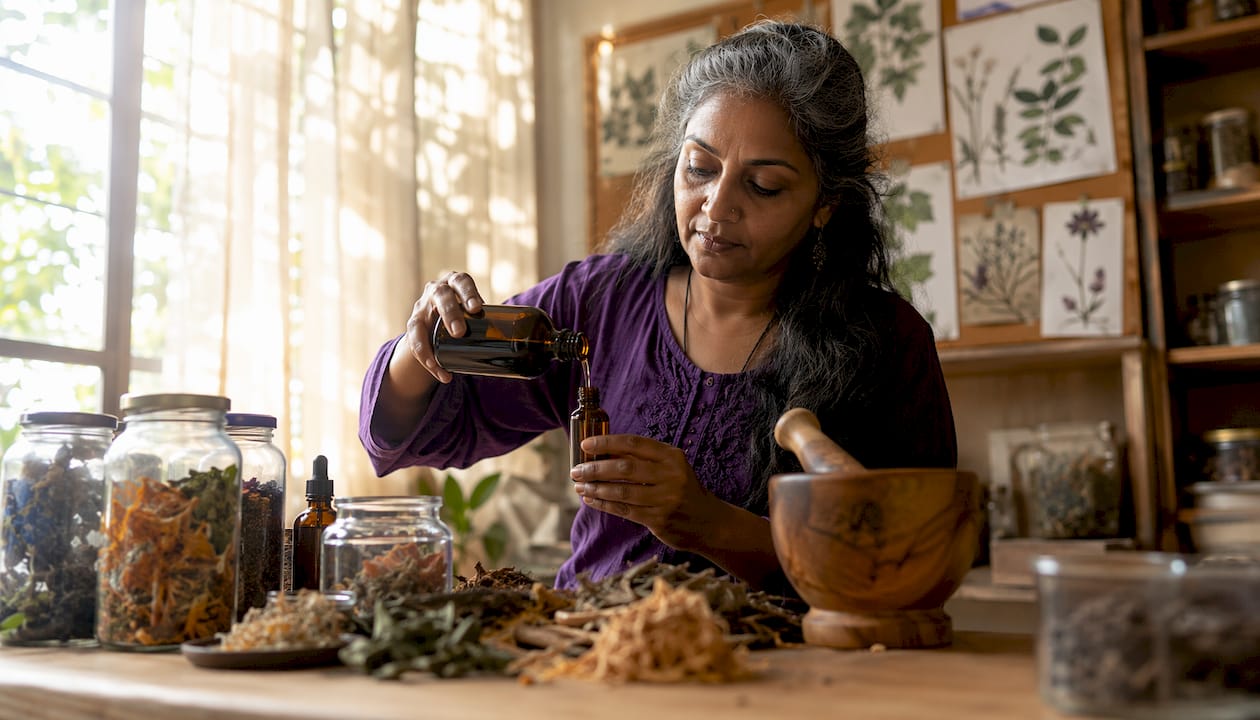
Some practitioners also incorporate aromatherapy in ritual as a way to engage a plant’s volatile signature — its scent-based energetic imprint — without ingestion. Botanical aromatics can be a particularly accessible entry point for practitioners who are new to intentional preparations.
Key Takeaways
Plant spirit work in folk herbalism is fundamentally a practice of sustained, reciprocal relationship — not a technique you apply once and move on from.
| Point | Details |
|---|---|
| Relationship over transaction | Visit the same plant across multiple seasons; patterns across visits reveal more than single-session impressions. |
| Ethics and cultural respect | Avoid culturally restricted species like white sage without guidance; prioritize local plants and sustainable sourcing. |
| Safety is non-negotiable | Confirm plant identity before any physical use; check drug-herb interactions and pregnancy contraindications with a clinician. |
| Signatures as a learning tool | A plant’s form, scent, and habitat communicate its nature; reading these cues is a core practitioner skill. |
| Kejiwastore as a prepared-product resource | Kejiwastore’s spagyric tinctures and botanical aromatics are small-batch, ethically sourced tools that support — not replace — direct plant relationship work. |
Why relationship-based practice is the only practice worth doing
The conventional framing of plant spirit work tends to split into two camps: the purely mystical (all vision, no grounding) and the purely skeptical (all chemistry, no presence). Both miss the point. What folk herbalism traditions across cultures actually describe is something more demanding and more rewarding than either: a disciplined, reciprocal relationship with a living being that operates on registers your analytical mind was not trained to read.
What gets underestimated is the patience this requires. Most practitioners who report meaningful plant spirit experiences did not have them in their first sitting. They had them after months of showing up to the same plant, in the same spot, through rain and drought and the quiet boredom that precedes genuine attention. The plant did not change. Their capacity to perceive changed.
The spagyric and alchemical traditions that inform Kejiwa Alchemy’s work take this seriously. The preparation of a tincture is not a shortcut to relationship — it is an extension of it. When a plant is harvested with attention, processed with care, and offered to a practitioner who approaches it with the same attentiveness, something of that relational quality carries through. That is not mysticism for its own sake. It is a coherent philosophy of how intention shapes practice.
The decolonization conversation in herbalism is equally worth taking seriously, not as a political obligation but as a practical one. The traditions that have kept plant spirit knowledge alive longest are the ones that maintained reciprocity — with the plants, with the land, and with the communities those plants belonged to. Reconnecting with that ethic is not about guilt. It is about learning from what actually works.
Kejiwastore’s botanical tools for plant-spirit practice
If you are ready to bring intentional preparations into your practice, Kejiwastore offers a focused range of small-batch products designed for exactly this kind of work.

Kejiwastore’s spagyric herbal tinctures are prepared using the full alchemical process — plant body, essential oils, and mineral salts reunited — with organic and wild-harvested botanicals sourced for both quality and provenance. Each preparation is a tool for deepening a relationship you are already building in the field, not a substitute for it. The Piñon Pineal Spagyria is a strong starting point for practitioners drawn to conifer medicine and clarity work.
For scent-based practice, the botanical aromatics collection offers aromatherapy elixirs and mists that engage a plant’s volatile signature directly. These work well as ritual anchors — a spray before meditation, a scent-cue during journaling, or a sensory bridge when field contact is not possible.
All products are made in small batches with ethically sourced ingredients. They are intended to complement, not replace, the direct plant relationships this guide describes. Follow the safety guidance in the contraindications section before use, and consult a clinician if you are pregnant, nursing, or on prescription medication. Browse the full range at Kejiwastore and find the preparation that fits where your practice is right now.
This article is general educational information, not medical or clinical advice. Confirm current regulations and contraindications with a qualified healthcare provider or your state’s relevant authority before using plant preparations.