


Tulsi, brahmi, gotu kola, mugwort, blue lotus, rosemary, chamomile, and sage are the most widely used third eye herbs, and their real job is to quiet the nervous system and sharpen focus, not to unlock psychic ability on command. No herb guarantees an “opening.” What these plants actually do is create the internal conditions, calm, clarity, and better dream recall, providing space where intuitive practice can deepen. Start with one nervine for calm, one focus herb for clarity, and always pair them with something grounding.
TL;DR:
- Most third eye herbs like mugwort and blue lotus support calmness, focus, and vivid dreams but do not reliably open or activate the third eye.
- Safety considerations include avoiding mugwort during pregnancy and consulting a clinician if taking medication or experiencing allergies, especially to plants from the Asteraceae family.
- Consistent use of calming herbs like tulsi, chamomile, and gotu kola over weeks enhances dream recall, focus, and mental clarity better than sporadic or high-dose applications.
- Pairing opening herbs with grounding botanicals such as vetiver, cedarwood, or patchouli helps stabilize energy after focused or visionary sessions.
- Preparation methods must match the intended ritual, with herbal teas, tinctures, and space clearing being the most common and effective forms.
Table of Contents
- What Are the Best Third Eye Herbs for Meditation?
- How to Prepare and Use Third Eye Herbs Safely
- Are Third Eye Herbs Safe? Contraindications to Know
- Grounding vs Opening Herbs: Why Pairing Matters
- How Kejiwa Alchemy Approaches Third Eye Herbs
- What Patience Actually Looks Like in Third Eye Work
- Start Your Third Eye Practice With Kejiwa Alchemy
- Sources
- FAQ
What Are the Best Third Eye Herbs for Meditation?
Every tradition that works with the sixth chakra reaches for a small, repeating cast of plants. Below is what each one actually does, how people traditionally prepare it, and where the evidence stands.
Tulsi (Ocimum sanctum), also called holy basil, is probably the most trusted meditation herb across Ayurvedic practice. It’s traditionally taken to ease stress and support what practitioners describe as clearer cerebral circulation during long sits. Research on tulsi and related adaptogens shows measurable effects on stress biomarkers and cognitive function, which is part of why herbalists lean on it for meditative focus. You’ll find it as a tea, a tincture, or steeped into an aromatic mist for pre-meditation grounding.
- Forms: tea, tincture, aromatic spray
- Quick recipe: steep 1 teaspoon dried tulsi in 8 ounces hot water for 8 minutes
- Safety flag: generally well tolerated; those on blood-thinning or blood-sugar medication should check with a pharmacist first
Brahmi (Bacopa monnieri) has a long history in Ayurveda as a concentration and memory herb. Practitioners use it specifically to steady wandering attention, the kind that pulls you out of a visualization three minutes into a session. It’s almost always taken as a tincture or capsule rather than a tea, since the taste is notably bitter.
- Forms: tincture, capsule
- Quick recipe: a few drops of brahmi tincture in water, 20 to 30 minutes before sitting
- Safety flag: can cause mild digestive upset; avoid combining with sedative medications without guidance
Gotu Kola functions as a nervous system tonic more than a stimulant. Herbalists reach for it when a student’s practice feels scattered rather than sleepy, since it supports sustained, contemplative attention without the wired feeling some focus herbs produce.
- Forms: tea, tincture
- Quick recipe: 1 teaspoon dried leaf, steeped 10 minutes, taken in the morning before practice
- Safety flag: avoid during pregnancy; can interact with sedatives
Mugwort (Artemisia species) is the classic dreamwork herb, prized for encouraging vivid dreams and easier dream recall, which is why it shows up constantly in lucid-dreaming preparations. It’s also one of the herbs where caution matters most. Authoritative safety reviews flag limited human data and specific contraindications, particularly around pregnancy. Mugwort is not something to take casually or daily.
- Forms: dried herb for tea or smoke, tincture (used sparingly)
- Quick recipe: a light tea in moderation, consumed before sleep
- Safety flag: avoid entirely during pregnancy and breastfeeding; use in small, occasional doses only
Blue Lotus (Nymphaea caerulea) carries a reputation as a dream and relaxation ally tied to ancient Egyptian ritual use. It contains mild alkaloids, and the operative word with blue lotus is small. Higher doses can produce grogginess rather than the light, dreamy clarity people are after.
- Forms: tea, tincture
- Quick recipe: a mild infusion of a few flowers per cup, sipped before bed
- Safety flag: avoid combining with sedatives or alcohol; not for regular daily use
Rosemary, chamomile, and sage round out the list as the most accessible allies, plants most people already have in a kitchen cabinet. Rosemary supports mental clarity and is often diffused or brewed before focused visualization work. Chamomile is a gentle nervine, ideal for calming pre-meditation jitters. Sage, especially white sage or garden sage, is traditionally burned for space clearing before ritual. A Yoga International roundup lists tulsi, brahmi, gotu kola, passionflower, and sage among the herbs practitioners most consistently reach for to calm the nervous system and sharpen focus during meditation.
- Forms: tea (rosemary, chamomile), smoke or bundle (sage)
- Safety flag: sage and chamomile belong to the Asteraceae/ragweed family and can trigger allergic reactions in sensitive individuals
How to Prepare and Use Third Eye Herbs Safely
Ritual only works when the preparation is right for the moment. A tea before bed serves a different purpose than a mist mid-session, and matching the format to the intention is half the craft.
1. Calming meditation tea. Combine 1 teaspoon tulsi, half a teaspoon chamomile, and a pinch of rosemary. Steep in 8 ounces of just-off-boil water for 8 to 10 minutes, covered, then strain. Drink 20 minutes before sitting so the nervines have time to take effect.
2. Tincture micro-dosing. Herbal tinctures are typically dosed by the dropper, and most gentle nervine or focus tinctures use 1 to 2 droppers (roughly 20 to 40 drops) in a small glass of water. This is general guidance, not a prescription. Start at the lower end, note how you feel over the next hour, and adjust slowly rather than jumping to a full dose.
**3. Shake well before each use. Mist lightly around the space or over clothing, never directly onto the face or broken skin.
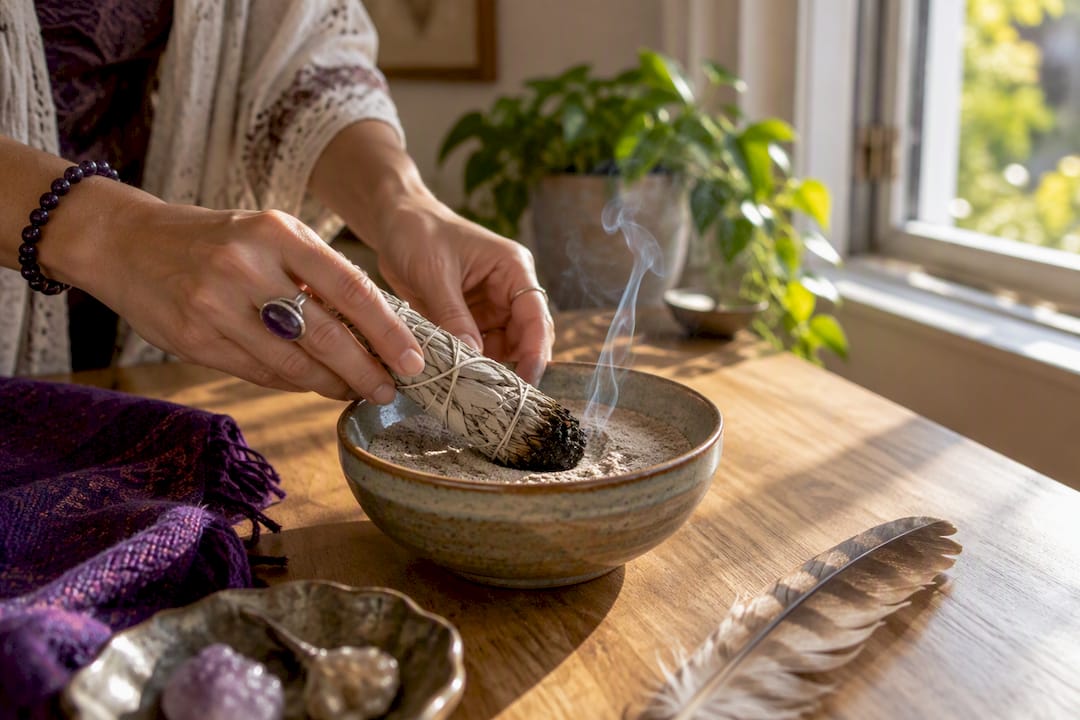
4. Basic smudge ritual for space clearing. Light the tip of a dried sage bundle, let it catch, then gently blow it out so it smolders. Walk the perimeter of your space, guiding the smoke with a feather or your hand, and set an intention as you go. Open a window afterward to let the smoke and any stagnant energy clear.
5. Mugwort dream tea for lucid dreaming. Steep a small pinch, no more than a teaspoon, in hot water for 5 minutes. Drink about an hour before sleep, and keep a journal beside the bed for morning recall.
Use dream-focused herbs like mugwort and blue lotus intentionally, reserved for dedicated sessions, rather than nightly. Herbalists consistently note that occasional, deliberate use preserves the plant’s subjective impact far better than daily habituation does, and it also keeps you from waking up groggy or overstimulated.
Pro Tip: After any visionary or dreamwork session, give yourself an integration step, five minutes of journaling or slow, grounding breathwork, before returning to your day. Skipping this is the most common reason people feel foggy or unsettled the morning after a mugwort or blue lotus session.
Are Third Eye Herbs Safe? Contraindications to Know
How you take a plant changes its risk profile entirely. Drinking a mugwort tea, inhaling a rosemary mist, and applying an essential oil to your skin are three different safety conversations, even though the source plant is the same. Oral doses are processed by your liver and can interact with medication; inhaled aromatics affect the respiratory tract and nervous system directly; topical applications risk skin irritation or, with a handful of botanicals, photosensitivity.
A few red flags deserve direct attention:
- Pregnancy and breastfeeding: Mugwort and several other potent botanicals are traditionally avoided during pregnancy, and current safety reviews back that caution given how little human data exists.
- Medication interactions: Herbs with sedative or blood-thinning properties can compound the effects of prescription CNS medications or anticoagulants.
- Allergic cross-reactions: Sage, chamomile, and related plants belong to the Asteraceae family, meaning anyone with a ragweed or daisy allergy should patch-test before regular use.
- Essential oil skin sensitivity: Undiluted essential oils can cause burns or reactions; always dilute before topical or aromatic use, and never apply near the eyes.
Broader review literature makes an important point that’s easy to miss in ritual spaces: systematic reviews consistently show herbs can influence sleep, anxiety, and cognitive markers, but there’s no clinical support for the idea that any herb reliably opens psychic perception. That’s not a dismissal of the practice, it just means the evidence supports herbs as conditions-setters rather than mechanisms of clairvoyance.
Practical safety checklist:
- Read the label and ingredient list every time, even for a brand you trust.
- Start at the lowest suggested dose and wait to see how your body responds.
- Patch-test any new essential oil on your inner arm 24 hours before broader use.
- Talk to a pharmacist or clinician before combining herbs with existing medications.
- Stop immediately if you notice rash, dizziness, or unusual grogginess, and seek care if symptoms persist.
Our stress response herbs guide breaks down how to evaluate herbal products on their own safety merits, separate from their ritual meaning, which is a useful habit no matter which plant you’re working with.
Grounding vs Opening Herbs: Why Pairing Matters
“Opening” herbs, tulsi, brahmi, mugwort, blue lotus, tend to loosen focus outward and inward at once, which is exactly what you want during visualization or dreamwork. The trade-off is that this same quality can leave you feeling scattered, floaty, or disconnected from your body once the session ends. That’s where grounding herbs earn their place in the ritual.
Common grounding allies:
- Vetiver: an earthy root oil, excellent as a diffused scent or a drop on the wrists after a session
- Cedarwood: warm and steadying, often blended into a post-meditation mist
- Patchouli: heavy and centering, traditionally used to anchor energy back into the body
- Frankincense: resinous and calming, burned or diffused to close a ritual space
Three pairings worth trying: mugwort tea for dreamwork, followed by a vetiver mist on waking to settle back into your body. Tulsi tea before meditation, followed by a few drops of cedarwood oil at the base of the skull afterward. Blue lotus tea before a visualization journey, paired with patchouli incense burned as the session closes. Our grounding essential oil blends guide walks through dilution ratios if you want to build your own mist.
Pro Tip: Build grounding into your routine automatically, not as an afterthought. A simple rule works well: whatever “opening” herb you use, follow it with a grounding scent or a few minutes of barefoot contact with the floor before you go about your day.
How Kejiwa Alchemy Approaches Third Eye Herbs
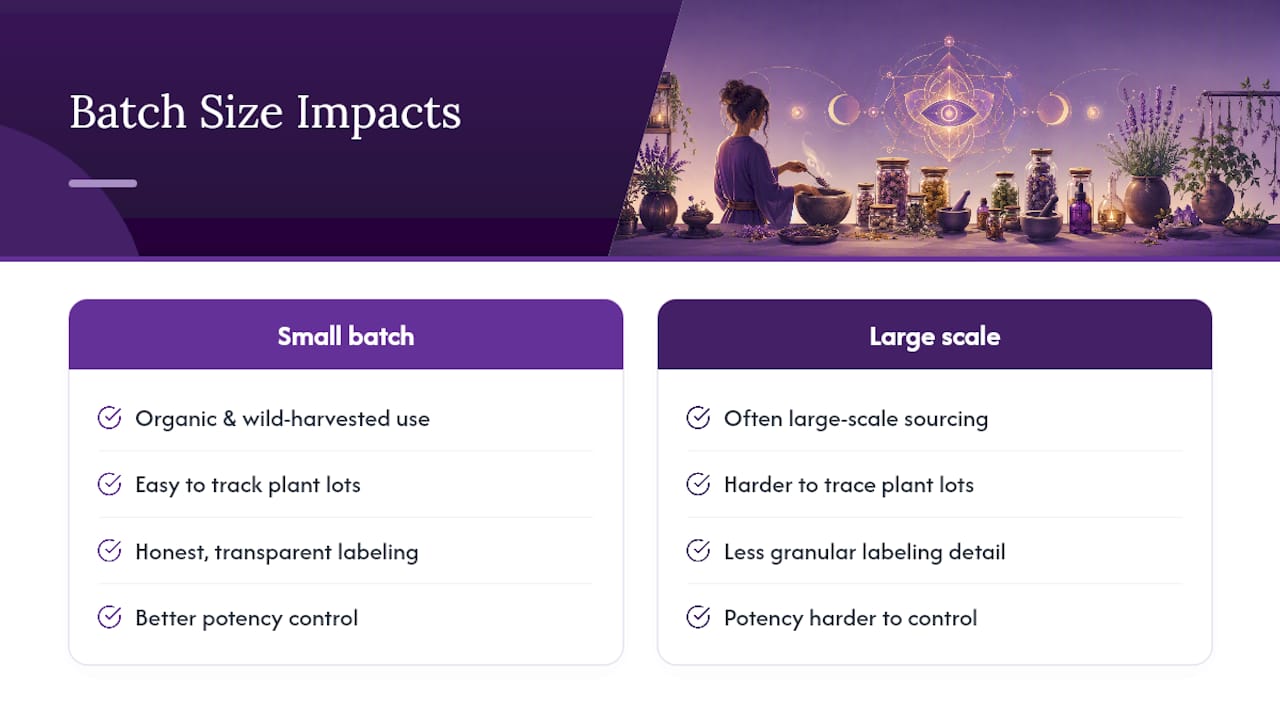
The formulation is often done in small batches using organic and wild-harvested botanicals, a decision that shapes everything from potency to how transparent the labeling can be. When a tincture is made in a batch of a few dozen bottles instead of a few thousand, it’s far easier to track exactly which plant lot went into it and disclose that honestly.
That transparency matters for everything covered above. Our spagyric herbal tinctures follow traditional alchemical extraction methods, and usage directions are written to match the same start low, go slow guidance recommended throughout this piece. The same principle applies to our botanical aromatics, where dilution and application notes are meant to align with the safety practices any responsible herbalist would recommend.
As a real-world use case: a rosemary or tulsi aromatic mist from our botanical aromatics line fits naturally into the pre-meditation ritual described earlier, misted lightly around a seated space before dropping into visualization work. It’s a use-case, not a medical claim, the mist supports the atmosphere and focus of the ritual, not a guaranteed outcome.
Our smudging herb bundles and Ormus mineral offerings round out the categories most relevant to the practices described in this guide, each crafted with the same intention: honor the plant, disclose what’s in the bottle, and let the reader decide how to work with it responsibly.
What Patience Actually Looks Like in Third Eye Work
Herbs support a disciplined practice, they don’t replace one. If you’re expecting a single cup of mugwort tea to produce a dramatic shift in perception, you’ll likely be disappointed. What actually happens, over weeks of consistent sitting, is subtler: dreams get easier to recall, focus holds a little longer, the mind settles a little faster.
The plants I’d bet on long term are the boring ones, tulsi, chamomile, gotu kola, taken consistently and paired with journaling and grounding work, not the flashy ones taken once for a big reveal. And one caution worth repeating: if you’re pregnant, nursing, or on medication, talk to a clinician before adding any of these herbs to your routine, no ritual intention overrides that.
— Kejiwa
Start Your Third Eye Practice With Kejiwa Alchemy
Kejiwa Alchemy exists for readers who want the plants in this guide without guessing at sourcing, potency, or dosage. Every product is handcrafted in small batches from organic and wild-harvested botanicals, so what’s on the label is what’s actually in the bottle.

If the pre-meditation ritual above appealed to you, our botanical aromatics collection offers grounding and upliftment mists built for exactly that moment before you sit. For readers drawn to the tincture micro-dosing guidance, our spagyric herbal tinctures apply traditional alchemical extraction to support mind, body, and soul work with the same start low, go slow philosophy this article recommends. If space clearing is more your entry point, our smudging herb bundles are built for the ritual described above, and our Ormus mineral line supports contemplative practice for those exploring energetic balance more broadly.
The best way to start is simple: pick one product that matches a ritual you already do, read the label closely, and follow the usage guidance before adding a second. Browse the full botanical aromatics collection to find the mist that fits your practice.
Sources
The PMC review and Yoga International’s herb guide informed this article’s safety and practice framing.
- PMC review (relevant herbal evidence and limitations)
- PubMed study relevant to traditional herbs and cognitive/stress markers
- PubMed resource on herbal evidence and safety considerations
- Five herbs to assist in meditation — Yoga International
FAQ
What Herb Opens the Third Eye?
No single herb reliably “opens” the third eye; tulsi, brahmi, mugwort, and blue lotus are the most commonly cited allies because they support the calm and focus that meditative and dreamwork practices depend on. Research on tulsi and bacopa shows measurable effects on stress and cognitive markers, which herbalists link to better meditative focus rather than any paranormal ability.
How Do You Naturally Open Your Third Eye?
Consistent meditation, breathwork, and journaling do more for sixth chakra work than any single herb. Pairing a calming nervine like chamomile or tulsi with a grounding practice, such as a cedarwood or vetiver mist afterward, keeps the process steady rather than disorienting.
What Trauma Is Stored in the Third Eye Chakra?
Traditional energy work associates the third eye chakra with confusion, self-doubt, and difficulty trusting one’s own perception or intuition, often tied to past experiences of being dismissed or told not to trust one’s own judgment. This is a spiritual framework rather than a clinical diagnosis, and readers dealing with real trauma symptoms should speak with a licensed mental health professional.
What Are the Signs Your Third Eye Is Opening?
People commonly report more vivid dreams, easier dream recall, a stronger gut sense about people or situations, and longer, steadier focus during meditation. These shifts tend to build gradually over weeks of consistent practice rather than appearing after a single tea or session.
Are Third Eye Herbs Safe to Use Every Day?
Gentle herbs like tulsi and chamomile are generally fine for regular use, but potent dreamwork herbs like mugwort and blue lotus are best reserved for occasional, intentional sessions rather than daily habit. Anyone pregnant, breastfeeding, or on medication should consult a clinician before starting any new herb, especially mugwort given its limited safety data.