


Water is defined as the most universal spiritual symbol in human history, recognized across more than 5,000 years of religious and indigenous traditions as a medium of purification, emotional release, and transformation. The role of water in spiritual healing is not a modern wellness trend. It is a foundational principle woven into Abrahamic faiths, Hindu sacred rivers, indigenous water ceremonies, and traditional medicine systems from China to Ayurveda. Whether you are drawn to ritual baths, mindful immersion, or simply sitting beside a stream, water meets you where you are. This article unpacks why water holds such power, how it works within the body and the energetic field, and how you can use it intentionally in your own healing practice.
What is the role of water in spiritual healing?
Water’s role in spiritual healing is defined by three core functions: purification, emotional release, and energetic transformation. These are not separate ideas. They work together every time you engage water with conscious intention.
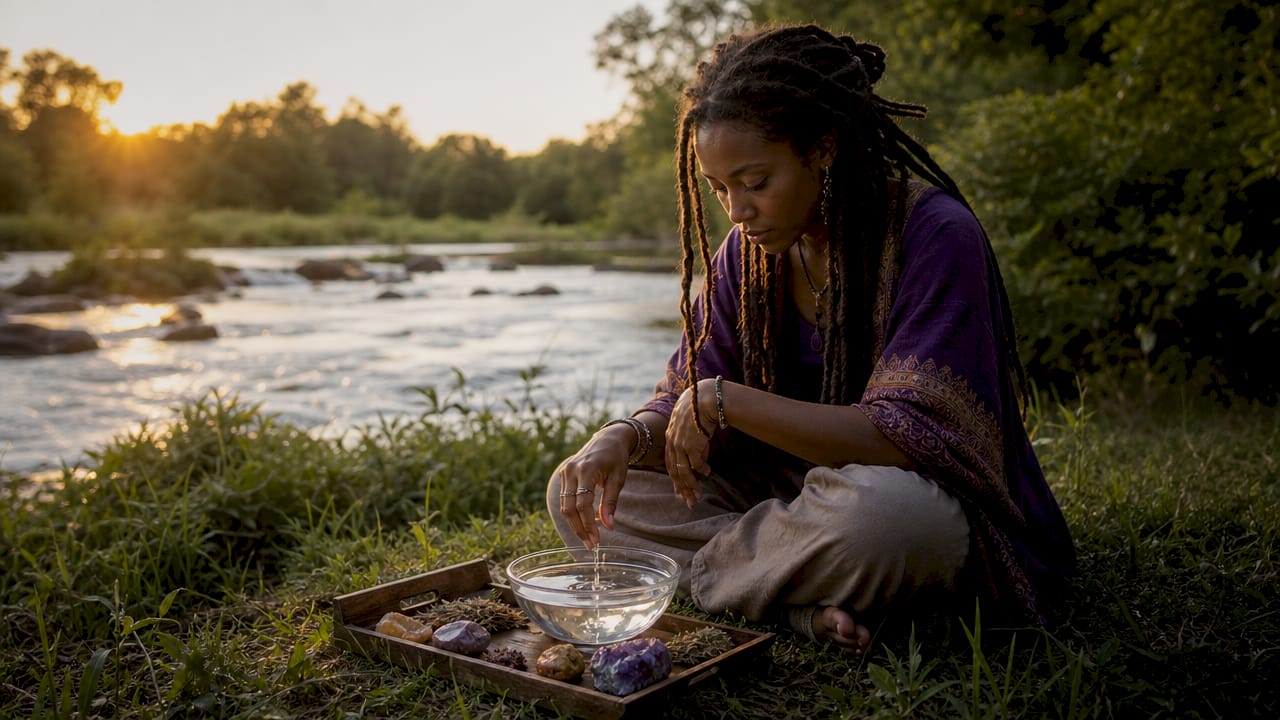
Water’s physical properties make it uniquely suited to spiritual work. It is fluid, adaptive, and reflective. It takes the shape of any container. It cleanses what it touches. These physical behaviors map directly onto spiritual principles. Fluidity mirrors emotional openness. Reflection mirrors self-awareness. Cleansing mirrors the release of what no longer serves you.
| Physical property | Spiritual meaning |
|---|---|
| Fluidity | Emotional adaptability and surrender |
| Reflection | Self-examination and clarity |
| Cleansing | Release of energetic residue and guilt |
| Life-sustaining | Connection to divine life force |
| Shape-shifting | Transformation and renewal |
Water also carries deep scriptural weight. In the Gospel of John, Jesus speaks of “living water” as a source of eternal life. Hindu tradition holds the Ganges as a goddess who dissolves karma. Indigenous traditions across North America, Africa, and the Pacific treat water spirits as living intelligences that must be honored before healing can begin. These are not coincidences. They reflect a shared human recognition that water in scripture represents divine presence and life force.
Pro Tip: Before any water ritual, pause and state your intention aloud. The water is a medium, not the source. Your focused awareness is what activates its healing potential.
How does water support emotional healing and holistic wellness?
Water’s connection to emotion is fundamental, not metaphorical. In Traditional Chinese Medicine (TCM), the water element governs the kidneys, bladder, and mucosal membranes. These organs are directly linked to fear, ancestral trauma, and the capacity for emotional fluidity. When the water element is depleted or blocked, fear becomes chronic and emotional processing slows down. That is not a poetic idea. It is a diagnostic framework used by practitioners for centuries.
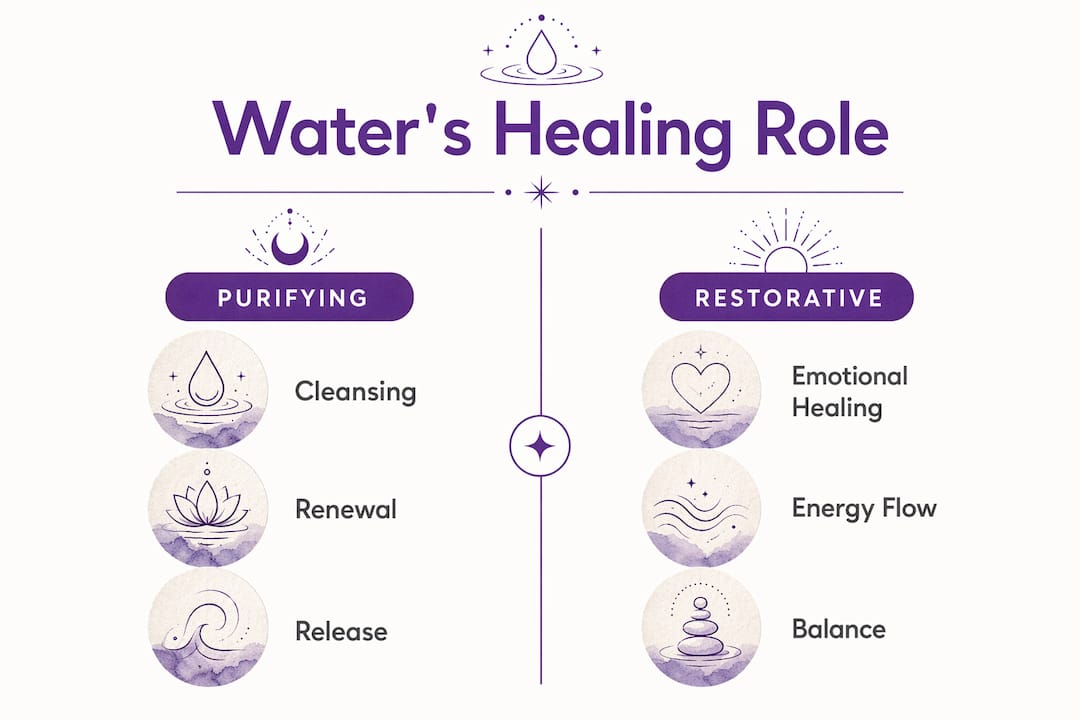
Ayurveda holds a parallel view. Water (Jala) governs cohesion, lubrication, and the emotional quality of love and attachment. Imbalance in the water element shows up as grief that will not move, or emotions that feel frozen rather than flowing.
Modern hydrotherapy adds a physiological layer to this understanding. Hydrotherapy uses thermal and mechanical water stimulation to improve circulation, reduce inflammation, and support the nervous system. Cold immersion activates the vagus nerve. Warm baths lower cortisol. These are measurable effects that align with what traditional healers have observed for generations.
The emotional benefits of water contact include:
- Fear release: Cold water immersion activates the body’s stress response and, with practice, teaches the nervous system to regulate rather than react.
- Grief processing: Tears are water. Crying near or in water amplifies the body’s natural release mechanism.
- Ancestral healing: TCM links the kidneys to inherited emotional patterns. Water rituals directed at the kidney meridian can support generational healing work.
- Stress reduction: Warm water immersion lowers cortisol and creates parasympathetic dominance, the physiological state most conducive to healing.
Combining water immersion with CBD for wellness is an emerging practice among energetic healers who want to deepen nervous system relaxation before or after water rituals. The synergy supports emotional regulation at both the physiological and energetic levels.
What water rituals are used across spiritual traditions?
Water rituals for healing appear in virtually every spiritual tradition on earth, from Christian baptism to Japanese misogi purification to Haitian Vodou river ceremonies. Each tradition uses water differently, but the underlying intention is the same: to mark a threshold, release the old, and invite the new.
Common water healing rituals across cultures include:
- Baptism (Christianity): Full or partial immersion to symbolize death of the old self and rebirth into spiritual life.
- Misogi (Shinto): Standing under a waterfall or in a cold river to purify the spirit before sacred practice.
- Ritual baths (Hoodoo, Santería, folk traditions): Bathing in herb-infused water to remove energetic residue and attract specific qualities.
- Ablution (Islam): Wudu, the ritual washing before prayer, purifies the body and focuses the mind for divine connection.
- Sacred river immersion (Hinduism): Bathing in rivers like the Ganges or Yamuna to dissolve karma and receive blessings.
- Charging water with prayer: Placing water in sunlight or moonlight while holding specific intentions, then drinking or bathing in it.
The practice of charging water with intention is particularly significant. The efficacy of this practice depends on the practitioner’s focused intent rather than any inherent property of the water itself. Water is the medium. You are the source. This distinction matters because it places responsibility and power directly in your hands.
Sacred water sources, from Lourdes in France to Chalice Well in Glastonbury to the Ganges in India, draw pilgrims who believe the water carries a concentrated spiritual charge. Whether or not you accept that claim literally, the act of pilgrimage, intention, and immersion creates a powerful psychological and energetic shift.
Pro Tip: Align your water rituals with lunar cycles. New moon baths support setting intentions. Full moon immersions amplify release and completion. The lunar cycle governs tidal rhythms, and your body is mostly water.
Navigating the shadow side of water healing
Water heals, but it also reveals. Emotional blockages are likened to stagnant water within the energetic body. When you begin working with water intentionally, those blockages can surface quickly. That is the point. But it can also feel destabilizing if you are not prepared.
Experienced spiritual healers caution that if emotional blockages are strong, water rituals may surface intense feelings rapidly. Integration support, whether through journaling, somatic bodywork, or a trusted guide, is not optional. It is part of the practice.
| Water’s nurturing qualities | Water’s challenging qualities |
|---|---|
| Cleanses and refreshes | Can overwhelm unprepared practitioners |
| Supports emotional flow | May surface buried grief or fear rapidly |
| Renews and transforms | Stagnation mirrors energetic depletion |
| Connects to life force | Overuse without grounding can destabilize |
The shadow side of water is stagnation. A pond with no inlet or outlet becomes toxic. The same is true energetically. If you use water rituals to avoid rather than process emotion, the water element turns against its own purpose. The antidote is movement: physical movement, emotional expression, and the willingness to let what surfaces actually leave.
Grounding practices like walking barefoot on earth, eating warm foods, and working with root-based herbs help stabilize the nervous system after deep water work. Water and earth work together. You need both.
Practical ways to incorporate water into your spiritual healing
Water healing does not require a pilgrimage or a ceremonial setting. The most consistent practice is the one you can sustain daily. Start with what you already have access to.
- Create a sacred bath ritual: Add Epsom salt, essential oils, and a clear intention to your bath. State what you are releasing before you enter the water. Stay for at least 20 minutes to allow the nervous system to shift.
- Practice mindful hand washing: Each time you wash your hands, pause. Feel the water temperature. State silently what you are releasing. This micro-ritual builds a consistent energetic hygiene practice.
- Drink water with intention: Hold your glass, set a clear intention for your day or your healing, and drink slowly. This is the simplest form of charging water with prayer.
- Sit near moving water: Rivers, streams, and ocean waves produce negative ions that measurably reduce cortisol and support mood. Twenty minutes near moving water shifts your biofield.
- Combine water with aromatherapy in ritual: Diffusing or misting botanical aromatics during a bath or water meditation amplifies the sensory and energetic environment.
- Journal near water: Water activates emotional fluidity. Writing beside a body of water, or even a bowl of water on your desk, loosens emotional material that might otherwise stay locked.
- Combine water with prayer: The role of prayer in herbal crafting applies equally to water work. Spoken prayer over water creates a focused energetic container that amplifies the ritual’s effect.
Accessible water rituals like immersion, sacred baths, and drinking sanctified water are supported across traditions precisely because they are repeatable. Consistency matters more than ceremony. A daily two-minute mindful hand washing practice outperforms a monthly elaborate ritual you dread.
Key Takeaways
Water is the most consistent medium for spiritual healing across human history because its physical properties, purification, reflection, and adaptability, map directly onto the emotional and energetic work that healing requires.
| Point | Details |
|---|---|
| Water as universal healer | Recognized across 5,000+ years of tradition as a medium for purification and transformation. |
| Emotional body connection | TCM links the water element to kidneys, fear, and ancestral trauma, making water rituals physically grounded. |
| Intention activates water | Charging water with focused prayer or intention is the mechanism, not the water’s inherent properties. |
| Shadow side requires grounding | Water rituals can surface intense emotions; earth-based grounding practices support safe integration. |
| Daily micro-rituals work | Consistent small practices like mindful hand washing build stronger energetic hygiene than rare ceremonies. |
Water taught me what no book could
Water has been my most honest teacher. Not because it is gentle. Because it is relentless. Every time I thought I had processed a layer of grief or fear, a deep bath or a cold river would show me there was more. That used to frustrate me. Now I understand it as water doing exactly what it is designed to do: revealing what is ready to move.
The most surprising thing I have learned is that the ritual matters less than the relationship. You can have the most elaborate ceremonial bath with every herb and crystal aligned perfectly, and if you are not present, nothing shifts. Conversely, a simple glass of water held with genuine intention and a whispered prayer can crack something open that months of therapy could not reach.
I have also learned to respect water’s dual nature. It gives life and it takes it. When I approach water healing with humility rather than expectation, it responds. When I try to force a specific outcome, it stagnates. The practice is really about learning to surrender to flow, and that is the hardest thing most of us will ever do.
If you are new to water work, start small. A bowl of water on your altar. A mindful shower. A few minutes beside a stream. Let the relationship build at its own pace. Water is patient. It has been waiting for you.
— Kejiwa
Kejiwastore products that deepen your water healing practice
Water rituals become more potent when you pair them with botanical and mineral allies that speak the same energetic language.
Kejiwastore’s Ormus minerals are crafted to support energetic coherence and spiritual receptivity, making them a natural complement to water immersion and intention-setting practices. Adding Ormus to a sacred bath or drinking water amplifies the ritual’s depth. Kejiwastore’s spagyric herbal tinctures and botanical aromatics round out the sensory and energetic environment, supporting emotional release and nervous system regulation before, during, and after water work. Each product is small-batch, intentionally crafted, and made to work alongside your practice, not replace it.
FAQ
What is the spiritual significance of water across traditions?
Water is recognized as a universal spiritual symbol across more than 5,000 years of human history. Nearly every major religion uses it for purification, renewal, and connection to divine presence.
How does water help with emotional healing?
Water supports emotional healing by activating the body’s natural release mechanisms, including tears, nervous system regulation through immersion, and the energetic flow associated with the water element in TCM. It works on both physiological and energetic levels simultaneously.
What are the most effective water rituals for spiritual cleansing?
Sacred baths, misogi (cold water immersion), ablution before prayer, and charging water with intention are among the most widely practiced and effective water rituals across traditions. Consistency and clear intention matter more than elaborate ceremony.
Can water rituals be overwhelming for beginners?
Yes. Emotional overwhelm during water rituals is a recognized risk, particularly when emotional blockages are strong. Starting with small practices and pairing water work with grounding techniques reduces this risk significantly.
How do I charge water with intention?
Hold the water in your hands, state your intention clearly (aloud or silently), and visualize the water receiving that intention. The practitioner’s focused intent is the active ingredient. The water is the medium that holds and transmits it.