


The most meaningful gifts for healers are intention-first tools that support their actual work: ritual kits, portable practice tools, reflective journals, ethically sourced crystals, and botanical aromatics. Skip the generic candle or coffee-table crystal. This guide breaks down gift ideas for healers by category, shows how to choose one that fits a specific practice, and includes Kejiwa Alchemy pieces built for exactly this kind of giving.
TL;DR:
- Portable tools should be compact and multi-use, especially for practitioners who travel frequently between client sites or need tools that withstand travel.
- Ritual kits and smudging bundles should be complete, sourced organically, and targeted toward specific practices like space clearing or energy cleansing.
- Crystals and wearable reminders work best when they serve as subtle energetic anchors and are paired with botanical elements, rather than being purely decorative.
- Gifting should consider the recipient’s specific modality, sensitivities, and preferences, avoiding assumptions about tradition or practice framework.
- Presentation matters: cleanse, charge, and include a clear intention with the gift to reinforce its practical and spiritual purpose.
Table of Contents
- Gift Ideas for Healers, Organized by What They Actually Use
- How to Choose a Gift That Actually Fits Their Practice
- How to Present a Gift So It Feels Ready for Practice
- Why Kejiwa Alchemy Understands What Healers Actually Need
- Making a Gift Feel Personal Without Overdoing It
- Respecting Different Traditions When You Give a Spiritual Gift
- What This Guide Gets Right That Most Gift Lists Miss
- Kejiwa Alchemy Picks for Every Category on This List
- Sources
- FAQ
Gift Ideas for Healers, Organized by What They Actually Use
Healers get a lot of well-meaning but useless gifts. A decorative crystal that sits on a shelf. A generic spa gift card. A book they already own three copies of. The gifts that land are the ones that plug directly into how someone works, whether that’s a Reiki practitioner moving between client sessions, an herbalist mixing tinctures at a home apothecary, or a massage therapist who spends her days on her feet.
Here’s how to think about categories, matched to what different types of practitioners actually need.
Portable practice tools
Mobile practitioners, house-call energy workers, and anyone who travels between client sites value gifts that survive a bag. Handheld singing bowls, compact ritual wands, mala beads, and travel-sized smudge sticks all get chosen for one reason: dual utility. A healer can use them in a session and in their own personal practice, which makes the gift feel less like decor and more like equipment.
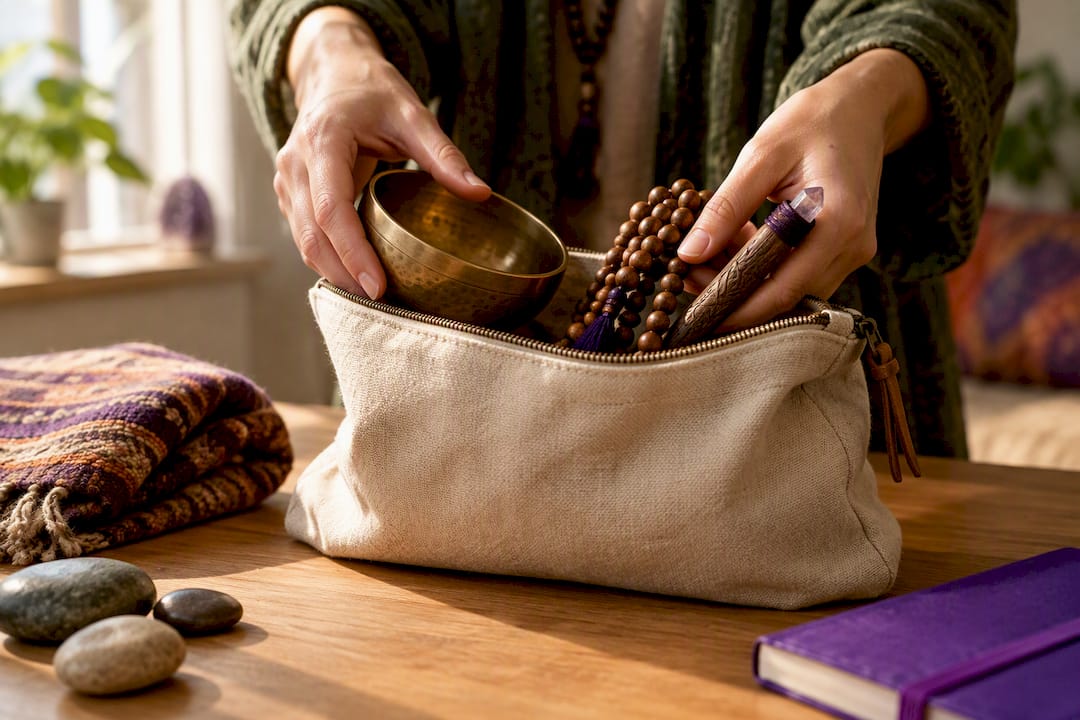
A small crystal set that fits in a pouch beats a large geode that never leaves the car. If the recipient does a lot of driving between appointments, portability isn’t a nice-to-have. It’s the deciding factor.
Ritual kits and smudging bundles
Packaged ritual kits remove the guesswork for gift buyers, which is exactly why they’re so popular. A complete chakra kit built for Reiki masters bundles a wand, mala, bracelet, pendulum, and pendant into one presentable box, giving the giver a finished, ready-to-wrap experience instead of five separate purchases. That’s a strong option for a beginner-level Reiki practitioner or someone newer to energy work.
Smudging herbs occupy their own tier. They’re consumable, they’re used constantly in space-clearing between clients, and a healer never seems to have enough on hand. Look for wild-harvested or organically grown bundles rather than mass-produced ones, since sourcing matters more here than almost any other category. Kejiwa Alchemy’s smudging herbs for energy cleansing and ceremony are built specifically for this kind of ritual use, not shelf display.
- Best for: energy workers, Reiki practitioners, anyone who clears space between sessions
- Price band: modest to mid-range, depending on bundle size
- Watch for: mass-produced bundles with vague sourcing claims
Crystals and wearable reminders
Crystals are the most obvious gift category for a spiritual practitioner, and also the easiest to get wrong. A large decorative piece can feel like clutter to someone who already works with stones daily. Wearable crystal jewelry tends to land better, because it does double duty as a subtle energetic anchor during the workday.
Reiki-infused protection necklaces marketed specifically to healers and empaths lean into this idea: the jewelry isn’t just pretty, it’s framed as a wearable reminder to hold personal boundaries while doing energy work for others. Similar bracelets marketed toward caregivers and healthcare and healing professionals carry the same logic. The gift becomes a physical cue to protect one’s own energy, not just a pretty accessory.
If you’re choosing a crystal gift, a curated set with variety, like Kejiwa Alchemy’s Crystal Vortex collection, gives the recipient options rather than locking them into one stone that may not fit their current practice. Pairing a crystal with a complementary botanical mist deepens the ritual further, an approach covered in this guide to crystal and botanical pairing.
Journals and reflective tools
Daily-practice items earn repeat use, which is exactly why gift guides for spiritual people keep coming back to planners, affirmation cards, and ritual boxes. These items become anchors in someone’s routine instead of one-time novelties.
A dedicated Reiki journal built for recording session notes, self-Reiki insights, and dream messages is a good example. It gives a practitioner a structured place to track client sessions and their own energetic shifts over time, something a generic blank notebook doesn’t do as well.
Aromatherapy and botanical mists
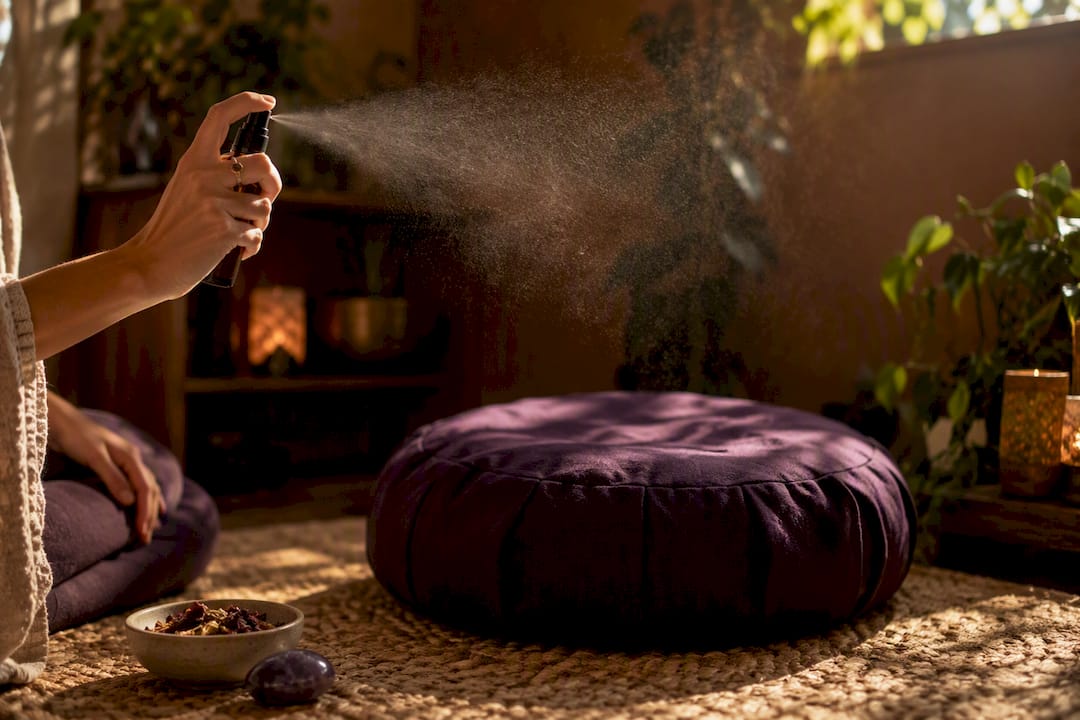
Scent is powerful in healing work, and also risky as a gift if you don’t know someone’s sensitivities. Botanical aromatics used for grounding and upliftment support meditation, cleansing rituals, and the transition between client sessions. Kejiwa Alchemy’s botanical aromatics collection is built around organic and wild-harvested plant material rather than synthetic fragrance blends, which matters to practitioners who are sensitive to what they breathe in all day. For DIY-minded recipients, a set of grounding essential oil blends gives them the ingredients to build their own mist.
Study and education gifts
Not every gift has to be a physical tool. A book on a modality adjacent to what they already practice, a workshop credit, or a subscription to a spiritual wellness resource all support the intellectual side of the work. These gifts work especially well for healers in the early stages of certification who are still building their reference library.
Self-care tools for healers
This is the category most gift guides skip, and it’s arguably the most important one. Healers give energy out constantly; the gifts that actually help are the ones that refill instead of just decorate. Heating pads for massage therapists’ hands, weighted blankets for nervous system regulation, and unscented body oils for someone who spends all day around other people’s scents all belong here. Broad marketplace listings for healing gifts show just how wide the price range runs, from small trinkets under $20 to substantial ritual sets well over $100.
Pro Tip: Store crystal gifts away from direct sunlight and cleanse them under running water or moonlight before gifting, especially if the stone has passed through several hands at a market or shop. A crystal that arrives “pre-cleared” feels more ready to use than one that arrives untouched.
How to Choose a Gift That Actually Fits Their Practice
The single biggest mistake in gift-giving for healers is assuming all spiritual practitioners want the same things. A massage therapist and a Reiki practitioner have almost nothing in common in terms of daily tools, even though both fall under the “healer” umbrella. Before you buy anything, answer these questions.
- What modality do they practice? Energy healers lean toward crystals, wands, and pendulums. Herbalists want tinctures, dried botanicals, and apothecary tools. Massage therapists want tactile self-care items, not spiritual jewelry.
- Do they travel for work? If they see clients at multiple locations, prioritize compact, travel-friendly versions of any tool.
- Do they have scent sensitivities or allergies? Aromatherapy mists and smudging herbs are wonderful gifts, but a strong or unfamiliar scent can backfire badly for someone who works closely with clients all day.
- Do they prefer simple, natural items over elaborate ones? Some practitioners want minimalist tools; others love an elaborate ritual box. Watch how they talk about their own space for clues.
Budget tiers run roughly like this: under $30 covers a single smudging bundle, a small crystal, or a journal. The $30 to $75 range covers most aromatherapy sets, curated crystal collections, and mid-size ritual kits. Above $75 typically means a full packaged kit, a tincture set, or a higher-grade Ormus mineral product.
The biggest etiquette rule is one that gets broken constantly: never assume someone’s specific spiritual framework matches your own. A practitioner who works with one tradition may not want tools associated with another. When you’re unsure, scent sensitivities and unsolicited crystal placements can create real friction, so lean toward neutral, practice-supporting items and include a short note on suggested use rather than instructions on how they “should” use it.
How to Present a Gift So It Feels Ready for Practice
A thoughtful gift for a healer deserves a presentation that matches the intention behind it. This doesn’t require elaborate ceremony, just a few deliberate steps before wrapping.
- Set a clear intention for the gift before you wrap it, even something as simple as “may this support your work and protect your energy.”
- Cleanse the item with smoke from a smudging herb or a few passes of sound from a bell or bowl.
- Charge it briefly under moonlight overnight, especially for crystals or jewelry.
- Include a short handwritten note describing the intention behind the gift, not just a generic “hope you like it.”
For packaging, wrap in natural fiber like cotton or linen rather than plastic, and include a small card with suggested uses so the recipient isn’t guessing. If you’re unsure about scent sensitivities, choose a scent-free wrap and skip any strongly aromatic tissue paper.
Shipping a gift instead of handing it over in person doesn’t have to break the ritual. Slip in a small smudge sachet, seal the box with a stated intention (“sealed with grounding energy”), and include a card explaining how to use the item once it arrives.
Pro Tip: If you’re shipping during warmer months, avoid pairing wax-based items like candles with essential oil bottles in the same package. Heat can compromise both, and a leaked oil bottle ruins the whole presentation.
Why Kejiwa Alchemy Understands What Healers Actually Need
Kejiwa Alchemy builds its product families around the same principle that runs through this whole guide: gifts should support practice, not just decorate a shelf. Ormus minerals, spagyric tinctures, botanical aromatics, smudging herbs, and the Crystal Vortex collection are all made in small batches using organic and wild-harvested ingredients, with sourcing and craft treated as part of the product’s integrity rather than a marketing line.
That approach comes from working closely with the alchemical traditions these tools draw from. For a deeper look at how something as elemental as water plays into spiritual healing work, this piece on water’s role in spiritual practice shows the kind of thinking behind every product Kejiwa Alchemy makes.
Making a Gift Feel Personal Without Overdoing It
Personalization turns a good gift into a memorable one, but it works best in small, restrained doses. A monogrammed pouch for a crystal set or an engraved pendant with a practitioner’s initials adds a personal touch without overwhelming the item’s spiritual purpose. The gift stays the focus. The personalization is a quiet detail underneath it.
Handwritten intention cards do more work than most people expect. A short note naming a specific quality you associate with the recipient’s practice (“for the steady hands you bring to every session”) carries more weight than a generic engraved phrase. If you want something more structured, custom labels on tincture bottles or aromatherapy mists, noting the intended use or the date given, turn a functional item into a keepsake.
Avoid over-personalizing items meant for daily practice use. A smudging bundle engraved with a name is impractical since it burns away. Save customization for items meant to last: jewelry, journals, pouches, and wooden boxes. That’s where a monogram or a short phrase adds meaning without interfering with how the object gets used.
Respecting Different Traditions When You Give a Spiritual Gift
Spiritual and healing practices draw from a wide range of cultural traditions, and treating them as interchangeable is one of the fastest ways to give a gift that misses the mark. Smudging, for instance, is rooted in specific Indigenous practices, and not every practitioner uses that term or that method for cleansing space. Some prefer sound cleansing, sprays, or incense from entirely different traditions.
Before choosing an item tied to a specific cultural or religious practice, consider whether the recipient actually works within that tradition or whether a more universal alternative fits better. Aromatherapy mists and crystal sets tend to cross tradition lines more easily than items with specific ceremonial origins. When in doubt, ask directly, or choose something the recipient has already shown interest in rather than assuming based on their general “healer” label.
Inclusivity also means recognizing that not every healer identifies as spiritual in a New Age sense. Massage therapists, physical therapists, and body workers may practice healing without any energy work framework at all. A gift that assumes crystals or chakras apply to everyone in this broad category can feel like a mismatch. Reading the specific practice, not the umbrella term, prevents that gap.
What This Guide Gets Right That Most Gift Lists Miss
Most gift roundups for healers treat the category as one big undifferentiated group of “spiritual people,” which leads to lists heavy on decorative crystals and light on anything a practitioner would actually use during a workday. That’s backwards. The best gift ideas for healers start from function, not aesthetic. Ask what modality someone practices before you ask what looks good wrapped in tissue paper.
The self-care angle gets underweighted almost everywhere. Healers give energy out all day; a gift that helps them recover matters more than one more crystal for the collection. If you take one thing from this guide, prioritize practice fit and recovery support over anything decorative.
Small-batch, ethically sourced items also carry more weight in this space than mainstream gift guides acknowledge. A practitioner who works with energy and plant medicine daily notices the difference between a mass-produced smudge stick and one grown and harvested with intention. That difference shows up in how the gift feels the moment it’s opened.
— Kejiwa
Kejiwa Alchemy Picks for Every Category on This List
If you want a handcrafted, ritual-ready gift without assembling five separate items yourself, Kejiwa Alchemy’s collections map directly onto the categories covered above. For the ritual kit and smudging bundle category, the smudging herbs collection gives you organically sourced options built for actual ceremony use, not shelf display. For aromatics and grounding, the botanical aromatics line covers mists made for upliftment and nervous system support.
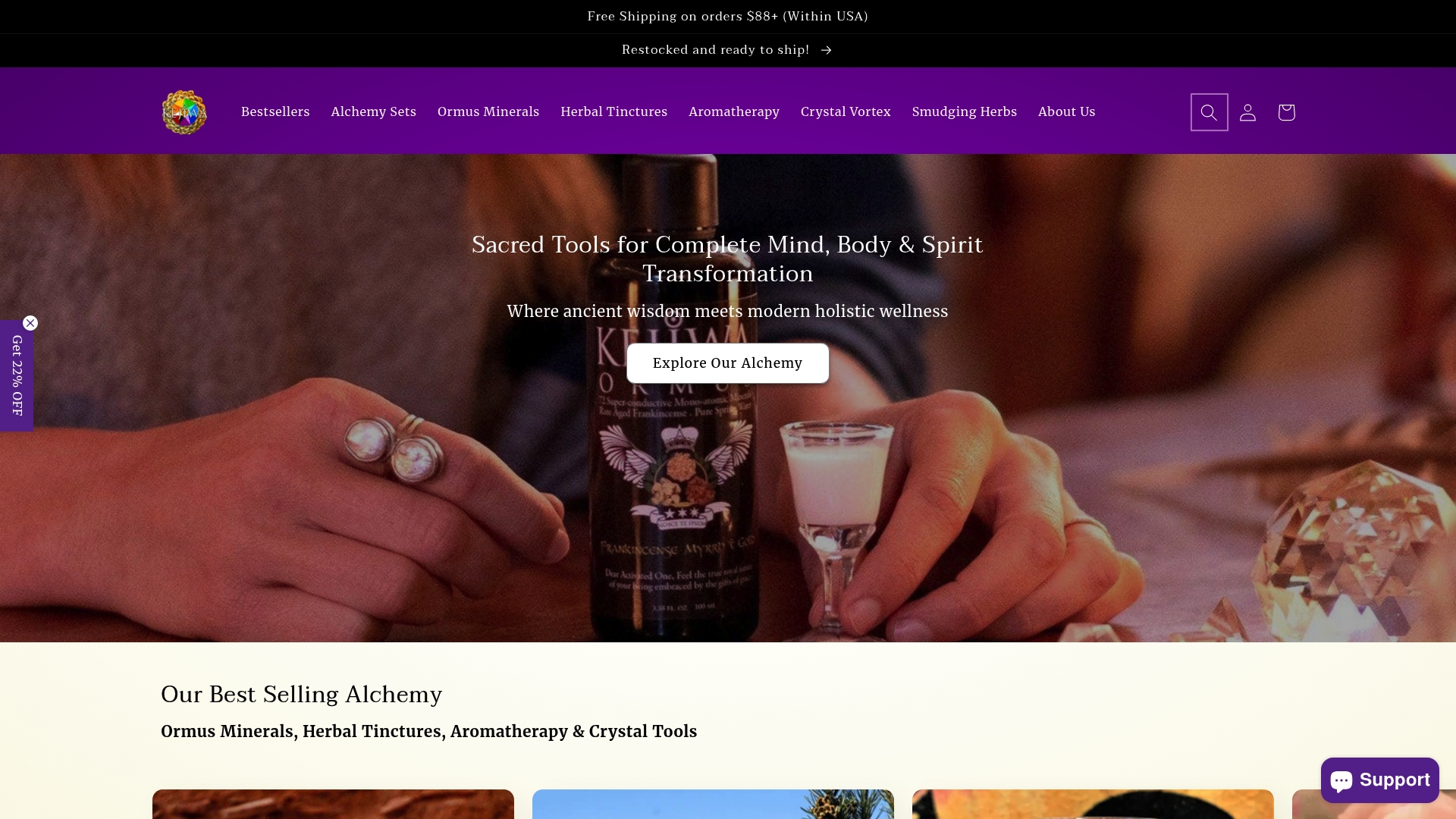
For energetic support and vitality, the Ormus minerals collection offers monoatomic gold products crafted in small batches for practitioners who want something beyond a standard supplement. If tinctures fit the recipient’s practice better, the spagyric herbal tincture line nourishes mind, body, and soul through traditional alchemical methods. And for the crystal and wearable reminder category, the Crystal Vortex collection rounds out a gift with stones chosen for spiritual alignment rather than decoration alone.
Every product ships with attention to presentation, since a gift that looks rushed undercuts the intention behind it. If you’re shopping for a healer who deserves something made with the same care they put into their own practice, browse the full Kejiwa Alchemy collection and pick the category that matches how they actually work.
Sources
- 26 Positive Energy Gift Ideas for Spiritual People | The Good Body
- Energy Shield Necklace for Healers & Empaths – Reiki-Infused Crystal Protection — Ivy+Light
FAQ
What Are Good Gifts for a Spiritual Healer?
The best gifts support their actual practice rather than sitting on a shelf: smudging bundles, portable ritual tools, ethically sourced crystals, aromatherapy mists, and reflective journals for tracking session insights. Kejiwa Alchemy’s smudging herbs and Crystal Vortex sets both fit this practice-first approach.
What Makes a Good Healing Gift?
A good healing gift matches the recipient’s specific modality, whether that’s energy work, herbalism, or bodywork, and respects any scent sensitivities or allergies they have. Items with dual utility, ones the healer can use both in sessions and personal practice, tend to get used the most.
What Are Some Good Healing Presents for Someone Prone to Burnout?
Self-care tools that help a healer recover their own energy make excellent presents: unscented body oils, weighted blankets, journals for reflection, or grounding aromatherapy mists. Since healers give energy out constantly, gifts framed around recovery often mean more than another decorative item.
What Items Symbolize Healing?
Crystals, smudging herbs, water, and botanical aromatics are common symbols of healing across many spiritual traditions, each representing cleansing, grounding, or energetic renewal. Wearable items like protection necklaces also carry symbolic weight, acting as a daily reminder to protect one’s own energy while working with others.
How Much Should I Spend on a Gift for a Healer?
Gifts for healers run from under $30 for a single smudging bundle or small crystal up to $75 and beyond for full ritual kits or premium tinctures. Kejiwa Alchemy’s collections don’t list published prices online, so exact costs are available directly on the product pages.