


A short, repeatable nightly botanical ritual — timed 40–60 minutes before bed — reliably signals a parasympathetic shift and supports restorative sleep when you follow it consistently. Here is what to do tonight:
- 60 min before bed: Dim lights to candlelight or amber tones; lower room temperature to 65–68°F.
- 50 min before bed: Steep your foundational sleep tea (chamomile, lemon balm, or passionflower) for 5–7 minutes. Inhale the steam slowly as you pour.
- 40 min before bed: Take your foundational spagyric tincture sublingually or stir it into the warm tea.
- 30 min before bed: Mist your pillow and aura with a botanical aromatic; set a clear intention for rest.
- Optional: Add a targeted tincture or Ormus mineral drop for deeper ceremonial support on high-depletion nights.
TL;DR: The single most essential habit is a consistent nightly anchor at the same time every night. Timing and repetition matter more than any single herb.
Table of Contents
- Why a botanical ritual supports restorative sleep
- How do you match botanicals to your energetic pattern?
- Which botanicals and forms work best for sleep?
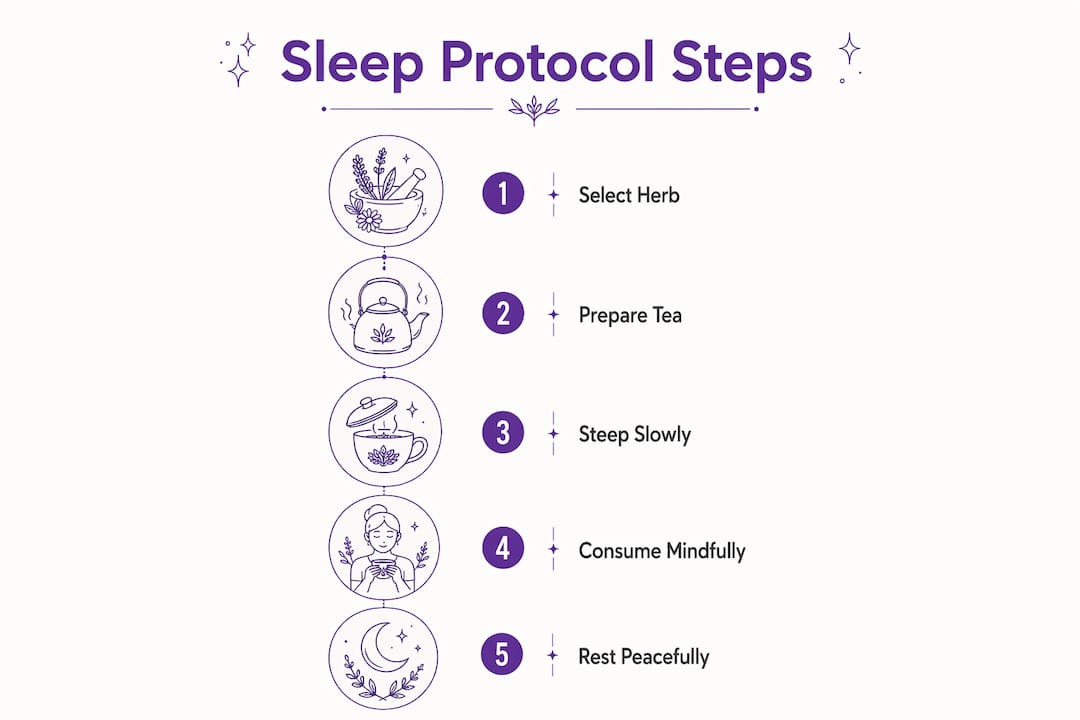
- Three sample protocols you can follow tonight
- How to build a 4-week restorative sleep protocol
- Safety, contraindications, and when to seek medical advice
- How do you know if a botanical is ritual-grade quality?
- How Kejiwa Alchemy’s offerings map to this protocol
- Key Takeaways
- A practitioner’s note on why this ritual matters
- Kejiwastore’s botanical sleep collection
- Useful sources and further reading
Why a botanical ritual supports restorative sleep
Timed botanicals and repeatable rituals act as circadian bookends — environmental and sensory cues that signal safety to the nervous system and begin the sympathetic-to-parasympathetic shift before herbs take effect.
Your body reads light, temperature, scent, and routine as information. Reducing blue light raises melatonin production. Drinking warm tea triggers a mild core temperature drop as the body radiates heat outward, which itself promotes sleep onset. Repeatable sensory cues — the scent of lavender, the weight of a ceramic mug, the act of steeping — train the nervous system to associate those cues with safety and rest. Over time, the ritual itself becomes the trigger, independent of any pharmacological action.
Specific botanicals then layer biochemical support on top of that foundation:
- GABA modulation: Valerian (valerenic acid), passionflower (chrysin), and chamomile (apigenin) all support GABAergic pathways, reducing neural excitability.
- HPA-axis regulation: Ashwagandha modulates cortisol and stress-response signaling, addressing the root cause of wired-but-tired depletion.
- Heart-Shen nourishment: Classical TCM formulas like Suan Zao Ren Tang nourish Liver Blood and calm the Heart-Shen, restoring sleep architecture rather than simply sedating.
- Anti-inflammatory and temperature pathways: Lavender and glycine (indirectly via temperature regulation) reduce systemic arousal.
Pro Tip: The act of preparation — slowly steeping tea, holding the warm cup, taking three conscious breaths over the mist — speeds the parasympathetic transition even before herbal compounds reach peak absorption. Treat preparation as medicine, not preamble.
How do you match botanicals to your energetic pattern?
Constitutional herbalism matches plants to your individual energetic pattern, not just the symptom of poor sleep. A cooling sedative given to someone already cold and depleted can deepen exhaustion rather than restore it.
Ask yourself these four questions before choosing your herbs:
- Do you fall asleep easily but wake between 1–3 AM with racing thoughts? (Liver Heat / excess pattern)
- Do you lie awake with an anxious, busy mind but feel physically exhausted? (Heart-Shen deficiency)
- Do you feel wired and hot at bedtime, unable to wind down? (excess / heat pattern)
- Do you feel flat, depleted, and unable to drop into deep sleep? (deficiency / cold pattern)
Excess / heat pattern: Cooling, sedative-nourishing formulas work best. Reach for passionflower, lemon balm, Suan Zao Ren Tang, or skullcap. Avoid stimulating adaptogens at night.
Deficiency / cold pattern: Nutritive nervines are your allies. Oat straw, milky oats, ashwagandha (taken earlier in the evening), and reishi support the nervous system without further depleting it.
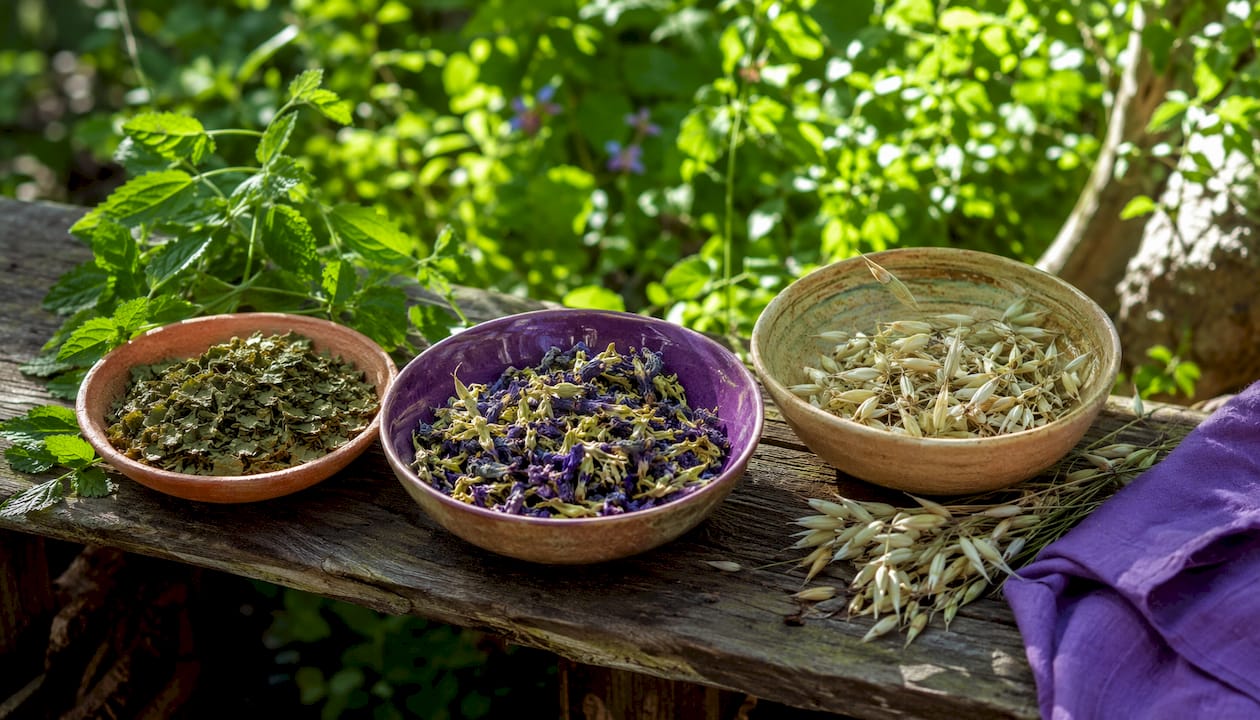
Test one herb or formula for a full two weeks at the same nightly time before adding another. Practitioners recommend this calibration window because the body needs consistent exposure to retrain its circadian response. If you notice no shift after two weeks, pivot to a different energetic match before stacking more herbs.
Pro Tip: If you work with clients or hold space for others energetically, your pattern may shift seasonally or after high-output periods. Re-assess your constitutional match every 4–6 weeks, especially after ceremony or intensive practice.
Which botanicals and forms work best for sleep?
Choose your delivery form based on timing need: fast onset calls for nano-emulsified or sublingual tinctures; sustained overnight coverage calls for longer-acting formats.
| Botanical | Primary Mechanism | Best Form | Onset | Typical Dose |
|---|---|---|---|---|
| Valerian | GABA modulation | Tincture, capsule | onset varies | typical extract dose |
| Chamomile | Apigenin / GABA | Tea, tincture | onset varies | typical dose |
| Passionflower | Chrysin / GABA | Tea, tincture | onset varies | typical dose |
| Lemon balm | GABA-T inhibition | Tea, tincture | onset varies | typical dose |
| Ashwagandha | HPA-axis / cortisol | Capsule, tincture | onset varies | typical extract dose |
| Suan Zao Ren Tang | Heart-Shen / Liver Blood | Decoction, tincture | onset varies | per formula instructions |
| Lavender | Anti-inflammatory / aromatic | Essential oil, mist | onset varies | typical aromatic dose |
Certain nano-delivery formats may have faster onset compared to traditional oil-based extracts. Timing for dosing depends on product and individual response. Transdermal and sustained-release formats provide longer overnight coverage and reduce the mid-sleep drop-off that wakes light sleepers around 3 AM.
Safety notes:
- Avoid combining multiple sedating botanicals with alcohol or prescription sedatives.
- Valerian and passionflower may potentiate benzodiazepines and other CNS depressants.
- Ashwagandha is contraindicated in thyroid conditions and autoimmune disorders without practitioner guidance.
- Pregnancy and breastfeeding: consult a qualified herbalist or clinician before use.
Pro Tip: Add a botanical aromatics mist to your pillow and pulse points at the 30-minute mark. Aromatic delivery works within minutes and reinforces the sensory anchor even when you vary other protocol elements.
Three sample protocols you can follow tonight
Protocol 1 — Minimal (onset difficulty)
| Step | Timing | What to Do |
|---|---|---|
| Dim lights | 60 min before bed | Amber/candlelight only |
| Chamomile-lemon balm tea | 45 min before bed | 1 tsp each, steep 7 min |
| Passionflower tincture | 40 min before bed | 1–2 mL in tea |
| Aromatic mist | 30 min before bed | 2–3 sprays on pillow |
Protocol 2 — Full Ritual (mid-night waking)
- 60 min: Environment shift (light, temperature, screen curfew).
- 50 min: Brew Suan Zao Ren Tang decoction or a passionflower-valerian blend.
- 40 min: Take spagyric tincture sublingually; hold for 60 seconds before swallowing.
- 30 min: Mist aura and bedroom; 5 minutes of slow breathwork (4-count inhale, 8-count exhale).
- 20 min: Journal or set a sleep intention; no screens.
Protocol 3 — Deep Ritual (high-stress / high-depletion nights)
Follow Protocol 2 fully, then add:
- 25 min: 3–5 drops of Ormus minerals in a small amount of water, held with intention.
- 15 min: Gentle yin yoga or legs-up-the-wall for 5–7 minutes.
- 10 min: Guided body scan or silent meditation in bed.
Pro Tip: Combine tea and tincture rather than taking them separately. The warm liquid slows your breathing, the tincture absorbs sublingually, and the ritual of holding the cup gives your nervous system a clear “we are winding down” signal.
How to build a 4-week restorative sleep protocol
Follow a consistent nightly anchor and test one variable at a time. That single rule prevents the most common mistake: changing too many things at once and losing track of what worked.
- Week 1–2 (Calibration): Choose one protocol from above. Use it at the same time every night. Track time to fall asleep, number of night wakings, morning energy (1–10), and one subjective note. Do not change herbs or timing yet.
- Week 3 (Stabilization): If you notice improvement, hold the protocol steady. If sleep quality is unchanged, adjust one variable — swap one herb, change the tincture dose by 0.5 mL, or add an aromatic layer.
- Week 4 (Evaluation): Review your tracking log. A clear pattern of improvement validates the protocol. Persistent difficulty despite consistent use warrants a constitutional re-assessment or practitioner consultation.
| Tracking Column | What to Record |
|---|---|
| Time to fall asleep | Minutes from lights-out to sleep |
| Night wakings | Number and approximate time |
| Sleep quality | 1–10 subjective rating |
| Morning energy | 1–10 on waking |
| Notes | Herb, dose, any deviations |
Herbs often need a loading phase of at least two weeks before you can accurately assess their effect. Pair the protocol with foundational sleep-hygiene habits — consistent wake time, morning light exposure, and stimulant reduction after 2 PM — because botanicals amplify good habits rather than replace them.
Pro Tip: Keep your tracking log next to your tea station, not your phone. The physical act of writing reinforces the ritual and keeps screens out of the wind-down window.
Safety, contraindications, and when to seek medical advice
Consult a clinician before starting any botanical protocol if you are pregnant, breastfeeding, taking antidepressants, blood thinners, or sedative medications, or managing a diagnosed sleep disorder.
Screen for these before you begin:
- SSRIs / SNRIs: St. John’s Wort and some adaptogens interact with serotonergic pathways.
- Blood thinners (warfarin): Valerian, chamomile, and ginger have mild anticoagulant activity.
- Benzodiazepines or Z-drugs: Sedating botanicals can potentiate CNS depression.
- Thyroid medication: Ashwagandha affects thyroid hormone levels.
- Autoimmune conditions: Several adaptogens are immunomodulatory.
Seek clinical evaluation for persistent insomnia lasting more than three months, signs of sleep apnea (loud snoring, gasping, daytime sleepiness), severe mood symptoms, or any situation involving complex polypharmacy. Botanicals are a meaningful support layer, not a replacement for clinical care when it is genuinely needed.
Safety callout: Never combine multiple sedating botanicals with alcohol, benzodiazepines, or prescription sleep aids without direct practitioner supervision. The combined CNS depressant effect can exceed what any single substance would produce alone.
Pro Tip: Start with one herb at a single moderate dose. If you are new to botanical protocols, a single-herb tea is the safest entry point — it makes it easy to identify both benefits and any adverse reactions.
This guide is general educational information, not medical advice. Confirm current guidance with a qualified herbalist, naturopath, or physician for your specific situation.
How do you know if a botanical is ritual-grade quality?
Choose small-batch, transparently sourced botanicals — organic or responsibly wild-harvested, with clear batch information and third-party testing where available. Vague sourcing and proprietary blends without disclosed doses are the two clearest red flags.
Quality signals to look for:
- Harvest provenance stated (region, wild-harvest or certified organic)
- Extraction method disclosed (spagyric, alcohol-based, CO₂, water)
- Potency labeling (standardized extract ratio or mg per mL)
- Certificate of Analysis (COA) or GC/MS testing available on request
- Batch or lot number on the label
- No proprietary blends that hide individual herb doses
Questions to ask any vendor:
- Where and when was this herb harvested?
- What extraction method was used, and what is the menstruum ratio?
- Is a COA available for this batch?
Spagyric extraction goes beyond standard tincturing by reintegrating the plant’s mineral salts (the “body” of the plant in alchemical tradition) back into the extract after calcination. This process is claimed by practitioners to preserve a fuller spectrum of the plant’s energetic and chemical constituents. For Ormus and ceremonial-grade products, evaluate whether the vendor distinguishes between energetic/ceremonial claims and clinical claims, and whether they are transparent about their preparation process.
Pro Tip: Ask for the harvest date, not just the bottling date. Botanical potency degrades over time; a tincture bottled recently from a two-year-old herb is not the same as one made from a fresh harvest.
How Kejiwa Alchemy’s offerings map to this protocol
Kejiwastore supplies handcrafted spagyric tinctures, botanical aromatics (Alche-Mists), and Ormus minerals that fit the foundational, targeted, and ceremonial roles of this protocol directly.
| Protocol Role | Kejiwastore Product Type | How to Use |
|---|---|---|
| Foundational tincture | Spagyric herbal tinctures | 1–2 mL sublingual or in warm tea, 40–50 min before bed |
| Environment / aura support | Botanical Alche-Mists | 2–3 sprays on pillow, aura, and room at 30-min mark |
| Ceremonial / energetic depth | Ormus minerals | 3–5 drops in water, held with intention, 25 min before bed |
| Targeted onset support | Fast-acting spagyric tinctures | Sublingual, 15–20 min before bed for acute onset support |
All Kejiwastore products are made in small batches using organic and wild-harvested botanicals, with intentional craftsmanship at every stage. The Alche-Mist aromatics are formulated specifically for energetic boundary-setting and sensory anchoring, making them a natural fit for the 30-minute ritual window. Ormus minerals add a ceremonial dimension that supports energetic boundary-setting alongside the biochemical layers of the protocol.
Pro Tip: Add the spagyric tincture directly to your chamomile or passionflower tea rather than taking it separately. The warm liquid carries the extract gently, and the combined ritual of steeping and dosing becomes a single, coherent parasympathetic cue.
Key Takeaways
A consistent nightly botanical ritual, matched to your constitutional pattern and timed 40–60 minutes before bed, is the most reliable path to restorative sleep for energetic practitioners.
| Point | Details |
|---|---|
| Consistent nightly anchor | Same timing every night trains the nervous system faster than any single herb alone. |
| Constitutional matching | Identify your hot/cold, excess/deficiency pattern before choosing herbs to avoid deepening depletion. |
| Calibration phase | Allow at least two weeks of consistent use before assessing effectiveness or changing herbs. |
| Form determines timing | Nano/sublingual tinctures act in ~15 minutes; standard extracts need 40–60 minutes of lead time. |
| Kejiwastore protocol fit | Spagyric tinctures, Alche-Mists, and Ormus minerals map directly to foundational, aromatic, and ceremonial protocol roles. |
A practitioner’s note on why this ritual matters
Most sleep guides treat rest as a recovery problem. For those of us doing energetic work, holding space, or moving through deep meditation practice, sleep is something more specific: it is the nightly reset of the biofield, the window in which the nervous system integrates what the day asked of it. A botanical ritual is not just a supplement schedule. It is a deliberate act of self-stewardship that signals to every layer of your system — physical, emotional, energetic — that the work of the day is complete.
What gets overlooked in most natural sleep enhancement guides is the difference between sedation and restoration. Sedating the nervous system is easy. Restoring it requires matching the right plant ally to the right constitutional need, at the right time, with the right intention. That is why constitutional herbalism and ritual preparation are not optional add-ons to this protocol. They are the protocol.
Kejiwastore’s approach to ritual botanical use is rooted in respect for plant allies as living intelligences, not raw ingredients. Small-batch, wild-harvested sourcing is an ethical commitment to that relationship. When you work with botanicals this way, the ritual carries meaning beyond the chemistry, and that meaning is itself medicine.
Kejiwastore’s botanical sleep collection
If you have read this far, you already have the protocol. What you need now are the right plant allies to fill each role.
Kejiwastore’s spagyric herbal tinctures are the foundational layer: small-batch, organically sourced, and prepared using full spagyric extraction to preserve the complete spectrum of each plant’s constituents. For the aromatic layer, the Alche-Mist botanical sprays are crafted specifically for ritual boundary-setting and sensory anchoring. And for ceremonial depth on high-depletion nights, Ormus minerals add an energetic dimension that no standard supplement provides.
Every product ships with transparent sourcing information and batch details. Start with one foundational tincture and one aromatic mist, follow the 4-week protocol above, and track one subjective shift. That is the whole entry point.
Useful sources and further reading
- Natural sleep remedies (National Council on Aging) — Authoritative overview of behavioral and botanical sleep supports; backs the sleep-hygiene-first principle throughout this guide.
- Sleep herbs, nervines and restorative (Hannah Forest Herbalist) — Practitioner-level discussion of constitutional matching and the two-week single-herb testing rule.
- The 3 nervous system states and herbs for sleep (Natura Sacra) — Explains circadian bookend framing and how environmental cues shift nervous-system states.
- The Nightly Restoration Protocol (Dragon Hemp) — Source for Suan Zao Ren Tang clinical framing and the restorative vs. sedative distinction.
- The Circadian Bookend Protocol (Dragon Hemp) — Backs nano-delivery onset timing (~15 minutes) and the circadian bookend concept.
- Sleep herbs that actually work (RestEase) — Supports the 2-week calibration/loading phase recommendation.
- Herbal sleep remedies: 7 botanicals (Klova) — Mechanistic summaries of GABA-modulating botanicals and delivery-format duration data.
- 10 best natural sleep aids (Healthline) — Mainstream clinical guidance on when to seek professional evaluation for persistent insomnia.
- What is energetic herbalism? (Kejiwastore) — Kejiwa’s own guide to constitutional and energetic herbalism; deepens the matching framework in this protocol.
- Why spagyric extracts work better (Kejiwastore) — Explains spagyric preparation and why it matters for ritual-grade sourcing.
- Healthy Sleep (MedlinePlus) — Primary reference on sleep architecture and the role of consistent sleep-wake cycles.
Recommended
- Ritual Botanical Use: A Guide for Spiritual Seekers – Kejiwa Alchemy
- Ancestral Healing Botanical Ceremony: A Complete Guide – Kejiwa Alchemy
- Elemental Rituals with Botanical Tools: 2026 Guide – Kejiwa Alchemy
- Vivid Dreams vs. Lucid Dreaming: A Guide to Dreamwork & Expanded Awareness – Kejiwa Alchemy