


Common nervine herbs include lavender, lemon balm, chamomile, passionflower, valerian, kava, hops, California poppy, skullcap, oatstraw, bacopa, St. John’s wort, and catnip. These plants are grouped together because they act on the nervous system to calm, soothe, or rebuild its resilience over time. Before you try any of them, one safety note: if you take prescription medications, are pregnant, or are breastfeeding, speak with a qualified clinician first.
Common nervine herbs at a glance:
- Lavender (Lavandula angustifolia)
- Lemon balm (Melissa officinalis)
- Chamomile (Matricaria recutita)
- Passionflower (Passiflora incarnata)
- Valerian (Valeriana officinalis)
- Kava (Piper methysticum)
- Hops (Humulus lupulus)
- California poppy (Eschscholzia californica)
- Skullcap (Scutellaria lateriflora)
- Oatstraw / Milky oats (Avena sativa)
- Bacopa (Bacopa monnieri)
- St. John’s wort (Hypericum perforatum)
- Catnip (Nepeta cataria)
Table of Contents
- What nervines are and how they work on your nervous system
- Profiles of 13 common nervine herbs: uses, forms, and safety notes
- Fast-acting relaxants vs. tonics: which nervine fits your timing?
- How to take nervines: forms, onset, and safe combinations
- Safety, contraindications, and herb–drug interactions
- What the clinical evidence actually shows
- How to match your goal to the right nervine
- Key Takeaways
- Kejiwa’s perspective on nervine herbs and intentional sourcing
- Ready-made nervine support from Kejiwastore
- Useful sources and further reading
What nervines are and how they work on your nervous system
A nervine is an herb that soothes, calms, or supports the nervous system, either by quieting acute stress signals or by nourishing the nervous system’s capacity to handle stress over time. The word comes from the Latin nervus, and herbalists have used this category for centuries. Modern phytopharmacology has started to explain why many of these plants work.
The primary mechanisms vary by herb. Several nervines modulate GABA (gamma-aminobutyric acid), the brain’s main inhibitory neurotransmitter, producing a calming effect similar in principle to how benzodiazepines work, though typically far milder. Apigenin, a flavonoid in chamomile (Matricaria recutita), binds to benzodiazepine receptors in the brain. Lavender’s active constituents, linalool and linalyl acetate, influence central nervous system activity and have shown cortisol reductions in some aromatherapy trials. Other nervines act on the HPA axis (the hypothalamic-pituitary-adrenal stress pathway) or exert serotonergic and monoaminergic effects, as St. John’s wort does.
Herbalists draw a clear line between two types. Nervine relaxants act relatively quickly to ease tension, anxiety, or sleeplessness. Nervine tonics work more slowly, nourishing and restoring the nervous system’s structural and functional integrity over weeks of consistent use. Knowing which category an herb falls into shapes how and when you use it.
Profiles of 13 common nervine herbs: uses, forms, and safety notes
## 1. Lavender (Lavandula angustifolia)
Primary action: Nervine relaxant. Strength: Mild to moderate.
Lavender is one of the most studied nervines. Clinical trials show it can reduce anxiety and improve some measures of sleep quality, though results differ between aromatherapy and oral preparations. The essential oil is widely used in diffusers and topical blends; oral lavender preparations (standardized to linalool and linalyl acetate) have been studied in capsule form. Safety: Generally well tolerated. Avoid high-dose oral use during pregnancy. May potentiate sedative medications.
## 2. Lemon balm (Melissa officinalis)
Primary action: Nervine relaxant, gentle mood support. Strength: Mild.
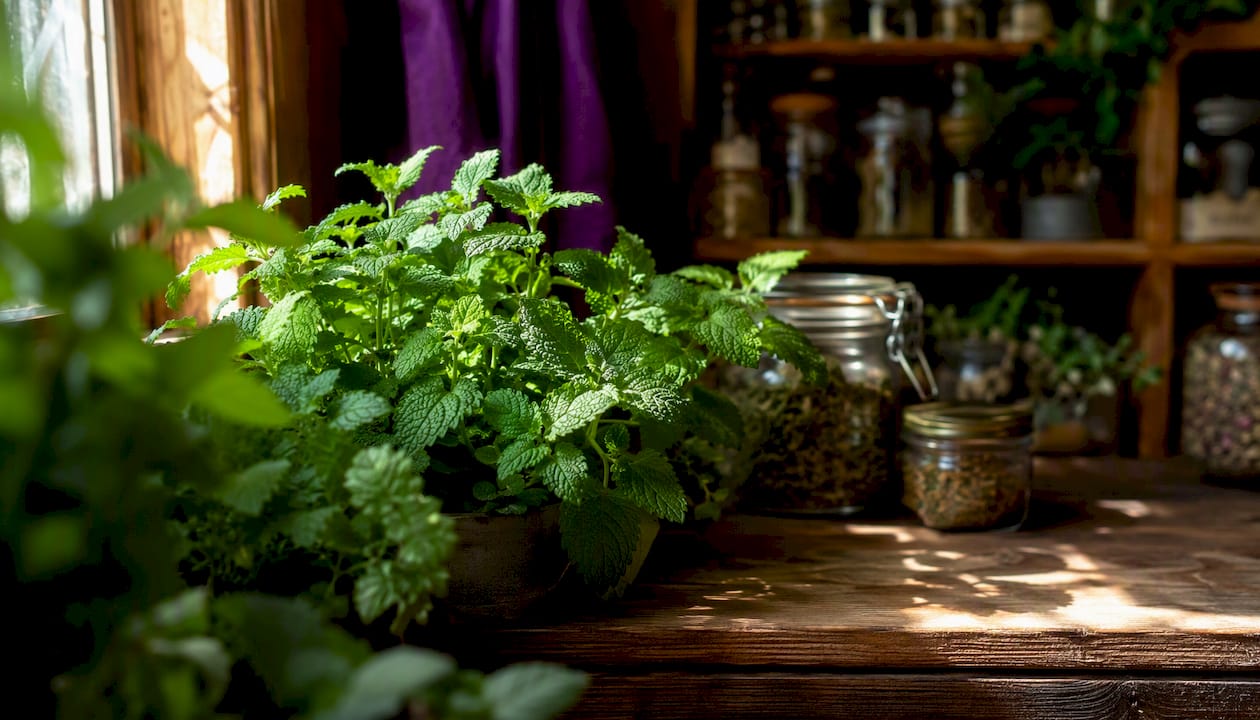
Lemon balm is a go-to for daytime anxiety because it calms without heavy sedation. It pairs well with chamomile in tea and with valerian for sleep. Available as tea, tincture, or capsule. Safety: Very low risk profile; may interact with thyroid medications at high doses. Generally considered safe in moderate culinary amounts during pregnancy, but therapeutic doses warrant clinician guidance.
## 3. Chamomile (Matricaria recutita)
Primary action: Nervine relaxant, anti-inflammatory. Strength: Mild.
Chamomile’s apigenin content gives it a gentle GABAergic action that makes it one of the safest daily nervines. Research supports its use for mild anxiety and sleep onset. Tea is the most common form; standardized extracts are available in capsules. Safety: Ragweed-family allergy is a contraindication. Avoid therapeutic doses during pregnancy.
## 4. Passionflower (Passiflora incarnata)
Primary action: Nervine relaxant, sleep support. Strength: Moderate.
A 2022 systematic review found passionflower effective for stress reactivity and insomnia, with GABAergic mechanisms likely responsible. It works faster than a tonic and pairs well with valerian for sleep blends. Available as tea, tincture, or capsule. Safety: Avoid during pregnancy. Additive sedation with CNS depressants; do not combine with benzodiazepines or sleep medications without clinician oversight.
## 5. Valerian (Valeriana officinalis)
Primary action: Sedative nervine, sleep support. Strength: Moderate to strong.
Valerian affects GABA release and receptor binding, producing notable sedation in most people. A minority experience paradoxical stimulation, which is why starting at a low dose matters. NCCIH notes that evidence for sleep support is mixed but promising. Available as tincture, capsule, or standardized extract. Safety: Additive sedation with alcohol and CNS depressants. Avoid during pregnancy and before surgery or anesthesia.
## 6. Kava (Piper methysticum)
Primary action: Anxiolytic nervine. Strength: Strong.
Kava’s kavalactones produce pronounced relaxation and anxiolytic effects through multiple receptor pathways. It is one of the more potent nervines for acute anxiety. Safety: Hepatotoxicity risk is real and documented; clinical reviews flag liver toxicity concerns and urge medical monitoring, especially with pre-existing liver conditions or alcohol use. Avoid combining with acetaminophen or other hepatotoxic substances. Not for daily long-term use without clinician supervision.
## 7. Hops (Humulus lupulus)
Primary action: Sedative nervine. Strength: Moderate.
The same plant that flavors beer contains bitter resins (particularly 2-methyl-3-buten-2-ol, a metabolite of humulone) that contribute to sedation. Hops work well in sleep blends alongside valerian and passionflower. Available as tincture, capsule, or in combination formulas. Safety: Avoid during depression, as hops can deepen low mood. Additive sedation with CNS depressants. Avoid during pregnancy.
## 8. California poppy (Eschscholzia californica)
Primary action: Nervine relaxant, mild sedative. Strength: Mild to moderate.
Despite its name, California poppy is not an opiate and contains no morphine alkaloids. It acts on GABA and opioid receptor pathways through its own alkaloids (californidine, eschscholtzine) to produce gentle relaxation and sleep support. Available primarily as tincture or tea. Safety: Avoid during pregnancy. May add to sedation from other herbs or medications.
## 9. Skullcap (Scutellaria lateriflora)
Primary action: Nervine relaxant, nerve tonic. Strength: Mild to moderate.
Species identity matters here: Scutellaria lateriflora is the appropriate species for nervine use. Herbalist guidance emphasizes that other Scutellaria species lack the same traditional profile and should not be substituted. Skullcap’s baicalin content supports GABAergic calming and makes it useful for nervous exhaustion alongside oatstraw. Available as tincture or capsule. Safety: Adulteration with germander (Teucrium species) has caused liver toxicity in some products; source from reputable suppliers with third-party testing.
## 10. Oatstraw / Milky oats (Avena sativa)
Primary action: Nervine tonic. Strength: Mild (cumulative).
Oatstraw and milky oats (the fresh, unripe seed) are the classic restorative nervine. Herbalists distinguish tonics like oatstraw from relaxants precisely because they require consistent use over weeks to nourish the nervous system rather than producing immediate sedation. Think of oatstraw as rebuilding your energetic architecture from the inside out. Available as tea, tincture (fresh plant preferred), or infusion. Safety: Avoid if you have celiac disease or severe gluten sensitivity (cross-contamination risk). Otherwise very safe for long-term use.
## 11. Bacopa (Bacopa monnieri)
Primary action: Nervine tonic, cognitive support. Strength: Mild (cumulative).
Bacopa is an Ayurvedic nervine tonic that supports memory, cognitive clarity, and stress adaptation over time. It modulates serotonin and acetylcholine pathways and has adaptogenic qualities alongside its nervine action. Effects build over 8–12 weeks of consistent use. Available as standardized extract (bacosides), capsule, or powder. Safety: May cause GI upset; take with food. Avoid during pregnancy. May interact with thyroid medications and anticholinergic drugs.
## 12. St. John’s wort (Hypericum perforatum)
Primary action: Nervine, antidepressant. Strength: Moderate to strong.
St. John’s wort is one of the most clinically studied nervines for mild to moderate depression and anxiety. Its hypericin and hyperforin constituents influence serotonin, dopamine, and norepinephrine reuptake. The critical safety issue: it is a potent inducer of cytochrome P450 enzymes, reducing the efficacy of many pharmaceuticals, including SSRIs, oral contraceptives, anticoagulants, and antiretrovirals. Available as standardized extract (0.3% hypericin), tincture, or capsule. Safety: Do not combine with SSRIs or SNRIs (serotonin syndrome risk). Photosensitivity is a documented side effect. Avoid during pregnancy.
## 13. Catnip (Nepeta cataria)
Primary action: Nervine relaxant, digestive. Strength: Mild.
Catnip’s nepetalactone content produces gentle sedation and digestive calming in humans (the feline response is unrelated). It is particularly useful for stress-related digestive upset alongside its nervine action. Available as tea or tincture. Safety: Avoid during pregnancy (uterine stimulant). Generally very safe for short-term adult use.
Summary data table:
| Herb | Primary use | Typical forms | Typical onset | Relative strength | Main safety concern |
|---|---|---|---|---|---|
| Lavender | Anxiety, sleep | Tea, essential oil, capsule | Fast (aroma); moderate (oral) | Mild–moderate | Sedation potentiation; avoid high oral dose in pregnancy |
| Lemon balm | Daytime anxiety | Tea, tincture, capsule | Fast | Mild | Thyroid medication interaction at high doses |
| Chamomile | Anxiety, sleep onset | Tea, capsule | Fast | Mild | Ragweed allergy; avoid therapeutic dose in pregnancy |
| Passionflower | Sleep, stress | Tea, tincture, capsule | Moderate | Moderate | Additive sedation; avoid in pregnancy |
| Valerian | Sleep, anxiety | Tincture, capsule | Moderate | Moderate–strong | Paradoxical stimulation; additive sedation; avoid in pregnancy |
| Kava | Acute anxiety | Tincture, beverage | Fast | Strong | Hepatotoxicity; avoid with liver disease or alcohol |
| Hops | Sleep | Tincture, capsule | Moderate | Moderate | Worsens depression; additive sedation |
| California poppy | Relaxation, sleep | Tea, tincture | Moderate | Mild–moderate | Additive sedation; avoid in pregnancy |
| Skullcap | Anxiety, nerve exhaustion | Tincture, capsule | Moderate | Mild–moderate | Adulteration risk; source carefully |
| Oatstraw / Milky oats | Nerve restoration | Tea, tincture | Slow (weeks) | Mild (cumulative) | Gluten cross-contamination risk |
| Bacopa | Cognitive support, stress | Capsule, powder | Slow (8–12 weeks) | Mild (cumulative) | GI upset; thyroid and anticholinergic interactions |
| St. John’s wort | Mild depression, anxiety | Standardized extract, capsule | Moderate (weeks) | Moderate–strong | CYP450 induction; serotonin syndrome with SSRIs |
| Catnip | Mild anxiety, digestive | Tea, tincture | Fast | Mild | Uterine stimulant; avoid in pregnancy |
Fast-acting relaxants vs. tonics: which nervine fits your timing?
Not all nervines work on the same clock, and mixing up these categories is one of the most common reasons people feel disappointed with herbal support.
Fast-acting relaxants are the herbs you reach for when anxiety spikes or sleep feels out of reach tonight. Passionflower, valerian, hops, California poppy, and lavender all fall here. They act within 30–90 minutes in most people and are best used as needed rather than around the clock.
Nervine tonics operate on a completely different timeline. Oatstraw and milky oats, bacopa, and skullcap need consistent daily use over weeks before you feel their full effect. Practitioners emphasize that tonics nourish the nervous system’s deeper architecture rather than quieting a single stress signal. Think of them as rebuilding your capacity to hold calm, not just borrowing it.
Gentle daily supports sit in the middle: chamomile, lemon balm, and catnip are mild enough for everyday use and gentle enough to layer with either category. They provide a soft baseline of calm without the sedation risk of stronger relaxants.
The most effective approach for many people combines both categories: a fast-acting herb for acute moments and a tonic taken daily for long-term resilience. Herbalist resources commonly recommend pairings like lemon balm with valerian for sleep, or chamomile with oatstraw for nervous exhaustion, because the gentle herb softens the stronger one’s edge.
Pro Tip: If you are new to nervines, start with lemon balm or chamomile for two weeks before adding a stronger relaxant like valerian. This lets you gauge your baseline response and reduces the risk of over-sedation from combining multiple herbs at once.
How to take nervines: forms, onset, and safe combinations
The form you choose shapes how quickly a nervine works and how strong the effect feels.

Tea is the gentlest entry point. Steeping 1–2 teaspoons of dried herb in hot water for 10–15 minutes produces a mild, slow-releasing preparation. Onset is typically 30–60 minutes. Tea is ideal for daily tonic use (oatstraw, chamomile, lemon balm) and for mild acute calming.
Tinctures (liquid alcohol or glycerin extracts) absorb faster and deliver higher concentrations of active constituents. A typical tincture ratio is 1:5 (herb to solvent), and common adult doses range from 2–4 mL, though exact amounts depend on the product’s standardization and the herb’s potency. Onset is often 20–40 minutes. Tinctures suit both relaxants and tonics and are easy to dose precisely.
Standardized extracts in capsules offer measurable, reproducible doses. For example, valerian capsules are often standardized to 0.8% valerenic acid; St. John’s wort to 0.3% hypericin. This matters for safety and for matching what clinical trials actually studied. Onset is similar to tea: 30–60 minutes for most capsules.
Essential oils and aromatherapy apply specifically to lavender and a few other nervines. Diffusing lavender or applying diluted oil topically produces a faster sensory response (minutes) but a shorter duration. For readers interested in aromatherapy as a ritual practice, this form pairs beautifully with breathwork or meditation.
A practical sequence for beginners:
- Choose one herb that matches your primary goal (see the quick-match guide below).
- Start at the lowest suggested dose for that form (half a cup of tea, or the low end of the tincture range).
- Use it consistently for 7 days and note your response: sleep quality, mood, energy, any side effects.
- If well tolerated and helpful, continue. If no effect after two weeks, consider adjusting the dose or form before switching herbs.
- Before adding a second nervine, wait until you know how the first one affects you.
- Consult a clinician before combining any nervine with prescription medications or before use during pregnancy.
Avoid stacking multiple strong sedatives (valerian, hops, kava, California poppy) in the same dose without professional guidance. The combined sedation can exceed what any single herb would produce.
Safety, contraindications, and herb–drug interactions
Nervines are plants with real pharmacological activity. That is exactly why they work, and exactly why they carry interaction risks.
St. John’s wort is the highest-interaction nervine in common use. It induces multiple cytochrome P450 enzymes (CYP3A4, CYP2C9, and others), accelerating the breakdown of many pharmaceuticals, including oral contraceptives, warfarin, cyclosporine, antiretrovirals, and some chemotherapy agents. Combining it with SSRIs or SNRIs raises the risk of serotonin syndrome, a potentially serious condition. If you take any prescription medication, St. John’s wort requires a clinician conversation before use.
Kava carries documented hepatotoxicity risk. Clinical reviews flag liver toxicity as a real concern, particularly with long-term use, high doses, or concurrent alcohol or acetaminophen use. Anyone with liver disease, hepatitis, or a history of heavy alcohol use should avoid kava entirely.
Valerian adds to the sedative burden of CNS depressants, including benzodiazepines, opioids, antihistamines, and alcohol. The paradoxical stimulation some people experience is another reason to start low. Discontinue valerian at least two weeks before scheduled surgery, as it may interact with anesthesia.
Pregnancy and breastfeeding: Most strong nervines, including passionflower, valerian, hops, kava, California poppy, catnip, and St. John’s wort, are not considered safe during pregnancy. Chamomile and lemon balm in culinary amounts are generally regarded as lower risk, but therapeutic doses of any nervine during pregnancy warrant clinician approval.
Your pre-use checklist:
- Do you take any prescription or OTC medications? (Especially SSRIs, blood thinners, sedatives, contraceptives, or immunosuppressants.)
- Do you have liver disease or a history of hepatitis?
- Are you pregnant, breastfeeding, or trying to conceive?
- Do you have surgery planned within the next 2–4 weeks?
- Are you under 18 or over 65? (Both groups may respond differently to sedative herbs.)
If you answered yes to any of these, bring your product label and a list of your medications to your next clinician visit before starting a nervine. Online pharmacy interaction checkers (such as those at Drugs.com) can also flag known herb-drug pairs as a starting point, though they do not replace professional advice.
This article is general educational information, not medical advice. Confirm current safety guidance with a qualified healthcare provider before using nervines therapeutically.
What the clinical evidence actually shows
The evidence base for nervines is real but uneven. Some herbs have solid clinical data; others rely primarily on traditional use and mechanistic studies.
Passionflower has the most recent systematic review support: a 2022 analysis found it effective for stress reactivity and insomnia, with GABAergic mechanisms likely driving the effect. Study heterogeneity and small sample sizes limit confidence, but the signal is consistent.
Lavender has been studied in both oral and aromatherapy forms. Clinical trials show reductions in anxiety scores and some improvements in sleep quality, though the magnitude varies by delivery method. Aromatherapy studies show mixed physiological results; oral standardized preparations tend to produce more consistent outcomes.
Valerian has a long clinical history and a plausible GABAergic mechanism, but meta-analyses remain inconclusive on sleep outcomes. The paradoxical stimulation finding in a subset of users is documented and worth noting.
St. John’s wort has the strongest evidence base of any nervine for mild to moderate depression, supported by multiple meta-analyses. Its interaction profile, however, is equally well documented.
A narrative review published in Pharmaceuticals (MDPI) found that herbs including Hypericum perforatum, Passiflora incarnata, Valeriana officinalis, and Piper methysticum show clinically relevant anxiolytic and sedative effects but also present documented interaction and toxicity signals requiring clinical monitoring.
Evidence quality limitations apply across the category: studies often use heterogeneous extracts, small samples, and short durations. Aromatherapy trials measure different outcomes than oral trials, making direct comparisons difficult. Product quality also materially affects outcomes: standardized extracts with third-party testing produce more reproducible results than unverified bulk herbs.
The bottom line is that research supports some nervine uses, particularly for mild anxiety and sleep, but clinical oversight and product quality are not optional extras. They are what separate a beneficial experience from an unpredictable one.
How to match your goal to the right nervine
You do not need to try all 13. Start with one herb that fits your primary goal, use it consistently, and assess before adding anything else.
For sleep:
- Valerian, passionflower, and hops are the most studied combination for sleep onset and quality.
- Prefer tincture or standardized capsule for more consistent dosing.
- Use 30–60 minutes before bed.
For daytime anxiety:
- Lemon balm, chamomile, and lavender are gentle enough for daytime use without impairing function.
- Tea or tincture works well; lavender aromatherapy offers an immediate, non-sedating option for acute moments.
- Nervous-system regulation practices like breathwork pair naturally with these herbs.
For long-term nervous-system resilience:
- Oatstraw, bacopa, and skullcap are the tonic trio. Commit to 6–12 weeks of daily use.
- Tea or fresh-plant tincture for oatstraw; standardized bacosides capsules for bacopa.
- Track changes in stress tolerance, sleep depth, and cognitive clarity over time, not day to day.
Topical vs. internal use: Lavender essential oil diffused or applied (diluted in a carrier oil) to pulse points gives fast, non-systemic calming, useful before a stressful meeting or at bedtime. For deeper or more sustained effects, oral preparations (tea, tincture, capsule) are the appropriate route.
One practical note: if you are exploring nervines alongside CBD or other natural stress supports, research on plant-based stress management suggests that combining gentle nervines with complementary botanicals can be useful, though the same interaction-awareness principles apply.
Key Takeaways
Nervines fall into two clear categories, fast-acting relaxants and slow-building tonics, and matching the right herb to your goal and timeline is the single most important step before you begin.
| Point | Details |
|---|---|
| Two core categories | Fast-acting relaxants (valerian, passionflower, hops) work within hours; tonics (oatstraw, bacopa, skullcap) need weeks of consistent use. |
| Top picks by goal | Sleep: valerian, passionflower, hops. Daytime anxiety: lemon balm, chamomile, lavender. Long-term resilience: oatstraw, bacopa, skullcap. |
| Safety comes first | St. John’s wort interacts with many pharmaceuticals via CYP450; kava carries hepatotoxicity risk; most strong nervines are contraindicated in pregnancy. |
| Quality determines outcomes | Standardized extracts with third-party testing produce more consistent and safer results than unverified bulk herbs. |
| Kejiwastore’s approach | Kejiwastore offers small-batch spagyric tinctures made from organic and wild-harvested botanicals for readers who want carefully crafted, ready-to-use nervine support. |
Kejiwa’s perspective on nervine herbs and intentional sourcing
What strikes me most about nervines is how often they are treated as interchangeable, as if any chamomile tea or any valerian capsule will do the same thing. The evidence and the herbalist tradition both say otherwise. Species identity, plant part, extraction method, and sourcing conditions all shape what ends up in your body and how it behaves there. Skullcap adulterated with germander has caused real liver harm. Valerian standardized to valerenic acid behaves differently from an unstandardized bulk powder. These are not minor details.
At Kejiwa, the approach to nervine-based preparations starts with this understanding. Small-batch spagyric tinctures, made through an alchemical process that preserves the plant’s full spectrum of constituents, represent a different relationship with the herb than mass-produced capsules do. Organic and wild-harvested sourcing is not a marketing claim; it is the foundation of a preparation that actually carries the plant’s energetic and biochemical signature intact. The sacred dimension of herbal crafting matters too, not as mysticism, but as a commitment to presence and care at every step of the process.
The nervine category also rewards patience and self-knowledge in a way that pharmaceuticals generally do not. A tonic like oatstraw asks you to show up daily, to rebuild your nervous system rather than suppress its signals. That is a different philosophy of care, and one worth taking seriously.
[insert detailed professional credentials of Kejiwa]
[insert customer testimonials for Kejiwa Alchemy products]
Ready-made nervine support from Kejiwastore
For readers who want to move from research to practice without sourcing and preparing herbs themselves, Kejiwastore offers two natural entry points.

The spagyric herbal tinctures collection brings together small-batch preparations made through a traditional alchemical process that preserves the full spectrum of plant constituents. Each tincture uses organic or wild-harvested botanicals, and the spagyric method means you are getting more than a standard alcohol extract. For readers drawn to aromatic nervine support, the botanical aromatics collection includes handcrafted aromatherapy mists and elixir sprays suited to breathwork, meditation, and moment-to-moment calming.
Start with one preparation, begin at a low dose, and give your nervous system time to respond. And if you are on medications or have any of the risk factors covered in the safety section above, bring your chosen product’s label to your next clinician visit before you begin.
Useful sources and further reading
- Common herbs for stress: The science and strategy of a botanical medicine approach to self-care — PMC review covering lavender, passionflower, valerian, and other nervines with clinical trial data and mechanistic discussion.
- Efficacy and Safety of Herbal Supplements with Anxiolytic, Antidepressant, and Sedative Action: A Review of Clinical Data and Toxicological Risks — MDPI Pharmaceuticals narrative review documenting herb-drug interactions, hepatotoxicity signals, and quality-control concerns for key nervines including kava, St. John’s wort, and valerian.
- NCCIH: Chamomile — National Center for Complementary and Integrative Health fact sheet on chamomile’s evidence base and safety profile.
- NCCIH: Valerian — NCCIH fact sheet covering valerian’s clinical evidence, dosing considerations, and known safety concerns.
- What Is a Nervine? The Complete Guide to Herbs That Support Your Nervous System — Practitioner-oriented overview of nervine categories (relaxants vs. tonics), onset expectations, and common pairings.
- Understanding Nervines and Adaptogens: Herbs for Stress and the Nervous System — Mountain Rose Herbs herbalist blog covering nervine and adaptogen distinctions, common pairings, and practical usage guidance.
- Nervine tonics and adaptogens: practitioner guidance — Healthline overview of nervine tonics, species specificity (including skullcap), and the distinction between nervines and adaptogens.