


For an effective smoke-free cleansing, use a targeted room mist, sound clearing, surface cleaning paired with better ventilation, or aromatherapy blends built on citrus and conifer oils. Sensitive lungs and shared apartments do best with sprays and sound. Anyone moving into a new space benefits most from cleaning and intention work together. The steps below walk through each method, with recipes.
TL;DR:
- Using a room spray with citrus and conifer oils can neutralize smoke odors and dissolve oily residues more effectively than masking scents alone.
- Sound clearing with bells or tuning forks is a practical, scent-free method suitable for shared walls and sensitive lungs, requiring only a brief perimeter walk.
- Physical cleaning and ventilation are essential for removing surface residues and accelerating odor elimination, especially after smoke exposure.
- Visualization and crystal grids provide a completely airborne-free option, ideal for pregnancy, asthma, or highly sensitive individuals.
- Combining physical cleaning, energetic methods, and proper ventilation enhances the longevity and effectiveness of smoke-free space clearing.
Table of Contents
- What Are the Best Smoke-Free Cleansing Methods?
- How Do You Make a Smoke-Free Room Spray?
- Can You Clear a Room With Sound Instead of Smoke?
- Do You Still Need to Clean and Ventilate the Room?
- Which Essential Oils Actually Neutralize Smoke Residue?
- How Do You Cleanse a Space With Visualization Alone?
- How Do You Build a Full Smoke-Free Cleansing Ritual?
- How Do You Adapt Smudging Traditions Respectfully?
- Where Kejiwa Alchemy Fits Into a Smoke-Free Practice
- A Note on Accessibility and Sourcing
- Ready-Made Tools for Your Smoke-Free Practice
- Sources
- FAQ
What Are the Best Smoke-Free Cleansing Methods?
You don’t need a smoldering bundle of herbs to clear a space. You need a method that fits your lungs, your neighbors, and your actual living situation. Here’s a working shortlist, ordered roughly from gentlest to most involved.
- Room sprays and mists — best for renters, apartments, and anyone who needs a fast, repeatable reset between rituals.
- Sound clearing (bells, tuning forks, singing bowls) — best for shared walls, quiet hours, and people who find scent overwhelming.
- Cleaning plus ventilation — best after illness, an argument, a move-in, or any time the air feels physically heavy, not just energetically.
- Aromatherapy diffusion — best for ongoing daily maintenance and for neutralizing lingering odors rather than masking them.
- Visualization and crystal grids — best for people with asthma, chemical sensitivities, or pregnancy, since it requires nothing airborne at all.
- Combined ritual (cleaning plus one energetic method) — best when you want the effect to last longer than a single afternoon.
None of these methods work in isolation as well as they work together. A spray clears the felt sense of a room in minutes, but the Botanical Smoke Cleansing Guide notes that pairing a physical reset with genuine surface cleaning is what makes the shift last past the afternoon.
How Do You Make a Smoke-Free Room Spray?
Two base recipes cover most needs: one for ritual mists, one for straightforward aromatherapy.
- Charged alchemical mist: Combine 2 ounces distilled water with 1 ounce witch hazel or perfumer’s alcohol in a glass spray bottle. Add 15 to 20 drops of your chosen essential oil blend. Hold the bottle, state a short intention aloud or silently, then mist the room in a clockwise sweep.
- Everyday aromatherapy spray: Mix 3 ounces distilled water with 10 to 12 drops of essential oil in a fine-mist bottle. Shake before each use since oil and water separate.
Patch test any new blend on fabric or wood before spraying it directly onto surfaces, and skip citrus oils on unsealed wood or delicate upholstery. Keep sprays away from cats specifically, since several common essential oils are toxic to them. Store finished mists in a cool, dark spot and use within two to three months for full potency. Two to four sprays per average room is plenty. More isn’t stronger; it’s just wetter.
Pro Tip: Label your spray bottle with the date it was mixed and the oils used. A mist that smells “off” after a few months has likely gone rancid, and that’s your cue to make a fresh batch rather than push through it.
Can You Clear a Room With Sound Instead of Smoke?
Yes, and for many people it’s the most practical option in shared housing. Sound clearing carries no scent, no residue, and no risk to anyone with respiratory sensitivity, which makes it one of the most accessible smoke-free cleansing tools available.
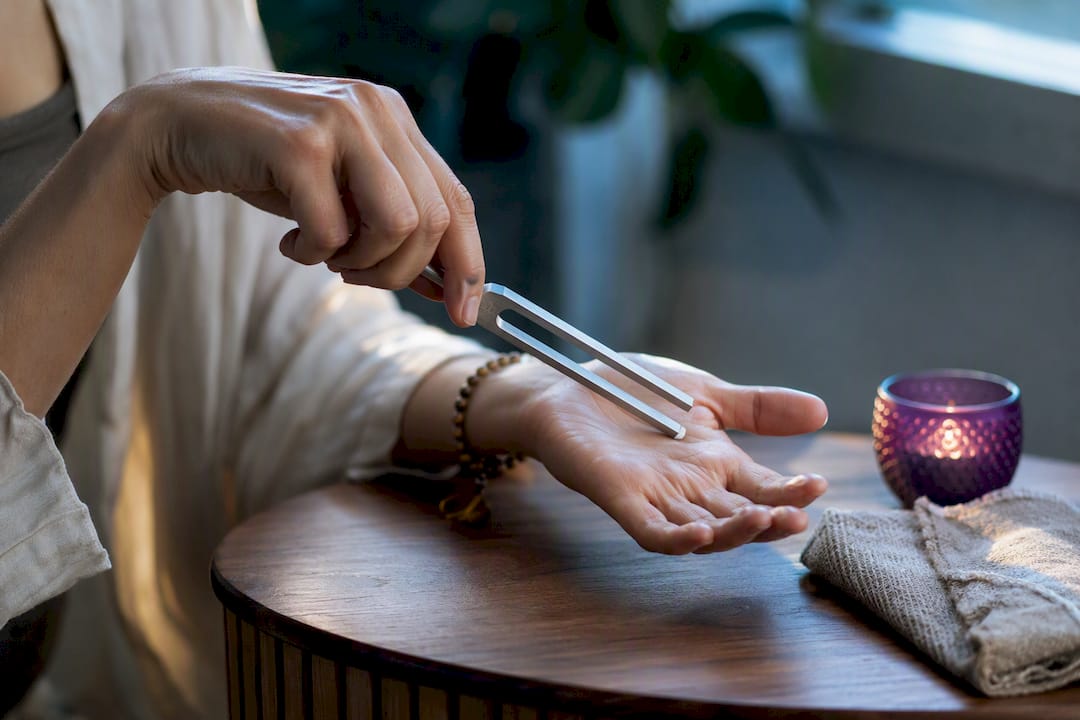
A simple protocol: walk the perimeter of the room, ringing a bell or striking a tuning fork at each doorway and corner. Pause for three to five seconds at each spot, long enough for the tone to fully decay before moving on. The whole walk should take three to five minutes for an average room.
- A small brass bell or tingsha cymbals work well and cost little.
- A tuning fork (128Hz or higher) gives a cleaner, more contained tone for thin-walled apartments.
- Recorded singing bowl tracks played through a phone speaker are a reasonable substitute if you don’t own an instrument.
If you share walls, keep volume low and favor higher-pitched, shorter tones over deep, sustained bowl strikes that travel through drywall.
Pro Tip: If you’re sensitive to sudden sound, use a tuning fork struck against your palm rather than a bell. The tone is softer and easier to control.
Do You Still Need to Clean and Ventilate the Room?
Yes, and this is the step most rituals skip. Smoke and stagnant energy both leave a physical trace, and no spray or bell fully addresses it. Airborne particles clear with filtration in hours to a few days, but residue that settles on surfaces can linger for weeks or months until it’s physically removed. Think of it as two separate clocks: the air clears fast, the surfaces don’t.
- Open windows for cross ventilation for at least 15 minutes, weather permitting.
- Run a HEPA air purifier or replace an HVAC filter rated MERV 11 or higher if you’ve had recent smoke exposure of any kind.
- HEPA vacuum upholstery, rugs, and curtains, moving slowly to lift embedded particles.
- Damp-wipe hard surfaces, including shelves and windowsills, where residue settles.
- Launder soft textiles that can’t be spot-cleaned, since fabric holds odor longer than any other surface type.
Sequencing matters. Combining vacuuming and damp wiping with filtration clears lingering odor faster than running an air purifier alone. Filter first if smoke or heavy scent is actively present; deep clean once the air itself feels lighter. If soot, grease film, or odor persist after a full cleaning pass, that’s a sign to call a remediation professional rather than keep spraying over it.
Which Essential Oils Actually Neutralize Smoke Residue?
Citrus oils high in d-limonene, paired with a conifer oil like pine or fir, do more than mask odor. The citrus acts as a mild solvent that helps dissolve oily residue films, while the conifer’s alpha-pinene content lifts and freshens what’s left behind. Lemon plus cedarwood, or grapefruit plus pine, are both reliable starting pairs.
Delivery method changes the result more than people expect. A nebulizing diffuser fragments oil into micro-droplets without heat or water, which preserves the active terpenes that do the actual neutralizing work. Ultrasonic diffusers dilute oil into water and run cooler, which is gentler for shared air but less potent for odor removal. HVAC diffuser pads are the lowest-effort option for whole-home coverage, though they’re the weakest at concentrated spot treatment.
- Nebulizer: strongest effect, best for a single problem room.
- Ultrasonic: gentler, better around pets and children.
- HVAC pad: passive, whole-home, minimal daily effort.
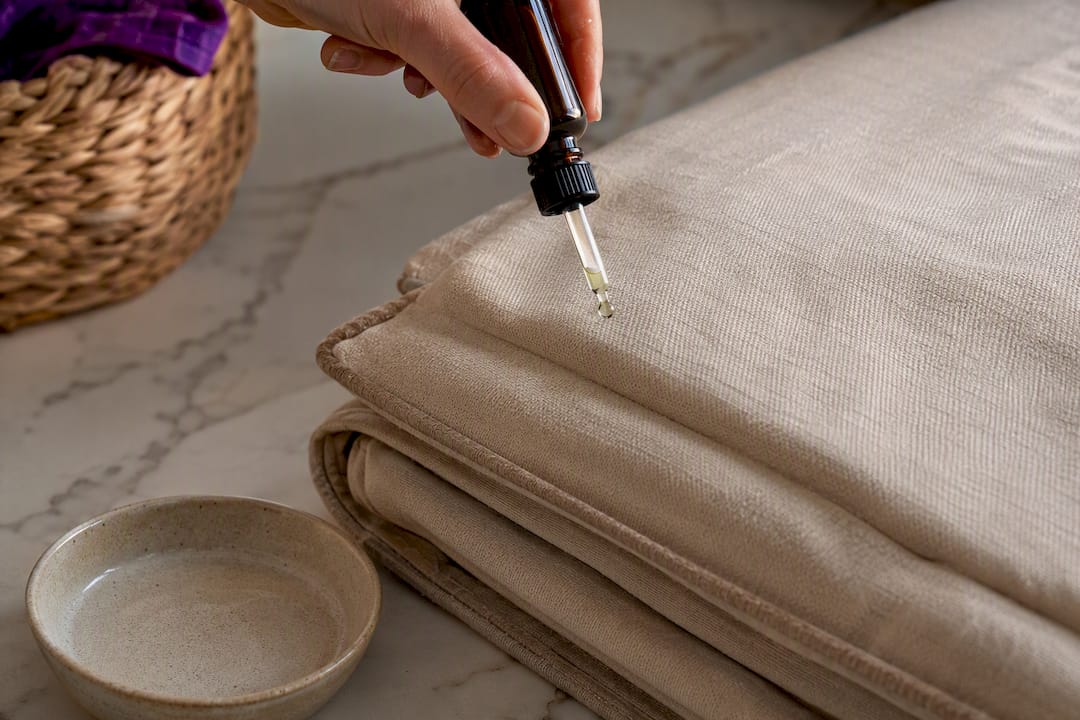
For textiles, mix baking soda with two or three drops of pine or tea-tree oil, sprinkle over carpet or upholstery, let sit overnight, then HEPA vacuum it up.
Pro Tip: Test any citrus-heavy blend on pet bedding before regular use. Cats in particular metabolize essential oils poorly, so keep diffusers running in ventilated rooms they can leave if they choose.
How Do You Cleanse a Space With Visualization Alone?
Some situations call for nothing airborne at all: pregnancy, asthma, a newborn in the house, or simply a preference for quiet symbolic work. Visualization and crystal grids carry real ritual weight without a single molecule leaving the object.
- Set four crystals (clear quartz, black tourmaline, selenite, and one intuitive choice) at the room’s four corners to form a simple grid.
- Sit at the room’s center, close your eyes, and visualize soft light expanding outward from your chest to fill the walls.
- Hold that image for three to five slow breaths, then state a short closing phrase like “this space is clear” to mark the end.
- Substitute a small fan, a light mist, or a single bell tone for the traditional “air” element instead of smoke.
- Ground the work by placing both palms flat on the floor for ten seconds once you finish.
This approach works well stacked onto physical cleaning, since it adds intention without adding anything that could trigger a reaction in a sensitive household member.
How Do You Build a Full Smoke-Free Cleansing Ritual?
A repeatable ritual needs structure, not more ingredients. This three-step template runs 10 to 20 minutes and works for a weekly refresh or a full move-in reset.
- Prepare and clean (5 to 10 minutes): Open a window, vacuum or damp-wipe visible surfaces, and clear physical clutter first. Energetic work on top of a dirty room rarely holds.
- Perform your chosen method (3 to 7 minutes): Mist the room, ring a bell along the perimeter, or run through the visualization script above. Pick one primary method rather than stacking all of them every time.
- Seal and ground (2 to 3 minutes): State a short closing intention, place your hands on the floor or a windowsill, and take three slow breaths before returning to normal activity.
Keep a small kit ready: your spray bottle, a bell or tuning fork, and one or two grounding crystals. For low-scent households, skip the spray and lean on sound and visualization instead. For quiet-hours apartments, do the reverse.
Pro Tip: Moving into a new home calls for the full ritual, ideally before furniture arrives. A weekly refresh only needs step two, on its own, once the space is already clean.
How Do You Adapt Smudging Traditions Respectfully?
Smoke cleansing has deep roots in specific cultural and spiritual lineages, and going smoke-free doesn’t erase that history. It’s worth naming it rather than treating the practice as generic. Some ethnobotanical traditions have used smoke for cleansing for generations, and many contemporary practitioners now recommend low-smoke or smoke-free adaptations partly out of respect for those origins and partly for accessibility.
- Credit the tradition a practice comes from instead of presenting it as your own invention.
- Avoid claiming ceremonial titles or sacred lineage you haven’t been given by that community.
- Consult or hire a cultural practitioner directly when a ritual carries specific protocol.
- Check that any dried herbs or resins you do buy come from sustainably wild-harvested or cultivated sources, not over-harvested wild stock.
- When in doubt, default to a neutral substitute: sound, water, or breath rather than a specific sacred plant.
The guide to smudging herbs covers herb-specific origins in more depth if you’re sourcing plant materials directly.
Where Kejiwa Alchemy Fits Into a Smoke-Free Practice
Some aromatherapy and mist lines are built around the principle of small-batch craft using organic and wild-harvested botanicals, made with intentionality alongside the ingredient list.
- Our botanical aromatics are formulated for grounding and upliftment, built for exactly the mist recipes described above.
- Our smudging herbs are sourced with sustainability and ceremony in mind, for readers who choose to work with plant allies directly.
- Our crystal vortex pieces support grid work and visualization practices without a single drop of liquid or grain of resin involved.
These are our own products, offered as one honest option among the smoke-free methods covered here, not a replacement for the DIY recipes above. The step-by-step smudging guide walks through low-smoke variations if you want more detail before choosing a tool.
A Note on Accessibility and Sourcing
Smoke-free cleansing isn’t a compromise. It’s what lets someone with asthma, a newborn, or thin apartment walls actually participate in this work instead of sitting it out. That accessibility only means something if the ingredients behind it are sourced with the same care as the ritual itself, from where a botanical is wild-harvested to how a supplier treats the land it comes from. We’d genuinely like to hear how your own smoke-free practice has evolved.
— Kejiwa
Ready-Made Tools for Your Smoke-Free Practice
If you’d rather skip measuring witch hazel ratios and go straight to a finished blend, Kejiwa Alchemy’s small-batch approach gives you the citrus-and-conifer chemistry this guide covers, already balanced and ready to mist.

Our botanical aromatics collection includes grounding and upliftment mists built for the exact room-clearing rituals described above, each one made in small batches from organic and wild-harvested plant material rather than mass-produced synthetic fragrance. If you’re building out a full altar practice instead, the crystal vortex collection pairs naturally with the visualization scripts in this guide, and our smudging herbs are sourced for anyone choosing to work with traditional plant allies directly and responsibly. Browse the aromatics collection now and pick a blend that matches the ritual you’re ready to start.
Sources
- Filterbuy — Recover from wildfire smoke exposure
- Remove Smoke Smell With Essential Oils: 2026 Guide - Organic Aromas
- Frontiers DOI entry (research pool)
- DOI entry on delivery technology (nebulizing rationale)
FAQ
How Do You Do a Smoke-Free Cleansing Ritual?
Clean the physical space first, choose one method such as a charged mist or sound clearing, then perform that method for three to seven minutes while holding a clear intention. Close by grounding your hands on the floor or a windowsill for a few breaths. The full three-step template above covers timing for a first-time or move-in cleanse.
What Can You Use Instead of Burning Herbs to Clear Negative Energy?
A room spray made from distilled water, witch hazel, and citrus or conifer essential oils works well, as does sound clearing with a bell or tuning fork. Visualization and crystal grids offer a fully airborne-free option for anyone with respiratory sensitivity. Kejiwa Alchemy’s botanical aromatics are built specifically around these smoke-free pairings.
Is Smoke Cleansing the Same as Smudging?
Not exactly. Smudging refers to specific cultural and ceremonial traditions of burning particular plants, while “smoke cleansing” is often used as a broader, more generic term for the same act. Smoke-free cleansing swaps the burning step for a mist, sound, or visualization while keeping the underlying intention of clearing a space intact.
What Are Practical Alternatives to Smoke Cleansing?
The most practical alternatives are aromatherapy mists, sound clearing with bells or tuning forks, physical cleaning paired with better ventilation, and visualization work using crystal grids. Combining physical cleaning with one energetic method tends to produce results that last longer than either approach used alone.