


Light your bundle, let the flame die into a smolder, then use your hand or a feather to waft the smoke from the crown of your head down to your feet while holding a clear intention. Safety and focus matter more than smoke volume. The sections below walk through the materials, the ordered steps, the words to say, and how to close the ritual safely without leaving anything smoldering behind.
TL;DR:
- Use sustainably sourced herbs like garden-grown sage or botanical mists to respect overharvesting and reduce environmental impact.
- Keep water or sand within reach and never leave a smoldering bundle unattended to prevent fire hazards.
- Follow a precise head-to-feet pattern, moving from the crown to your feet, to cleanse mind, senses, heart, and body.
- Rehearse simple, personal phrases silently during the ritual to anchor your focus without copying ceremonial prayers.
- Opt for smoke-free alternatives such as botanical mists or tinctures if you have respiratory sensitivities or want safer, quicker options.
Table of Contents
- How to Smudge Yourself: Materials and Prep
- What Are the Steps to Smudge Yourself?
- What to Say While Smudging Yourself
- Safety, Ventilation, and Smoke-Free Options
- Smudging vs. Smoke Cleansing: What’s the Difference?
- Aftercare: Closing the Ritual Properly
- Kejiwa’s Take on Choosing the Right Herb
- Why Slowness Is the Point, Not a Side Effect
- Where to Find Responsibly Sourced Smudging Herbs
- Sources
- FAQ
How to Smudge Yourself: Materials and Prep
Before you strike a match, gather everything within arm’s reach. Fumbling for a lighter mid-ritual breaks the focus you’re trying to build, and it’s a fire hazard besides.
Here’s what you need:
- Dried herb bundle such as sage, cedar, or sweetgrass, or a smoke-free alternative like a botanical mist
- Heatproof dish (an abalone shell or ceramic bowl works well) to catch ash and embers
- Matches or a lighter
- A feather or your open hand to direct the smoke
- Water or sand nearby to extinguish the bundle when you’re finished
The Seven Generations Education Institute’s smudging guide recommends keeping water or sand within reach at all times, not just at the end. A layer of sand in the bottom of your dish also keeps the vessel from overheating and gives you an instant way to snuff out an ember.
Once your materials are set, tidy the room, crack a window for airflow, and take a moment to name what you want out of the ritual before you light anything. That single pause does more for the ritual’s effectiveness than any amount of smoke.
What Are the Steps to Smudge Yourself?
Light the tip of your bundle and let it catch for a few seconds, then blow out the flame so it smolders and releases a thin, steady stream of smoke. Heavy flame means heavy smoke, and heavy smoke means a shorter, harsher session. A gentle smolder gives you control over the whole process.
Hold your heatproof dish underneath the bundle the entire time. Ash falls, embers occasionally pop loose, and the dish catches both before they land on skin, fabric, or carpet.
Wash your hands first if they’re dirty. Then work through your body in this order:
- Top of the head. Circle the smoke above your crown for two or three slow breaths, thinking of it clearing mental clutter.
- Face. Pass smoke gently near your eyes, ears, and mouth, inviting clearer sight, better listening, and honest speech.
- Throat and heart. Waft smoke across your throat and chest for a few breaths, focused on voice and openness.
- Front of the body. Sweep the smoke down your torso and legs to your feet.
- Back of the body. Reach behind you (or use a mirror) to pass smoke down your spine.
- Feet. Finish at ground level, grounding the whole sweep.
This head-to-feet pattern mirrors the order Indigenous educators outline for cleansing the mind, senses, heart, and body in sequence rather than at random.
You can do this seated or standing. Seated works better if your hands are shaky or you’re using a feather, since you have more stability to guide the smoke precisely. Standing gives you more reach for the back and feet in one continuous motion.
If sparks fly or the smoke gets heavier than expected, press the bundle firmly into your sand or dish immediately. Don’t wait to see if it settles on its own.
Pro Tip: Blow out the flame right after lighting instead of letting it burn freely. A slow smolder produces just enough smoke to work with and keeps the ritual from turning into a coughing fit.
What to Say While Smudging Yourself
The words you use matter less than the fact that you’re using them with attention. A phrase repeated silently while smoke moves over each body area gives your mind something to anchor to instead of drifting.
A few examples to start from, drawn from common beginner scripts:
- “I release what no longer serves me.”
- “I welcome peace and protection.”
- “I am grounded, clear, and whole.”
- A simple line of gratitude for the herb, the moment, or your own effort in showing up for yourself
Write your own version once you’re comfortable. Personalizing the wording makes the ritual feel like yours rather than borrowed. One caution: avoid copying specific ceremonial prayers or chants tied to a particular Indigenous nation unless you’ve learned them directly from someone in that community. General intention setting is open to everyone. Closed ceremonial language is not.
Safety, Ventilation, and Smoke-Free Options
Fire risk is the part beginners underestimate most. A few basics keep the ritual safe:
- Keep a dish of sand or a cup of water within reach the entire time
- Never leave a smoldering bundle unattended, even for a minute
- Clear flammable material (curtains, papers, hair) away from your workspace
- Crack a window before lighting anything
Ventilation solves two problems at once: it clears smoke faster and keeps you from setting off a smoke detector mid ritual. Blowing out the flame right after lighting, so the bundle smolders instead of burns, also keeps smoke output manageable.
Smoke isn’t right for everyone. Medical research on smoke exposure points to real risks for people with asthma or other respiratory conditions, which is reason enough to keep smoke-free alternatives on hand rather than treating them as an afterthought. Botanical mists, a bell or singing bowl, salt placed in the room’s corners, a piece of selenite, or even a few minutes of focused visualization can all deliver the same sense of a reset without a flame involved.
Smudging vs. Smoke Cleansing: What’s the Difference?
Smudging, as a specific ceremony, belongs to certain Indigenous nations and carries protocols that aren’t meant to be replicated by outsiders. What most beginners are doing when they light a bundle at home is closer to what’s often called smoke cleansing: a broader, cross-cultural practice open to anyone.
Language matters here. If you weren’t taught this by someone from the community it comes from, calling your own practice smoke cleansing rather than smudging is a small but meaningful way to respect the difference. A few practical habits follow from that:
- Skip replicating ceremonial protocols you haven’t been taught directly
- Ask before joining or leading a smudge involving other people, since it’s meant to stay voluntary
- Choose garden-grown or sustainably harvested herbs over wild white sage, which is increasingly overharvested in its native range
Aftercare: Closing the Ritual Properly
Extinguish fully before you move on. Press the smoldering end into sand or ash until no glow remains, or douse it with water if you’d rather not save the rest of the bundle. Store any unused portion somewhere dry and away from heat.
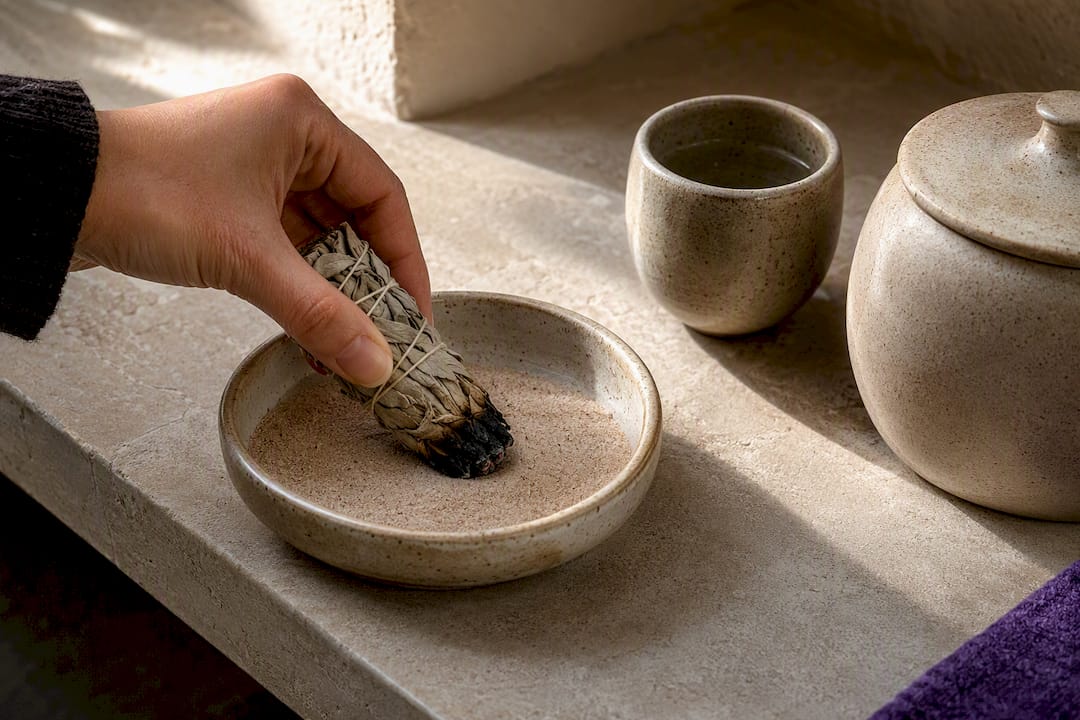
For the ashes, some people bury them outside, others rinse them down the drain, and some follow specific community guidance if they’ve learned the practice from a cultural source. Any of those is fine as a default.
Close with three slow breaths, a quiet word of thanks, and a hand wash or quick shower if you want an extra sense of finality.
Kejiwa’s Take on Choosing the Right Herb
Not every herb suits every person, and that’s where a little guidance helps. Kejiwa Alchemy’s Botanical Smoke Cleansing Guide walks through which herbs suit which intentions and how to combine a light bundle with a botanical mist to cut smoke volume without losing the ritual’s texture. That pairing works especially well if you’re sensitive to smoke but still want the sensory anchor of scent and smolder.
For sourcing, Kejiwa’s smudging herbs collection sticks to organic and wild-harvested material chosen with sustainability in mind, which matters given how strained wild white sage supplies have become.
Why Slowness Is the Point, Not a Side Effect
The version of this ritual that actually changes how you feel is the slow one. Rushing the sweep to check a box defeats the purpose. What makes self-smudging land isn’t the smoke itself. It’s the few minutes of consent, attention, and pause that most days never offer you.
— Kejiwa
Where to Find Responsibly Sourced Smudging Herbs
Bundles and botanicals are sourced in small batches, so you’re not buying mass-harvested wild sage that’s straining already overtaxed ecosystems. That’s the real difference between picking up a bundle at a random shop and choosing one where sourcing was part of the decision from the start.

The collection includes a few categories worth knowing about:
- Traditional smudging herb bundles for the full smoke ritual
- Botanical aromatic sprays for smoke-free cleansing or as a low-smoke pairing
- Spagyric tinctures for grounding work after a session
If smoke isn’t an option for you, Kejiwa’s botanical aromatics collection offers mist-based alternatives built around the same wild-harvested and organic sourcing standards. Readers curious about the tincture side of botanical work can also read 562 GoGreen’s explainer on tinctures for background before browsing Kejiwa’s spagyric tincture line. Start by browsing the smudging herbs collection and pick a bundle that matches the intention you set for your next ritual.
Sources
- Learn how to smudge - Seven Generations Education Institute
- How to Cleanse Your Home’s Energy: Smudging, Smoke Cleansing, and Simple Rituals | Celesian
- The Sacred Art of Smudging - Kripalu
FAQ
What should I say while smudging myself?
Short, personal phrases work best, such as “I release what no longer serves me” or “I welcome peace and protection,” repeated silently as smoke passes over each part of your body.
What are the general rules for smudging?
Keep it voluntary and never force it on someone who declines, extinguish your bundle fully when finished, and use the term “smoke cleansing” for your own practice unless you’ve learned traditional smudging from an Indigenous teacher.
What should you avoid doing when smudging?
Avoid leaving a smoldering bundle unattended, skip replicating closed ceremonial prayers you weren’t taught directly, and don’t use wild-harvested white sage if a garden-grown or sustainable alternative is available.
How do I make my own smudge bundle?
Bundle dried herbs like sage, cedar, or lavender tightly with cotton string, let them dry fully for one to two weeks, and trim the ends before lighting; Kejiwa’s smudging herbs collection also offers pre-made bundles if you’d rather skip the drying step.