


Quality in aromatherapy comes down to four things: the oil is plant-derived with nothing synthetic added, it’s correctly identified by botanical species and chemotype, and it’s backed by batch-specific testing you can actually see. The fastest way to check any bottle is to ask for a batch-specific GC/MS report or Certificate of Analysis (COA). If a seller can produce one that matches what’s on the label, and the bottle lists a clear Latin name and country of origin, you’re in good hands. Dilute before topical use, and never ingest an oil without guidance from a healthcare provider.
TL;DR:
- Ensure the essential oil comes with a batch-specific GC/MS report matching the label to confirm chemical purity and verify it is not adulterated.
- Confirm the Latin name and chemotype are clearly listed and match the expected chemical profile for the specific plant species.
- Ask for detailed sourcing information, including country of origin, plant part, and extraction method, and verify these details against the batch report.
- Watch out for suspiciously low prices on expensive oils like rose or sandalwood, which indicate possible adulteration or dilution.
- Always dilute essential oils before topical use, patch test first, and avoid ingestion without professional healthcare guidance.
Table of Contents
- What “Quality Aromatherapy Ingredients” Actually Means
- How to Verify Purity: Reading GC/MS Reports and COAs
- Certifications and Marketing Claims, Decoded
- Traceability: The Exact Questions to Ask a Supplier
- Safety Rules That Matter Even With a Pure Oil
- A Fast Checklist for Buying Quality Aromatherapy Ingredients
- Kejiwa’s Sourcing Perspective on Real Ingredient Integrity
- Where to Find Kejiwa’s Batch-Verified Aromatics
- Sources
What “Quality Aromatherapy Ingredients” Actually Means
An oil earns the label “genuine” when it comes from a single plant species, hasn’t been cut with carrier oils or synthetic isolates, and matches the chemical fingerprint that species is known to produce. “Authentic” and “unadulterated” aren’t marketing flourishes here. They’re the difference between an oil that behaves predictably on your skin and one that might trigger a reaction nobody can explain, because nobody actually knows what’s in it.
Botanical precision matters more than most shoppers realize. Lavender isn’t just lavender. Lavandula angustifolia behaves differently in the body than Lavandula latifolia, and even within one species, growing conditions shift the chemotype (the specific chemical profile a plant produces based on soil, climate, and altitude). A tea tree oil grown in one region can carry a meaningfully different terpene profile than one grown three hundred miles away. This is why botanical precision in Latin naming and chemotype disclosure separates a serious supplier from a bargain-bin one.
Extraction method changes the oil too:
- Steam distillation produces the classic aromatic profile most people associate with essential oils and is the most common method for lavender, peppermint, and eucalyptus.
- Cold pressing is used almost exclusively for citrus peels and retains compounds that heat can degrade.
- CO2 extraction pulls a broader, often richer, chemical range and tends to cost more.
- Solvent extraction (used for absolutes like jasmine) can leave trace solvent residue if not processed carefully.
Common signs of adulteration include an oil that’s suspiciously cheap for its species, a scent that’s flat or “off” compared to a known reference sample, or a supplier who can’t name the plant part used. Genuine rose otto costs what it costs because it takes roughly 60 rose petals to produce a single drop. If it’s priced like a supermarket candle oil, something’s been added.
How to Verify Purity: Reading GC/MS Reports and COAs
A GC/MS report (gas chromatography mass spectrometry) breaks an essential oil down into its individual chemical components and measures each one as a percentage of the whole. A COA (Certificate of Analysis) packages that data alongside batch number, harvest date, and often microbial or heavy metal screening. The key word in both cases is “batch specific.” A generic GC/MS chart pulled from a company’s marketing page proves nothing about the bottle in your hand.
Here’s how to actually use one:
- Request the batch number printed on your specific bottle and ask the seller to match it to a report.
- Compare major compounds to published reference ranges for that species. Lavender oil, for example, should show linalool and linalyl acetate as dominant compounds; if those are missing or unusually low, the oil may be diluted or mislabeled.
- Watch for red flags like unexpected synthetic markers (diethyl phthalate is a common adulterant flag) or wildly inconsistent ratios compared to known chemotype profiles.
- Keep a record of the COA with your purchase, especially for oils you plan to use regularly or on sensitive skin.
Lab data has limits, though. A GC/MS panel can’t detect oxidation or reveal how old an oil is, and reading the numbers correctly takes some familiarity with each species’ expected range. This is why batch-specific GC/MS combined with organoleptic assessment, meaning a trained sensory check of color, viscosity, and aroma, gives a fuller picture than either method alone. Reputable partner resources like Luxurious Habbits’ guide to reading lab certificates show how this same logic applies across the broader botanical and plant-extract industry, not just essential oils.
Pro Tip: Save every COA you receive in a folder, digital or physical. Over a year of purchases, you’ll start noticing which suppliers consistently test each batch versus which ones send the same report for every order, a pattern that’s easy to spot once you’re comparing side by side.
Certifications and Marketing Claims, Decoded
Not every label claim carries equal weight, and knowing which ones actually mean something saves you from paying a premium for nothing.
- USDA Organic guarantees the plant was grown without synthetic pesticides or fertilizers and that the certifying body audited the farm. It says nothing about chemotype accuracy or purity testing, so an organic oil can still be poorly distilled or mislabeled.
- ISO and AFNOR standards define chemical composition ranges for specific oils (mostly used in Europe) but describe commercial specification, not a guarantee of “therapeutic” performance.
- “Therapeutic grade” is the phrase to watch closest. It sounds official, but it isn’t a regulated classification anywhere in the industry. Any brand can print it on a bottle. Judge the oil by its lab data, not by that phrase.
- Vague country claims like “sourced globally” or “imported” without a specific region or farm relationship are a signal to ask more questions, not a reason to walk away automatically.
When a label feels thin, ask the seller directly: what’s the Latin name, what’s the chemotype, and can you see a batch report? A supplier confident in their sourcing will answer without hesitation.
Traceability: The Exact Questions to Ask a Supplier
Traceability is where quality claims either hold up or fall apart. A transparent supplier should be able to tell you, on request, the following:
- Botanical Latin name and chemotype (not just the common name)
- Country or region of origin, ideally down to the farm or cooperative
- Plant part used (leaf, flower, root, peel, bark)
- Extraction method
- Batch ID and harvest year
- Whether the COA is publicly posted or available on request
Suppliers who publish batch-specific GC/MS reports openly, rather than making you dig for them, demonstrate a stronger commitment to ingredient integrity than mass-market retailers that treat oils as interchangeable commodities. Estate-grown claims and direct farm relationships are also worth weighing. A supplier who can name the farm and the harvest season usually has closer oversight over quality than one buying anonymous bulk lots on a spot market.
If you’re emailing a vendor, something as simple as “Can you send the COA for batch #_____ and confirm the plant part and extraction method used?” tends to get a fast, clear answer from any legitimate seller.
Pro Tip: If a supplier hesitates or deflects when you ask for a batch-matched COA, treat that as your answer. A brand with nothing to hide sends the document within a day, not a vague reassurance.
Lack of transparency isn’t a small inconvenience. It’s a dealbreaker, especially for oils you plan to use on skin, around children, or in a diffuser in a shared space.
Safety Rules That Matter Even With a Pure Oil
Purity doesn’t mean risk free. Even a perfectly authentic, high-quality oil needs to be used correctly to be safe.
- Dilute before topical use. A common starting ratio is 1 to 2% essential oil in a carrier oil for adult skin, and always patch test on a small area first.
- Watch phototoxic citrus oils. Bergamot, cold-pressed lime, and some grapefruit oils can cause skin burns or dark spots when exposed to sunlight after application. Avoid sun exposure on treated skin for several hours after application.
- Consult a healthcare provider before ingestion. Medical sources are consistent that oils shouldn’t be swallowed without professional guidance, regardless of how pure the batch is.
- Take pet and child exposure seriously. Cats in particular metabolize certain oil compounds poorly, and concentrated oils can cause skin irritation or more serious complications in small children.
There’s also an ongoing research thread worth knowing about: peer-reviewed studies have looked at potential hormonal or neurological effects tied to specific compounds in lavender and tea tree oil in certain contexts. The findings are limited and not a reason to avoid these oils outright, but they’re a reason to use them thoughtfully rather than liberally, especially in households with young children.
Storage affects safety too. Keep oils in dark glass bottles, away from heat and direct light, and expect most oils to hold their integrity for one to three years unopened, with citrus oils oxidizing faster than woods or resins. Once oxidized, an oil can become more irritating to skin even if it started out pure.
A Fast Checklist for Buying Quality Aromatherapy Ingredients
When you’re standing in front of a shelf or a product page, run through this in under two minutes:
- Is the Latin name printed on the label or product description? No Latin name, no sale.
- Is a batch-specific COA available, either on the page or on request?
- Does the listing name the extraction method and plant part used?
- Is the country or region of origin specified, not just “imported” or “global”?
- Is there a harvest year or batch number you can reference later?
- Does the price make sense for the species? Rose, melissa, and sandalwood are expensive because yield is low. A cheap version of one of these oils is a red flag, not a bargain.
- Will the seller answer sourcing questions directly, or do they deflect with vague brand language?
If two or more of these come back blank, it’s worth asking follow up questions before buying, and declining if the answers stay vague. A slightly higher price backed by real documentation beats a lower price backed by nothing every time.
Kejiwa’s Sourcing Perspective on Real Ingredient Integrity
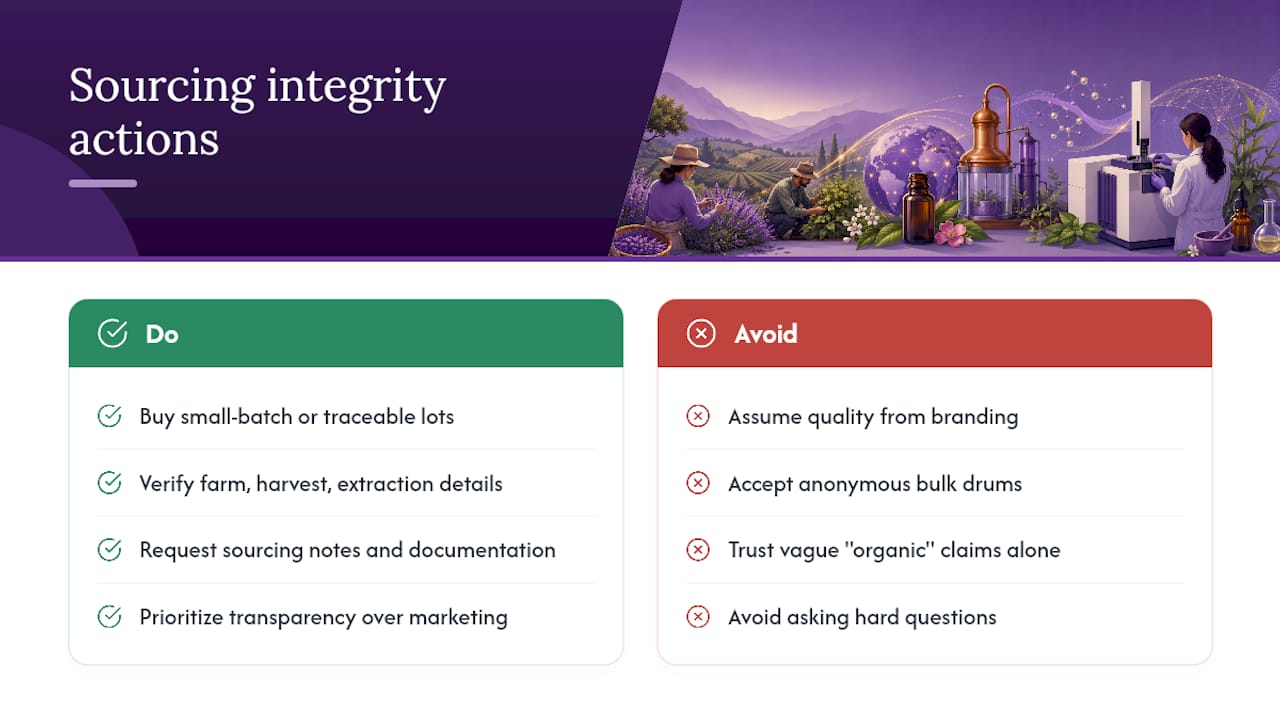
Small batch production isn’t a marketing angle for us. It’s a practical constraint that keeps sourcing honest. When you’re working with limited quantities of organic and wild harvested botanicals rather than buying anonymous bulk drums, you end up knowing exactly which farm, which harvest, and which extraction method went into what’s on your shelf. That kind of proximity to the source is hard to fake at scale, and it’s exactly what the verification steps in this article are designed to surface.
Our botanical aromatics collection and educational resources on aromatherapy’s role in ritual practice reflect that same emphasis on sourcing transparency over marketing shorthand. We know the industry runs on trust that’s often unearned, and we’d rather be asked hard questions about a batch than have a customer assume quality without proof. If you want sourcing notes or documentation on a specific product, ask us directly. That conversation is part of how quality actually gets demonstrated, not just claimed.
— Kejiwa
Where to Find Kejiwa’s Batch-Verified Aromatics
Everything discussed here, the Latin naming, the sourcing transparency, the batch-level accountability, is the standard we hold our own botanical aromatics collection to. Unlike a mass retailer buying anonymous lots, Kejiwastore works in small batches sourced from organic farms and wild-harvest partners we can actually name, which means when you ask about a plant part, an extraction method, or a harvest season, you get a real answer instead of a shrug.

Our mists and elixir sprays list the botanical names and sourcing notes that this article walks through, and pieces like the Sense U All aromatherapy blend show exactly how those ingredients come together in a finished product. If you’re building a home aromatherapy practice around ritual, sleep, or daily grounding, our sleep-focused protocols and quality checks walk through safe nightly use alongside the same verification habits covered above. Browse the botanical aromatics collection to see current batches, or reach out to us directly if you want a COA or sourcing detail on a specific product before you buy. That’s the fastest way to know what you’re getting.
Sources
The School of Aromatic Studies’ guide on essential oil quality is the clearest primer on GC/MS interpretation available to non-lab audiences. Cleveland Clinic’s essential oil guidance and WebMD’s essential oils overview cover safe use, while the FDA’s cosmetics page outlines the regulatory frame for topical products in the United States.
- The Quality of Essential Oils — The School of Aromatic Studies
- 11 Essential Oils: Their Benefits and How To Use Them — Cleveland Clinic
- Essential oils slideshow — WebMD