


Inhalation aromatherapy is an evidence-informed complementary approach that helps many adults fall asleep faster and sleep more soundly, particularly when anxiety is part of the picture. Lavender, bergamot, chamomile, cedarwood, and clary sage are the core oils worth trying first, with vetiver, frankincense, and neroli as strong alternatives. None of this replaces medical care for chronic insomnia, so the safety and dosing guidance below matters just as much as the oil you pick.
TL;DR:
- Aromatherapy works best when matched to specific sleep issues, such as lavender for racing minds and cedarwood for waking during the night.
- Longer inhalation sessions over 20 minutes have shown a greater effect on improving sleep symptoms and reducing anxiety, especially when done consistently.
- Use high-quality oils with clear chemotype labeling and proper extraction methods; avoid low-cost or unverified products to ensure safety and efficacy.
- Diffusing oils 20 to 30 minutes before bedtime or applying blended pillow sprays and roll-ons can support sleep, but routine and patience are key for optimal results.
- People with health conditions or pet owners should consult a professional before starting aromatherapy, as proper dilution and safety precautions are essential.
Table of Contents
- Best Essential Oils for Sleep and Who Each One Fits
- How Do You Use Essential Oils for Sleep?
- What Does the Research Actually Say About Aromatherapy and Sleep?
- Is Aromatherapy Safe? Dilution, Allergies, and Warning Signs
- How Do You Know an Essential Oil Is High Quality?
- Three Nightly Aromatherapy Protocols to Try
- Why We Choose Chemotype Over Marketing at Kejiwa
- Bring These Protocols Into Your Nightly Ritual
- Sources
Best Essential Oils for Sleep and Who Each One Fits
Not every restless night has the same root cause, and not every oil solves the same problem. Matching the oil to what’s actually keeping you up is where most people go wrong. They grab whatever smells nice at the store instead of asking what their nervous system needs at 11 PM.

Lavender remains the most studied option, and for good reason. Its two dominant constituents, linalool and linalyl acetate, act on GABAergic neurons in the central amygdala, which is how inhaled lavender shortens the time it takes to enter non-REM sleep in laboratory research. If your main struggle is a racing mind at bedtime rather than staying asleep, lavender is the reasonable first pick.
Bergamot brings a brighter, citrus profile that works especially well when anxiety, not just physical restlessness, is driving your insomnia. It’s less sedating than lavender in a heavy sense and more mood-lifting, which makes it a good match for people whose sleep problems trace back to stress spirals rather than pure overstimulation.
Chamomile is the gentle nervine of the group. If you have sensitive skin, dislike strong floral scents, or want something closer to what you’d sip as tea, chamomile delivers a mild calming effect without the intensity of lavender or clary sage. It’s often the right starting point for people who are new to essential oils altogether.
Cedarwood works differently. Rather than easing you into sleep, it tends to support staying asleep through the night, thanks to its grounding, woody profile that many people describe as physically settling. If your issue is 3 AM waking rather than a slow start, cedarwood deserves a place on your nightstand.
Clary sage has a following among people whose sleep disruption is tied to hormonal shifts or high cortisol, including perimenopausal sleep complaints. One systematic review of aromatherapy in menopausal women found meaningful reductions in sleep latency and daytime drowsiness, even though overall sleep-quality scores didn’t shift significantly. That’s a useful reminder that aromatherapy tends to help specific sleep domains rather than fixing everything at once.
Three additional oils round out a well-stocked cabinet:
- Vetiver offers a deep, earthy, almost smoky scent that suits people who find floral oils too sweet and need something heavier to settle a busy mind.
- Frankincense pairs slow, resinous breathing cues with a mild grounding effect, useful for winding down a meditation or breathwork routine before bed.
- Neroli brings citrus-floral calm similar to bergamot but softer, often preferred by people sensitive to stronger essential oils.
One caution before you buy: chemotype matters more than most labels admit. Lavender grown at different altitudes or harvested at different times can shift its chemical makeup dramatically. A lavender oil high in camphor or ocimene can actually work against you, since ocimene-heavy batches have been associated with increased alertness rather than calm. This is why the botanical name and chemotype notation on a label carry real weight, a point worth revisiting when you’re comparing bottles at checkout.
How Do You Use Essential Oils for Sleep?
The oil matters less than most people assume. Delivery method and consistency often matter more, and this is where most home aromatherapy routines quietly fail.
- Diffuser sessions. Start the diffuser 20 to 30 minutes before you intend to fall asleep, not the moment you climb into bed. Ultrasonic diffusers work well in a bedroom of average size; place the unit a few feet from your pillow, never directly beside your face. If you have cats or birds in the house, run diffusers in a separate room. Cats in particular lack the liver enzymes to metabolize many essential oil compounds safely.
- Pillow and linen sprays. Mix 10 to 15 drops of your chosen oil (or blend) with 2 tablespoons of witch hazel or high-proof vodka in a 2-ounce glass spray bottle, then top with distilled water. A splash of vodka or a small amount of a natural preservative keeps the mixture from growing bacteria if it sits for more than a couple of weeks. Two to three light spritzes on the pillowcase, away from your eyes, is plenty.
- Topical roll-ons. For a 10 mL roller bottle, a 1 to 2% dilution means 2 to 4 drops of essential oil topped with a carrier oil like jojoba or fractionated coconut oil. Apply to wrists, temples, or the soles of the feet. Always patch-test on your inner forearm 24 hours before regular use.
- Direct inhalation. For travel or a fast reset, add a few drops to a cotton pad or personal inhaler tube and breathe in for about a minute or so. This is the quickest way to test whether a scent even agrees with you before committing to a full bedtime routine.
Three ready-to-use recipes:
Bedtime diffuser blend: 4 drops lavender, 2 drops cedarwood, 1 drop bergamot in your diffuser’s water reservoir, run for 30 minutes starting before lights-out.
Pillow spray: 12 drops lavender, 5 drops chamomile, 2 tablespoons witch hazel, distilled water to fill a 2-ounce bottle.
Pro Tip: Stick with the same blend and the same timing for at least one to four weeks before judging whether it’s working. Scent-based interventions often need a few repetitions before your nervous system starts associating the smell with sleep onset, similar to how a bedtime song works for a toddler.
What Does the Research Actually Say About Aromatherapy and Sleep?
The strongest current evidence comes from a 2025 meta-analysis covering 27 studies and 2,072 patients, which found inhalation aromatherapy produced statistically significant improvements in sleep symptoms as well as related anxiety and depression among people with comorbid insomnia.
Across that pooled data, longer inhalation sessions were consistently linked to larger effects, and interventions running longer than 20 minutes tended to outperform quick, one-off sprays.
A separate review of 30 studies on aromatherapy and sleep quality in adults and older populations calculated a moderate overall effect size (Hedges’ g = 0.74), with massage-based delivery and sessions over 20 minutes showing the strongest results. That’s a meaningful signal, but it’s not proof of a cure. Effect sizes in this range sit well below what you’d see from prescription sleep medication, and they come bundled with real limitations.
Study heterogeneity is the biggest issue researchers flag. Dosing varies wildly between trials, oil purity is rarely independently verified, and blinding is nearly impossible when a participant can smell the difference between lavender and a placebo. Johns Hopkins Medicine notes that aromatherapy works primarily through olfactory engagement of the amygdala and other emotional processing centers in the brain, which explains why scent preference personally matters. An oil you find unpleasant is unlikely to relax you no matter what a study says about its average effect.
The practical takeaway sits in the middle ground: aromatherapy is a reasonable complementary tool, especially for sleep onset and anxiety-linked wakefulness, but it works best stacked alongside consistent sleep hygiene rather than used as a standalone fix.
Is Aromatherapy Safe? Dilution, Allergies, and Warning Signs
Essential oils are concentrated plant chemistry, not gentle background scent. Treat them with the same respect you’d give any active ingredient.
- Keep nightly topical blends at 1 to 2% dilution. For a 10 mL carrier oil bottle, that’s 2 to 4 drops of essential oil, no more.
- Patch-test every new oil on your inner forearm and wait 24 hours before applying it anywhere else.
- Pregnant or breastfeeding people, infants, and young children should check with a clinician before regular use, since several common sleep oils (including clary sage) carry specific pregnancy cautions.
- People with asthma, seizure disorders, or those taking sedative medications, blood thinners, or blood pressure medication should also confirm safety with a doctor first, since certain oils can amplify drowsiness or interact with prescriptions.
- Cats and birds are especially vulnerable to essential oil compounds; diffuse in a separate room and never apply oils directly to pets.
- Store oils away from light and heat, and label bottles with the date opened. Oxidized oils are more likely to cause skin irritation.
Pro Tip: If you notice a headache, nausea, or skin redness within an hour of use, stop immediately and switch to a different oil or a lower dilution. Reactions are usually a sign of oil sensitivity, not a signal to push through.
How Do You Know an Essential Oil Is High Quality?
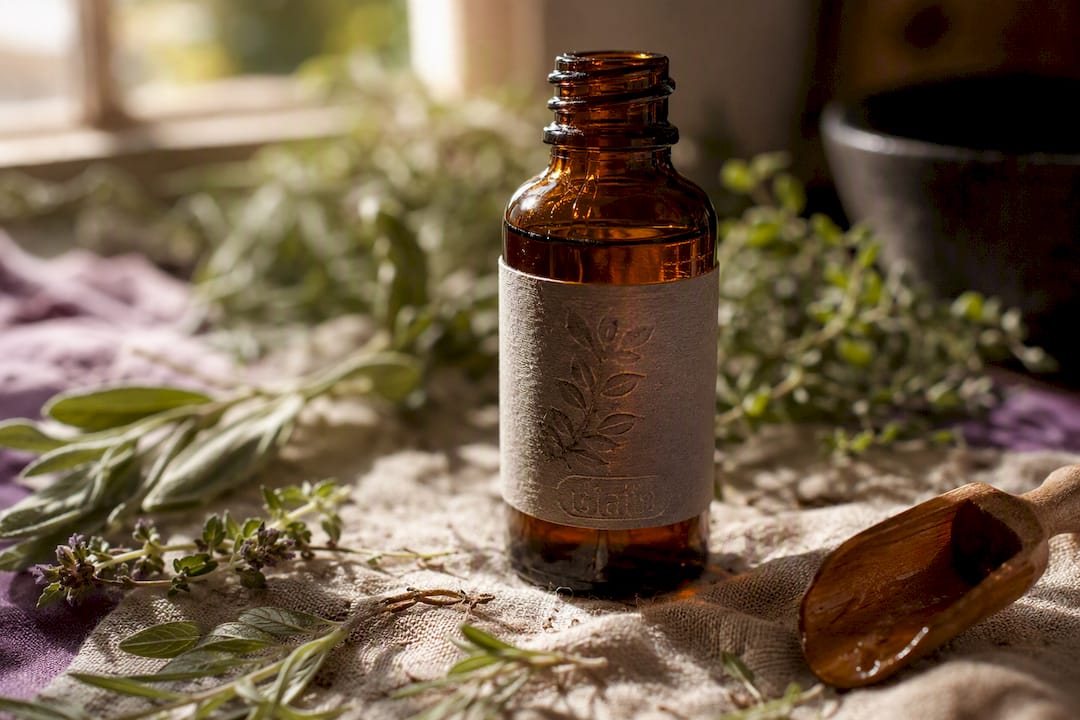
The label is where quality control either shows up or quietly disappears. A trustworthy bottle lists the plant’s Latin botanical name (Lavandula angustifolia, not just “lavender”), the chemotype when relevant, the extraction method, a batch or lot number, and the country of origin.
Ask whether the company provides a certificate of analysis from gas chromatography-mass spectrometry (GC/MS) testing. This is the actual lab test that confirms an oil’s chemical makeup matches what’s on the label, and reputable small-batch producers are generally happy to share it. Clinical reviews studying aromatherapy for sleep consistently flag inconsistent product verification as a limitation in the underlying research, which is exactly why sourcing matters at home too.
Red flags to watch for:
- Marketing language like “therapeutic grade” with no accompanying lab data. That phrase has no legal or industry-standard definition.
- Missing or inconsistent batch numbers across a product line.
- Prices dramatically below market rate for oils like rose, neroli, or clary sage, which are labor-intensive to extract and rarely cheap when genuine.
Three Nightly Aromatherapy Protocols to Try
Pick a starting point based on how much structure you’re willing to commit to, then track results honestly for a few weeks before deciding what’s next.
- Beginner protocol (1 to 2 weeks): Use a single-oil pillow spray or a 10-minute diffuser session with lavender or chamomile alone. Keep everything else about your bedtime routine unchanged so you can isolate the effect.
- Moderate protocol (2 to 4 weeks): Run a 20 to 30 minute diffuser session before bed combined with a 1% roll-on blend applied to your wrists. This mirrors the session lengths tied to larger effects in the research above.
- Therapeutic-adjunct protocol (4+ weeks): Pair aromatherapy with a 20-minute wind-down practice, such as breathwork or gentle stretching, and layer in sleep hygiene basics like consistent wake time and no screens in the final hour. Track nights in a simple sleep diary, noting time to fall asleep and number of wakings.
If none of these protocols move the needle after a month, or if insomnia is paired with loud snoring, gasping, or daytime exhaustion severe enough to affect driving or work, that’s your cue to talk with a sleep specialist rather than adjusting the blend again. A restorative sleep protocol built around botanical routines can help you structure this progression step by step.
Why We Choose Chemotype Over Marketing at Kejiwa
We built Kejiwastore’s aromatic line around chemotype awareness, not trend chasing. When we source lavender, we prioritize linalool and linalyl acetate content because that’s what the research actually points to for sleep support, not because it sounds good on a label. Small-batch sourcing lets us stay close to that detail in a way mass production rarely allows, and our guides on aromatherapy mists walk through the reasoning behind each blend.
— Kejiwa
Bring These Protocols Into Your Nightly Ritual
If you’re ready to put the beginner or moderate protocol into practice, Kejiwastore’s botanical aromatics were built exactly for this. Our aromatherapy mists and roll-ons use small-batch, wild-harvested botanicals sourced with chemotype in mind, the same detail that separates a lavender oil that actually helps you sleep from one that just smells pleasant.

For the beginner protocol, reach for one of our pillow mists and spritz your linens 20 minutes before bed. For the moderate protocol, pair that mist with a 1% botanical roll-on applied to your wrists as part of a longer wind-down. Readers exploring hormone-related sleep disruption often pair aromatics with our spagyric herbal tinctures for a fuller nightly ritual, while some also look into complementary options like CBD for sleep as part of a broader wellness approach. Browse the full botanical aromatics collection to find the blend that matches where you are tonight, and start your first session before your next bedtime.
Sources
- Inhalation aromatherapy for the treatment of comorbid insomnia: a systematic review and meta-analysis
- Aromatherapy: Do essential oils really work? — Johns Hopkins Medicine
- Effect of aromatherapy on sleep quality of adults and elderly people: A systematic literature review and meta-analysis
This article is general information, not a substitute for advice from a qualified doctor. Consult a qualified healthcare professional about your own circumstances before acting on anything here.