


An aromatherapy mist is a pre-diluted spray of essential oils in water, meant for a quick sensory reset. Use it as a light room, linen, or body spritz at 6 to 12 inches for immediate calm, sleep support, or focus.
Reach for it in three ways right now:
- Pillow and linens before bed, for a wind-down cue.
- Room air, sprayed away from your face, for an instant mood shift.
- Body, on clothing or pulse points, never directly in the eyes.
Pro Tip: Patch-test on a hidden fabric corner or a small patch of skin first, and wait 24 hours before regular use.
Key Takeaways
Aromatherapy mists work best when the scent family matches a specific mood goal and the application method (fabric, air, or skin) matches the setting.
| Point | Details |
|---|---|
| Match scent to goal | Lavender for sleep, citrus for energy, peppermint for focus, resins for grounding. |
| Apply at the right distance | Hold the bottle 6 to 8 inches away and use 2 to 3 pumps per application. |
| Target fabric for longevity | Curtains, pillows, and cushions hold scent longer than open air or hard surfaces. |
| Patch-test before regular use | Spray a small area and wait 24 hours to check for skin or fabric reactions. |
| Choose formulated blends | Kejiwa Alchemy’s Botanical Aromatics line offers pre-diluted mists built for daily ritual use. |
Where to Learn More About Aromatherapy Safety and Evidence
- Cleveland Clinic overview on aromatherapy and stress relief.
- CEHN fragrance FAQ on fragrance sensitivity risks.
- Hindawi review on aromatherapy clinical evidence.
Table of Contents
- What Is an Aromatherapy Mist and How Does It Work?
- Everyday Aromatherapy Mists Uses You Can Start Today
- How Do You Choose a Scent for Your Mood Goal?
- Is It Safe to Use Aromatherapy Mists Every Day?
- How Should You Store an Aromatherapy Mist and What Should the Label Say?
- How Kejiwa Alchemy Approaches Everyday Aromatherapy Rituals
- Bring These Everyday Uses Into Your Own Routine
- Frequently Asked Questions
- Sources
What Is an Aromatherapy Mist and How Does It Work?
An aromatherapy mist is water blended with a solubilizer and a small percentage of essential oils, usually somewhere between 1% and 5%, designed for portability and short bursts of scent rather than the slow, sustained release you get from a plug-in diffuser. That composition matters because it’s what makes mists so easy to layer into a day: no cords, no heat source, no waiting.
Scent works fast because aroma molecules travel straight to the olfactory bulb, which sits close to the brain’s emotional and memory centers. That’s the physiological reason a single spritz of lavender can feel calming almost immediately, though the evidence for aromatherapy’s effects on anxiety and relaxation is mixed and varies by study quality.
- Body mist: worn on skin or clothing, best for on-the-go mood shifts.
- Room or pillow mist: sprayed into air or onto fabric, best for sleep and environment resets.
Everyday Aromatherapy Mists Uses You Can Start Today
Most people default to one use case (usually room spray) and never explore the rest. That’s a missed opportunity, because a single well-formulated mist can support at least six different daily moments.
Pillow and bedtime spray. Mist your pillowcase and sheets 5 to 10 minutes before lying down, giving the alcohol or water base time to evaporate before your face touches the fabric. Two to three light pumps from about 8 inches away is plenty. Because good sleep hygiene supports mood and stress regulation more broadly, pairing a scent cue with a consistent bedtime routine can reinforce the wind-down signal your nervous system is looking for.
Room and air refresh. Hold the bottle 6 to 8 inches from the space you’re treating and spray two or three pumps into the air, not directly at furniture or electronics. Skip this after cleaning with strong chemical products, since combined smells tend to compete rather than blend.
Linen and soft-furnishing spray. Curtains, cushions, and throw blankets hold scent longer than open air does, so experts recommend targeting fabric over hard surfaces if you want the effect to last through an evening.

Body spritz. Spray onto clothing or hair rather than bare skin unless the label confirms the dilution is skin-safe. Aim for pulse points like wrists and the base of the neck.
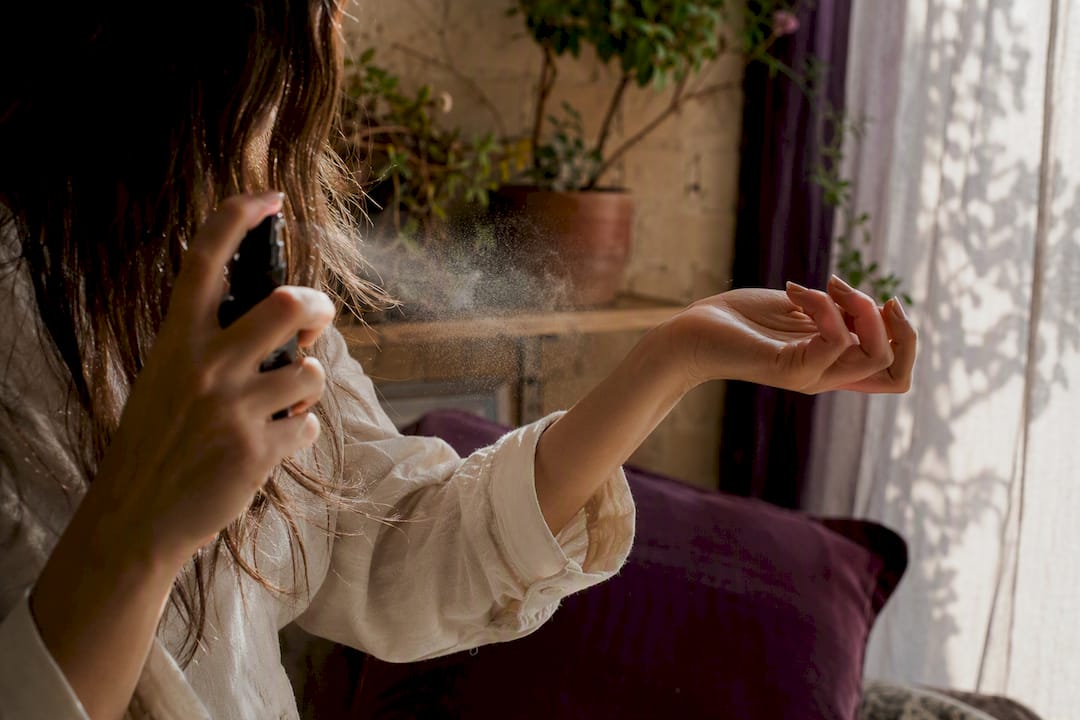
Yoga, meditation, or ritual use. A single mist before or after practice signals a mental transition, the same way a bell or a candle does. This is where a lot of ritual-minded readers find aromatherapy’s role in meditation practice most useful.
Car and commute refresh. One or two sprays on a fabric seat cover or floor mat, never directly on dashboard plastic or leather, which can stain.
- Shake the bottle before every use.
- Hold it 6 to 8 inches from your target.
- Apply two to three pumps.
- Wait a few seconds before returning to the fabric or space.
Pro Tip: Spraying into shower steam turns an ordinary mist into a spa-like ritual, since the humidity carries the scent further and holds it longer than dry air ever could.
How Do You Choose a Scent for Your Mood Goal?
Scent families behave differently, and matching the right one to your goal makes a bigger difference than most people assume.
- Floral (jasmine, rose): mood-lifting, often used for romantic or ritual settings.
- Citrus (bergamot, sweet orange): energizing, best for daytime rooms rather than bedding if you’re light-sensitive to brighter scents at night.
- Herbal (rosemary, peppermint): sharpening, useful before focused work.
- Resinous (frankincense, myrrh): grounding, common in meditation and ritual practice.
- Woodsy (cedarwood, patchouli): stabilizing, good for anchoring an evening routine.
For sleep, lavender remains the most reached-for oil, applied as a light linen spritz rather than a heavy body spray. For a midday lift, bergamot or citrus blends work better as a room mist. For focus, peppermint or rosemary near a workspace, sprayed into the air rather than on paper or electronics, tends to help. For grounding before meditation, frankincense or patchouli as a body or ritual spray fits the moment. A small clinical study found that certain essential oils were linked to reduced subjective anxiety in limited samples, which supports the general pattern, even if it doesn’t guarantee results for every person.
Is It Safe to Use Aromatherapy Mists Every Day?
Aromatherapy is widely treated as a complementary relaxation practice, not a medical treatment, and the Roots Health Store explains how CBD for rust zorgt: natuurlijke ontspanning can complement these calming methods effectively. That distinction matters when you’re deciding how often, and how directly, to apply a mist.
Start with a patch test: spray a small amount on the inside of your forearm or a hidden patch of fabric, then wait 24 hours. Redness, itching, or a rash means stop and don’t use that blend again.
A few groups need extra caution:
- Pregnancy: certain oils (including some in the herbal and resinous families) are best avoided or used only after checking with a healthcare provider.
- Young children and infants: skip direct skin application and keep mists out of reach.
- Pets: cats in particular can react badly to several common essential oils, so mist rooms they can leave rather than confined spaces.
- Asthma or fragrance sensitivity: fragrance products can include compounds that trigger reactions in sensitive people, so ventilate the room and avoid spraying directly near anyone with a known sensitivity.
Keep sprays 6 to 12 inches from skin and never aim toward the eyes or face. If a blend is meant for fabric only, the label should say so. Review-level research on aromatherapy shows mixed results depending on study design, which is a reasonable argument for treating mists as a mood-support tool rather than a cure for anything more serious.
How Should You Store an Aromatherapy Mist and What Should the Label Say?
Keep bottles in a cool, dark place. Heat and direct sunlight break down essential oil compounds faster, which shortens how long a mist stays potent. Most mists hold their scent well for 12 to 24 months unmixed, though color changes, a flat smell, or separation that doesn’t shake back together are signs it’s time to replace the bottle.
When you’re buying, check the label for:
- Essential oil percentage, not just an oil name in the ingredient list.
- Solubilizer or preservative type, so you know what’s binding the water and oil.
- The word “fragrance” listed alone, which usually signals synthetic additives rather than pure essential oil content.
If you’re blending your own, dilute conservatively, label the bottle with the date and ratio, and store it the same way you would a finished product.
How Kejiwa Alchemy Approaches Everyday Aromatherapy Rituals
We formulate our mists the way we’d want to use them ourselves: as a small, repeatable ritual, not an afterthought. That means sourcing organic and wild-harvested botanicals first, then dialing in dilution so a spray works on skin, fabric, or open air without guesswork. Every practical step in this guide, the spray distance, the fabric targeting, the mood-matching, comes from the same formulation priorities we build into every bottle.
Bring These Everyday Uses Into Your Own Routine
Careful formulation is the difference between a mist that fades in an hour and one that actually holds up through a bedtime routine or a meditation session. Kejiwa Alchemy’s Botanical Aromatics collection is built around that idea: pre-diluted, small-batch blends meant for the exact pillow, room, and body uses covered above.
If you’re drawn to floral, ritual-forward scents, the Jasmine Passion Alche-Mist is a good place to start, and it pairs naturally with a grounding oil like Sense U All for layering during meditation or evening wind-down. Browse the collection, pick a scent that matches your current mood goal, and add it to checkout to start your next ritual tonight.
Frequently Asked Questions
How far should you hold an aromatherapy mist from your face or fabric? Keep the bottle 6 to 8 inches from skin or fabric, and never spray directly toward your eyes.
Can you use aromatherapy mists every night? Yes, for most people, though those with asthma, fragrance sensitivity, or pregnancy should check with a healthcare provider first and always patch-test a new blend.
What’s the difference between a body mist and a room spray? A body mist is formulated and diluted for skin or clothing contact, while a room or pillow mist is meant for air and fabric only, so check the label before applying either to skin.
Which scent is best for sleep versus focus? Lavender and other floral or herbal blends support sleep, while peppermint and rosemary tend to sharpen focus during work.
How long does an aromatherapy mist last once opened? Most mists stay potent for 12 to 24 months when stored away from heat and sunlight, though a flat smell or separation signals it’s time to replace the bottle.
This article is general information, not a substitute for advice from a qualified doctor. Consult a qualified healthcare professional about your own circumstances before acting on anything here.
Sources
- PubMed — clinical study on essential oils and stress/anxiety
- Cleveland Clinic — Aromatherapy can help you feel calmer
- CEHN — Fragrances FAQ (health concerns)
- Hindawi — Review of aromatherapy clinical evidence