


Sacred plant medicine traditions are the ceremonial use of botanicals to restore balance across the physical, emotional, and spiritual dimensions of human life. Indigenous cultures across every continent have practiced ethnobotanical healing for thousands of years, treating plants not as passive remedies but as living teachers with their own intelligence and spirit. From Tobacco ceremonies in North America to Palo Santo rituals in the Andes, these traditions share one core truth: healing is a relationship, not a transaction. This guide explores the most significant ceremonial plant allies, their cultural roots, and how you can engage with them respectfully.
1. What are sacred plant medicine traditions?
Sacred plant medicine traditions are defined as ritualized systems of healing and spiritual practice in which plants serve as intermediaries between human beings and the natural or spiritual world. The term “ethnobotany” is the recognized academic field that studies these relationships. Both terms appear throughout this article because each serves a different purpose: ethnobotany builds scientific credibility, while “sacred plant medicine” reflects the lived, spiritual reality practitioners describe.
Traditional healers view illness as an imbalance within moral, spiritual, and ecological realms, not simply a physical symptom to suppress. This worldview shapes everything: the plants chosen, the timing of harvest, the prayers spoken, and the protocols followed during ceremony. Healing in this framework restores equilibrium across all three realms simultaneously.
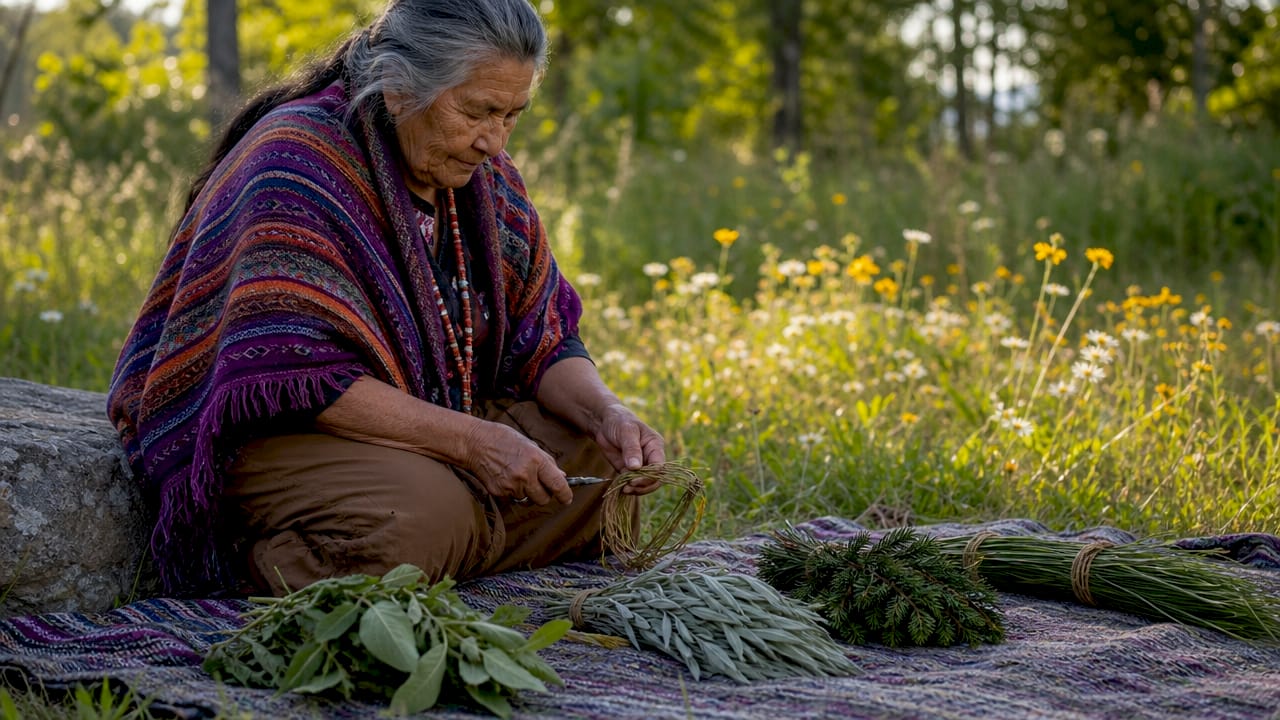
2. What are the four sacred medicines in Indigenous North American traditions?
Four plants anchor sacred ceremony botanicals in many Indigenous North American communities: Tobacco, Sage, Cedar, and Sweetgrass. Each carries a distinct energetic function and ceremonial role.
| Plant | Energetic Function | Ceremonial Use |
|---|---|---|
| Tobacco | Offering and prayer carrier | Gifted to elders, placed at roots of trees |
| White Sage | Clearing and purification | Smoke used to cleanse spaces and people |
| Cedar | Protection and grounding | Burned at doorways, used in sweat lodges |
| Sweetgrass | Harmony and invitation | Braided and burned to welcome good spirits |
White Sage, Sweetgrass, Cedar, and Palo Santo each serve distinct smoke purposes: clearing, harmony, protection, and uplift respectively. That categorization by energetic function reflects a sophisticated botanical intelligence developed over generations. These are not interchangeable herbs. Each plant has a specific protocol for gathering, preparing, and using.
- Tobacco is the most sacred of the four in many nations. It is offered, not smoked recreationally, and carries prayers to the spirit world.
- White Sage clears stagnant or negative energy from a space before ceremony begins.
- Cedar protects and grounds, often used to mark sacred boundaries.
- Sweetgrass is braided to represent the hair of Mother Earth and burned to attract positive energy.
Pro Tip: When working with these four plants, use them in sequence: clear with Sage first, protect with Cedar second, then invite harmony with Sweetgrass. This mirrors the ceremonial order many Indigenous practitioners follow.
3. How do sacred plant traditions vary globally?
Sacred plant medicine practices extend far beyond North America. Across Asia, South America, and Oceania, distinct cultures have developed their own ceremonial plant allies with equally rich protocols.
Palo Santo (South America): Used by Andean and Amazonian peoples for centuries, Palo Santo wood is burned for spiritual cleansing and to raise energetic frequency. The smoke is said to clear misfortune and invite healing spirits. Ethical sourcing requires using only naturally fallen wood, never cutting living trees.
Vibhuti Ash (South Asia): In Hindu Shaivite tradition, Vibhuti is sacred ash applied to the body as a mark of spiritual devotion and protection. It is not a plant medicine in the botanical sense, but it functions within the same ceremonial logic: a sacred substance that connects the practitioner to divine energy.
Ficus septica (Indonesia): Ficus septica in Bugis-Makassar traditional medicine symbolizes balance and healing, incorporating cosmological, ecological, and pharmacological dimensions. The plant treats fever, inflammation, and wounds, but always within a ritual framework that honors the plant’s spirit. This is a living example of how ethnobotanical traditions remain active and documented today, not relics of the past.
- Palo Santo: spiritual cleansing, energetic uplift, Andean and Amazonian origin
- Vibhuti ash: devotional protection, Hindu Shaivite tradition
- Ficus septica: fever and wound healing within a cosmological framework
- Copal resin: Mesoamerican offering smoke, used in Mayan and Aztec ceremony
The pattern across all these traditions is consistent. Plants are treated as partners in a reciprocal relationship, not as raw materials to extract and consume. You can explore how wild-harvested copal resin fits into this broader ceremonial context.
4. What is the role of smoke and ritual in plant medicine ceremonies?
Smoke is the most universal medium in sacred plant ceremony. It carries prayers upward, purifies space, and marks the boundary between ordinary and sacred time. Understanding how to use it correctly matters as much as which plant you burn.
The distinction between “smudging” and “smoke cleansing” is not semantic. The difference between casual smoke use and Indigenous smudging ceremonies involves specific cultural protocols and community authorization. Smudging is a ceremony with lineage. Smoke cleansing is a practice anyone can adopt with respect and intention.
Burning traditional cleansing herbs can reduce airborne pathogens by up to 94%, linking spiritual practice with measurable physical benefit. This means the ritual is not purely symbolic. The antimicrobial properties of sage and cedar smoke create a genuinely cleaner environment.
A basic smoke ritual sequence for spiritual seekers:
- Set intention. State clearly what you are clearing or inviting before you light anything.
- Open a window. Smoke carries what it clears out of the space. Give it an exit.
- Move counterclockwise to clear, clockwise to invite. This mirrors the directional logic in many ceremonial traditions.
- Close the ritual. Extinguish the herb fully and offer gratitude to the plant.
Pro Tip: Combine Frankincense resin with White Sage for a two-phase ritual: Sage clears the space first, then Frankincense raises the frequency and sets a receptive tone for meditation or prayer. Kejiwastore’s organic Frankincense resin works well for this second phase.
You can deepen this practice further by reading about sacred smudging for meditation and how ancient resins prepare your energy field.
5. How are sacred plants sustainably sourced and ethically harvested?
Ethical harvesting is not optional in sacred plant traditions. It is the foundation of the practice itself. Before harvesting, indigenous practitioners recite invocations to seek the plant’s permission and acknowledge its spirit. This is documented practice in Indonesian Bugis-Makassar communities and paralleled across dozens of other traditions worldwide.
“Ethical harvest practices include ritual permission-seeking, removing minimal plant material, and dedicating harvest acts as spiritual discipline to maintain balance.”
This principle has direct practical implications for anyone sourcing ceremonial botanicals today:
- Take only what you need. Removing minimal material is both an ecological ethic and a spiritual one.
- Seek permission. Whether through prayer, intention, or simply pausing to acknowledge the plant, this act shifts your relationship from extraction to reciprocity.
- Support wild-harvested sources. Wild harvested botanicals carry a spiritual meaning that cultivated, mass-produced herbs often lack. The plant’s relationship to its ecosystem is part of its medicine.
- Avoid overharvested species. White Sage faces serious pressure from commercial demand. Ethical sourcing means choosing suppliers who harvest with restraint and community oversight.
The commodification of sacred plants is a real threat. When Palo Santo or White Sage becomes a mass-market product stripped of its cultural context, the medicine weakens and the communities who steward it lose both resources and recognition. Viewing plants as spiritual partners expands healing beyond physical symptoms to balance across mind, body, and environment. That view also demands accountability in how you source.
A study documenting 218 healers in West Sikkim using 70 medicinal plant species for 35 ailments shows these traditions are living systems, not museum artifacts. Protecting them means protecting the people who carry them.
6. How to incorporate sacred plant medicine into your spiritual practice respectfully
Respectful engagement with ceremonial plant allies starts with education, not acquisition. You do not need to own every sacred herb to begin. You need to understand what you are working with and why.
- Learn the cultural origin of every plant you use. Knowing that Sweetgrass comes from specific Indigenous nations in North America changes how you hold it.
- Use “smoke cleansing” language unless you have been taught smudging protocols by an authorized Indigenous teacher. Language reflects relationship.
- Source ethically. Choose suppliers who name their harvest regions, work with indigenous communities, and practice sustainable collection. Kejiwastore sources wild-harvested botanicals with this standard in mind.
- Start with beginner-friendly plants. Lavender, Rosemary, and Frankincense carry strong ceremonial histories and are widely available without the overharvesting concerns of White Sage.
- Connect with nature spirits through presence. Spend time with a plant before you burn it. Sit with it. Smell it. This is what connecting with nature spirits through wild botanicals actually looks like in practice.
- Seek community knowledge. Modern spiritual practitioners should engage with sacred plants as relationships with teachers rather than mere tools, prioritizing respect, rituals, and community knowledge.
You can also explore the broader world of entheogenic wellness to understand how sacred plant traditions intersect with contemporary spiritual healing frameworks.
Key Takeaways
Sacred plant medicine traditions work because they treat healing as a reciprocal relationship between humans, plants, and the living world, not as a one-directional extraction of benefit.
| Point | Details |
|---|---|
| Plants as teachers | Engage with ceremonial botanicals as living partners, not passive tools or products. |
| Four sacred medicines | Tobacco, Sage, Cedar, and Sweetgrass each carry distinct energetic roles in North American ceremony. |
| Global diversity | Palo Santo, Ficus septica, and Vibhuti ash show that sacred plant traditions span every continent. |
| Smoke with intention | Distinguish smoke cleansing from smudging and follow a clear ritual sequence for best results. |
| Ethical sourcing matters | Wild-harvested, permission-based harvesting is both a spiritual and ecological responsibility. |
Plants are teachers, not products: a perspective from Kejiwa
The most common mistake I see in the modern wellness world is treating sacred plants like supplements. You buy them, you use them, you move on. That approach misses the entire point.
Every plant I work with at Kejiwastore has a story. Frankincense carries thousands of years of ceremonial use across Egypt, the Arabian Peninsula, and East Africa. Copal resin was burned in Mayan temples as an offering to the gods. When you burn these plants without knowing that history, you are using the body of the medicine without its spirit.
What I have found, after years of working with wild-harvested botanicals and spagyric preparations, is that the relationship you build with a plant determines the depth of what you receive. This is not mysticism. It is attention. When you slow down, learn the plant’s origin, harvest it or source it with care, and approach it with gratitude, your nervous system responds differently. Your intention sharpens. The ceremony actually works.
The indigenous knowledge holders who developed these traditions deserve credit, compensation, and protection. The least any of us can do is learn their names and honor their protocols before we light anything on fire.
— Kejiwa
Kejiwastore’s botanical alchemy for your ceremonial practice
Kejiwastore creates small-batch botanical preparations that draw directly from these traditions. Each product is made with wild-harvested or organic ingredients, crafted with the same intentionality that sacred plant traditions demand.

The spagyric herbal tinctures at Kejiwastore follow an alchemical preparation method that preserves the plant’s full spectrum: body, soul, and spirit. This mirrors the ethnobotanical worldview that a plant’s medicine lives in its whole being, not just its active compounds. The Ormus minerals collection supports the energetic architecture that ceremonial practice opens up, helping you hold and integrate what the plants offer. For ritual atmosphere, the botanical aromatics line brings sacred fragrance into your space with the same care and sourcing integrity these traditions require.
FAQ
What is sacred plant medicine?
Sacred plant medicine is the ceremonial use of botanicals to heal physical, emotional, and spiritual imbalance. Indigenous traditions worldwide treat these plants as living teachers with their own intelligence and spirit.
What are examples of ceremonial plant allies?
Tobacco, White Sage, Cedar, Sweetgrass, Palo Santo, Copal, and Frankincense are among the most widely recognized ceremonial plant allies across different cultural traditions.
What is the difference between smudging and smoke cleansing?
Smudging is a specific Indigenous ceremony with cultural protocols and community authorization. Smoke cleansing is a broader practice of using plant smoke for energetic clearing that anyone can adopt respectfully.
How do I source wild-harvested botanicals ethically?
Choose suppliers who name their harvest regions, work with indigenous communities, and collect minimal material. Avoid mass-market versions of overharvested plants like White Sage.
Can sacred plant medicine traditions support modern spiritual practice?
Yes. Engaging with ceremonial botanicals through education, ethical sourcing, and intentional ritual integrates these traditions into modern spiritual life without appropriating or diluting their cultural roots.
Recommended
- The Role of Prayer in Herbal Crafting: A Sacred Guide – Kejiwa Alchemy
- A Guide to Smudging Herbs: Choosing Your Sacred Ally – Kejiwa Alchemy
- Sacred Smudging for Deeper Meditation | Ancient Resins for Spiritual Practice – Kejiwa Alchemy
- Elemental Rituals with Botanical Tools: 2026 Guide – Kejiwa Alchemy