


A usable meditation kit comes down to five things: a supportive seat, a focal cue like mala beads or an altar object, a way to mark time or sound, a scent or aromatherapy element, and a journal for reflection. Together, these items hold your posture, your attention, and your ritual in place, so the practice becomes something your body and senses recognize, not just something your mind tries to remember to do.
TL;DR:
- A supportive cushion like a zafu with a zabuton mat is essential for proper posture and comfort during meditation, especially for longer sessions.
- Mala beads or a bead counter help keep the mind focused by providing a tactile focus for breath or mantra repetitions.
- Using a timer, singing bowl, or ting-sha cymbals defines session boundaries and reduces mind wandering during practice.
- Incorporating scent cues such as incense or aromatherapy sprays can enhance relaxation but should be chosen based on scent tolerance and living conditions.
- Starting with a minimal kit and gradually adding items based on practice consistency ensures a functional setup without clutter or waste.
Table of Contents
- Meditation Kit Essentials You’ll Actually Use
- Choosing Between Minimal, Standard, and Complete Kits
- How to Pick Items That Fit Your Body and Practice
- Putting Your Kit to Work in a Daily Ritual
- Why Craftsmanship Matters in Ritual Botanicals
- Build Slowly. Let the Practice Choose the Gear.
- A Ritual-Minded Way to Round Out Your Kit
- Sources
Meditation Kit Essentials You’ll Actually Use
The right items don’t just sit on a shelf looking spiritual. Each one does a job, and knowing that job helps you decide what’s worth buying now versus later.
Start with your seat. A zafu cushion filled with buckwheat hulls or kapok tilts your hips forward and takes pressure off your lower back, which is why it’s the anchor piece of most starter kits. Pair it with a zabuton mat underneath. That combination cushions knees and ankles during longer sits and gives the whole setup a defined edge, so your practice space feels intentional rather than improvised, a pairing Still Sitting points to as the traditional foundation of a home setup. If cross-legged sitting isn’t comfortable for your hips or knees, a meditation bench or a firm chair with both feet flat on the floor works just as well. Posture matters more than the shape you sit in.
Mala beads give restless hands and minds something to do. Counting through 108 beads (or a shorter travel strand) as you breathe or repeat a phrase keeps attention anchored without forcing stillness.
A timer, singing bowl, or ting-sha cymbals mark the start and stop of your session. Striking a bowl once at the beginning and once at the end helps define the practice as a container rather than an open-ended drift, a small ritual habit that PotalaStore’s starter guide credits with cutting down transitional mind wandering.
Scent is where people often overthink things. Incense works well if your space has airflow and no one nearby has respiratory sensitivities. If smoke isn’t an option, an aromatherapy spray or a few drops of essential oil on a cloth does the same conditioning job: your nervous system starts associating that specific scent with settling in.
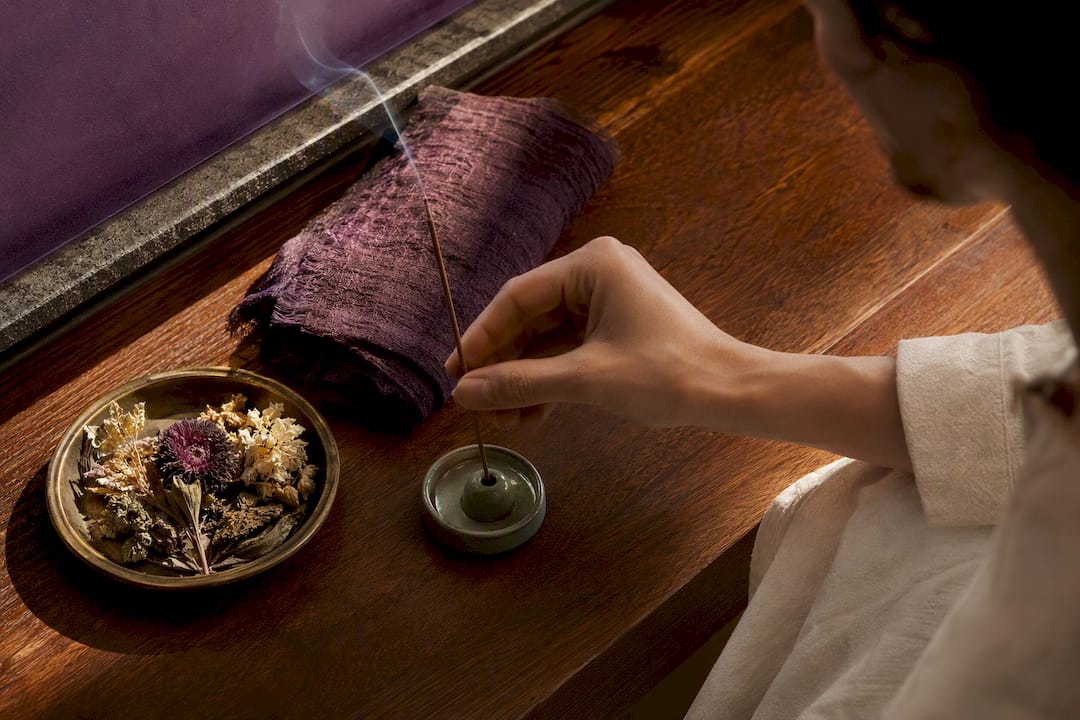
A small altar object (a stone, a candle, a meaningful image) gives your eyes somewhere to rest before you close them. It doesn’t need religious weight to work; it just needs to mean something to you.
Finally, keep a short journal nearby. Two lines after each session (What did I notice? What pulled my attention away?) turns a vague habit into a practice you can actually track.
- Zafu cushion + zabuton mat for supported seating
- Mala beads or a bead counter for focus
- Timer, singing bowl, or ting-sha for session boundaries
- Incense or aromatherapy spray for scent cues
- Small altar object for a visual focal point
- Journal for quick reflection notes
Pro Tip: Build a pocket-sized version for travel: a folding cushion, a wrist mala, and a small tin of solid perfume or balm instead of a spray. You lose nothing but bulk.
Choosing Between Minimal, Standard, and Complete Kits
Not everyone needs the same setup on day one, and buying more than your practice level calls for usually just means clutter.
A minimal kit ($30 to $50) typically includes a basic cushion and either a mala or a simple timer. This fits someone testing whether daily meditation will stick before spending more.

A standard kit ($80 to $150) adds a zafu and zabuton pairing, a small singing bowl or bell, incense, and mala beads. Multiple beginner guides converge on this tier as the most practical first purchase for anyone who has already committed to a regular sit.
A complete or altar kit ($200 and up) layers in a higher-end cushion, a full-size singing bowl, ting-sha cymbals, altar pieces, and curated aromatics, based on tiered pricing common across starter bundles.
- Practicing a few times a week, unsure it’ll last: minimal kit
- Committed to a daily sit, want it to feel grounded: standard kit
- Building a dedicated ritual space or altar corner: complete kit
How to Pick Items That Fit Your Body and Practice
The wrong cushion height or an incense scent that triggers a headache will quietly kill a new habit faster than lack of willpower ever will.
- Test posture first. Sit on any cushion for at least five minutes before committing. Your knees should sit slightly below your hips.
- Check scent tolerance. If anyone in your household has asthma or allergies, skip smoke entirely and choose an aromatherapy mist or oil instead.
- Look at materials. Removable, washable covers and natural fill (buckwheat, kapok, organic cotton) hold up better and smell less over time.
- Ask about care. Bowls need occasional polishing; cushions need airing and cover washing every few months.
- Vet the seller. Confirm return policy, refill or exchange availability for fill materials, and realistic shipping windows before buying.
Pro Tip: If a seller can’t tell you what’s inside the cushion, don’t buy it blind. Buckwheat and kapok behave completely differently under sustained pressure.
Putting Your Kit to Work in a Daily Ritual
A kit only earns its cost once it’s part of a rhythm, not just displayed in a corner.
- Set your cushion or bench somewhere ventilated if you’re using incense, and check it sits flat and stable.
- Strike your bowl or start your timer, then light incense or spritz aromatherapy a minute or two before sitting.
- Settle in, using mala beads or breath counting to anchor attention as thoughts drift.
- Close with a second bowl strike or the timer’s end, then write one or two lines in your journal about what you noticed.
- Repeat daily, starting at 5 to 10 minutes.
Mindful recommends beginners stick to sessions of five to ten minutes and focus on comfortable posture rather than duration, since consistency early on matters more than how long you sit. Add a minute or two most weeks, and most people reach 15 to 20 minutes comfortably within a month.
Why Craftsmanship Matters in Ritual Botanicals
The aromatics and botanicals in your kit aren’t decoration; they’re doing real sensory work every time you sit. Kejiwa Alchemy formulates its aromatherapy mists and smudging botanicals in small batches, using organic and wild-harvested ingredients prepared with the same intention traditional herbalism calls for. That matters if you’re relying on scent as a genuine cue rather than an afterthought. For readers navigating smoke sensitivities or apartment living, Kejiwa’s guide to sacred smudging covers safer resin practices worth knowing before you light anything indoors. This approach suits practitioners who want their ritual items to hold real craftsmanship, not seekers just browsing for a scented candle.
Build Slowly. Let the Practice Choose the Gear.
Start with less than you think you need. A cushion and a timer will teach you more about your own attention in the first two weeks than any curated altar setup will.
Add one meaningful item every four to eight weeks, but only if the sitting has actually stuck. Use your journal to notice which additions genuinely change your focus and which ones just look good in the corner of the room.
— Kejiwa
A Ritual-Minded Way to Round Out Your Kit
If incense smoke isn’t right for your space or your lungs, Kejiwa Alchemy’s botanical aromatherapy sprays fill that same scent-cue role without a flame or a haze in the room.

These mists are made in small batches with organic and wild-harvested botanicals, the kind of ingredient care that matters when a scent is meant to signal your mind to settle, not just smell pleasant for a moment. They pair naturally with the standard and complete kit tiers described above, where aromatics are already part of the setup. If you’re still testing whether a daily sit will stick, hold off. A minimal kit with just a cushion and a timer is the smarter first move; ritual botanicals are worth adding once the practice has held for a few weeks. When you’re ready, browse the aromatherapy collection and pick one scent to pair with your next sit.
Sources
- Mindful
- PotalaStore meditation starter kit: everything you need to begin your journey
- 5 essential items for your home meditation space — Still Sitting
- Meditation starter kit gift bundle — Lion’s Roar store