


Herb bundles are compact, portable collections of fresh or dried plants used for smoke cleansing, ceremony, home fragrance, and cooking (bouquet garni). Whether you’re clearing stagnant energy from a room, simmering a rich stock, or simply scenting a linen drawer, the right bundle and the right approach make all the difference. For ritual work, choose responsibly sourced herbs and follow safe burning practices; for the kitchen, reach for a classic bouquet garni tied with food-safe cotton string.
Quick examples of typical herb bundle uses:
- Smoke cleansing a room before meditation or hosting guests
- Burning cedar or lavender as part of a personal ceremony or altar ritual
- Hanging dried rosemary and eucalyptus bundles on a door for fragrance and decor
- Simmering a thyme, parsley, and bay bouquet garni in soups or stews
- Tucking a lavender sachet into a drawer to scent linens naturally
Key Takeaways
Herb bundles serve four distinct purposes, and matching the right herb to the right use, with proper safety and sourcing awareness, is what separates a meaningful practice from a rushed one.
| Point | Details |
|---|---|
| Match herb to purpose | Use white sage or cedar for smoke cleansing; thyme, parsley, and bay for culinary bouquet garni; lavender or rosemary for decor. |
| Burn safely every time | Ventilate the room, use a heat-proof bowl for ash, and never leave a smoldering bundle unattended. |
| Source ethically | Ask vendors about wild-harvesting practices; choose cultivated white sage and verified sustainable palo santo. |
| Store correctly | Keep ritual bundles in breathable paper in a dark space; store dried culinary bundles in airtight glass jars for up to a year. |
| Kejiwastore for ready-made bundles | Kejiwa Alchemy offers small-batch, ethically sourced smudging herbs and smoke-free botanical mists with full sourcing transparency. |
Table of Contents
- What are herb bundles used for, and how do you choose the right one?
- Which herbs should you use, and what do they do?
- How do you use herb bundles safely?
- How do you make a simple herb bundle at home?
- Why does cultural sensitivity matter when you use herb bundles?
- How do you store dried bundles, and what else can you do with them?
- What are the alternatives when you can’t or don’t want to burn?
- How Kejiwa Alchemy approaches herb bundles
- The case for slowing down with herb bundles
- Responsibly sourced herb bundles from Kejiwa Alchemy
- Sources
What are herb bundles used for, and how do you choose the right one?
Herb bundle uses fall into four broad categories, and knowing which one you’re working toward shapes every decision, from which herbs you pick to whether you ever light a match.
Smoke cleansing and purification is what most people picture first. You light one end of a dried bundle, let it smolder, and move the smoke through a space or around a person with intention. White sage, cedar, and juniper are the most recognized herbs for this purpose, each carrying traditional associations with clearing and protection. This is the category where sourcing ethics and cultural awareness matter most, which is covered in detail later.
Ceremonial and ritual use overlaps with smoke cleansing but goes further. Some practitioners use herb bundles as altar offerings, burn them at the start of a moon ritual, or incorporate them into seasonal ceremonies. Sweetgrass braids, for instance, are traditionally burned to invite positive energy rather than clear negativity. The ritual botanical use guide from Kejiwa Alchemy offers a useful orientation if you’re new to this dimension of practice.
Decorative and aromatic use requires no flame at all. Dried bundles hung on a door, draped over a mantle, or placed in a bowl release a gentle, lasting fragrance as they continue to dry. Lavender, rosemary, and eucalyptus work especially well here because their volatile oils persist for weeks. DIY herb-bundling tutorials commonly highlight these non-burning placements as the most accessible entry point for beginners.
Culinary use is the oldest and arguably most practical category. A bouquet garni is a bundle of herbs tied together and submerged in soups, stews, and stocks to infuse flavor, then removed whole before serving. Classic components include parsley, thyme, and bay leaves. It’s a simple technique with an immediate payoff: concentrated herb flavor, zero stray leaves in your bowl.
Which herbs should you use, and what do they do?
Smudge sticks commonly feature sage, cedar, lavender, and sweetgrass, each with traditional associations that have shaped how practitioners choose herbs today. The table below maps common herbs to their primary uses, typical associations, and any cautions worth knowing before you buy or harvest.
| Herb | Primary Use | Common Association | Caution |
|---|---|---|---|
| White sage | Smoke cleansing | Purification, clearing | Overharvested; buy cultivated or ethically wild-harvested only |
| Cedar / Juniper | Smoke cleansing, ceremony | Protection, grounding | Smoke can irritate sensitive airways |
| Lavender | Smoke cleansing, decorative, culinary | Calm, relaxation | Generally safe; avoid concentrated smoke near cats |
| Rosemary | Culinary, decorative, smoke cleansing | Memory, clarity | Safe for most; avoid high doses during pregnancy |
| Thyme | Culinary, smoke cleansing | Purification, strength | Safe culinary use; smoke in moderation |
| Bay leaf | Culinary (bouquet garni) | Wisdom, protection | Remove before serving; do not ingest whole |
| Mugwort | Smoke cleansing, ceremony | Dreams, intuition | Avoid during pregnancy; can trigger ragweed allergies |
| Sweetgrass | Ceremony | Inviting positive energy | Ethically sensitive; source from Indigenous-owned suppliers when possible |
| Palo santo | Smoke cleansing | Uplifting, grounding | Threatened species; verify sustainable sourcing rigorously |
| Oregano | Culinary | Flavor, warmth | Safe; use sparingly in smoke form |
| Parsley | Culinary (bouquet garni) | Cleansing, vitality | Add late in cooking; delicate in heat |
Pro Tip: Hardy-stem herbs like rosemary, thyme, and sage hold up well during long simmers; add delicate herbs like parsley and cilantro in the last 10 minutes of cooking to preserve their brightness.
How do you use herb bundles safely?
Safety with herb bundles comes down to three things: fire, air, and awareness of who else is in the room.
Fire safety first. Hold a smudge stick at a downward angle and bring a flame to the tip; best-practice burning technique calls for maintaining a smoldering ember rather than an open flame. Keep a heat-proof bowl or abalone shell beneath the bundle at all times to catch falling ash and embers. Never set a smoldering bundle down on a flammable surface, and never leave it unattended, even for a minute.
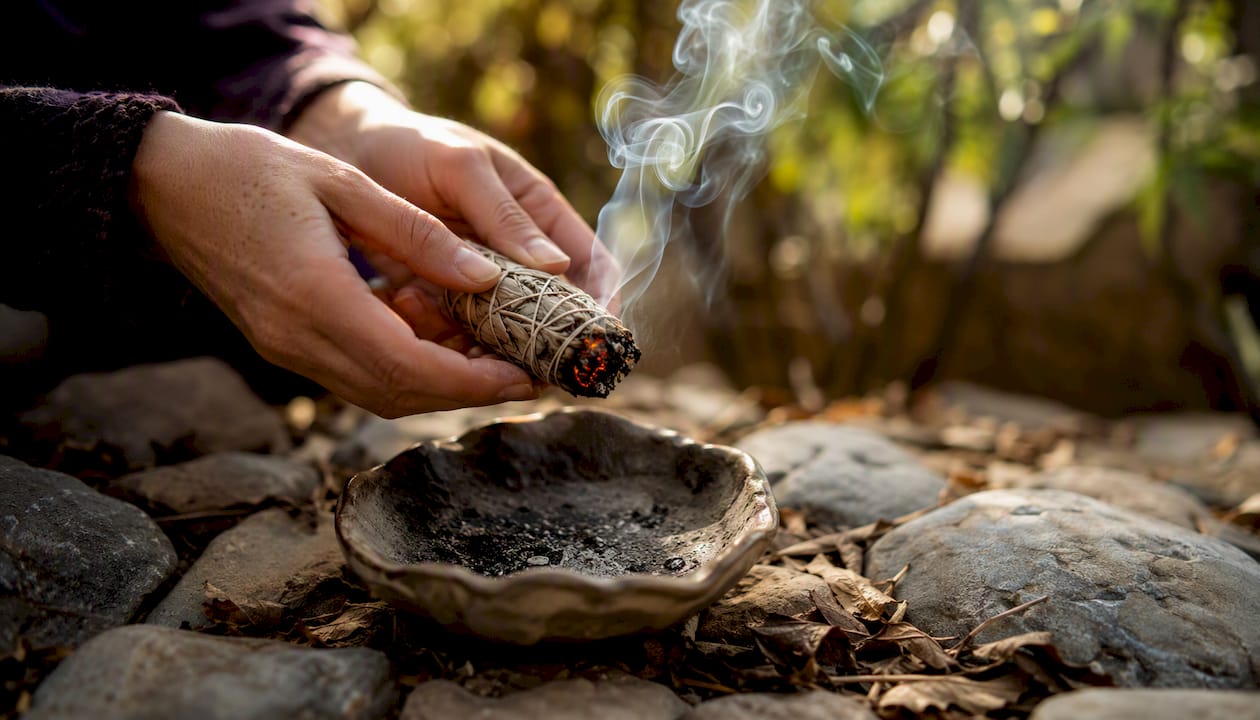
Ventilation is non-negotiable. Open at least one window before you begin. Smoke from any organic material, including herbs, contains particulate matter that can aggravate asthma, COPD, and other respiratory conditions. Children, pregnant people, and anyone with lung sensitivity should stay out of the room while smoke is present and for several minutes after.
Pets need special consideration. Cats are particularly sensitive to aromatic compounds, including those in lavender and tea tree. Keep animals in a separate, well-ventilated space during any smoke cleansing session.
Extinguishing properly matters as much as lighting safely. Press the lit end firmly into sand or a heat-proof bowl until no ember remains. Do not use water on a bundle you plan to reuse; it makes re-lighting difficult and can cause mold during storage.
Pro Tip: Use a large feather or a small hand fan to direct smoke intentionally rather than waving the bundle itself. This gives you more control, keeps the ember stable, and reduces the risk of dropping ash.
How do you make a simple herb bundle at home?
Making your own bundle takes about 20 minutes of active time, plus a drying period. The process differs slightly depending on whether you’re making a culinary bouquet garni or a smoke-cleansing bundle.
Materials you’ll need:
- Fresh or dried herbs of your choice
- Food-safe cotton or kitchen twine (for culinary bundles) or natural cotton string (for smoke bundles)
- Scissors
- Optional: cheesecloth for a culinary sachet, a drying rack or hook
Step-by-step for a smoke-cleansing bundle:
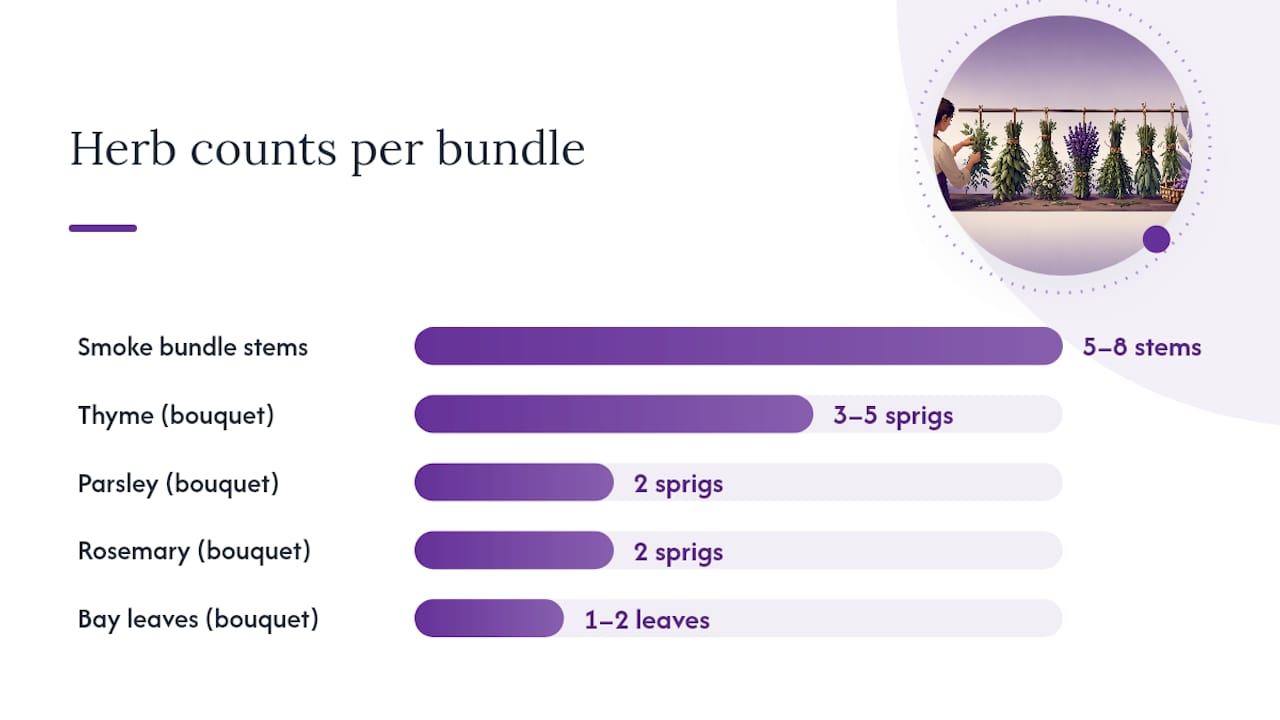
- Gather 5–8 stems of your chosen herbs, roughly 4–6 inches long, with the stem ends aligned.
- Hold the bundle firmly at the base and wrap the twine tightly around the stems, starting at the bottom.
- Spiral the twine upward toward the tip at a slight angle, overlapping each wrap by about half.
- Spiral back down to the base and tie off with two firm knots.
- Hang the bundle upside down in a cool, dry, well-ventilated space away from direct sunlight.
- Allow 1–3 weeks to dry fully, depending on humidity. The bundle is ready when the stems snap rather than bend.
**
Step-by-step for a bouquet garni:
- Lay 3–5 sprigs of thyme, 2 sprigs of parsley, 2 sprigs of rosemary, and 1–2 bay leaves flat on a cutting board.
- Stack them with the sturdiest stems (rosemary, thyme) on the outside to hold the bundle’s shape.
- Tie tightly with food-safe cotton twine, leaving a long tail so you can tie the bundle to a pot handle for easy removal.
- Alternatively, wrap the herbs in a small square of cheesecloth and tie it closed; this works especially well with dried herbs or small leaf pieces.
- Drop the bundle into your pot at the start of cooking and remove before serving.
Drying timelines from DIY tutorials typically range from a few days to a week for thin-stemmed herbs in low humidity, and up to three weeks for thick, moisture-rich bundles in humid climates. Culinary bundles used fresh don’t need drying at all.
Why does cultural sensitivity matter when you use herb bundles?
Smudging is rooted in Indigenous ceremonies, and non-Indigenous practitioners are widely advised to be mindful of cultural protocols. Using the term “smoke cleansing” or, in Scottish folk tradition, “saining,” acknowledges that the practice you’re doing may draw on personal or general botanical tradition rather than a specific Indigenous ceremony. It’s a small linguistic shift that carries real respect.
When you shop for bundles, ask vendors direct questions:
- Is this herb wild-harvested or cultivated? From which region?
- What regeneration or stewardship practices does the supplier follow?
- For palo santo: can you provide chain-of-custody documentation showing sustainable sourcing?
- For white sage: is this cultivated, or wild-harvested with a permit?
- For sweetgrass: is this sourced from an Indigenous-owned supplier or cooperative?
If a vendor can’t answer those questions, that’s useful information. Herbs like white sage and palo santo face genuine pressure from overharvesting driven by commercial demand. Choosing cultivated white sage or sourcing palo santo from verified sustainable operations protects both the plant and the communities whose traditions these herbs come from.
When a herb is listed as threatened or ethically sensitive:
- Substitute with a cultivated alternative that carries a similar aromatic profile (e.g., garden sage instead of wild white sage)
- Look for certified organic or regeneratively farmed versions
- Ask the Kejiwa Alchemy smoke cleansing guide for sourcing context and herb alternatives
How do you store dried bundles, and what else can you do with them?
Dried herb bundles stay fresh longest when stored correctly, and many of them have a second life beyond burning.
For ritual or smoke-cleansing bundles: store in a breathable paper bag or open basket in a cool, dark place. Avoid plastic, which traps moisture and encourages mold. Properly dried bundles typically remain fragrant and burnable for 1–2 years, though potency fades after the first year.
For culinary bundles: if you’re using fresh herbs, use within 3–5 days (refrigerate wrapped in a damp paper towel). Dried culinary bundles stored in an airtight glass jar in a cool, dark pantry hold their flavor for up to a year. Drying timelines vary from a few days to a week depending on humidity and stem thickness.
Non-burning uses for dried bundles:
- Hang on a door or window frame as a fragrant, natural decoration
- Place on a mantle or altar as an aromatic offering without burning
- Tuck into dresser drawers or linen closets to scent fabric naturally
- Steep in hot water (not for ingestion unless the herbs are food-safe) to create an aromatic steam for a room
- Infuse dried lavender or rosemary bundles in a carrier oil for a simple botanical oil
- Create small travel bundles (2–3 inches) for personal rituals away from home
- Weave dried bundles into a wreath or seasonal door arrangement
What are the alternatives when you can’t or don’t want to burn?
Not every space, person, or situation calls for smoke. Respiratory sensitivities, rental agreements, and the presence of children or pets are all good reasons to reach for a non-burning alternative.
Practical smoke-free options:
- Aromatherapy sprays and mists: botanical mists like those in the Kejiwa aromatherapy collection deliver herbal fragrance and energetic intention without any smoke or flame
- Herbal steam: place dried herbs in a bowl of hot water and allow the steam to carry the scent through a room
- Sachets: fill a small cheesecloth pouch with dried lavender, rosemary, or cedar chips and place it wherever you’d normally burn
- Diffusers: a few drops of essential oil (lavender, cedarwood, frankincense) in an ultrasonic diffuser replicates the aromatic effect
- Pairing with CBD-based routines: some practitioners combine herbal rituals with CBD oil as part of a broader wellness and meditation practice
Culinary substitutions for bouquet garni:
- Bay leaf is the anchor of most bouquet garni recipes; if unavailable, a combination of thyme and oregano approximates its depth
- Dried herbs work well in a cheesecloth sachet when fresh sprigs aren’t on hand; use roughly one-third the volume of fresh herbs
- For delicate broths, a small bundle of parsley stems alone adds clean, green flavor without overpowering
One firm rule: never ingest any bundle, oil, or herb preparation that isn’t explicitly labeled for internal use. Decorative and smoke-cleansing bundles often include herbs treated with natural preservatives or harvested from plants not intended for consumption.
How Kejiwa Alchemy approaches herb bundles
Kejiwastore is a small-batch botanical alchemy company that sources herbs organically and through wild-harvesting practices that prioritize plant stewardship. Every bundle in the smudging herbs collection is assembled with the same care and sourcing transparency the article above describes: cultivated or ethically wild-harvested, never mass-produced.
Sourcing transparency, as Kejiwa practices it:
- Organic and wild-harvested botanicals with traceable origins
- Small-batch production that allows for quality control at every step
- Herb selection guided by both traditional use and modern safety awareness
- Usage guidance provided with each product so you can burn, hang, or use your bundle with confidence
The White Sage Smudge Bundle is a foundational example: 4-inch white sage bundle sized for a single room clearing or personal ceremony, with sourcing notes available on the product page. When you’re ready to ask sourcing questions, Kejiwa’s team welcomes them directly.
The case for slowing down with herb bundles
There’s a tendency in wellness culture to treat herb bundles as a quick fix, something you light, wave around, and check off a list. That framing misses what makes the practice meaningful, whether you’re smoke cleansing a room before a gathering or simmering a bouquet garni for Sunday dinner.
Both uses ask you to be present. The culinary bundle rewards patience: you tie it, you simmer it, you pull it out at the right moment. The smoke-cleansing bundle rewards intention: you set it, you move slowly, you notice the space changing. Neither one works better when you rush.
What Kejiwa believes, and what the sourcing questions and safety steps in this guide reflect, is that the plants themselves deserve the same attention you’re hoping to cultivate. Asking where your white sage came from isn’t just an ethical checkbox. It’s the beginning of a relationship with the botanical world that makes every herb bundle use more grounded, more honest, and ultimately more effective.
Responsibly sourced herb bundles from Kejiwa Alchemy
You’ve done the research. Now you want bundles you can trust, ones where the sourcing questions have already been asked and answered.

Kejiwastore’s smudging herbs collection offers small-batch, organically and ethically sourced bundles for ritual, ceremony, and home fragrance. The White Sage Smudge Bundle suits single-room clearings and personal practice. For a smoke-free complement, the botanical aromatherapy mists deliver the same herbal intention without flame, making them ideal for sensitive spaces, travel, or daily use alongside your bundles. Browse the collection and reach out with any sourcing questions; every product comes with usage guidance so you can start with confidence.
Sources
A short list of reputable resources for cooking, cultural context, and safe burning:
- Bouquet Garni - The Spice Library
- Smudging - Wikipedia
- Smudge stick — New World Encyclopedia
- Detailed Burning Instructions - JL Local