


Yes, stress deplete the subtle energetic charge of your Ormus and spagyric preparations. Psychological pressure, environmental disruption, and physiological reactivity all interact with a mineral preparation’s biofield in ways practitioners consistently describe as “flattening” the product’s potency. Understanding how stress affects mineral depletion at this energetic level is the first step toward doing something about it.
Act first with these three steps:
- Stabilize your nervous system before handling any preparation (even one slow diaphragmatic breath shifts your field).
- Move products into protected storage: dark glass, cool temperature, sealed in a cotton or silk pouch away from EMF sources.
- Perform a simple energetic check by holding the bottle with both hands, eyes closed, for 30 seconds and noting your subjective response before use.
Kejiwa Alchemy’s founder, trained in traditional alchemy and herbalism, built these protocols from hands-on batch handling and years of small-batch production. Every Kejiwa product carries batch labeling precisely so you can track potency across bottles. Minerals function as electrical mediators in both physiological and energetic frameworks, and that dual role is what makes them so sensitive to stress-induced field disruption.
Table of Contents
- How can you tell when a preparation is energetically depleted?
- How to prevent energetic depletion through storage and daily practice
- How to restore or recharge a depleted Ormus or spagyric preparation
- When should you restore versus replace a preparation?
- Ready-to-use protocols for practitioners: 3-minute, 15-minute, and session-length
- Key Takeaways
- What practitioners often get wrong about energetic depletion
- Kejiwastore’s small-batch preparations, built for ritual resilience
- Useful sources and further reading
How can you tell when a preparation is energetically depleted?
Depletion rarely announces itself dramatically. More often, it accumulates quietly across several sessions until you notice a pattern.
Common practitioner-observed signs:
- Muted or absent ritual response where a clear effect was previously felt
- Weaker meditation focus or shortened depth of stillness during use
- Change in taste or clarity for spagyric tinctures (cloudiness, off-notes, or unusual sediment)
- Reduced subtle effects across multiple consecutive sessions, not just one off day
A simple three-step assessment:
- Single-blind ritual check: Use the preparation without any expectation-setting and journal your response immediately after. Repeat across three sessions.
- Small-dose tracking: Take a micro-dose and note physical and energetic sensations within 20 minutes. Compare notes across bottles using Kejiwa’s batch labels.
- Physical inspection: Check for unusual sediment, color shift, or smell. Spagyric tinctures should remain clear; Ormus preparations may show natural settling but should not smell off.
Trust subjective impressions when they repeat across multiple sessions. A single flat experience could be your state, not the product’s. Three consecutive flat sessions with a preparation you previously found potent is a signal worth acting on. Kejiwa’s batch labeling lets you cross-reference your notes against production dates, which is genuinely useful when you are trying to distinguish aging from depletion.
How to prevent energetic depletion through storage and daily practice
Prevention costs far less time than restoration. Most depletion happens not during ritual use but during storage and casual handling.
Storage essentials:
- Dark amber or cobalt glass, away from direct sunlight and heat sources
- Stable cool temperature (a dedicated drawer or cabinet, not a windowsill)
- Tight seals; for Ormus jars, add a cotton or silk pouch as a secondary layer
- Keep away from strong odors, cleaning products, and EMF-dense areas (routers, microwaves)
Handling and dosing habits:
- Use only the dropper; avoid any contact between the bottle opening and skin or saliva
- Decant small ritual amounts into a secondary vial for repeated-use sessions
- Sensitive practitioners benefit from smaller daily doses rather than larger infrequent ones
Ritual habits that protect potency:
- A brief consecration on unpacking each new bottle sets a clean energetic baseline
- Ground yourself for 60 seconds before handling any preparation
- Align regular micro-chargings to lunar cycles: full moon for Ormus amplification, new moon for spagyric intention-setting
The fastest way to slow field volatility is to regulate your own nervous system first. Kejiwa’s nervous-system regulation practices include diaphragmatic breathing, microbreaks, and sleep hygiene, all of which reduce the erratic field output that accelerates mineral attrition in your preparations.
Pro Tip: A 30-second botanical hydrosol or Alche-Mist spray around your workspace before handling any preparation stabilizes both your field and the product’s immediate microclimate.
How to restore or recharge a depleted Ormus or spagyric preparation
Restoration follows a clear sequence. Skip steps and you risk introducing new instability.
- Cleanse the space: Smudge the area around the preparation with dried herbs (sage, cedar, or palo santo) or use a steam diffusion of a grounding essential oil. Let the smoke or steam clear before proceeding.
- Stabilize yourself: Complete a 3–5 minute nervous-system reset: box breathing (4 counts in, 4 hold, 4 out, 4 hold) repeated four times. Your field needs to be coherent before you work on the product’s.
- Charge the preparation: For Ormus, use indirect moonlight (full moon preferred), sound (a singing bowl at 432 Hz or 528 Hz placed near, not on, the bottle), or intentional breathwork directed toward the sealed container. Avoid direct bright sunlight for most Ormus extracts unless Kejiwa’s batch guidance specifically allows it. For spagyric tinctures, gentle indirect sunlight during morning hours is generally safe.
- Seal and re-label: After charging, reseal the preparation, note the recharging date on the label, and store immediately in protected conditions.
For spagyric tinctures specifically, the spagyric process combines spirit, soul, and mineral body in a way that allows experienced practitioners to consider minor remineral reintegration. This is advanced work. Reserve chemical reconstitution for trained spagyricists; reintroducing salts or altering solvent ratios changes both pharmacology and safety profiles.
Pro Tip: Never ingest any preparation that has been altered outside its original production guidance without small-dose testing and written documentation of your response first.
When should you restore versus replace a preparation?
Spagyric tinctures, when stored dry and clear, can remain stable for years. The Aurelian spagyric method produces preparations that often evolve rather than degrade, thanks to the calcination and mineral reintegration steps. Ormus preparations have more variable timelines; always follow Kejiwa’s batch-specific guidance for your product.
Replace rather than restore when:
- Repeat recharging attempts across 2–3 sessions produce no measurable improvement in ritual response
- Physical contamination is present (unusual sediment, off-smell, color change that persists after settling)
- Altered taste or clarity in a spagyric tincture does not resolve after proper storage correction
- Ritual reproducibility has broken down and you cannot isolate whether the cause is the product or your state
A practical cost heuristic: if the time and materials for another restoration attempt exceed the cost of a fresh small-batch bottle, replace it. Kejiwa’s small-batch production means each bottle is traceable and consistent, so a replacement genuinely resets your baseline.
Re-check schedule: For frequently used preparations, perform a potency check every 6–12 months. Less-used items need a pre-use check each time you return to them after a gap.
Ready-to-use protocols for practitioners: 3-minute, 15-minute, and session-length
3-minute micro-protocol
- Take three slow diaphragmatic breaths, exhaling fully each time.
- Hold the sealed preparation in both hands for 30 seconds with a clear intention.
- Place one drop on your tongue or pulse point and speak one sentence of consecration aloud.
15-minute mid-depth protocol
- Smudge your space and sit quietly for 2 minutes.
- Complete box breathing for 3 minutes.
- Place the preparation in indirect moonlight or near a singing bowl for 5 minutes while you journal your current energetic state.
- Take a micro-dose and record your response in a dedicated batch-tracking journal.
Session-length protocol (45–90 minutes)
- Preparation (10 min): Smudge space, ground yourself, review client intake notes and any known sensitivities or allergies. Obtain informed consent for product use.
- Opening (5 min): Consecrate the preparation with intention; note batch number and date.
- Application (20–40 min): Apply product per Kejiwa’s dosing guidance. For Ormus in meditation, one drop sublingually is typical; for spagyric tinctures, follow label dosing.
- Recharging window (10 min): While the client rests, place the preparation in a charging position (moonlight, sound bowl proximity).
- Aftercare (10 min): Document client response, note batch number, and store the preparation immediately in protected conditions.
Practitioner notes:
- Always document batch numbers alongside session notes
- For group sessions, use a secondary decant vial to avoid repeated contact with the main bottle
- Sensitive practitioners may need smaller doses and longer integration windows
Key Takeaways
Stress measurably disrupts the subtle energetic charge of Ormus and spagyric preparations, and the fastest recovery path starts with stabilizing your own nervous system before attempting any product restoration.
| Point | Details |
|---|---|
| Stress depletes energetic charge | Field volatility from stress transfers to preparations during handling, flattening ritual potency over time. |
| Spagyrics resist depletion better | Reintegrated mineral salts give spagyric tinctures structural resilience that Ormus monoatomic preparations lack. |
| Stabilize yourself first | Nervous-system regulation (breathwork, grounding) is the fastest, lowest-risk first step before any restoration attempt. |
| Replace when restoration fails | After 2–3 failed recharging attempts or physical contamination, a fresh small-batch bottle is the prudent choice. |
| Kejiwastore for traceable replacements | Kejiwa’s batch-labeled Ormus, spagyric tinctures, and Alche-Mists give you a clean, documented baseline every time. |
What practitioners often get wrong about energetic depletion
Most practitioners focus entirely on the preparation and overlook the practitioner field as the primary vector of depletion. A bottle stored perfectly in silk and moonlight will still lose charge if every person who handles it is running on cortisol and shallow breathing. The product is not failing. The container, meaning you, is leaking.

This is the part conventional wellness writing almost never says plainly: your nervous-system state is not just background context for your ritual. It is an active variable in the preparation’s potency. Spagyric ashwagandha and similar adaptogens are used in stress-support protocols precisely because they work at the intersection of physiological resilience and energetic coherence. The preparation and the practitioner are a system.
The other overlooked point is documentation. Practitioners who track batch numbers, session dates, and subjective responses across bottles can actually distinguish product aging from personal depletion. Without that data, every flat session becomes ambiguous. Kejiwa’s batch labeling exists for this reason, and using it consistently is one of the most practical things you can do for your practice.
Kejiwastore’s small-batch preparations, built for ritual resilience
When a preparation has run its course, or when you want to start fresh with a clean energetic baseline, Kejiwastore offers small-batch Ormus minerals, spagyric herbal tinctures, and botanical Alche-Mists crafted with organic and wild-harvested botanicals, each carrying clear batch labeling so you can track potency from the first drop to the last.
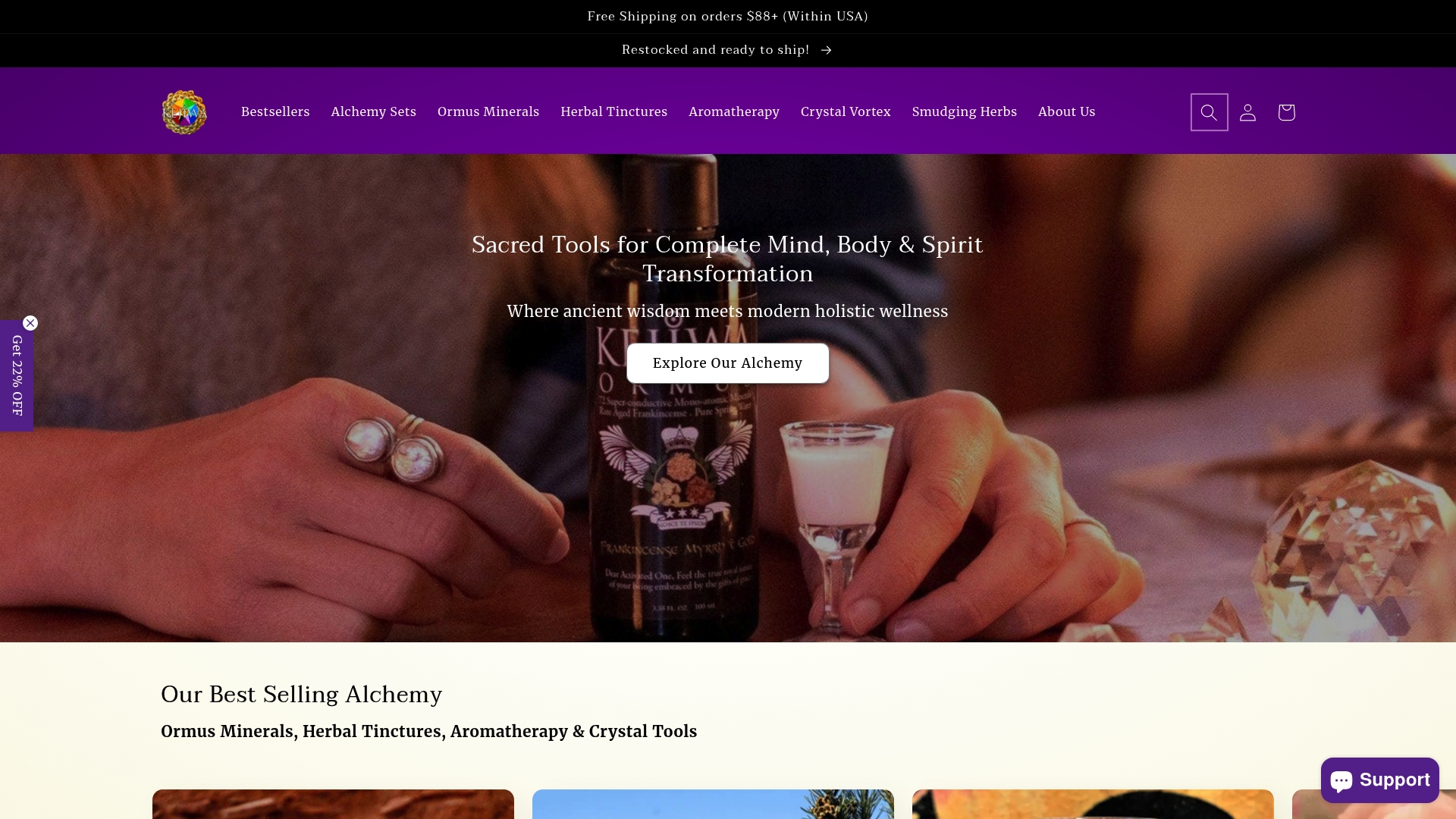
For practitioners who have worked through a restoration cycle and need a reliable replacement, Kejiwa’s Ormus Minerals collection and Spagyric Herbal Tinctures are the natural next step. Each bottle is produced in small batches with intentional craftsmanship, and the Botanical Aromatics line gives you an in-ritual stabilization tool that supports both your field and the preparation’s microclimate. Browse the current batch offerings and reach out to Kejiwa directly for custom re-potentiation guidance.
Useful sources and further reading
The following sources informed this guide and offer deeper reading on the mechanisms, methods, and practices covered:
- The Mineral Matrix and How it Changes Everything
- Why Minerals May Be the Missing Link in Nervous System Healing – The Miracle Wellness Center Baton Rouge
- The Differences Between Herbalist Tinctures & Spagyrics Tinctures
- Spagyric Tinctures: Ancient Alchemy Meets Modern Herbalism – Dr. Clark Store
- Ashwagandha Spagyric Tincture (2 fl oz) - Lost Empire Herbs
- Ormus Minerals Health Benefits Explained for 2026
- How To Regulate Your Nervous System Naturally: Conscious Practices and Herbal Allys for Balance and Calm
For product-specific questions, batch information, or custom re-potentiation advice, contact Kejiwa directly through the website or consult the batch label included with your preparation.
Recommended
- Ormus Minerals Health Benefits Explained for 2026 – Kejiwa Alchemy
- How Ormus Minerals Support Meditation: The Alchemy of Consciousness Expansion – Kejiwa Alchemy
- Ormus: Unveiling the Essence of Vitality and Well-being – Kejiwa Alchemy
- Ormus as a Spiritual Adaptogen | Holding Frequency for Energy Work & Recovery – Kejiwa Alchemy