


The herbs people reach for most often to shape their dream life are mugwort, Calea zacatechichi, blue lotus, valerian, and chamomile, plus supporting botanicals like passionflower and Silene capensis. Mugwort and Calea lean toward vividness and recall; valerian and chamomile lean toward sedation and deeper sleep architecture. The safest way in: start low, pick one mild method (a weak tea or a few tincture drops), set a clear intention before bed, and keep a journal by your pillow.
TL;DR:
- Mugwort, Calea zacatechichi, blue lotus, valerian, and chamomile each influence dreams differently, with mugwort and Calea mainly enhancing vividness and recall.
- Calea zacatechichi has limited scientific validation, with one small sleep study supporting its effect on dream vividness, but most evidence remains anecdotal.
- Sedative herbs like valerian and chamomile promote deeper sleep, which can indirectly improve dream quality but may also cause grogginess or less restorative sleep.
- Combining herbs should be done cautiously, especially for pregnant individuals, those on medication, or with health concerns, and introducing new botanicals gradually helps identify effects.
- Preparation methods include teas, tinctures, pillow sachets, and incense, with setting clear intentions and journaling enhancing dream recall and overall effectiveness.
Table of Contents
- Mugwort for Vivid Dreams and Stronger Recall
- Calea Zacatechichi: The Mexican Dream Herb With Lab Data Behind It
- Blue Lotus, Valerian, and Chamomile: Sedatives That Improve Dream Quality
- Passionflower, Silene Capensis, and Other Supporting Botanicals
- How to Prepare Dream Herbs: Teas, Tinctures, and Timing
- Who Should Avoid Dream Herbs, and What to Watch For
- [How small-batch preparation of spagyric tinctures can help keep dosing predictable, which matters when working with something as individual as dream response. Our guides on mugwort’s spiritual uses and starting a dreamwork practice walk through intention setting and journaling in more depth. Source wild-harvested botanicals from sellers who can speak to origin, start with the smallest effective amount, and let the ritual around the herb do as much work as the herb itself.](#how-small-batch-preparation-of-spagyric-tinctures-can-help-keep-dosing-predictable-which-matters-when-working-with-something-as-individual-as-dream-response-our-guides-on-mugworts-spiritual-useshttpskejiwastorecomblogsmeditation-guidesmugwort-spiritual-uses-and-starting-a-dreamwork-practicehttpskejiwastorecomblogsmeditation-guides5-ways-to-begin-a-dreamwork-practice-walk-through-intention-setting-and-journaling-in-more-depth-source-wild-harvested-botanicals-from-sellers-who-can-speak-to-origin-start-with-the-smallest-effective-amount-and-let-the-ritual-around-the-herb-do-as-much-work-as-the-herb-itself)
- What the Research Actually Supports, and What It Doesn’t
- Prepared Botanicals for Your Dream Practice
- Sources
- FAQ
Mugwort for Vivid Dreams and Stronger Recall
Mugwort (Artemisia vulgaris) is the herb most associated with dream recall, and generations of herbalists have tucked it under pillows for exactly that reason. People report unusually vivid, sometimes surreal dreams and a marked jump in how much they remember on waking, though the evidence here stays anecdotal and ethnobotanical rather than clinical.
Three ways to work with it:
- Tea: steep a teaspoon of dried leaf in hot water for 5 to 7 minutes, 30 to 45 minutes before bed.
- Pillow sachet: a small muslin pouch of dried mugwort slipped inside your pillowcase.
- Incense: a pinch burned briefly in a well-ventilated room, never near the bed itself.
Skip mugwort if you’re pregnant. It contains thujone, a compound linked to uterine stimulation and, in sensitive people, allergic reactions.
Calea Zacatechichi: The Mexican Dream Herb With Lab Data Behind It
Calea zacatechichi (also called Calea ternifolia) stands apart from every other herb on this list for one reason: it’s the only one with an actual sleep-lab record. Oaxacan healers have used it in dream divination ceremonies for centuries, traditionally as an infusion sipped before sleep, dried leaves placed under the pillow, or smoked as incense.
What the lab found: In a small 1986 polysomnographic study, researchers recorded increased hypnagogic imagery and higher dream recall in participants after Calea preparations. The sample was small and hasn’t been replicated since, but it remains the closest thing to hard data any traditional oneirogen has.
A 2021 literature review backs this up, documenting Calea’s phytochemistry and toxicology while concluding the plant needs far more research before anyone can call it proven. Modern users tend to take it as:
- A strong, bitter tea (its taste is notoriously harsh, so many mix it with mint or honey)
- A tincture, dosed conservatively by the drop
- Capsules, for those who can’t tolerate the flavor at all
Because toxicological data is limited, treat Calea as an occasional tool, not a nightly habit.
Blue Lotus, Valerian, and Chamomile: Sedatives That Improve Dream Quality
Not every dream herb works by pushing vividness. Blue lotus (Nymphaea caerulea), valerian (Valeriana officinalis), and chamomile (Matricaria chamomilla) work by improving the sleep itself, and richer dreams often follow as a side effect of deeper, less interrupted rest.
- Blue lotus produces a mild euphoria and tends to color dreams with warmth and emotional depth. A light tea, steeped just a few minutes, is enough. Oversteeping makes it bitter without adding benefit.
- Valerian has real backing as a sleep aid and can intensify dream content, but it also causes grogginess in a meaningful share of users. Start with a low dose and never combine it with other sedatives on the same night.
- Chamomile is the gentlest of the three. It rarely produces dramatic effects on its own but works as a reliable base for blends, supporting consistent, pleasant dreaming rather than intensity.
Pro Tip: Reach for sedatives like valerian or chamomile when your problem is falling asleep at all. Reach for oneirogens like mugwort or Calea when sleep comes easily but the dreams themselves feel flat.
Community and shop guides consistently group these herbs together as the most commonly used dream botanicals, and that consensus tracks with how differently they actually behave once you use them.
Passionflower, Silene Capensis, and Other Supporting Botanicals
Passionflower (Passiflora incarnata) is anxiolytic, meaning it eases anxiety and encourages the kind of relaxed nervous system that supports REM-rich sleep. It rarely stars on its own but pairs well in blends aimed at emotionally calm, coherent dreaming.
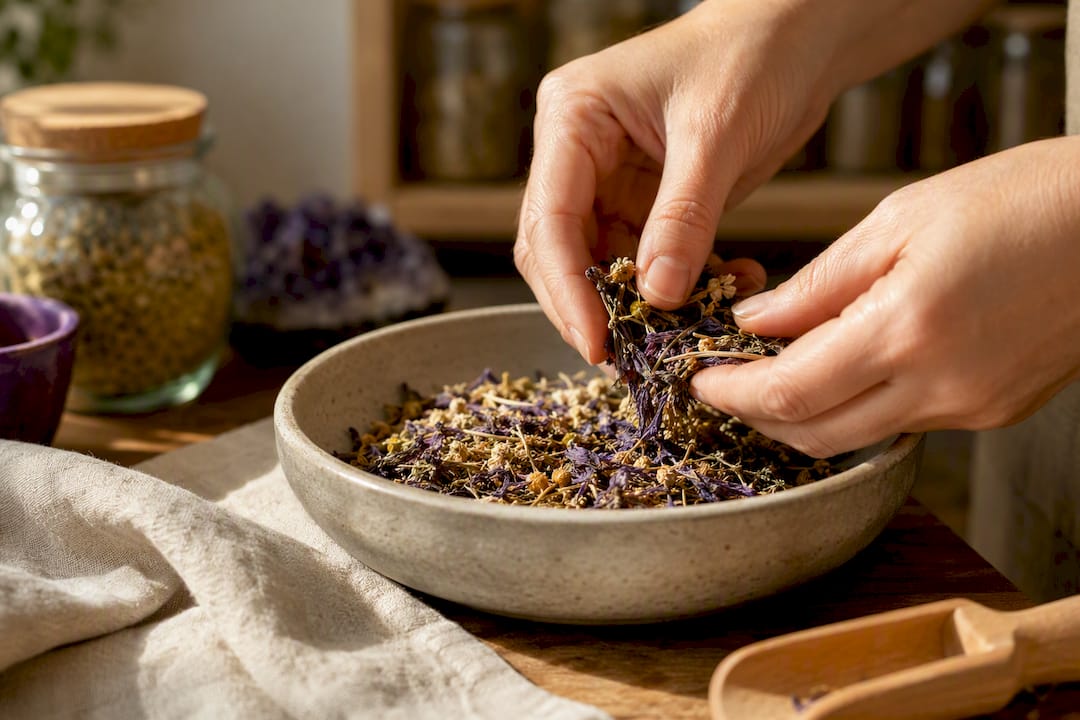
Silene capensis, known as African dream root, is a South African oneirogen traditionally prepared from the root and used in initiation and divination rites. It’s harder to source reliably than the herbs above, so quality and authenticity vary a lot between suppliers. Buy only from sellers who can identify the plant’s origin.
A few other botanicals show up often in dream blends for specific reasons:
- Lemon balm for mental clarity and a lighter, less muddled dream state
- Peppermint to settle digestion, since an upset stomach disrupts dream continuity
- Damiana for its reputation of adding emotional or sensual tone to dreams
Combine no more than two or three of these at once, and introduce new botanicals one at a time so you can actually tell what’s doing what.
How to Prepare Dream Herbs: Teas, Tinctures, and Timing
- Gentle sleep blend: one part chamomile, one part passionflower. Steep 5 minutes in hot water, drink 30 to 60 minutes before bed.
- Vivid-dream blend: one part mugwort, half a part blue lotus. Steep 5 to 7 minutes; this one is stronger, so start with a smaller cup.
- Tincture starting dose: begin with 5 to 10 drops in water, wait a few nights to gauge response before increasing.
- Pillow sachet: fill a small breathable pouch with dried mugwort or lavender and tuck it inside your pillowcase, not directly against your face.
- Incense safety: burn briefly, always in a ventilated room, and never fall asleep with anything still smoldering.
Pro Tip: Set your intention out loud before you turn off the light. Something as simple as “I will remember my dreams tonight” primes recall far more than the herb does alone. If you wake in the night, try a brief Mnemonic Induction of Lucid Dreams (MILD) session: recall your last dream, then repeat your intention as you drift back off, and write down whatever surfaces the moment you wake for real.
Who Should Avoid Dream Herbs, and What to Watch For
Pregnant or breastfeeding people, young children, and anyone with liver disease should skip these herbs entirely or check with a clinician first. That caution extends to anyone on prescription medication, since herbal sleep aids can interact with drugs metabolized through the same liver pathways, including the CYP3A enzyme family Calea’s chemistry touches on.
Watch for nausea, unusually disrupted sleep, or more frequent awakenings. Some Artemisia and Calea preparations intensify dreaming at the cost of restorative depth for certain people. A short safety checklist:
- Talk to a clinician before mixing any herb with sleep medication or antidepressants
- Keep a simple sleep and dream log so you can spot patterns early
- Stop immediately if you wake feeling less rested than before you started
How small-batch preparation of spagyric tinctures can help keep dosing predictable, which matters when working with something as individual as dream response. Our guides on mugwort’s spiritual uses and starting a dreamwork practice walk through intention setting and journaling in more depth. Source wild-harvested botanicals from sellers who can speak to origin, start with the smallest effective amount, and let the ritual around the herb do as much work as the herb itself.
What the Research Actually Supports, and What It Doesn’t
Most of what gets written about dream herbs treats ethnobotany and clinical proof as interchangeable, and they’re not. Calea has one small, unreplicated sleep-lab study behind it. Mugwort has centuries of ritual use and zero controlled trials. Valerian has solid sleep-aid research but was never studied for dream content specifically. Conflating these levels of evidence is where most guides on this topic go wrong.
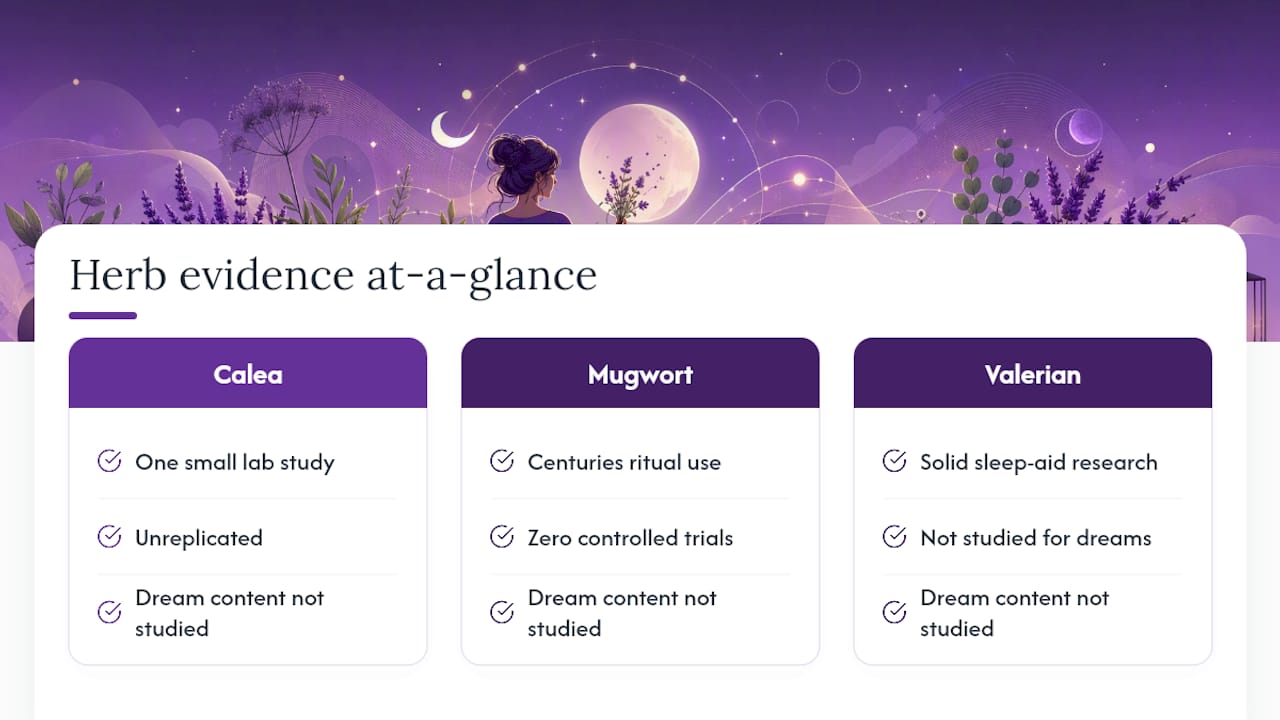
That gap doesn’t make the herbs useless. It means the honest framing is “traditional practice with anecdotal support” for most of this list, and “traditional practice with one limited lab signal” for Calea alone. Readers who want lucid or vivid dreaming should prioritize consistency and journaling over hunting for the single most potent herb. A mild tea taken nightly, paired with an intention and a notebook, will outperform an occasional strong dose taken without any ritual around it.
The conventional advice to “just take mugwort” skips the harder, more useful truth: the herb is a nudge, not a mechanism. Dream recall improves mostly through attention and habit. The plant just gives that habit something to hold onto.
— Kejiwa
Prepared Botanicals for Your Dream Practice
If measuring loose herbs isn’t your thing, prepared formats solve the guesswork Kejiwastore’s small-batch approach is built around. Our herbal tinctures are crafted using spagyric alchemy for consistent, measurable dosing, drop by drop, so you’re not eyeballing a teaspoon of dried mugwort every night.
For a pre-sleep ritual spray instead of a cup of tea, our botanical aromatics offer grounding pillow mists made from organic and wild-harvested plants. And if you’re building a full ceremonial setup around your dreamwork, our smudging herbs support the same intention-setting practice this guide recommends before bed. Products may be made in small batches, sourced with attention to origin, and designed for people seeking tools that match their intention. Browse the collections and start with whichever format fits how you already wind down at night.
Sources
- Calea ternifolia Kunth, the Mexican “dream herb”, a concise review
- Mayagoitia et al. 1986 polysomnographic study (indexed on PubMed)
- 15+ Best Herbs for Lucid Dreaming: Deepest Guide (2026)
- Calea Zacatechichi — Oaxacan Dream Herb Explained | Azarius
- Healthline
FAQ
What Is the Best Herb for Dreaming?
Mugwort and Calea zacatechichi are the two most commonly cited herbs for vivid dreaming, with mugwort favored for recall and Calea carrying the only sleep-lab data of any traditional dream herb. Neither is universally “best.” The right choice depends on whether you want intensity or gentler, more consistent recall.
What Herb Is Used to Encourage Vivid Dreams?
Mugwort is the herb most traditionally used for this purpose, typically as a tea or a pillow sachet placed near where you sleep. Blue lotus and Calea zacatechichi are also used for vivid or emotionally rich dream content, though evidence for all three remains largely ethnobotanical.
What Can I Take to Suppress Dreams?
Sedative herbs like valerian and chamomile promote deeper, less fragmented sleep, which for some people reduces the vividness or frequency of remembered dreams rather than eliminating them. If disturbing dreams are frequent or distressing, that’s a conversation for a clinician rather than a self-directed herbal fix.
What Tea Gives You Vivid Dreams?
A blend of mugwort with a touch of blue lotus, steeped 5 to 7 minutes, is the classic vivid-dream tea in herbal tradition. Start with a smaller cup than you’d normally drink, since both herbs are potent enough that more isn’t automatically better.
Are Dream Herbs Safe to Combine With Sleep Medication?
Not without checking first. Herbal sleep aids can interact with prescription medications metabolized through shared liver pathways, so anyone on sleep aids, antidepressants, or other prescriptions should talk to a clinician before adding herbs to the mix.