


Aromatherapy can support chakra work as a sensory anchor and mood-regulating tool. Start with inhalation and diluted topical blends, using lavender, cedarwood, or frankincense as reliable first choices. It won’t diagnose or cure anything, and it works best alongside meditation, breathwork, or bodywork rather than as a stand-alone fix. Patch-test any new oil and check contraindications before applying it to your skin.
TL;DR:
- Aromatherapy affects mood and stress through the olfactory-limbic pathway but lacks direct scientific evidence for chakra balancing.
- Diffusing, topical application, baths, and portable inhalers are practical methods, with specific oils recommended for each chakra.
- Dilute essential oils to 1-2 percent for topical use and patch-test before application, especially near sensitive areas.
- A 15-minute rainbow practice guides through each chakra using targeted scents, enhancing focus and intention.
- Choose high-quality, organic oils with clear sourcing for safe, ritual-oriented use, starting with simple blends or mists.
Table of Contents
- How aromatherapy relates to chakras: mechanism, evidence, and realistic expectations
- Practical application methods: diffusion, topical use, baths, and portable inhalation
- Safety and dilution: core rules for responsible chakra aromatherapy
- Chakra-by-chakra oil recommendations and starter blends
- A 15-minute “rainbow” chakra aromatherapy practice you can follow now
- Kejiwa’s approach: craftsmanship, sourcing, and ritual-ready blends
- Starter kit: Kejiwa Botanical Aromatics and how to begin
- Sources
How aromatherapy relates to chakras: mechanism, evidence, and realistic expectations
Your nose is wired straight into your brain’s emotional command center. When you inhale an essential oil, odor molecules bind to receptors in your nasal passages and send signals directly to the limbic system, the region that governs mood, memory, and stress response. That wiring is why a single whiff of lavender can shift how tense your shoulders feel before you’ve consciously registered the scent.
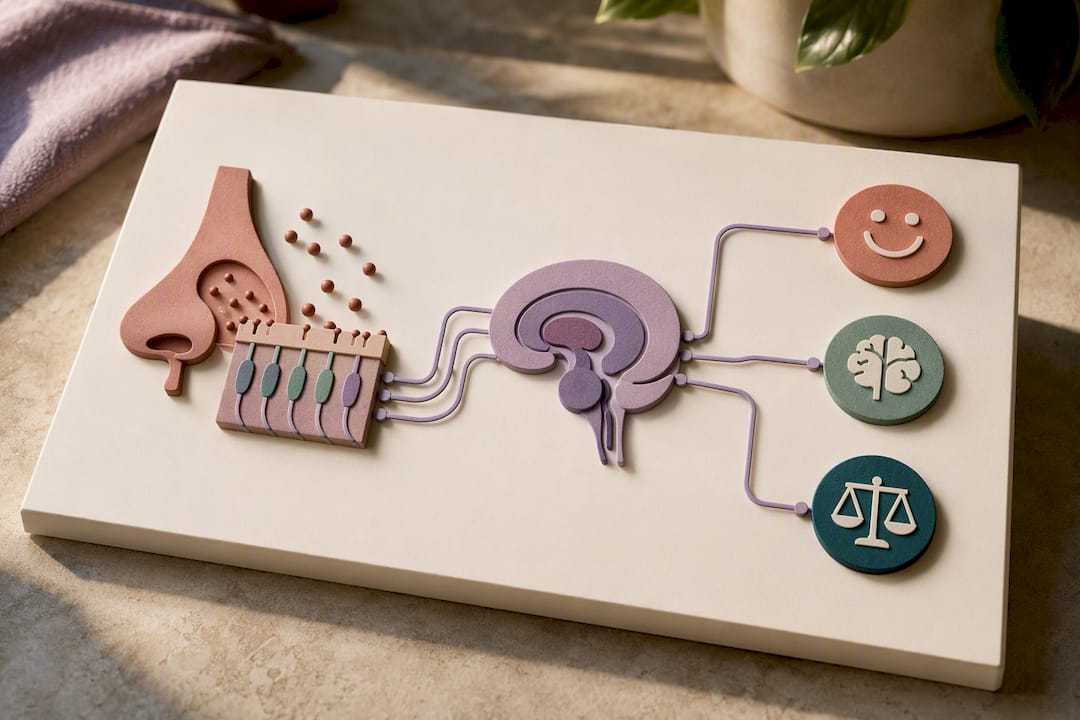
This is where aromatherapy for chakras earns its place in a holistic practice, and where you need to keep expectations honest. Chakras are not organs a lab can scan, so no study has measured an essential oil “balancing” one. What clinical research does show, consistently, is that aromatherapy affects mood, stress, and anxiety through the olfactory-limbic pathway, even though direct evidence for energetic balancing stays limited. Broader reviews of the clinical aromatherapy literature echo the same caution: much of what feels true anecdotally hasn’t been tested in large, controlled human trials.
None of that makes the practice pointless. It reframes what the oils are actually doing for you.
- Scent works as a sensory anchor, giving your mind something concrete to return to when a guided meditation asks you to “focus on your heart center.”
- Ritual use of aromatherapy sharpens intention setting, because the brain learns to associate a specific smell with a specific mental state over repeated sessions.
- Spa and energy-work practitioners report that chakra-aligned aromatherapy supports nervous-system regulation when it’s built into a ritual or treatment setting, not used in isolation.
- Pairing a scent cue with breathwork, visualization, or gentle bodywork tends to deepen the effect more than the oil alone ever could.
Think of the oil as the doorway, not the destination. What happens once you walk through, the breath you take, the intention you set, the stillness you allow, is where the real work happens.
Practical application methods: diffusion, topical use, baths, and portable inhalation
You don’t need a cabinet full of gear to start. Four methods cover nearly every chakra practice, and picking the right one depends on your space, your skin sensitivity, and how long you plan to sit with the scent.
- Diffusion for meditation sessions. For a room roughly 200 to 300 square feet, add 3 to 5 drops of essential oil to an ultrasonic diffuser filled with water, and run it 20 to 30 minutes, long enough to fill the space without oversaturating it. Reed diffusers work well for an always-on ambient scent but give you less control over intensity during a timed practice.
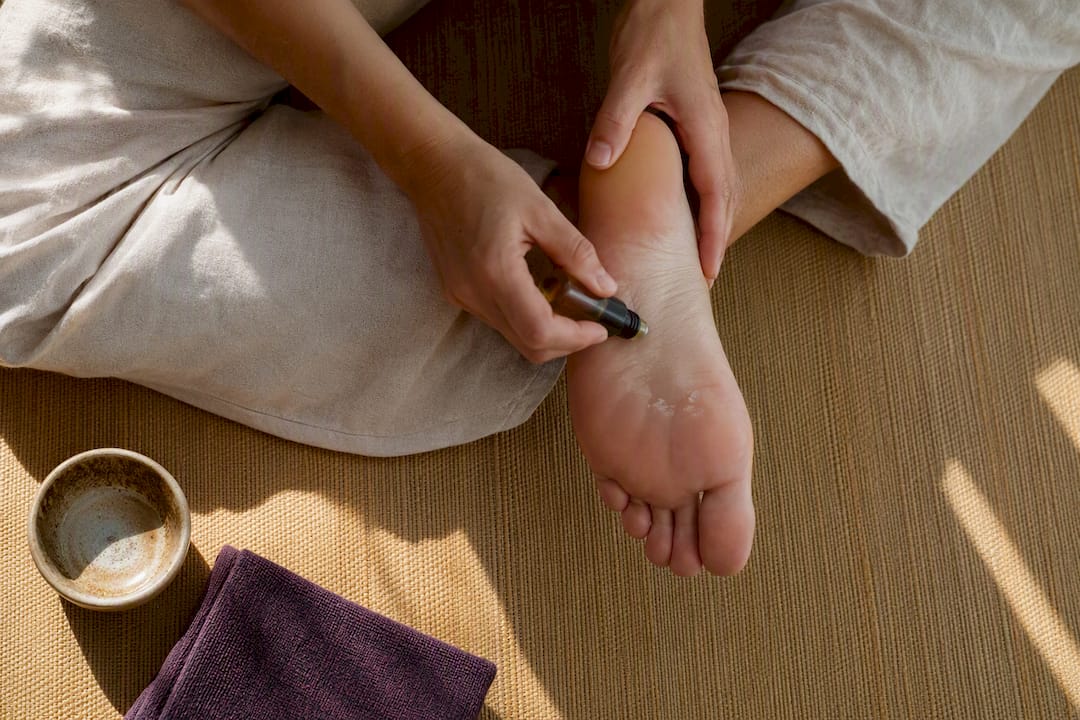
- Topical application over chakra points. Dilute essential oil in a carrier such as fractionated coconut oil, jojoba, or sweet almond oil before it touches skin. Industry dilution guidance generally recommends a 1 to 2 percent dilution for everyday use, which works out to roughly 6 to 12 drops of essential oil per ounce of carrier. Apply to the wrists, the soles of the feet for root work, the lower abdomen for the sacral chakra, or the center of the chest for heart work.
- Bath and steam infusions. Mix 4 to 6 drops of essential oil into a tablespoon of carrier oil or unscented bath dispersant before adding it to running water. Oil floats on water untouched, so skipping the pre-dilution step means it sits on your skin at full strength.
- Portable inhalation. Aromatherapy inhaler sticks, roller bottles, and scented cloth bracelets let you carry a chakra-specific scent through your day without a diffuser. These suit sensitive skin, shared workspaces, or anyone who wants a quick reset between meetings rather than a full ritual.
Pro Tip: Keep one roller blend dedicated to a single chakra you’re actively working on, rather than mixing several intentions into one bottle. Your nose learns the association faster when the scent stays consistent.
Safety and dilution: core rules for responsible chakra aromatherapy
Essential oils are concentrated plant chemistry, not gentle background scents, and treating them casually is where most people run into trouble. A few non-negotiable rules keep chakra aromatherapy safe rather than irritating.
Dilution comes first. Stick to a 1 to 2 percent ratio for topical use on adults, which means roughly 6 to 12 drops per ounce of carrier oil, and go lower still, around 0.5 percent, for facial application or sensitive skin. Before applying anything new to a chakra point, patch-test it on your inner forearm and wait 24 hours. Citrus oils like sweet orange and bergamot are photosensitizing, meaning they can cause skin reactions under sunlight, so safety-focused industry guidance recommends lower dilutions or avoiding sun exposure after applying them.
- Avoid undiluted topical use entirely; even oils marketed as “gentle” can cause sensitization over repeated exposure.
- Skip strong phenolic oils (like clove or oregano) on chakra points near the face or throat.
- If you’re pregnant, epileptic, managing severe asthma, or applying oil to broken skin, talk to a doctor before starting a topical practice.
- Keep bottles away from children and pets; several common oils, including tea tree and eucalyptus, are toxic to cats even in diffused form.
Quality matters as much as quantity. Look for labeling that specifies the botanical name (not just “lavender oil” but Lavandula angustifolia), the country of origin, and a batch or lot number, which signals the producer tests for purity. A PMC review of aromatherapy’s clinical evidence notes that most reported adverse effects trace back to skin irritation from undiluted or adulterated oils, not the plant compounds themselves. Buying from a source that discloses sourcing and testing practices cuts that risk substantially.
Chakra-by-chakra oil recommendations and starter blends
Practitioner guides across the aromatherapy world converge on a surprisingly consistent set of oils for each chakra. That repetition is useful: you can build a full seven-chakra collection from around a dozen oils rather than chasing rare botanicals one guide swears by and the next ignores.
Root chakra (Muladhara). Cedarwood, patchouli, and vetiver ground and stabilize, which fits the root’s association with security and physical presence. Apply diluted oil to the soles of your feet before a grounding meditation, or diffuse during any practice focused on stability. Roller recipe: 4 drops cedarwood, 3 drops patchouli, 2 drops vetiver, topped with fractionated coconut oil in a 10ml roller. Diffuser rotation: cedarwood alone on mornings when you feel scattered; add patchouli in the evening for deeper grounding work.
Sacral chakra (Svadhisthana). Ylang ylang, sweet orange, and sandalwood support creativity and sensuality. Apply diluted blend to the lower abdomen, just below the navel, or diffuse while journaling or moving your body. Roller recipe: 3 drops ylang ylang, 4 drops sweet orange, 3 drops sandalwood in a 10ml roller with jojoba oil. Diffuser rotation: sweet orange for daytime creative work; ylang ylang in the evening for sensual or relational focus.
Solar plexus chakra (Manipura). Lemon, ginger, and chamomile bring energizing, confidence-building qualities. Apply to the upper abdomen or wrist pulse points, or diffuse before tasks that require assertiveness. Roller recipe: 4 drops lemon, 3 drops ginger, 3 drops chamomile in a 10ml roller. Diffuser rotation: lemon and ginger for morning motivation; chamomile alone when solar plexus work feels tied to anxiety rather than low confidence.
Heart chakra (Anahata). Rose, bergamot, and geranium open compassion and emotional receptivity. Apply diluted oil to the center of the chest paired with heart-breathing (long inhale through the nose, longer exhale through the mouth), or diffuse during forgiveness or gratitude practices. Roller recipe: 3 drops rose, 4 drops bergamot, 3 drops geranium in a 10ml roller. Diffuser rotation: bergamot for lighter, everyday heart work; rose for deeper grief or relationship processing.
Throat chakra (Vishuddha). Peppermint, eucalyptus, and blue chamomile support clear expression. Apply to the throat hollow, or use inhalation only if your skin there is sensitive, since this area reacts more easily than the abdomen or feet. Roller recipe: 3 drops peppermint, 3 drops eucalyptus, 2 drops blue chamomile in a 10ml roller, diluted slightly heavier than usual given throat sensitivity. Diffuser rotation: peppermint before public speaking or difficult conversations; eucalyptus when the block feels more physical, like a tight chest or shallow breath.
Third eye chakra (Ajna). Frankincense, clary sage, and rosemary support intuition and mental clarity. Inhale directly from the bottle or a cloth, or apply a very small diluted amount to the forehead, avoiding the eyes entirely. Roller recipe: 4 drops frankincense, 3 drops clary sage, 2 drops rosemary in a 10ml roller, applied to temples rather than directly between the brows. Diffuser rotation: frankincense for meditation and intuitive journaling; rosemary when you need mental clarity for decision-making rather than introspection.
Crown chakra (Sahasrara). Lavender, sandalwood, and lotus or myrrh support spiritual connection and stillness. Diffuse into the whole room rather than applying topically at the crown, since this chakra responds well to ambient, full-space scent. Roller recipe: 4 drops lavender, 3 drops sandalwood, 2 drops myrrh in a 10ml roller for pulse points during meditation. Diffuser rotation: lavender on its own for wind-down practices before sleep; the full blend for longer, seated meditation sessions.
| Chakra | Key oils | Best application | Focus area |
|---|---|---|---|
| Root | Cedarwood, patchouli, vetiver | Topical (feet) or diffusion | Stability, security |
| Sacral | Ylang ylang, sweet orange, sandalwood | Topical (lower abdomen) | Creativity, sensuality |
| Solar plexus | Lemon, ginger, chamomile | Topical (upper abdomen) or diffusion | Confidence, energy |
| Heart | Rose, bergamot, geranium | Topical (chest) or diffusion | Compassion, connection |
| Throat | Peppermint, eucalyptus, blue chamomile | Inhalation or light topical | Expression, clarity |
| Third eye | Frankincense, clary sage, rosemary | Inhalation or temple application | Intuition, focus |
| Crown | Lavender, sandalwood, myrrh | Diffusion (whole room) | Spiritual connection |
Healthline’s chakra and oil guide points to lavender as the closest thing to a universal oil in this list, useful across nearly every chakra when you’re not sure where to start, thanks to its broad calming effect on anxiety and sleep.
A 15-minute “rainbow” chakra aromatherapy practice you can follow now
This sequence moves scent and attention through all seven centers in a single sitting. It borrows from the sequential root-to-crown structure that practitioner protocols commonly recommend, spending just enough time on each chakra to register the shift without dragging the session past a quarter hour.
Before you start: Choose either a diffuser with your seven oils on hand or seven pre-made roller bottles lined up in order. Sit somewhere quiet, set your phone timer, and take one breath to name your intention for the session, even a single word like “release” or “clarity” works.
- Minutes 0 to 2, Root. Apply or diffuse cedarwood. Breathe slowly, feel your seat or feet against the ground.
- Minutes 2 to 4, Sacral. Switch to sweet orange. Let your lower belly soften with each exhale.
- Minutes 4 to 6, Solar plexus. Switch to ginger. Sit a little taller, notice where confidence lives in your posture.
- Minutes 6 to 9, Heart. Switch to rose or bergamot. Extend your exhale longer than your inhale here.
- Minutes 9 to 11, Throat. Switch to peppermint. Hum quietly on the exhale if it feels natural.
- Minutes 11 to 13, Third eye. Switch to frankincense. Let your gaze soften behind closed eyes.
- Minutes 13 to 15, Crown. Switch to lavender. Let the breath slow further and simply sit in the stillness.
If you only have time or interest for one chakra, spend the full 15 minutes there instead of rushing through all seven. Beginners often find it easier to master one scent-breath pairing before attempting the full sequence.
Pro Tip: Keep a small notebook nearby and jot one line after the practice, whatever came up during the throat or heart minutes tends to be the most worth revisiting later.
Kejiwa’s approach: craftsmanship, sourcing, and ritual-ready blends
Kejiwastore builds its Botanical Aromatics line the way a spagyric alchemist approaches a tincture: slowly, with attention to sourcing, and with the end ritual in mind rather than the shelf appeal. Every blend starts with organic and wild-harvested botanicals, chosen for how they behave on skin and in the air, not just how they smell on paper.
That matters for chakra work specifically, because a blend designed for meditation needs to open, hold, and settle over the course of a session rather than hit you with one note and fade. Formulators think in terms of top, middle, and base notes, roughly a third bright and immediate, half sustaining the middle of the session, and the rest grounding it at the close, so the scent arc matches the emotional arc of the practice itself.
When you’re choosing a blend from Kejiwastore’s Botanical Aromatics, look past the chakra label and ask what the note structure actually does across a 15-minute sitting. A crown blend built around lavender and myrrh should feel different in minute one than in minute twelve. If it doesn’t, the formulation is aiming for fragrance, not ritual.
— Kejiwa
Starter kit: Kejiwa Botanical Aromatics and how to begin
If you’re ready to move from reading about chakra aromatherapy to actually practicing it, the fastest starting point is a single well-formulated mist or roller rather than a shelf of single-note oils you’ll rarely finish. Kejiwastore’s Botanical Aromatics collection is built for exactly the kind of ritual use covered in the 15-minute rainbow practice above, pre-diluted where needed and formulated with the top-mid-base note structure that carries a meditation session from start to finish.
A mist works well if you want to scent a whole room before seated meditation, while a roller suits pulse-point application at a single chakra you’re focusing on that day. Either way, check the scent profile against the chakra you’re targeting, confirm the dilution listed on the label matches your skin sensitivity, and look for organic sourcing details before you buy. Kejiwastore’s ritual guide to aromatheropy walks through pairing a specific mist with your intention if you want more structure before your first session. Browse the current Botanical Aromatics lineup and pick one blend to start your practice this week.
Sources
For readers who want to dig into the research and practitioner guidance behind this article:
- Aromatherapy and clinical evidence (PMC review)
- Essential oils for chakras: Balance and heal with scents (Healthline)
- Chakra balancing with essential oils - Tisserand Aromatherapy
- Balancing chakras with aromatherapy (American Spa)