


Energetic herbalism is defined as the practice of classifying and using herbs according to their energetic qualities, specifically temperature, moisture, and taste, to restore balance in the body rather than suppress symptoms. The standard industry term is herbal energetics, and both phrases describe the same living system of plant knowledge rooted in Ayurveda, Traditional Chinese Medicine, and Western vitalist traditions. Where conventional pharmacology isolates active compounds, herbal energetics reads the whole plant as a message to the whole person. This approach asks not just “what does this herb do?” but “what does this person need?” That shift in framing is what makes energetic herbalism so useful for anyone seeking a deeper, more personal relationship with plant medicine.
What is energetic herbalism and how does it work?
Energetic herbalism works by matching an herb’s energetic profile to a person’s current physiological state. The goal is not perfect categorization of plants. The true goal is matching remedies to physiological states using energetic frameworks as a guide. That means you assess both the person and the plant before selecting a remedy.
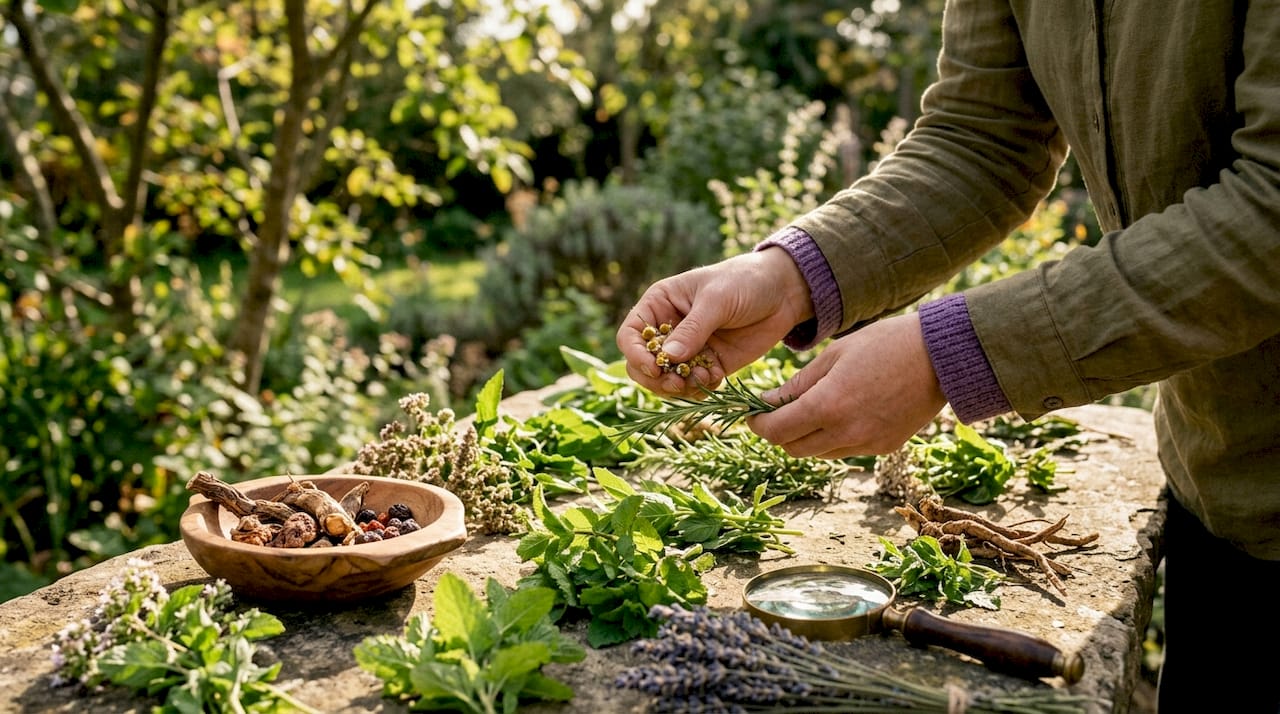
The three primary axes of assessment are temperature, moisture, and taste. Each axis describes a quality that both the herb and the body can express.
Temperature runs from warming to cooling, with neutral in the middle. Warming herbs like ginger and cayenne increase circulation and metabolic activity. Cooling herbs like peppermint and elderflower calm heat, inflammation, and agitation.
Moisture describes whether an herb tends to add or remove fluid from tissues. Moistening herbs like marshmallow root soothe dry, irritated membranes. Drying herbs like yarrow and sage reduce excess dampness, congestion, and sluggishness.
Taste carries the most diagnostic weight in many traditions. The six tastes used in herbal energetics are bitter, sweet, sour, salty, pungent, and astringent. Each taste signals a specific physiological action.
| Taste | Energetic quality | Common physiological effect |
|---|---|---|
| Bitter | Cooling, drying | Stimulates digestion, clears heat |
| Sweet | Warming, moistening | Nourishes, tonifies, rebuilds tissue |
| Sour | Cooling, drying | Tightens tissues, supports liver |
| Salty | Warming, moistening | Softens, mineralizes, supports kidneys |
| Pungent | Warming, drying | Moves stagnation, opens airways |
| Astringent | Cooling, drying | Tones mucous membranes, reduces secretions |
Pro Tip: Taste your herbs before reading about them. Your body’s immediate reaction, whether it warms your chest, dries your mouth, or settles your stomach, is direct energetic data that no chart can replace.
The sensory experience of herbs is the primary learning tool in this system. Factors like terroir, harvest time, and preparation method all shift an herb’s energetic expression. A dried marshmallow root behaves differently than a fresh cold infusion of the same plant.
How does energetic herbalism differ from conventional herbalism?
Conventional scientific herbalism focuses on isolating bioactive compounds and measuring their effects. Herbs contain flavonoids, phenolics, and other compounds that combat inflammation and oxidative stress at measurable doses. That is real, verifiable, and useful. Energetic herbalism does not reject this. It adds a layer of relational intelligence that biochemistry alone cannot provide.
The key difference is the frame of reference. Pharmacology asks: “What does this compound do to this receptor?” Herbal energetics asks: “What pattern of imbalance does this person show, and which plant speaks to that pattern?” Both questions are valid. They answer different things.
“Energetic herbalism functions as a complementary language for describing plant-body interactions that exist beyond biomedical models. The sensory frameworks of hot, cold, damp, and dry give practitioners a way to read the body that blood panels cannot fully capture.”
Emerging biophysics research on subtle fields suggests that ultraweak photon emissions and biocommunication may explain some of the effects attributed to energetic medicine. This science is still developing, but it provides a growing physical basis for taking subtle body signals seriously. Dismissing herbal energetics as unscientific ignores this trajectory.
Energetic herbalism also prioritizes nervous system regulation and long-term vitality over acute symptom relief. This makes it especially relevant for people dealing with chronic depletion, stress patterns, and low-grade imbalances that do not show up cleanly on standard diagnostics. For nervous system support, the energetic approach offers nuance that a supplement protocol often misses.
Key distinctions at a glance:
- Conventional herbalism targets specific compounds and measurable outcomes
- Energetic herbalism targets patterns of imbalance across temperature, moisture, and vitality
- Both approaches can and should coexist in a thoughtful wellness practice
- Energetic herbalism requires sensory engagement and iterative self-observation, not just dosing protocols
How can you start practicing energetic herbalism?
The most common mistake beginners make is trying to memorize energetic charts before ever tasting a plant. Symptom-matching from lists is less effective than learning to read energetic patterns directly from the body’s response. Start with your senses, not your notes.
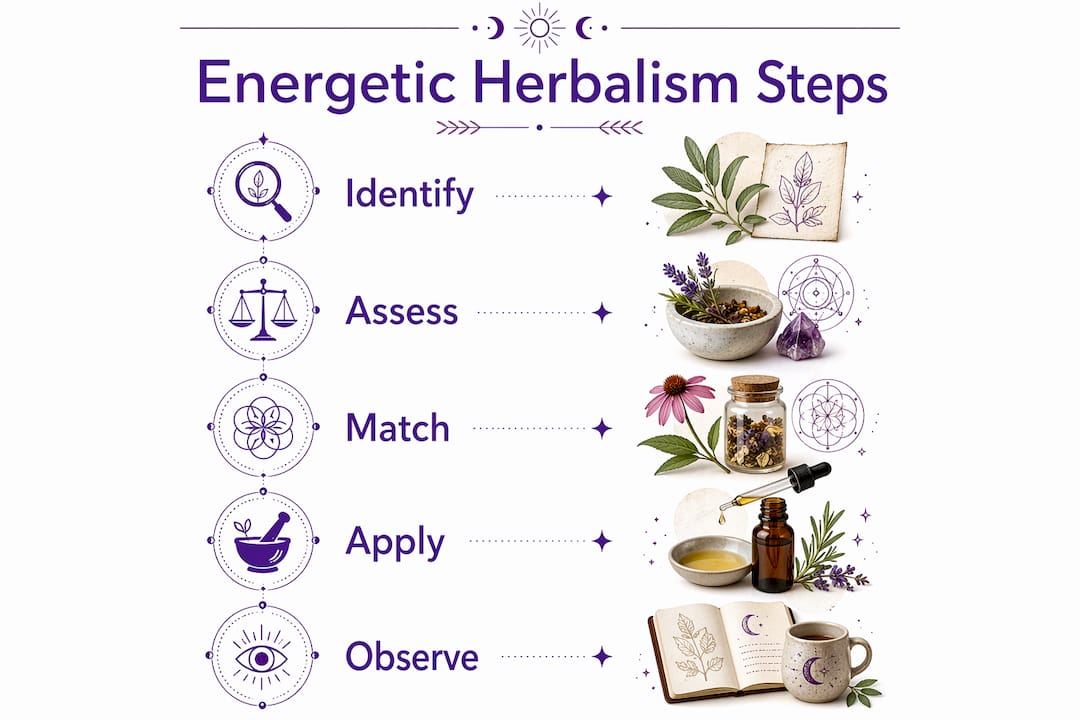
Here is a practical sequence for beginning safely and effectively:
- Choose one herb for one season. Ginger, chamomile, or nettle each offer clear, distinct energetic signatures. Spending a full season with one plant builds real knowledge. Jumping between ten herbs builds confusion.
- Taste it in multiple preparations. Try the same herb as a tea, a tincture, and a food ingredient. Notice what shifts. Does it warm your chest? Dry your mouth? Settle your digestion? Write down what you feel, not what you read.
- Observe your body’s state first. Before reaching for an herb, assess your own temperature, moisture, and energy level. Are you running hot and dry? Cold and damp? Matching the herb to your current state is the whole practice.
- Track patterns over weeks, not days. Success requires months of gentle self-study. Energetic shifts are subtle. A single dose tells you little. A consistent practice over six to eight weeks tells you a great deal.
- Work alongside conventional care. Energetic herbalism is a supportive practice, not a replacement for medical diagnosis. If you notice symptoms that feel structural or acute, consult a healthcare provider. Discernment between energetic imbalance and pathology is a skill that develops with time.
- Protect your own energetic state. Avoid deep energetic work when you are personally exhausted. Your assessment accuracy drops when your own system is depleted. Self-care is not optional in this practice. It is the foundation.
Pro Tip: Keep a simple journal with three columns: your state before, the herb you used, and what you noticed afterward. After three months, patterns will emerge that no textbook could have predicted for your specific body.
How does energetic herbalism fit within broader energy healing practices?
Energetic herbalism sits within the wider field of energetic medicine, which focuses on restoring coherence and supporting the body’s self-regulation rather than overriding it. Energy healing is generally safe with very low risk of side effects and is widely used to reduce stress and support well-being. That safety profile makes it an accessible entry point for people new to alternative healing.
What makes herbal energetics distinct within this field is its use of plants as informational medicine. The herb does not force a change. It offers a signal, a temperature, a taste, a quality, that the body can use to recalibrate. This is closer to biocommunication than pharmacology.
Energetic herbalism pairs naturally with:
- Meditation and breathwork, which develop the body awareness needed to read subtle energetic signals accurately
- Energy hygiene practices, which clear accumulated stress and keep your energetic field receptive to plant medicine
- Spagyric herbal preparations, which preserve the full spectrum of a plant’s physical and subtle qualities through alchemical extraction methods
- Somatic bodywork, which addresses the physical layer of the same patterns that energetic herbalism addresses from the plant side
The effectiveness of energetic work depends heavily on practitioner discernment and the ability to support the body’s self-regulation rather than trying to fix a client directly. This principle applies whether you are working with herbs, energy, or both. The body heals itself. Your role, and the herb’s role, is to create the conditions for that to happen.
Integrating multiple modalities amplifies results because each one addresses a different layer of the same whole. For people exploring energetic hygiene alongside herbal practice, the two systems reinforce each other in ways that neither achieves alone.
Key Takeaways
Energetic herbalism works by matching an herb’s temperature, moisture, and taste qualities to a person’s current physiological state, supporting the body’s self-regulation rather than suppressing symptoms.
| Point | Details |
|---|---|
| Core framework | Herbs are assessed by temperature, moisture, and six tastes to match remedies to individual patterns. |
| Sensory learning first | Tasting and observing herbs directly builds more reliable knowledge than memorizing energetic charts. |
| Complementary, not curative | Energetic herbalism supports conventional care and requires discernment to distinguish imbalance from pathology. |
| Practitioner self-care matters | Your own energetic state affects assessment accuracy; avoid deep practice when depleted. |
| Integration amplifies results | Combining herbal energetics with meditation, energy hygiene, and spagyric preparations deepens the practice. |
Why sensory learning changed how I think about plants
Most people come to energetic herbalism looking for a better system. They want a cleaner map, a more precise chart, a more reliable protocol. I understand that impulse. When I started, I filled notebooks with energetic correspondences before I had tasted half the plants I was writing about.
What actually shifted my practice was slowing down enough to feel an herb work. The first time I held a strong cup of yarrow tea and felt my sinuses clear and my skin begin to perspire, no chart was necessary. The plant communicated directly. That experience cannot be transferred through reading. It has to be lived.
The patience this practice demands is not a flaw. It is the point. Energetic herbalism asks you to develop a relationship with your own body’s signals before you can accurately read anyone else’s. That is a longer path than downloading a supplement protocol, but it produces something more durable: genuine discernment.
The biggest misunderstanding I see is treating energetic herbalism as a replacement for medical care. It is not. It is a language for the territory that medicine does not fully map, the chronic low-grade depletion, the subtle dryness or dampness that precedes illness, the nervous system that never quite settles. That territory is real, and plants speak to it fluently. Your job is to learn to listen.
If you are just beginning, resist the urge to do everything at once. Pick one plant. Spend a season with it. Let it teach you something your books cannot. That single relationship will teach you more about herbal energetics than a year of reading ever could.
— Kejiwa
Spagyric tinctures from Kejiwastore for your herbal practice
Kejiwastore crafts spagyric herbal tinctures using alchemical extraction methods that preserve the full physical and subtle spectrum of each plant. These are not standard herbal extracts. Spagyric preparations capture the body, soul, and spirit of the plant, making them among the most complete expressions of energetic herbalism available in a bottled form.

If you are building a personal herbal practice grounded in energetic principles, these tinctures offer a meaningful starting point. Each formula is made in small batches with wild-harvested and organic botanicals, selected for their energetic clarity and potency. Kejiwastore also offers botanical aromatics that complement herbal energetics by working through the olfactory system, one of the most direct pathways to the nervous system and subtle body. Both collections reflect the same commitment to intentional, quality-first plant medicine.
FAQ
What is the difference between herbal energetics and conventional herbalism?
Conventional herbalism focuses on bioactive compounds and measurable physiological effects. Herbal energetics classifies plants by temperature, moisture, and taste to match remedies to a person’s overall pattern of imbalance rather than a specific symptom.
Are the energetic properties of herbs scientifically supported?
Herbs contain flavonoids and phenolics with documented anti-inflammatory and antioxidant effects, and emerging biophysics research on ultraweak photon emissions offers a growing physical basis for subtle energetic effects. The science is still developing, but it does not contradict the energetic framework.
How long does it take to learn energetic herbalism?
Meaningful results from self-study typically require several months of consistent practice. Practitioners recommend focusing on one herb or one energetic quality per season to build genuine discernment rather than surface-level familiarity.
Is energetic herbalism safe to practice on your own?
Energy healing practices carry very low risk of side effects and are generally safe as a complementary approach. Always work alongside conventional healthcare for acute or structural conditions, and avoid deep energetic practice when personally exhausted.
What are the best herbs to start with for energetic herbalism?
Ginger, chamomile, and nettle each offer clear, distinct energetic signatures that make them ideal for beginners. Ginger is warming and drying, chamomile is cooling and slightly bitter, and nettle is nourishing and mineralizing, giving you three very different energetic experiences to compare.