


Grounding anchors your attention into the body and present moment. Centering gathers your scattered energy into a steady inner reference point. Use grounding when you feel spaced out, panicked, or disconnected from your body. Use centering when your energy feels scattered, reactive, or pulled in too many directions at once.
- Grounding: present-moment, body first, sensory contact with the earth or your surroundings
- Centering: internal reference point, breath and energy first, often practiced before grounding
Healthline and the Cleveland Clinic both frame these as nervous-system regulation tools, and Kejiwa Alchemy builds ritual resources around both.
Key Takeaways
Grounding anchors attention in the body and present moment, while centering gathers scattered energy into a steady internal reference, and combining both builds faster, more reliable regulation.
| Point | Details |
|---|---|
| Know the difference | Grounding connects you to your body and surroundings; centering steadies your internal energy. |
| Match the technique to the symptom | Choose grounding for panic or dissociation, centering for scattered or reactive states. |
| Sequence matters | Center first to gather energy, then ground to anchor that stability in the present. |
| Rehearse when calm | Practicing your preferred method during neutral moments improves recall during a crisis. |
| Support with ritual tools | Kejiwa Alchemy’s aromatics and tinctures can cue the practice as optional, non-clinical supports. |
This article is general information, not a substitute for advice from a qualified doctor. Consult a qualified healthcare professional about your own circumstances before acting on anything here.
Table of Contents
- Grounding vs. Centering: What’s the Real Difference?
- Do You Need to Ground or Center Right Now?
- Grounding Techniques You Can Practice Anywhere
- Centering Practices That Steady Your Energy
- How to Combine Grounding and Centering into One Routine
- What Grounding and Centering Can’t Do
- Kejiwa Alchemy’s Take on Practitioner Resources
- What I Learned Combining Both in One Bad Afternoon
- Ritual Tools That Support Grounding and Centering Practice
- Sources
Grounding vs. Centering: What’s the Real Difference?
Grounding pulls your awareness downward and outward, into your feet, your chair, the sounds around you. It’s a present-moment practice built on sensory contact with your body and environment. Centering works the opposite direction. It draws scattered attention inward, toward a felt sense of your own core or breath, creating what Psychology Today describes as an internal reference point for calm.
Think of centering as gathering the energy back into the container, and grounding as anchoring that container to something solid.
- Grounding answers: “Where am I, right now, in this body?”
- Centering answers: “Where is my energy, and how do I steady it?”
Practitioners often recommend centering first, then grounding. You collect your energy internally, then root that steadied state into the present moment. They’re not competing techniques. They’re sequential partners, and most people who dismiss one usually just haven’t tried pairing it with the other.
Do You Need to Ground or Center Right Now?
Your body usually tells you which one you need before your mind catches up.
Signs you need grounding:
- You feel spaced out, foggy, or disconnected from your surroundings
- Panic is rising and your thoughts are racing toward worst-case scenarios
- You notice dissociation, like watching yourself from outside your body
Signs you need centering:
- Your energy feels scattered across too many people, tasks, or worries
- You’re emotionally reactive, snapping or overreacting to small triggers
- You’ve lost your internal sense of steadiness, even if your body feels present
Pro Tip: Ask yourself one question: “Am I not here, or am I not steady?” If you’re not here, ground. If you’re not steady, center. That single distinction cuts through most of the guesswork.
When in doubt, start with centering. Gathering your energy first often makes grounding easier and more effective.
Grounding Techniques You Can Practice Anywhere
Grounding techniques break into three practical categories, and Healthline organizes them the same way: sensory, physical, and mental.
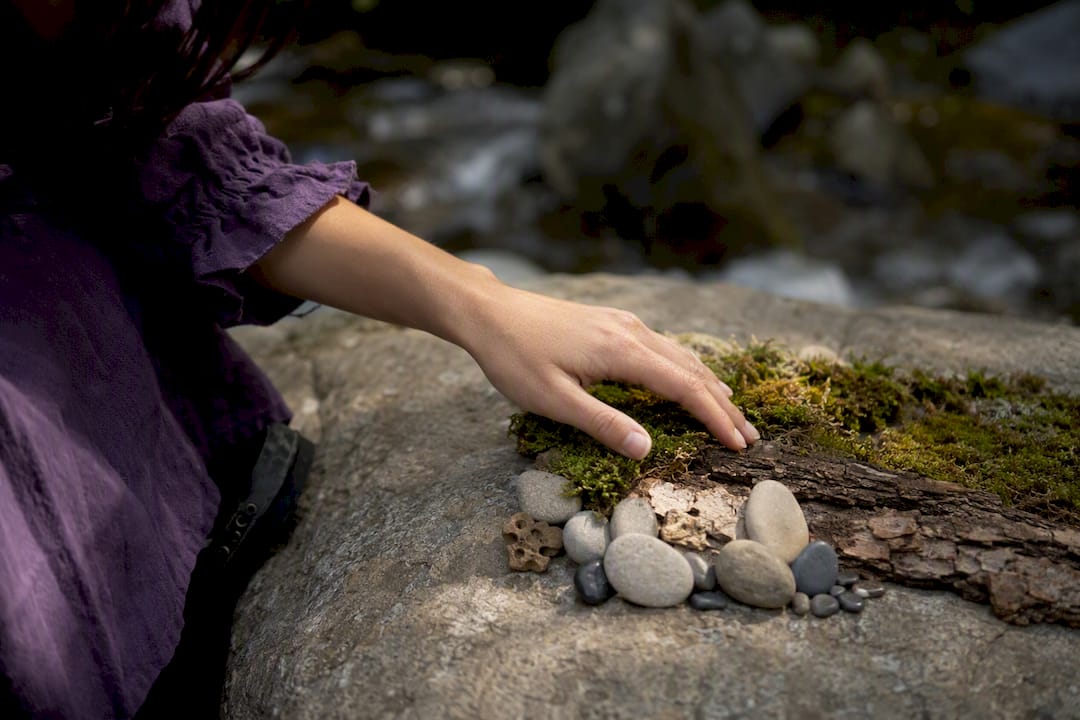
Sensory grounding starts with the 5-4-3-2-1 method: name five things you see, four you can touch, three you hear, two you smell, one you taste. It works because it forces your brain to process external input instead of internal spiraling.
Physical grounding uses your body directly:
- Press both feet firmly into the floor and notice the contact
- Hold something cold, like an ice cube or a chilled stone
- Walk barefoot outside if you have access to grass or dirt (earthing is one option among several, not a requirement)
Mental grounding works when your body feels unreachable: name today’s date and location out loud, count backward from 100 by sevens, or list every category you can think of that starts with the letter “S.”
There’s no fixed daily quota for these. They’re as-needed tools, best rehearsed during calm moments so they’re easier to recall during a crisis, according to research summarized by Medical News Today.
Centering Practices That Steady Your Energy
Centering lives in the breath and the imagination, which makes it the better option indoors, in crowded rooms, or anywhere physical contact with the earth isn’t practical.
Breath-based centering:
- Box breathing: inhale for four counts, hold four, exhale four, hold four
- The 3-3-3 micro-breath: three seconds in, three seconds hold, three seconds out, repeated three times
- Heart-centered breathing: place a hand on your chest and breathe as if the breath moves through that spot
Visualization centering: imagine a small point of light at your core, steady and unmoving, or picture an anchor dropping through your spine into stillness. A brief script, even just three sentences repeated silently, can pull scattered attention back to that internal point.
For crowded spaces, centering can happen seated with eyes open, hand resting on your sternum, breath slowed for ten seconds. Nobody around you needs to notice.

Pro Tip: Centering isn’t just calming. It also helps you hold boundaries, because a steady internal reference makes it harder for other people’s chaos to hijack your response.
How to Combine Grounding and Centering into One Routine
Pairing the two turns them into a repeatable ritual instead of a one-off fix.
- 1-minute micro-reset: one heart-centered breath, followed by naming three things you see, two you hear, one you feel against your skin.
- 3-minute midday reset: center with box breathing for four rounds, ground with feet-on-floor pressure and a slow visual scan of the room, then re-anchor by naming your location and the time.
- Morning and evening routine: center indoors with breath and visualization before you start the day, then ground outdoors (barefoot on grass, or a slow walk) in the evening to close it out.
Adjust based on setting. Outdoors favors grounding first; indoors or in public, lead with centering.
What Grounding and Centering Can’t Do
These techniques work well for short-term regulation. They calm an activated nervous system and interrupt a spiral in the moment. They are not a cure for post-traumatic stress disorder, chronic anxiety disorders, or ongoing dissociation, a distinction Medical News Today makes clear in its clinical overview.
Grounding and centering are supportive tools, not standalone treatments. If panic attacks are frequent, dissociation feels severe or prolonged, or thoughts turn toward self-harm, it’s time to talk to a mental health professional.
Practicing your preferred technique during calm moments, not just crisis moments, measurably improves how well you can recall and use it under pressure.
Kejiwa Alchemy’s Take on Practitioner Resources
Grounding and centering are practices, not products, but ritual tools can support the container around them. Kejiwa Alchemy’s guide on energy protection for highly sensitive people covers gentler grounding adaptations for readers who feel overstimulated easily.
For readers building consistency, the nervous-system regulation guide pairs botanical allies with breathwork, and the lightworker’s guide to staying grounded offers deeper ritual structure.
- Scent and ritual cues can mark the start of a grounding or centering practice
- Herbal tinctures are optional supports, never substitutes for clinical care
- Consistency matters more than the specific tool you choose
What I Learned Combining Both in One Bad Afternoon
Mid meltdown before a client call, I centered first: one hand on my chest, three slow breaths. Then I grounded, naming the desk, the chair, the hum of the fridge. The call went fine. The lesson: center to gather, then ground to land. Skipping the first step made the second one shaky.
— Kejiwa
Ritual Tools That Support Grounding and Centering Practice
Grounding and centering don’t require any products, but a scent or a sip can act as a reliable cue that tells your nervous system it’s time to shift states. Kejiwa Alchemy’s botanical aromatics work exactly that way: a spritz of an aromatherapy elixir before you sit down to breathe signals your body that the ritual has started, which can make the practice itself land faster.

These are adjuncts, not treatments, but some find CBD bei Stress und zur Entspannung helpful as a complementary relaxation support. If you’re building a grounding and centering practice and want a sensory anchor to mark the transition, browse Kejiwa Alchemy’s spagyric herbal tinctures or the aromatics collection and find a scent that feels like coming home to yourself. Pick one, keep it near your practice space, and let it become the smell your body associates with steadiness.
Sources
- Grounding techniques: Exercises for anxiety, PTSD, and more — Healthline
- What Is Centering? What Is Grounding? — Psychology Today
- Grounding techniques: What to know — Medical News Today
- Grounding techniques for anxiety — Cleveland Clinic