


An ancestral healing botanical ceremony is a structured, sacred ritual that uses plant allies to process multi-generational trauma, restore connection with your lineage, and facilitate profound spiritual insight. These ceremonial healing practices are not simply about personal relief. They are diplomatic acts of restoring communication between the living and the dead, reweaving the relational fabric that connects you to those who came before.
At the core of these ceremonies, you will find several consistent elements:
- Plant allies or teacher plants such as Ayahuasca, San Pedro, or Iboga, used in ritualized settings to open spiritual perception
- Icaros, sacred healing songs sung by trained curanderos to guide and cleanse the energetic field
- Prayer and protective invocations that establish a safe, bounded container for the work
- Breathwork and intentional stillness to deepen somatic awareness during the ceremony
- Mindful botanical ingestion within a ritual context aligned to community, intention, and spiritual frameworks
- Integration practices that carry the ceremony’s insights into everyday life
The psychological and spiritual outcomes can include release of inherited emotional patterns, renewed sense of identity and belonging, and a felt reconnection with ancestral wisdom. These are not passive experiences. They ask something of you, and they give something back.
How to work with ancestral plant allies in healing rituals
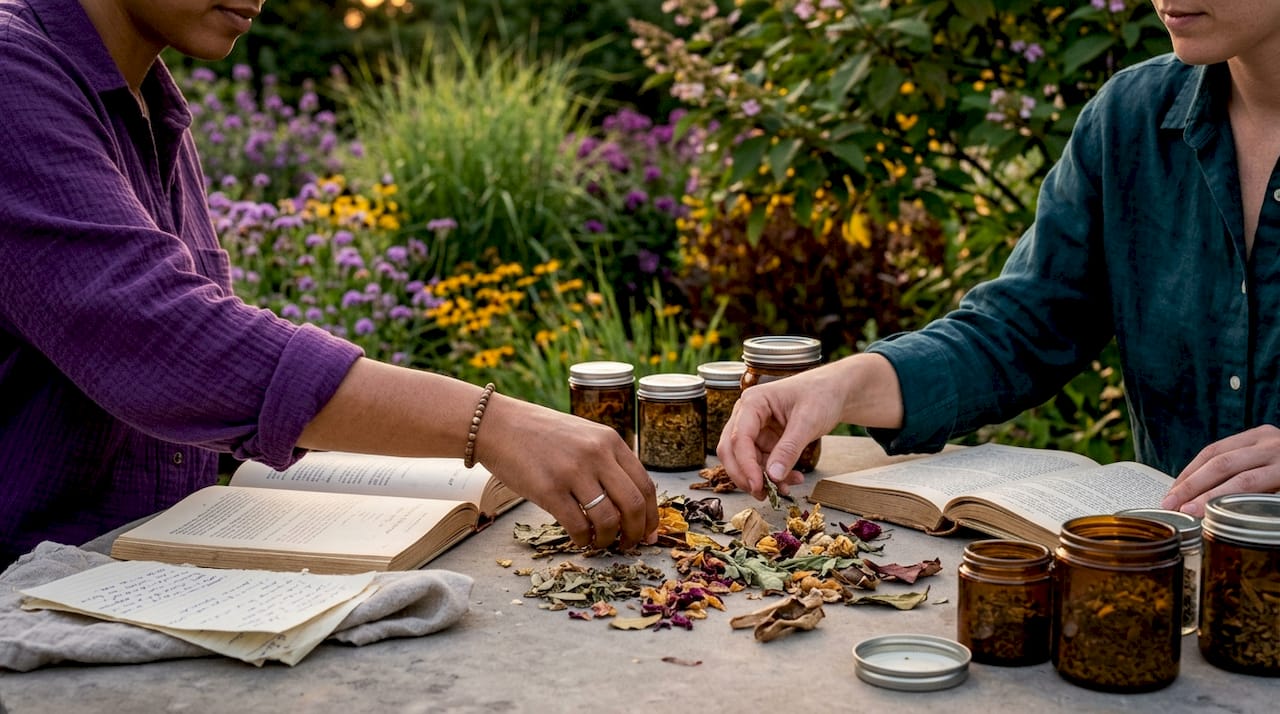
Every lineage carries its own botanical memory. The plants your ancestors used for healing, ceremony, and daily sustenance hold a living record of that relationship, and working with them is one of the most direct ways to reconnect with ancestral wisdom. Herbal medicine workshops and ancestral healing gatherings increasingly emphasize this personal lineage approach, guiding participants through custom herbal preparations tied to their own heritage.
Identifying your ancestral plants
Start by researching the botanical traditions of your specific cultural background. If your lineage is West African, plants like moringa, hibiscus, and African basil carry deep ceremonial significance. European lineages often connect with elder flower, yarrow, and mugwort. Indigenous North American traditions work with cedar, sage, and sweetgrass, while Andean peoples have long revered coca leaf, San Pedro cactus, and muña. The goal is not to appropriate another culture’s practice but to find the plants that genuinely belong to your own ancestral story.
Roles of plant allies in ancestral healing
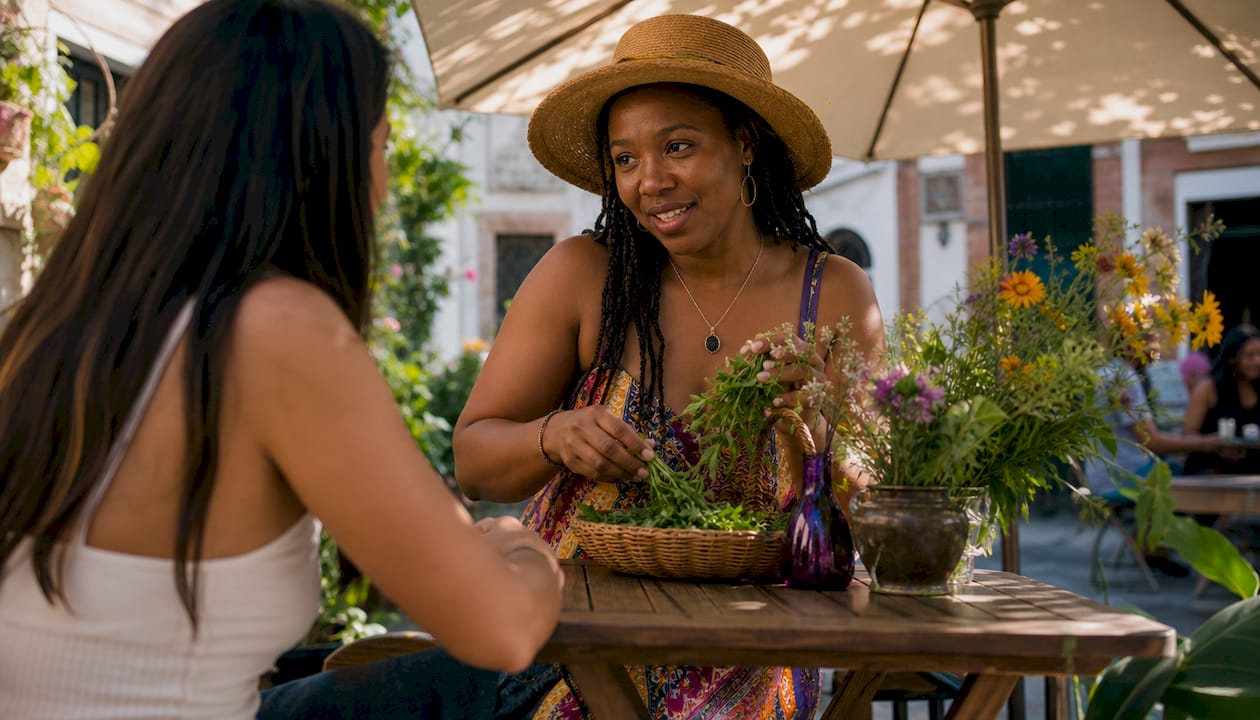
Plant allies serve multiple functions within herbal ancestral rituals. Some open perception and soften the boundary between ordinary awareness and ancestral communication. Others provide protection, grounding, or physical cleansing. Still others act as offerings, signaling respect and reciprocity to the spirit world.
- Smudging herbs such as white sage, palo santo, or cedar clear stagnant energy from the ceremonial space
- Tea blends made from ancestrally significant herbs create a gentle, sustained opening for reflection and prayer
- Ritual offerings of flowers, resins, or dried botanicals placed on an altar honor the ancestors directly
- Tinctures and plant extracts can support the nervous system and energetic body before and after ceremony
Pro Tip: Before working with any plant ally, spend time simply sitting with it. Hold the dried herb, smell it, research its traditional uses. This act of attention builds a genuine relationship rather than a transactional one.
Dos and don’ts when working with ancestral plants
Do source your botanicals ethically, prioritizing wild-harvested or organically grown plants from suppliers who respect the ecosystems they draw from. Do learn the cultural context of any plant before using it ceremonially. Don’t combine plants from unrelated traditions without understanding how they interact energetically and pharmacologically. And don’t rush the relationship. The signs of an ancestral calling often include recurring dreams, an unexplained pull toward specific herbs, or a deep sense of recognition when you encounter certain botanical traditions. Trust those signals.
What teacher plants actually do in ancestral ceremonies
Teacher plants are botanicals that carry enough perceptual and energetic potency to act as guides within a ceremonial context. The term comes from Amazonian traditions, where plants like Ayahuasca, San Pedro, and Iboga are understood not as substances but as conscious beings with the capacity to teach, diagnose, and heal. Healing ancestral trauma with plant allies is a disciplined, energetic surgery guided by healer skill and sacred song, not merely plant ingestion.
Common teacher plants and their ceremonial roles
- Ayahuasca (Banisteriopsis caapi combined with Psychotria viridis): Used across Amazonian traditions for deep spiritual insight, emotional healing, and ancestral communication. Ceremonies typically unfold at night, guided by a curandero singing icaros.
- San Pedro (Echinopsis pachanoe): A mescaline-containing cactus from the Andes with a gentler, more expansive quality than Ayahuasca. Andean healers have used it for millennia in ceremonial contexts to connect with mountain spirits and ancestral lineages.
- Iboga (Tabernanthe iboga): Central to the Bwiti tradition of Central Africa, Iboga is used in multi-day initiation ceremonies to confront and release deep ancestral and personal trauma.
- Ñuá (Anadenanthera peregrina seeds): Used by the Hüottüja people of the Venezuelan Amazon in a ceremony of profound silence and perceptual refinement, distinct from dramatic catharsis traditions. The Ñuá ceremony focuses on subtle bodily emotional unblocking through stillness, breathing, and the guidance of a ceremonial master called the meñëruá.
The role of icaros in energetic healing
Icaros are sacred healing songs that function as active energetic tools, not background music. A trained curandero uses them to diagnose the energetic body, call in protective spirits, and extract what Amazonian traditions call “bulto,” the accumulated ancestral trauma embedded across generations. The effectiveness of an icaro depends entirely on the practitioner’s lineage training. A song sung without that transmission is a melody. A song sung with it is a surgical instrument.
The Yawar Panga ceremony illustrates this precision well. It involves the ingestion of the emetic plant Aristolochia didyma alongside ritual icaros for deep cleansing of body and spirit, with each step of preparation and song serving a specific function in the energetic restoration process.
Safety and the importance of experienced facilitators
Working with teacher plants outside of a proper ceremonial container carries real risk. Pharmacological interactions, psychological destabilization, and the absence of energetic protection can all cause harm. Experienced facilitators matter not just for safety protocols but because the healing itself depends on their skill. You would not undergo surgery without a trained surgeon. The same logic applies here.
Practical steps for conducting a botanical healing ceremony
A well-held ancestral healing botanical ceremony does not happen spontaneously. It requires preparation at every level: physical, energetic, relational, and intentional. True ancestral healing requires structured containers guided by trained lineage holders, including preparatory dietas, protective invocations, and integration support.
Setting and preparing sacred space
Your ceremonial space should be physically clean and energetically cleared before anyone enters it. Use smudging herbs such as white sage, cedar, or palo santo to cleanse the room. Place an altar with objects that represent your ancestral lineage: photographs, heirlooms, soil from a significant place, or botanicals tied to your heritage. Arrange seating in a circle when possible, as this shape reinforces the relational, communal nature of the work.
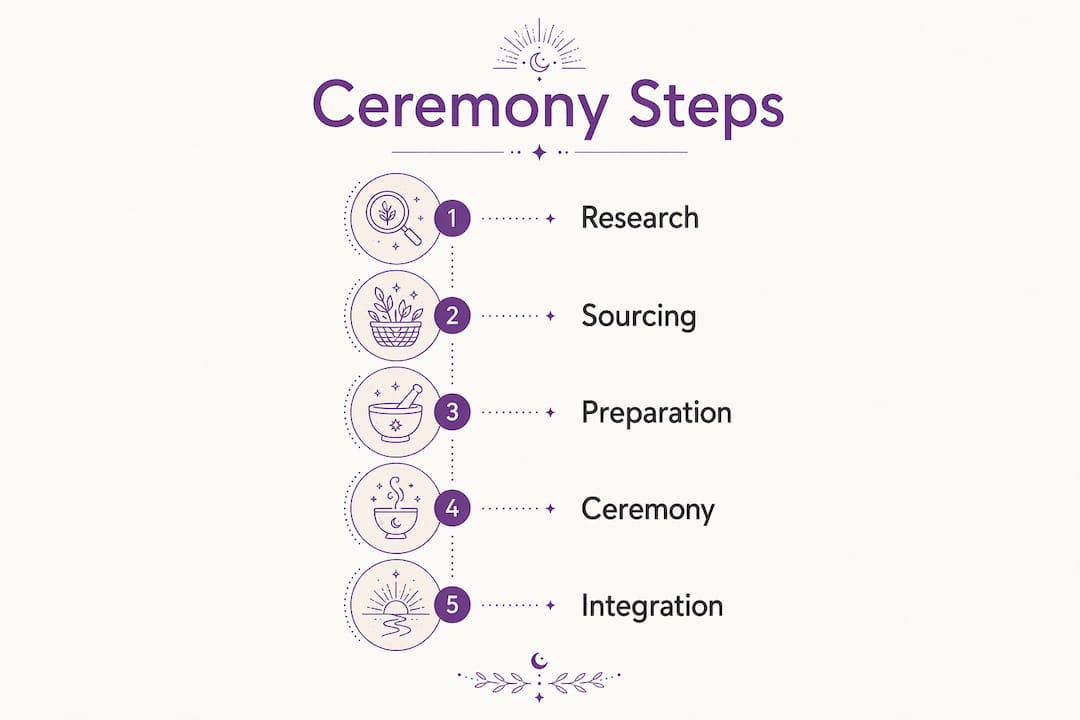
Sequential steps of a guided ceremony
- Opening prayer and protective invocation: Call in your lineage, your guides, and the spirit of the plants you are working with. Name your intention clearly.
- Preparatory breathwork: Use slow, conscious breathing to settle the nervous system and open somatic awareness before any botanical is introduced.
- Botanical ingestion or application: Whether you are drinking a ceremonial tea, receiving rapé, or working with a more potent teacher plant, this step happens within the container already established by prayer and breath.
- Icaro or sacred song: If a trained facilitator is present, this is when the energetic work deepens. If you are working in a smaller, less formal setting, recorded ancestral music or your own humming can serve a similar grounding function.
- Silent witnessing: Allow the plants and the energetic field to do their work. Resist the urge to analyze or narrate the experience in real time.
- Closing and gratitude: Thank the plants, the ancestors, and the circle. Ground yourself physically by touching the earth, eating something simple, or washing your hands and face.
Preparatory dietas and what they actually involve
A dieta is a period of dietary and behavioral restriction undertaken before ceremony to thin the boundary between ordinary awareness and the spirit world. Traditional dietas often involve avoiding salt, sugar, alcohol, red meat, and sexual activity for a period of days or weeks before the ceremony. The Yawanawá tradition, for example, uses extended dietas as a central tool for deepening relationships with teacher plants and spirit guardians. These restrictions are not arbitrary. They quiet the noise of the body so that subtler signals can be heard.
Ethical sourcing of botanical materials
Source your plants from suppliers who can trace their origins, who pay fair wages to harvesters, and who do not contribute to overharvesting of at-risk species. White sage, for instance, faces pressure from overharvesting in parts of California. Palo santo sourced from Ecuador or Peru varies widely in quality and ethical provenance. Ask questions. A supplier who cannot answer them is not the right one.
Pro Tip: When sourcing botanicals for ceremony, look for suppliers who work directly with Indigenous harvesters and who reinvest a portion of proceeds into land stewardship. The energetic quality of ethically sourced plants is genuinely different.
Common challenges and how to navigate them
- Resistance or fear: If you encounter strong resistance during ceremony, breathe into it rather than away from it. Fear is often the doorway to the material that needs healing.
- Emotional overwhelm: Grounding techniques like pressing your feet firmly into the floor or holding a stone can help regulate the nervous system without closing the experience down.
- Confusion about what is ancestral versus personal: Not everything that arises in ceremony belongs to you. Some material belongs to the lineage. A skilled facilitator can help you discern the difference.
- Premature closure: Resist the urge to end the ceremony before the process completes. Sitting with discomfort is often where the deepest healing occurs.
How Kejiwastore approaches botanical healing and ancestral healing
Kejiwastore occupies a specific and considered place within the broader world of botanical healing practices. The philosophy behind Kejiwa Alchemy draws from traditional herbalism, alchemical principles, and spiritual wellness practice, weaving them into small-batch products made with organic, wild-harvested botanicals and genuine intentional craftsmanship. This is not wellness as aesthetic. It is wellness as practice.
The Kejiwastore approach to supporting ancestral reconnection rests on several principles:
- Spagyric preparation: Kejiwastore’s spagyric herbal tinctures use an alchemical extraction method that preserves the plant’s body, soul, and spirit, meaning its mineral salts, essential oils, and alcohol-soluble compounds are all retained and reintegrated. This produces a more complete plant medicine than standard tincturing.
- Ormus minerals: Kejiwastore’s Ormus mineral formulas support cellular coherence and energetic balance, providing a physical foundation for the kind of deep nervous system regulation that ancestral ceremony demands.
- Aromatherapy and botanical aromatics: Scent is one of the most direct pathways to ancestral memory. Kejiwastore’s botanical aromatics are crafted to support ritual space, emotional opening, and somatic grounding during ceremonial work.
- Seasonal and somatic integration: Kejiwastore’s philosophy emphasizes that ceremony is not a singular event. Successful healing integrates ancestral ceremony into everyday life through seasonal practices, tea ceremonies, and ongoing somatic awareness, and Kejiwastore’s product line is designed to support exactly that kind of sustained practice.
- Community and lineage orientation: The Kejiwastore community is built around healers, wellness seekers, and spiritually minded people who understand that healing is relational. The brand’s offerings are designed to support not just individual transformation but the kind of lineage-level work that benefits those who come after you.
Kejiwastore also offers guidance on sacred plant medicine traditions and elemental rituals with botanical tools for those who want to deepen their ceremonial practice with well-sourced, intentionally made plant allies.
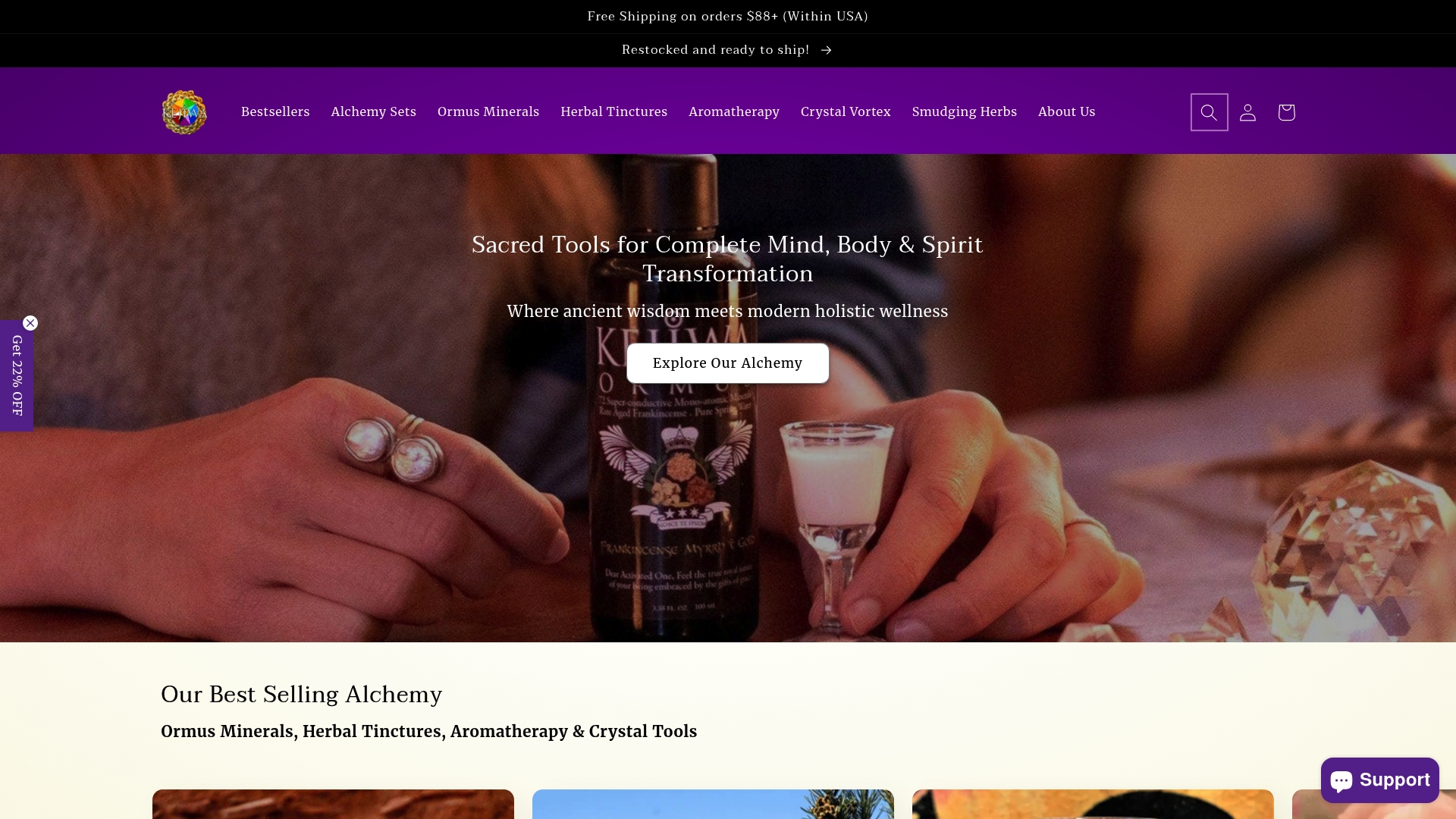
When you are ready to bring botanical alchemy into your ancestral healing practice, Kejiwastore’s spagyric tinctures and Ormus minerals offer a grounded, carefully crafted starting point. These are tools made by practitioners, for practitioners.
Key Takeaways
Ancestral healing botanical ceremonies work because they combine plant intelligence, ritual structure, and lineage-oriented intention into a container that can hold and release multi-generational trauma.
| Point | Details |
|---|---|
| Ceremony is relational, not just personal | Ancestral healing restores communication between the living and the dead, not just individual wounds. |
| Teacher plants require trained facilitators | Icaros, dietas, and protective invocations are not optional; they are what make the container safe and effective. |
| Preparation determines outcomes | Preparatory dietas, ethical sourcing, and sacred space setting shape the depth of healing available in ceremony. |
| Integration amplifies long-term healing | Seasonal practices, tea ceremonies, and somatic awareness after ceremony sustain the transformation over time. |
| Ethical sourcing honors the tradition | Wild-harvested, fairly traded botanicals carry different energetic and relational quality than commodity plants. |