


Gem-infused water can be safe, but safety depends entirely on which stone you choose and how you let it touch your water. The indirect method, meaning a sealed chamber, pod, or vial that keeps the crystal separate from the liquid, is the one approach that guarantees no chemical transfer. Skip direct contact with anything containing copper, lead, or mercury, and be wary of porous or water-soluble minerals until you know exactly what you’re holding.
TL;DR:
- Using the sealed-chamber method is the safest way to prepare gem water, as it prevents chemical leaching from porous or potentially toxic stones.
- Quartz-family stones like clear quartz, amethyst, and rose quartz are safe for direct contact, but stones containing copper, lead, or mercury such as malachite or galena must stay in sealed chambers or avoided altogether.
- The recommended maximum soak time for verified quartz stones in direct water is between 6 and 12 hours, while indirect infusion allows longer durations if water is changed daily.
- Visual signs like metallic luster, bright coloration, or flaky surfaces indicate unsafe stones, and expert verification is advised before using unknown specimens in water.
- Regularly inspect and clean your sealed gem water container for leaks or damage, replacing it as soon as signs of wear or contamination appear.
Table of Contents
- Gem Water Safety: Direct Contact vs. the Sealed-Chamber Method
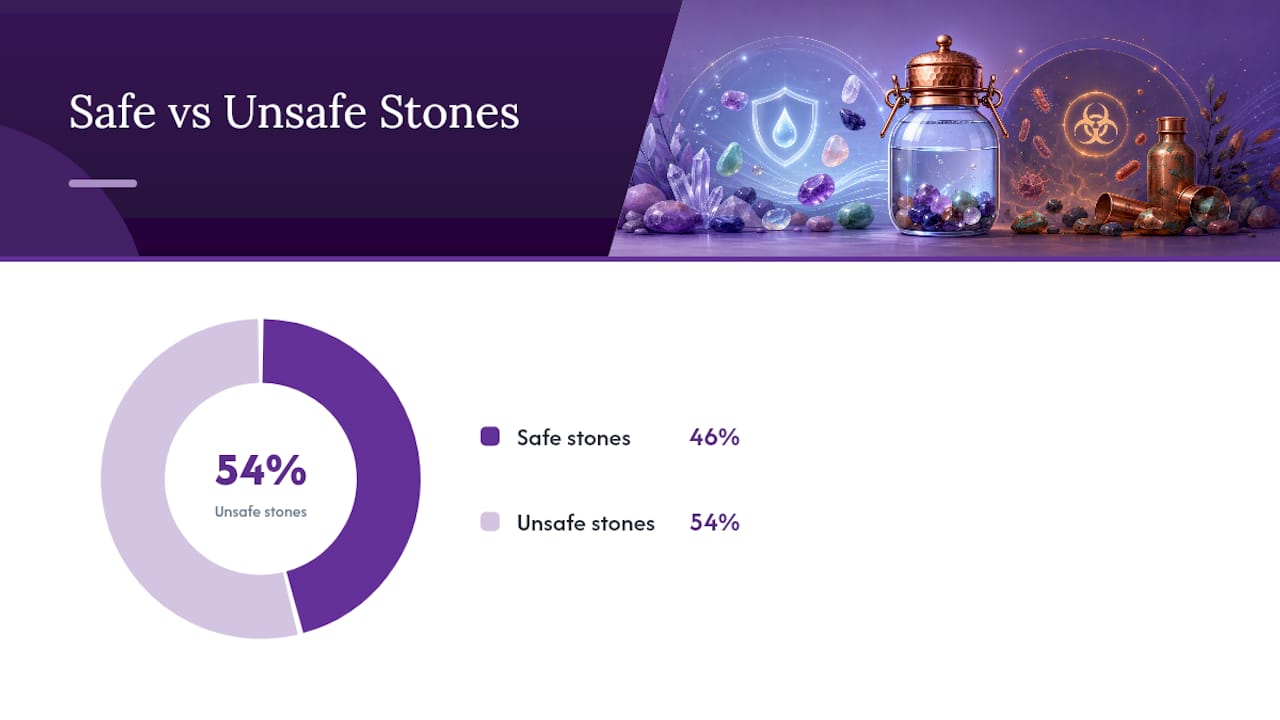
- Which Crystals Are Safe in Water and Which Ones Aren’t
- How to Verify a Stone Before It Goes Near Your Water
- Safe Prep: Cleaning, Infusion Times, and Storage
- Keeping Pods and Bottles Clean Over Time
- The Kejiwa Alchemy Approach to Gem Water
- Why “Just Use Any Pretty Stone” Advice Falls Short
- Vetted Crystals and Ritual Tools From Kejiwa Alchemy
- Sources
- FAQ
Gem Water Safety: Direct Contact vs. the Sealed-Chamber Method
Direct-contact infusion means dropping a stone straight into your water bottle or pitcher and letting it soak. It’s the oldest way people have made crystal elixirs, and it’s also the riskiest. Minerals can leach trace elements into the water, bacteria can colonize rough or porous surfaces, and some stones physically break down when they’re wet for too long.
Indirect infusion, sometimes called the sealed-chamber or pod method, keeps the crystal in a separate glass compartment that never touches the liquid. The stone sits inside its own vial, and that vial sits inside the water. According to NSF’s consumer guidance on metal leaching, this separation is the reason indirect preparation avoids the chemical transfer that makes direct-contact methods risky in the first place. You still get the visual and intentional presence of the crystal. You just remove the chemistry problem entirely.
Here’s the practical breakdown:
- Direct contact hazards: mineral leaching, bacterial growth on rough surfaces, physical erosion of soft or layered stones
- Indirect method benefits: zero chemical exchange, works with almost any stone regardless of composition, easier to clean
- When direct contact is acceptable: only with verified quartz-family stones (clear quartz, amethyst, citrine, rose quartz) that show no metallic inclusions, dye, or coating
If you’re not one hundred percent certain what a stone is made of, treat the sealed chamber as your default, not your backup plan.
Which Crystals Are Safe in Water and Which Ones Aren’t
Quartz-family stones dominate the safe list for a reason: they’re made of silicon dioxide, a compound that’s chemically stable and doesn’t dissolve or react in water. Crystal-safety guides consistently point to the same short roster of direct-contact-safe stones.
Generally safe for direct contact:
- Clear quartz
- Amethyst
- Rose quartz
- Citrine
- Agate
- Jasper
Never place these in drinking water, even briefly:
- Malachite (contains copper, linked to nausea and liver or kidney stress at high exposure)
- Azurite (also copper-bearing)
- Cinnabar (a mercury sulfide mineral)
- Galena (a lead sulfide)
- Pyrite (oxidizes in water and can release sulfur compounds)
- Selenite (dissolves in water, so it’s structurally unstable, not just chemically risky)
- Chrysocolla (often contains copper and can include other trace metals)
Copper is not a small concern. The EPA sets an action level for copper in drinking water, and stones like malachite and azurite can leach copper beyond safe levels when left in direct contact with liquid, according to reporting on crystal water bottle safety.
Mohs hardness, the scale that ranks how resistant a mineral is to scratching, tells you almost nothing about chemical safety. Pyrite scores a respectable 6 to 6.5, hard enough to seem sturdy, yet it oxidizes in water and can release sulfur compounds anyway, according to USGS research on mineral reactivity. Gold, by contrast, is soft and easily scratched but chemically inert. Hardness measures durability, not what a stone does once it’s sitting in your water for six hours.
How to Verify a Stone Before It Goes Near Your Water
A few visual cues should stop you before you even reach for a bottle:
- Metallic shine or luster often signals sulfide minerals like pyrite or galena, both unsafe for contact.
- Bright turquoise or saturated green coloring frequently points to copper content, as seen in malachite, azurite, and chrysocolla.
- Powdery, crumbly, or flaky surfaces mean the stone is breaking down and shouldn’t be near anything you plan to drink.
- Unnatural uniform color can indicate dye or resin coating designed to make a cheaper stone look like something more valuable.
A basic fingernail-to-stone scratch test can hint at hardness, but treat it as a rough clue rather than proof of safety. Some sellers use an acetone-dab test to check for dye, though this only confirms coating, not underlying composition, and it can damage the stone’s surface. Skip acid tests altogether. They’re a lab technique, not a kitchen-counter one, and they carry their own chemical risks.
Pro Tip: If you can’t identify a stone with confidence, don’t guess. A local gemologist or university mineral lab can usually verify composition for a small fee, and that’s a lot cheaper than a health scare.
When a specimen shows any of the warning signs above, or when you simply don’t know its origin, the sealed-chamber method sidesteps the whole question. You get the ritual without the guesswork.
Safe Prep: Cleaning, Infusion Times, and Storage
Start every session by choosing your method. Indirect infusion is the right default for beginners and for any stone you haven’t verified. Direct contact stays reserved for confirmed quartz-family stones only.
- Rinse the stone under cool running water to remove dust and surface debris.
- Scrub gently with a soft brush and a drop of mild, unscented soap.
- Rinse again thoroughly, then air-dry completely before use. Never run crystals through a dishwasher; the heat and detergent residue can crack stones or leave chemical film.
- For direct-contact infusion, limit soak time to 6 to 12 hours with quartz-family stones, then remove the crystal before drinking.
- For indirect infusion, the sealed pod can stay in water longer, but change the surrounding water daily to keep it fresh.
A few things to avoid regardless of method:
- Never pour hot liquids over a gem-water setup; heat accelerates any chemical reaction that might occur.
- Skip acidic additions like lemon or fruit juice in direct-contact bottles, since acidity speeds up mineral leaching.
- Refrigerate direct-infused water and drink it within 24 hours for freshness.
- Don’t leave porous or treated stones steeping for extended periods, even if they’re labeled “safe.”
Keeping Pods and Bottles Clean Over Time
A sealed pod is only as safe as its seal. Reporting on crystal water bottles found that many so-called sealed chambers develop micro-leaks or gasket wear over months of use, which quietly reintroduces the exact contact you were trying to avoid.
- Check the gasket and glass pod for hairline cracks every few weeks.
- Hand wash with mild soap; most crystal pods aren’t dishwasher-safe.
- Dry every component fully before reassembling to discourage bacterial growth.
- Retire the pod if you notice cloudiness, a metallic or off taste, unusual smell, or visible pitting on the glass.
Pro Tip: Do a quick leak check monthly: fill the outer chamber with water, seal it, and set it on a dry paper towel overnight. Any dampness the next morning means it’s time to replace the pod.
The Kejiwa Alchemy Approach to Gem Water
Some wellness brands recommend defaulting to indirect methods whenever a stone’s composition isn’t fully confirmed, and verify sourcing before selling crystals to customers. Our guide to cleansing crystals safely reflects the same standards we hold in our own small-batch practice.
A few habits worth borrowing: store water-intended crystals in containers separate from anything food-grade, label each specimen so you always know what you’re holding, and keep ritual tools apart from your drinking implements. Small separations like these prevent the kind of mix-ups that turn a beautiful practice into a health question.
Why “Just Use Any Pretty Stone” Advice Falls Short
Most gem water content treats crystal selection like a matter of taste. Pick what resonates, the advice usually goes, and the water will follow. That framing skips the one variable that actually determines whether the practice is safe: mineral chemistry.
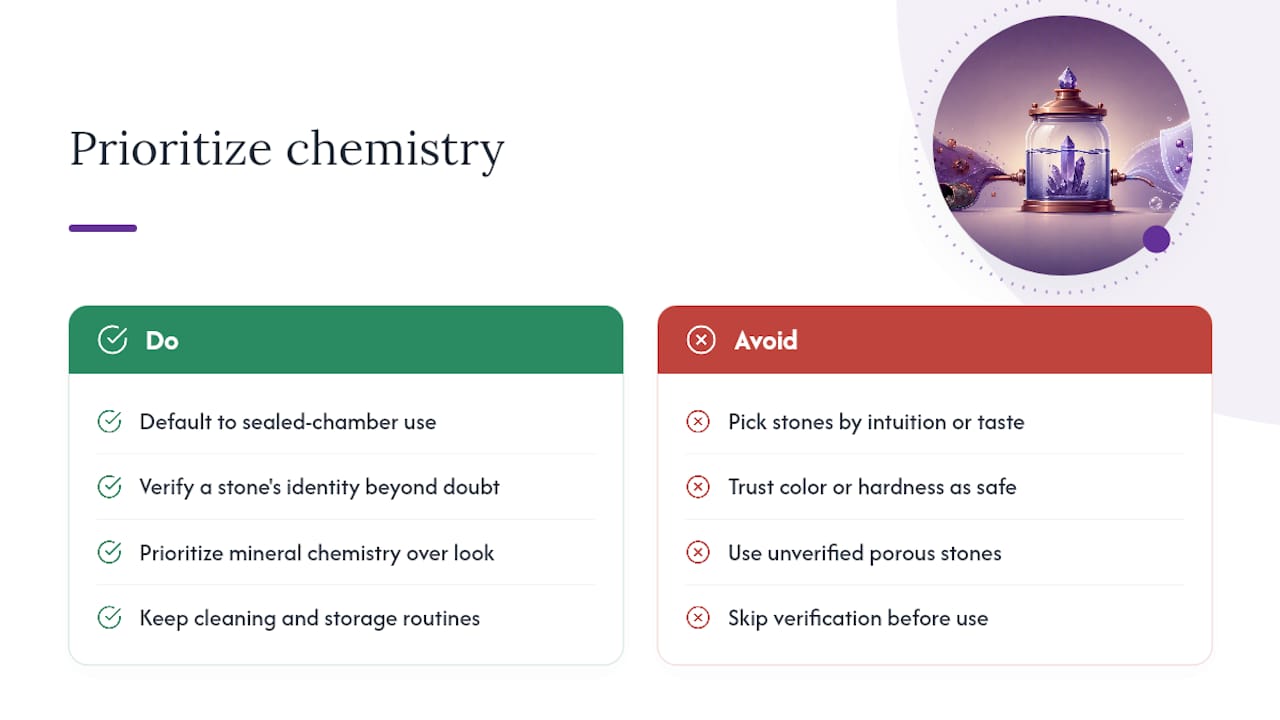
The research here points in one direction. Hardness tells you how a stone survives a scratch, not how it behaves in water for six hours. Color tells you about mineral content, sometimes in ways that should stop you cold, like that turquoise-green tint on malachite. The conventional wisdom of “trust your intuition” works fine for choosing a meditation stone. It’s a poor substitute for chemistry when you’re about to drink the result.
If there’s one priority worth acting on immediately, it’s this: default to the sealed-chamber method until you’ve verified a stone’s identity beyond doubt. That single habit removes almost every documented risk in this space, from copper leaching to bacterial buildup on porous surfaces. Everything else, the cleaning schedule, the infusion times, the storage habits, matters. But it matters less than getting this one decision right.
— Kejiwa
Vetted Crystals and Ritual Tools From Kejiwa Alchemy
Certain sellers source and hand-check stones before they reach customers, a practice important given the risks porous or copper-bearing minerals can pose to drinking water. Our Crystal Vortex collection features ethically sourced pieces suited to display, meditation, and sealed-chamber use, so you’re never left guessing about a specimen’s origin.
None of these stones are marketed as a health intervention, and we won’t pretend otherwise. They’re ritual companions, meant to support intention and grounding rather than replace medical guidance. If you want to pair your gem practice with something aromatic for the same grounding effect, our Botanical Aromatics collection offers mists crafted for exactly that. Browse the Crystal Vortex now and choose a piece you can trust from source to shelf.
Sources
- USGS: Mineralogical considerations and reactivity
- NSF Consumer resources on metal leaching and safe drinking practices
- Are Crystal Water Bottles Worth the Price? — SageStone
- Gem water and crystal elixirs: Which stones are safe? — Minerals Kingdom Magazine
FAQ
Is Gem Water Safe to Drink?
It can be, but only when you use chemically stable stones like clear quartz or amethyst, or when you use the indirect sealed-chamber method that keeps any stone away from direct water contact.
Which Crystals Should Never Go in Drinking Water?
Avoid malachite, azurite, cinnabar, galena, pyrite, selenite, and chrysocolla, since each contains toxic elements like copper, mercury, or lead, or dissolves in water entirely.
Does Mohs Hardness Tell Me if a Stone Is Water-Safe?
No. Hardness measures scratch resistance, not chemical stability. Pyrite is hard enough to resist scratching but still oxidizes in water and can release sulfur compounds.
How Long Can a Crystal Sit in Water Safely?
For verified quartz-family stones in direct contact, 6 to 12 hours is the common window; indirect sealed pods can sit longer if you change the surrounding water daily.
How Often Should I Check My Crystal Water Pod for Leaks?
Inspect gaskets and glass seals monthly, since pods can develop micro-leaks over time that let water and stone make unintended contact.
Does Kejiwa Alchemy Sell Crystals Safe for Water Rituals?
Kejiwa Alchemy’s Crystal Vortex collection offers ethically sourced stones suited to display and sealed-chamber use; current pricing is listed on the site.