


Plant alchemy preparations are defined as intentionally crafted herbal remedies that extract, purify, and recombine a plant’s essential properties to support physical, emotional, and spiritual wellness. The recognized industry term for the most advanced form of this practice is spagyrics, a word coined by Paracelsus to describe alchemy applied directly to plant medicine. The types of plant alchemy preparations range from simple water infusions to complex spagyric tinctures built on the three-stage process of separation, purification, and recombination. Understanding each type helps you choose the right preparation for your personal growth, energetic balance, and healing practice.
1. What are the types of plant alchemy preparations?
Spagyric alchemy employs a three-stage process of separation, purification, and recombination to create tinctures that capture the complete plant essence. This is the gold standard of botanical alchemy, and every other preparation type can be understood in relation to it. The three core types are spagyric tinctures, water-based preparations (teas, infusions, decoctions, and poultices), topical preparations (salves, ointments, and liniments), and aromatic or subtle preparations (hydrosols, flower essences, and glycerites). Each type targets a different layer of the plant’s healing potential.
Historical alchemy pioneered botanical extraction techniques that became foundational to modern herbalism. Distillation, solvent extraction, and purification methods all evolved from alchemical principles applied to plants. That lineage is why understanding what is plant alchemy history matters: it shows you that every preparation you make today carries centuries of intentional refinement.
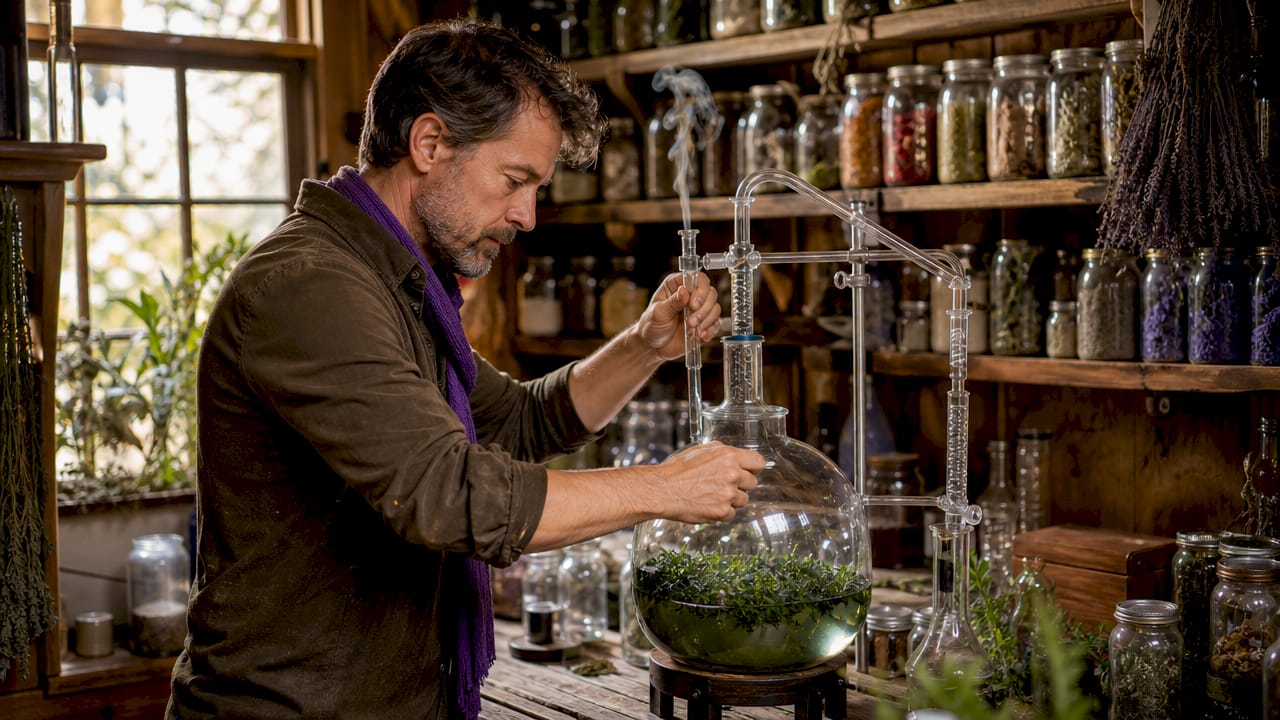
2. Spagyric tinctures: the complete alchemical extraction
Spagyric tinctures are the most complete form of plant alchemy preparation because they capture all three principles of the plant in one remedy. The three principles are Salt (the body, or mineral content), Soul (sulfur, or volatile oils), and Spirit (mercury, or the alcohol-soluble essence). Standard herbal tinctures capture only the Spirit and Soul. Spagyrics add the Salt back in, making the preparation whole.
The preparation follows four stages:
- Maceration and extraction. Dried herbs steep in alcohol of 40% or higher for 2–4 weeks. Some traditional spiritual cycles use 40 days to align with symbolic energetic extraction, a practice rooted in alchemical numerology.
- Calcination. The spent plant matter is burned to ash. Achieving fluffy white ash requires repeated purification steps, which are labor-intensive but vital for genuine mineral recovery.
- Purification. The ash is dissolved in distilled water and filtered to remove impurities, then evaporated to recover the pure mineral salts.
- Recombination. The purified salt is added back to the strained tincture. Aging the combined preparation for weeks or months allows all three principles to harmonize into a singular medicinal substance.
Paracelsus distinguished spagyric medicine from ordinary herbalism by focusing on creating perfected medicines rather than simple extracts. That distinction still holds today. A spagyric tincture does not just concentrate compounds. It philosophically and chemically transforms the plant through the principle of solve et coagula, dissolving and recombining to produce effects beyond simple concentration.
Typical dosage is 5–10 drops, taken 1–3 times daily. You need dried herb, high-proof alcohol, a glass jar, a strainer, and a dark glass bottle to get started.
Pro Tip: Store your finished spagyric tincture in a dark amber or cobalt glass bottle away from heat and light. The mineral salts in the preparation are sensitive to UV exposure, and proper storage preserves potency for years.
3. Traditional water-based preparations: teas, infusions, decoctions, and poultices
Water-based preparations are the most accessible entry point into herbal alchemy methods. They use water as the solvent to draw out specific plant compounds, and each method targets a different type of plant material.
| Preparation | Method | Best plant material | Primary use |
|---|---|---|---|
| Infusion | Steep in hot water, 5–15 minutes | Leaves, flowers, soft aerial parts | Internal tonic, calming, digestive |
| Decoction | Boil in water, 20–45 minutes | Roots, barks, seeds, hard material | Deeper extraction, immune support |
| Poultice | Mash fresh or dried herbs, apply topically | Fresh leaves, roots | Skin support, localized relief |
| Cold infusion | Steep in cold water, 4–8 hours | Mucilaginous herbs like marshmallow root | Gentle extraction, soothing |
Key points about each method:
- Infusions work best for delicate plant parts where heat would destroy volatile oils. Chamomile, lemon balm, and peppermint are classic examples.
- Decoctions pull minerals and dense compounds from tough plant matter. Ashwagandha root, cinnamon bark, and burdock root respond well to this method.
- Poultices apply the plant’s physical and energetic properties directly to the body. Plantain leaf and comfrey root are widely used this way.
- Cold infusions preserve mucilaginous compounds that hot water breaks down. Marshmallow root prepared cold produces a thick, soothing liquid.
Water-based preparations are not lesser than tinctures. They are simply different tools, each suited to a specific healing intention.
4. Salves, ointments, and liniments: plant alchemy in topical form
Salves, ointments, and liniments blend plant extracts into oil or wax bases for direct application to skin and muscle. The base ingredient determines the texture, absorption rate, and shelf life of the final product.
- Salves combine infused herbal oil with beeswax. The wax creates a protective barrier on the skin, making salves ideal for dry skin, minor wounds, and energetic shielding practices.
- Ointments use a higher ratio of oil to wax, producing a softer, more penetrating texture. They absorb more readily and suit muscle tension and joint support.
- Liniments are liquid preparations made with alcohol or vinegar as the carrier. They penetrate deeply and quickly, making them the preferred choice for acute muscle soreness and circulation support.
The extraction method matters as much as the base. Infusing dried herbs in a carrier oil like jojoba, olive, or coconut oil for 4–6 weeks draws out fat-soluble plant compounds. Calendula, arnica, and St. John’s wort are among the most widely used herbs for oil infusion because their active compounds transfer readily into lipid-based carriers.
Pro Tip: Add a few drops of vitamin E oil to your finished salve or ointment before pouring into containers. Vitamin E acts as a natural antioxidant that extends shelf life by slowing oxidation of the carrier oil, keeping your preparation potent for 12–18 months.
5. Aromatic and subtle preparations: hydrosols, flower essences, and glycerites
Aromatic and subtle preparations work on the energetic and emotional layers of wellness rather than the purely physical. Hydrosols are distilled herbal waters that capture essential oil molecules suspended in water during steam distillation. They are gentler than essential oils and safe for direct skin application, making them ideal for facial mists, room sprays, and energetic clearing rituals.
Flower essences operate on a different principle entirely. They are vibrational remedies prepared by floating flowers in spring water under sunlight or moonlight, then preserving the imprinted water with a small amount of brandy. The preparation carries the energetic signature of the flower rather than its chemical compounds. Bach Flower Remedies are the most widely recognized system of flower essences in the world, and they demonstrate how subtle preparations can address emotional and spiritual states directly.
Glycerites are alcohol-free extracts that use vegetable glycerin as the solvent. They suit people who avoid alcohol for health or spiritual reasons. Glycerin extracts sugars, tannins, and some volatile compounds effectively, though it does not capture the full spectrum that alcohol does. Children and those in recovery often benefit most from glycerite preparations.
Kejiwastore’s aromatherapy elixir sprays draw directly from this tradition, using distillation and intentional botanical blending to create preparations that support energetic balance and emotional clarity. The subtle preparations category is where botanical alchemy and spiritual practice meet most visibly.
6. Examples of alchemical plant preparations in practice
Choosing the right preparation type depends on your intention, your lifestyle, and the plant you are working with. The table below maps each preparation type to its best use case and relative potency.
| Preparation type | Best use case | Relative potency | Ease of preparation |
|---|---|---|---|
| Spagyric tincture | Deep systemic support, spiritual growth | Highest | Advanced |
| Decoction | Immune and mineral support | Moderate to high | Beginner |
| Infusion | Daily tonic, emotional balance | Moderate | Beginner |
| Salve or ointment | Topical skin and muscle support | Moderate | Intermediate |
| Hydrosol | Energetic clearing, skin misting | Subtle | Intermediate |
| Flower essence | Emotional and spiritual healing | Subtle | Beginner |
| Glycerite | Alcohol-free tonic | Moderate | Beginner |
A practical example: if you want to support your nervous system and deepen your meditation practice, a spagyric tincture of tulsi or ashwagandha delivers the most complete plant intelligence. If you want a daily ritual that grounds you without complexity, a decoction of cinnamon and astragalus root brewed each morning serves that intention well.
Combining preparation types is also valid. Many experienced practitioners use a spagyric tincture internally while applying a corresponding salve topically, working on both the systemic and local levels simultaneously. The herbal wisdom tradition at Kejiwastore supports this layered approach, recognizing that the body, mind, and energy field each respond to different forms of plant medicine.
The Green Lion concept in botanical alchemy views plants as energetic systems where the alchemical process liberates vital solar energy through intentional handling. That perspective reminds you that preparation method is not just chemistry. It is ceremony. Modern CBD extraction methods, for example, draw on solvent extraction principles that trace directly back to alchemical laboratory practice, showing how ancient methods continue to shape contemporary plant medicine.
Key takeaways
Spagyric tinctures represent the most complete form of plant alchemy preparation, capturing Salt, Soul, and Spirit through separation, purification, and recombination to produce effects no single-stage extraction can match.
| Point | Details |
|---|---|
| Spagyric tinctures are most complete | They capture all three plant principles: Salt, Soul, and Spirit in one remedy. |
| Water-based methods suit beginners | Infusions and decoctions are accessible, effective, and require no specialized equipment. |
| Topical preparations target local needs | Salves, ointments, and liniments deliver plant compounds directly to skin and muscle. |
| Subtle preparations work energetically | Hydrosols and flower essences address emotional and spiritual states without alcohol. |
| Preparation choice depends on intention | Match the method to your wellness goal: systemic, local, emotional, or spiritual. |
What I have learned from years of working with plant alchemy
The process is the medicine
Most people come to plant alchemy looking for a product. What they find, if they stay long enough, is that the process itself changes them. Burning plant matter to ash, dissolving it, filtering it, and folding it back into the tincture is not just chemistry. It is a practice of attention and patience that most modern wellness routines never ask of you.
The energetic dimension of these preparations is real, and I say that as someone who has made hundreds of batches. When you handle plant material with intention, when you time your maceration cycles with lunar rhythms, when you take the extra step of purifying your ash rather than rushing the calcination, the finished preparation feels different. Whether that difference is measurable by a laboratory instrument is less important than whether it is measurable by you.
My honest observation after years of this work: the people who get the most from plant alchemy preparations are the ones who slow down. They do not treat a spagyric tincture like a supplement to swallow and forget. They treat it as a conversation with the plant. That shift in relationship, from consumer to participant, is where the real growth happens.
Start with what you can actually commit to. A well-made infusion prepared with full attention outperforms a rushed spagyric tincture every time. Build your practice from there.
— Kejiwa
Kejiwastore’s handcrafted plant alchemy for your practice
Kejiwastore crafts small-batch spagyric herbal tinctures using the full three-stage alchemical process: maceration, calcination, and recombination. Every preparation uses carefully sourced organic and wild-harvested botanicals, handled with the same intentional craftsmanship described throughout this article.
The collection includes Ormus minerals and aromatic elixir mists alongside the spagyric line, giving you a complete range of preparation types to support physical, emotional, and energetic wellness. Each product reflects a commitment to traditional alchemical methods and quality ingredients. If you are ready to bring genuine plant alchemy into your daily practice, Kejiwastore’s offerings are a trustworthy place to begin.
FAQ
What is the difference between a spagyric tincture and a regular tincture?
A regular tincture extracts only the alcohol-soluble compounds from a plant. A spagyric tincture adds the purified mineral salts back in, capturing all three alchemical principles: Salt, Soul, and Spirit.
How long does it take to make a spagyric tincture at home?
The maceration stage alone takes 2–4 weeks, with traditional cycles running 40 days. Calcination and purification add additional time, making the full process a multi-week commitment.
What are the easiest types of plant alchemy preparations for beginners?
Infusions, decoctions, and flower essences require no specialized equipment and are the most accessible starting points for anyone new to botanical alchemy.
What is botanical alchemy?
Botanical alchemy is the practice of applying alchemical principles, specifically separation, purification, and recombination, to plant material to create medicines that work on physical, emotional, and spiritual levels simultaneously.
Can you combine different types of plant preparations?
Yes. Many practitioners use a spagyric tincture internally alongside a topical salve or hydrosol mist, working on systemic and local levels at the same time for layered support.