


Nature is the most reliable catalyst for spiritual awakening available to you. The role of nature in spiritual growth is not metaphor or wishful thinking. Research by psychologist Dr. Steve Taylor confirms that natural settings reliably trigger what he calls “awakening experiences,” states of mental quiet and expanded consciousness that most people spend years trying to reach through formal practice alone. These moments arise during ordinary activities. They reshape how you understand yourself and your place in the living world.
How does nature trigger spiritual awakening?
Awakening experiences in nature are defined by a specific set of qualities: mental quiet, a felt expansion of space between thoughts, and a dissolving of the boundary between self and surroundings. Dr. Taylor’s research shows these states can last minutes to hours. They are not reserved for monks or mystics.
What makes this finding significant is how ordinary the triggers are. You do not need a wilderness expedition or a silent retreat. Common activities that reliably produce these states include:
- Swimming in open water, where the body’s immersion quiets the default mode network
- Lying in the sun in a park, where warmth and light reduce cortical overstimulation
- Sitting near moving water, where rhythmic sound interrupts repetitive thought loops
- Walking slowly through trees, where the visual complexity of foliage calms the nervous system
The neuroscience behind this is straightforward. Urban environments demand constant directed attention. Nature restores what researchers call “involuntary attention,” a softer, receptive mode of awareness that the brain defaults to when external demands drop. That restoration is the neurological doorway to spiritual awakening in nature.
Pro Tip: You do not need to travel far. A local park visited consistently produces deeper spiritual states than a single dramatic wilderness trip. Frequency matters more than distance.
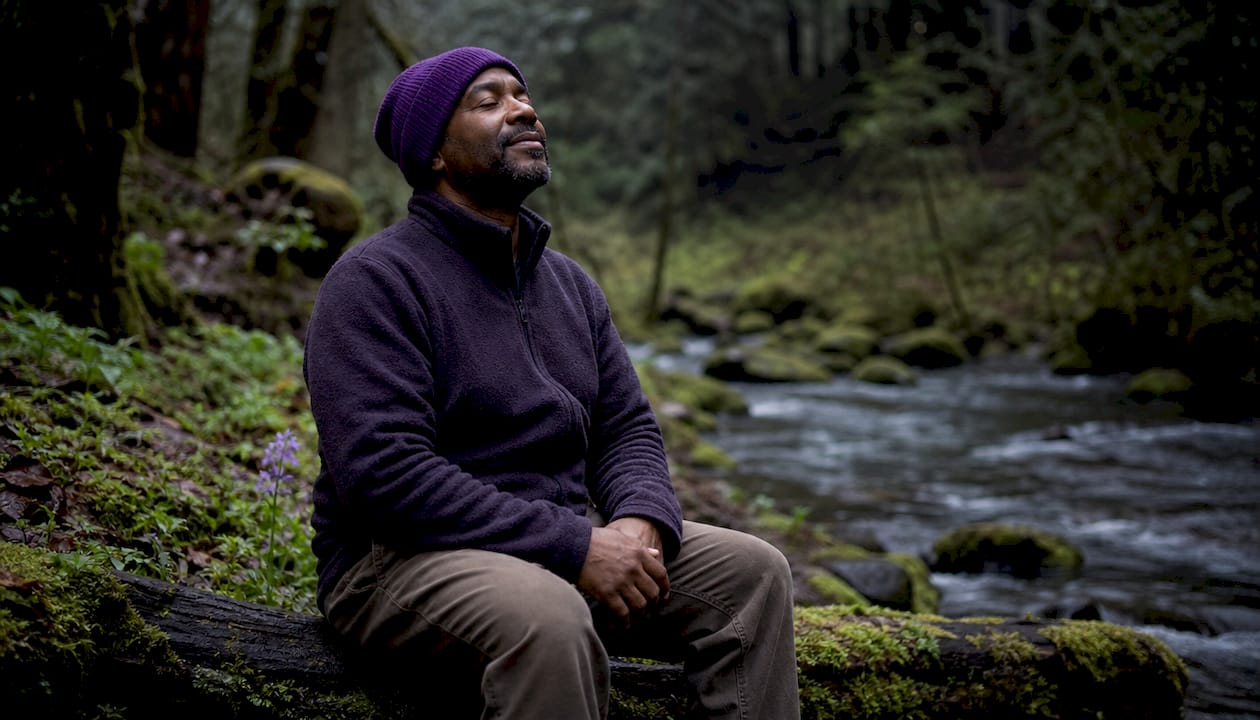
The bodily experience of awakening in nature is best described as a softening. Your shoulders drop. Your breath slows. The mental commentary quiets. This is not a new skill you acquire. It is the relaxation of defenses that were blocking an awareness already present in you.
What is the ecological self and how does it deepen spiritual growth?
The ecological self is an expanded sense of identity that does not stop at your skin. It includes the living systems you are embedded in: the soil, the watershed, the seasonal rhythms of your local place. This concept, central to deep ecology and mindfulness-based nature frameworks, describes what happens when repeated contact with a specific natural environment builds genuine belonging.
Most spiritual seekers chase novelty. A new retreat center, a different forest, a more dramatic landscape. The research points in the opposite direction. Repeated visits to the same natural place build something that novelty cannot: a living relationship with seasonal change, with the particular light of a specific hillside in october, with the birds that return each spring to the same tree outside your window.
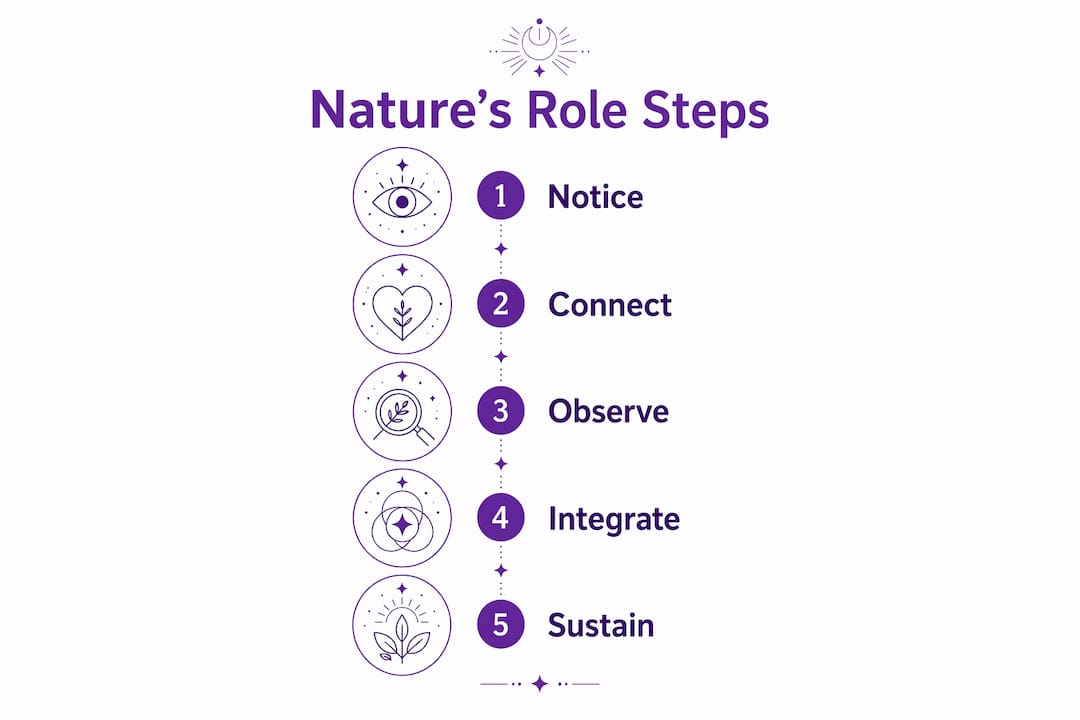
Building an ecological self through place-based practice follows a recognizable progression:
- Initial contact. You visit a local natural spot with no agenda. You observe what is there without labeling or judging.
- Seasonal tracking. You return regularly and notice what has changed. A plant flowers. A creek rises. Leaves shift color. Your attention sharpens.
- Emotional attunement. The place begins to feel like a relationship. You notice your own inner states reflected in its rhythms.
- Identity expansion. Over months, the boundary between “you visiting nature” and “you as part of nature” begins to blur. This is the ecological self taking root.
- Spiritual participation. You stop observing and start belonging. Ecological activism, gratitude practices, and a felt sense of responsibility emerge naturally from this stage.
Observing seasonal shifts in a familiar place calms the brain and builds the sustained attention that spiritual growth requires. This is not poetic language. It is a documented outcome of place-based mindfulness practice.
What spiritual lessons does nature uniquely offer?
Nature teaches through pattern, not instruction. Its rhythms, the tide’s return, the tree’s bare winter and full summer, the creek’s rise and fall, are invitations for nervous system reset that urban life systematically blocks. Nature’s vibrancy and absence of human noise create conditions that support spiritual navigation during life transitions, sometimes across months of sustained engagement.
Spiritual naturalism, a growing philosophical framework, makes a specific and useful claim: the sacred is not located in pristine wilderness. It lives in the mundane. The weed pushing through a sidewalk crack. The creek running behind a strip mall. The sparrow on a city fence. Granting soul to local creeks or weeds helps you accept your own inherent value, because you stop requiring perfection as a condition for reverence.
“The soul is not something we have to find. It is something we have to recognize. And nature, even in its most ordinary forms, holds up the mirror.” Adapted from the Center for Action and Contemplation’s teaching on soul and the natural world.
This perspective has a practical consequence. Many people drawn to nature and spirituality arrive there after painful experiences with institutional religion. Ecological activism, gratitude, and observation become their core spiritual practices. Nature becomes their primary place of faith. This is not a lesser form of spirituality. For many practitioners, it is the most honest one they have found.
The energy protection practices that support sensitive practitioners often draw directly from nature-based frameworks, using grounding, elemental awareness, and place-based ritual to maintain energetic stability.
How can you sustain spiritual growth through everyday nature connection?
Sustainable spiritual growth through nature does not require wilderness. It requires consistent attention to a local spot over time. Deep place-based wisdom emerges from disciplined, repeated presence, not from dramatic one-time experiences.
The concept of “micro-dosing nature” describes this well. Ten minutes in a backyard garden. A slow walk to work that passes a single tree you greet by name. Sitting by a window during rain. These small, consistent contacts build the neural and energetic pathways that support lasting spiritual growth.
Pro Tip: Rename your relationship to nature. Instead of “going into nature,” try “remembering I am part of nature.” That single reframe shifts you from observer to participant, and participation is where spiritual growth actually lives.
The myth of separation from nature is the central spiritual hurdle most practitioners face. The water in your body was once rain. The carbon in your cells was once a tree. Recognizing this biological continuity is not a metaphor. It is a fact that, when felt rather than merely known, catalyzes genuine spiritual participation.
Practical habits that build lasting nature connection include:
- Designate one local spot as your practice place and visit it at least three times per week
- Keep a nature journal noting what you observe, what you feel, and what changes between visits
- Practice barefoot contact with soil or grass for ten minutes daily to reinforce the felt sense of belonging
- Use smudging herbs from your local region to bring the energetic signature of natural places into your indoor practice
- Sit in silence outdoors before checking any device in the morning, even for five minutes
Nature connection supports emotional steadiness by reducing self-focus and aligning your nervous system with biological patterns larger than your personal concerns. This effect is supportive, not guaranteed. It requires your consistent attention to work.
Key Takeaways
Nature triggers genuine spiritual awakening through ordinary contact, and sustained growth requires consistent, place-based attention rather than dramatic or distant experiences.
| Point | Details |
|---|---|
| Nature triggers awakening states | Ordinary activities like swimming or lying in the sun reliably produce mental quiet and expanded awareness. |
| The ecological self deepens growth | Repeated visits to the same natural place build identity continuity with living systems over time. |
| The sacred lives in the mundane | Spiritual naturalism teaches that local weeds and creeks hold as much spiritual value as pristine wilderness. |
| Micro-dosing nature builds wisdom | Ten-minute daily contacts with a local spot produce deeper growth than occasional wilderness trips. |
| Reframing separateness is the key shift | Moving from “visiting nature” to “being part of nature” catalyzes genuine spiritual participation. |
What I have learned from years of watching people awaken in nature
The most common misperception I encounter is that spiritual awakening requires a dramatic setting. People wait for the perfect retreat, the right mountain, the ideal conditions. What the research and my own observation consistently show is the opposite: the most lasting awakenings happen in unremarkable places, visited with remarkable consistency.
Patience is the practice that nature actually teaches. A tree does not rush its seasons. A creek does not apologize for running low in August. When you sit with a place long enough to know its rhythms, you begin to absorb that quality. Your nervous system learns to wait. Your awareness learns to receive rather than grasp.
The softening that Dr. Taylor describes is real. I have seen it happen to people who came to a practice with enormous skepticism. They did not acquire new beliefs. They relaxed old defenses. That is a crucial distinction. Spiritual growth through nature is not about adding something. It is about removing the noise that was always covering what was already there.
Ordinary moments carry the most weight. The crow on the fence post. The smell of soil after rain. The particular silence of a forest at dusk. These are not lesser spiritual experiences. They are the ones that stay with you for decades, because they are woven into the body, not just held in the mind.
— Kejiwa
Nature-inspired tools to support your practice from Kejiwastore
Kejiwastore’s botanical alchemy products are made for practitioners who take their nature connection seriously. Each formulation draws from wild-harvested botanicals, traditional herbalism, and alchemical preparation methods designed to support the nervous system states that make spiritual awareness accessible.

Kejiwastore’s Ormus minerals support energetic balance and cellular coherence, qualities that deepen the receptive awareness nature invites. The spagyric herbal tinctures bring the concentrated intelligence of plant medicine into your daily practice. For those who work with scent as a gateway to presence, the botanical aromatics collection offers aromatherapy elixirs crafted to anchor meditative states and support the felt sense of nature connection indoors.
FAQ
What triggers a spiritual awakening in nature?
Awakening experiences are triggered by activities that reduce mental noise, including swimming, lying in the sun, and walking slowly through trees. Dr. Steve Taylor’s research shows these states arise from nature’s ability to quiet the brain’s default mode network.
How long does it take to develop an ecological self?
Building an ecological self through place-based practice typically takes months of consistent visits to the same natural location. Seasonal observation and regular attention accelerate the process more than any single dramatic experience.
Do I need pristine wilderness for spiritual growth in nature?
Spiritual naturalism teaches that soul recognition in the mundane is fully valid. A local creek, a backyard garden, or a city park visited consistently offers the same spiritual depth as a remote wilderness area.
What is the difference between visiting nature and being part of nature?
The shift from “visiting” to “belonging” is the central reframe in nature-based spirituality. Recognizing your biological continuity with nature transforms casual observation into active spiritual participation.
How does nature support nervous system regulation during spiritual practice?
Nature’s rhythms and absence of human noise reset the nervous system by reducing directed attention demands. This creates the physiological conditions for reflection, presence, and spiritual awareness to arise naturally.